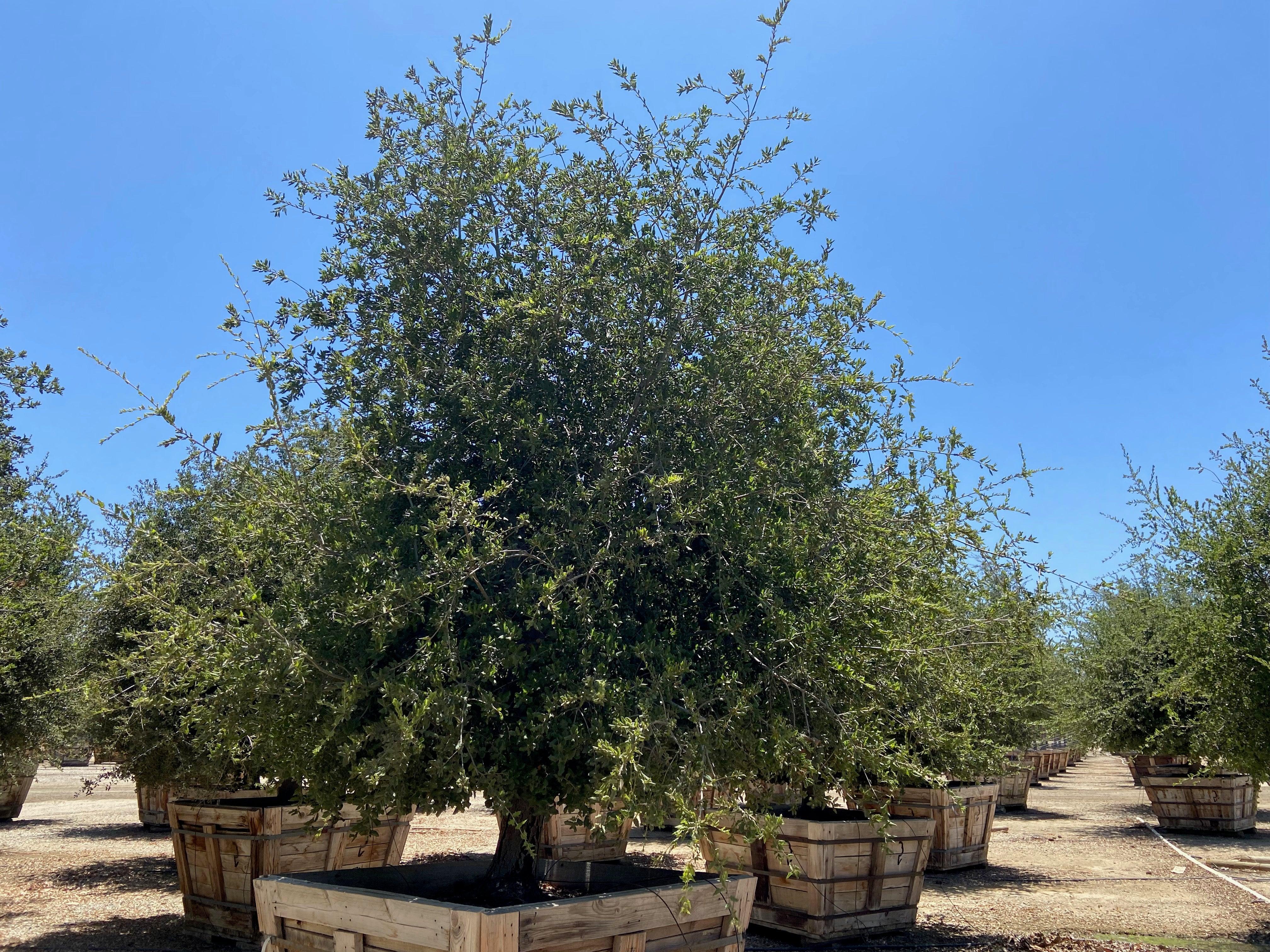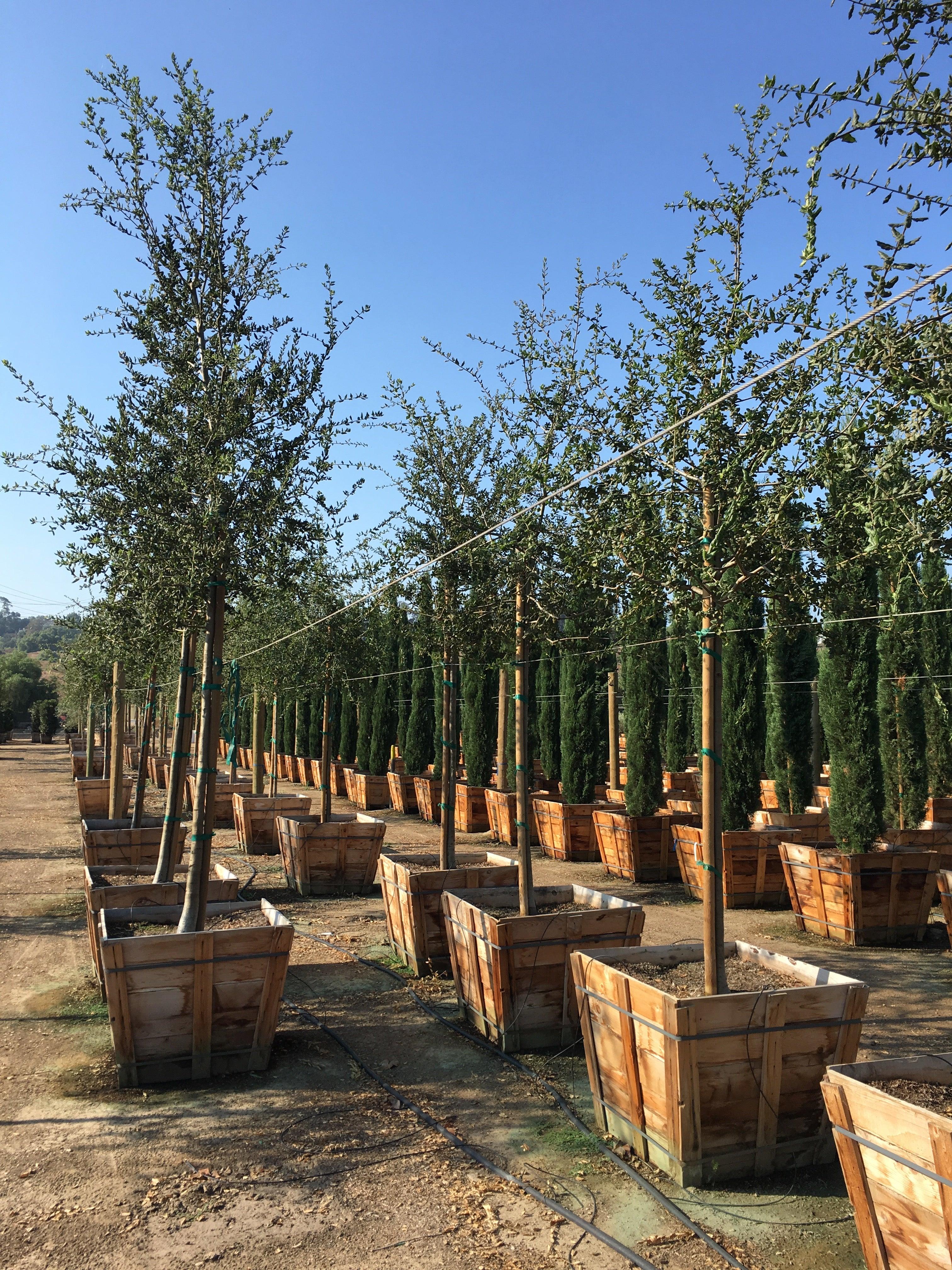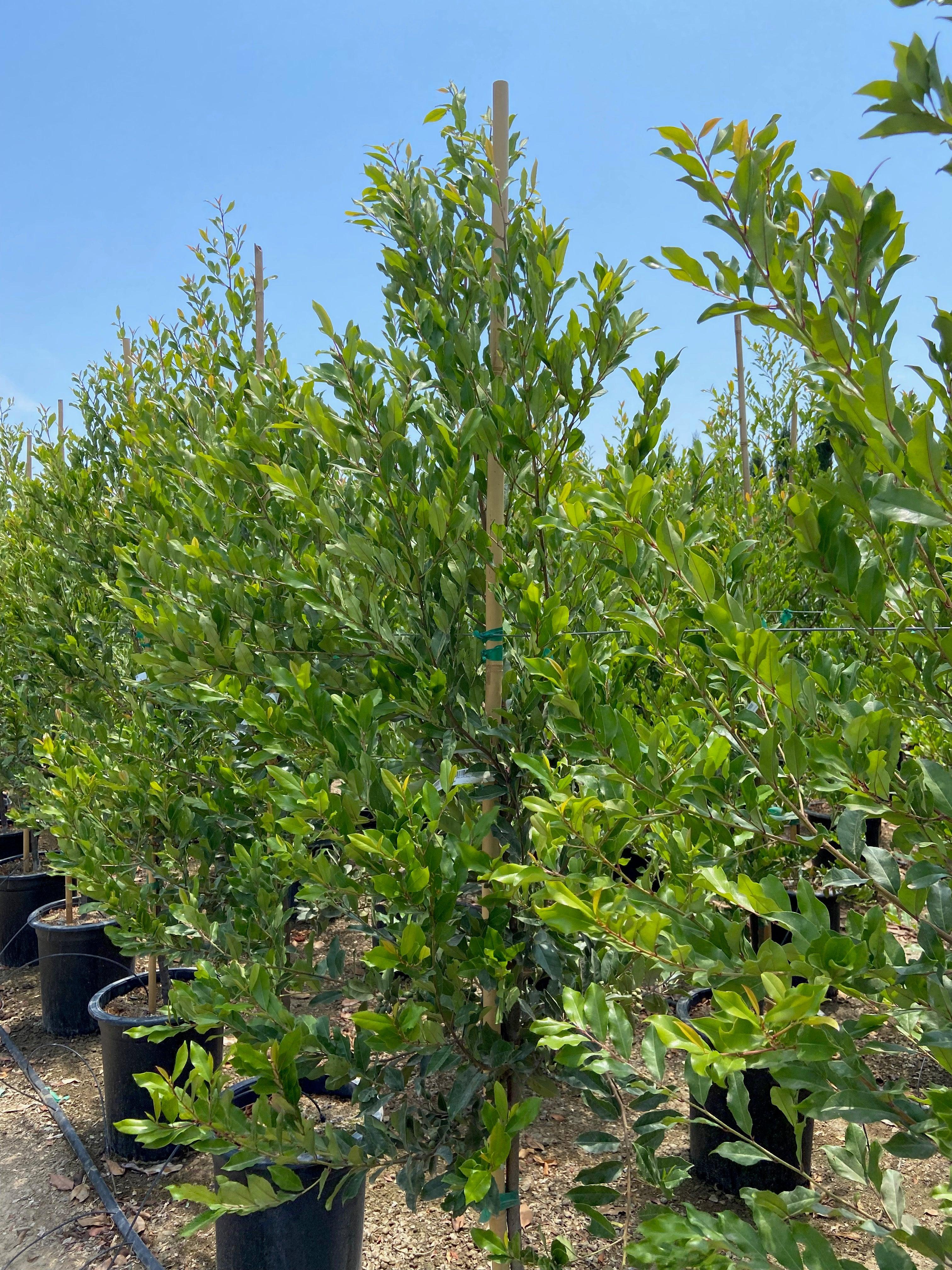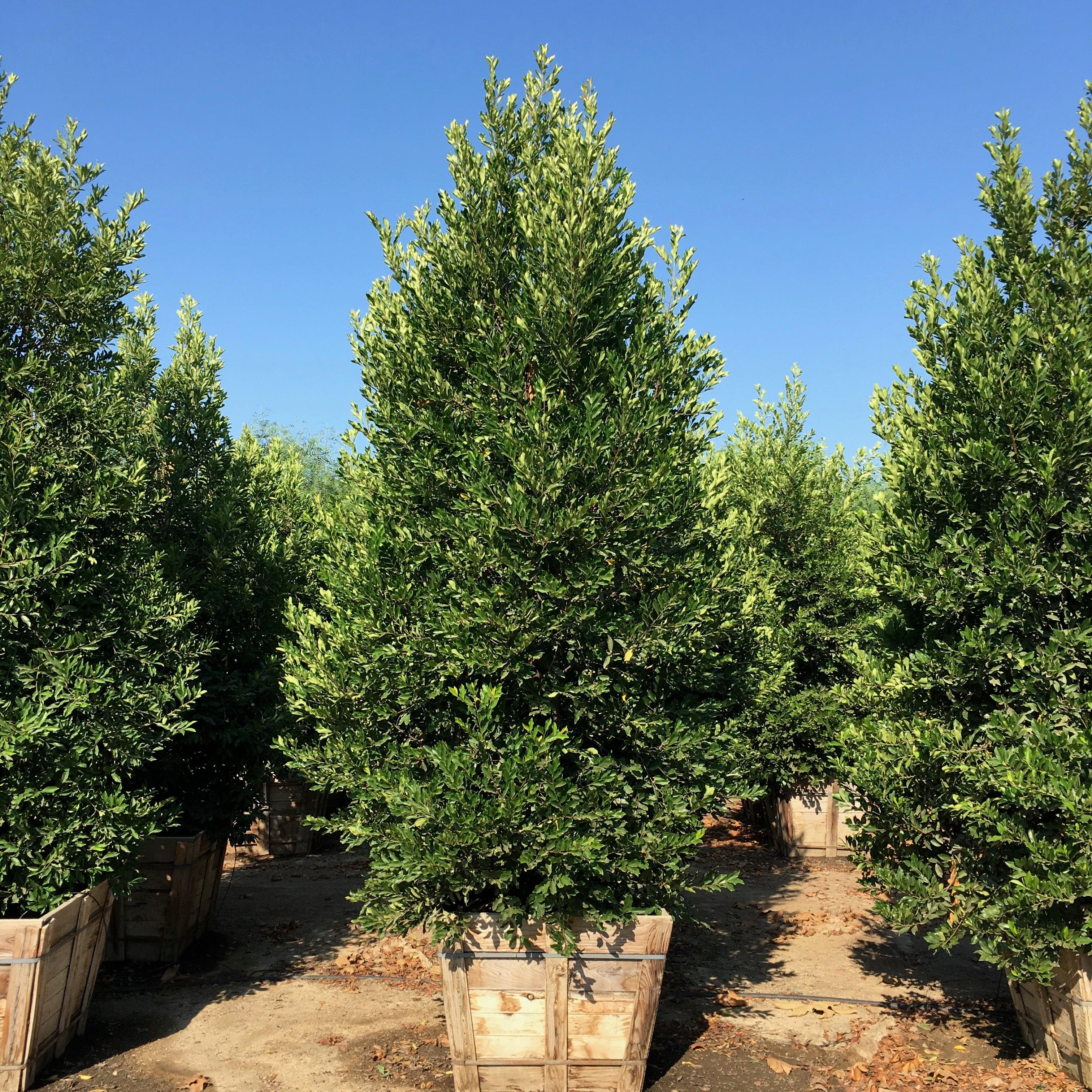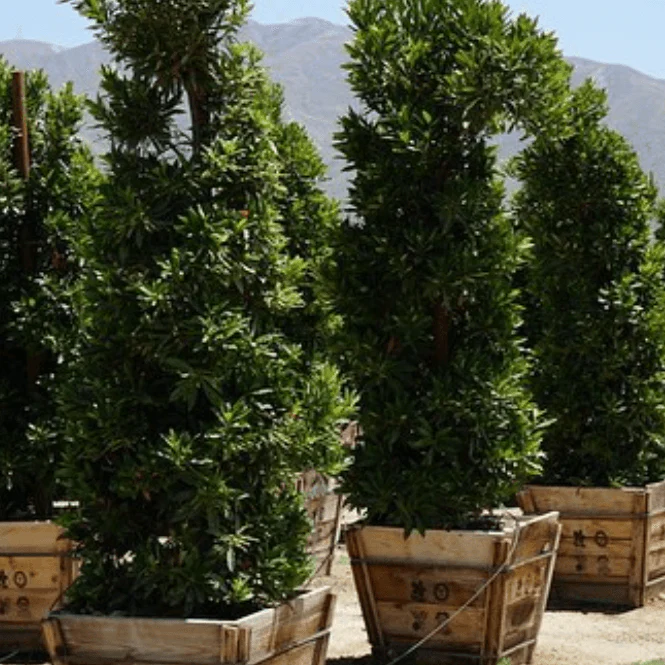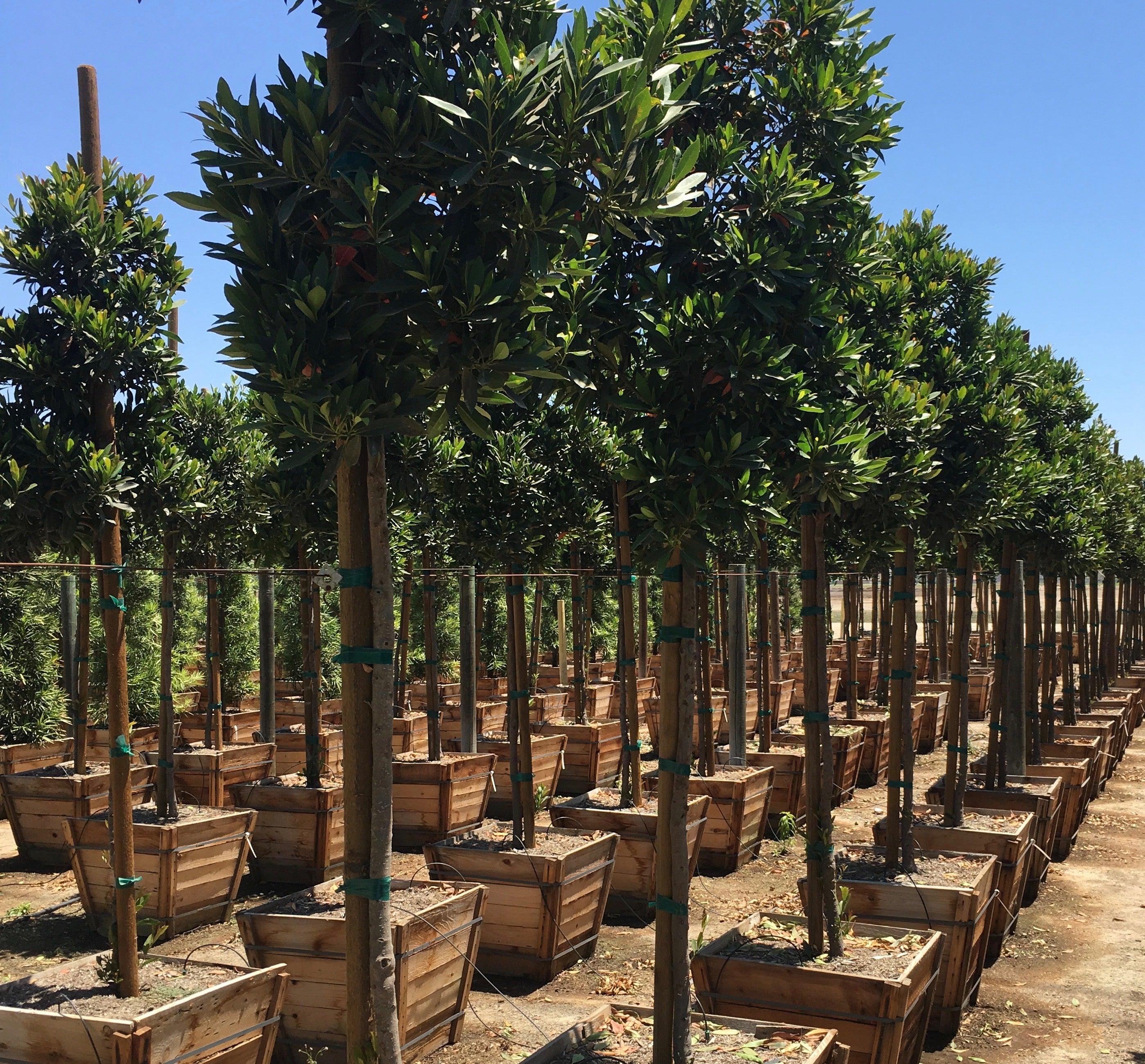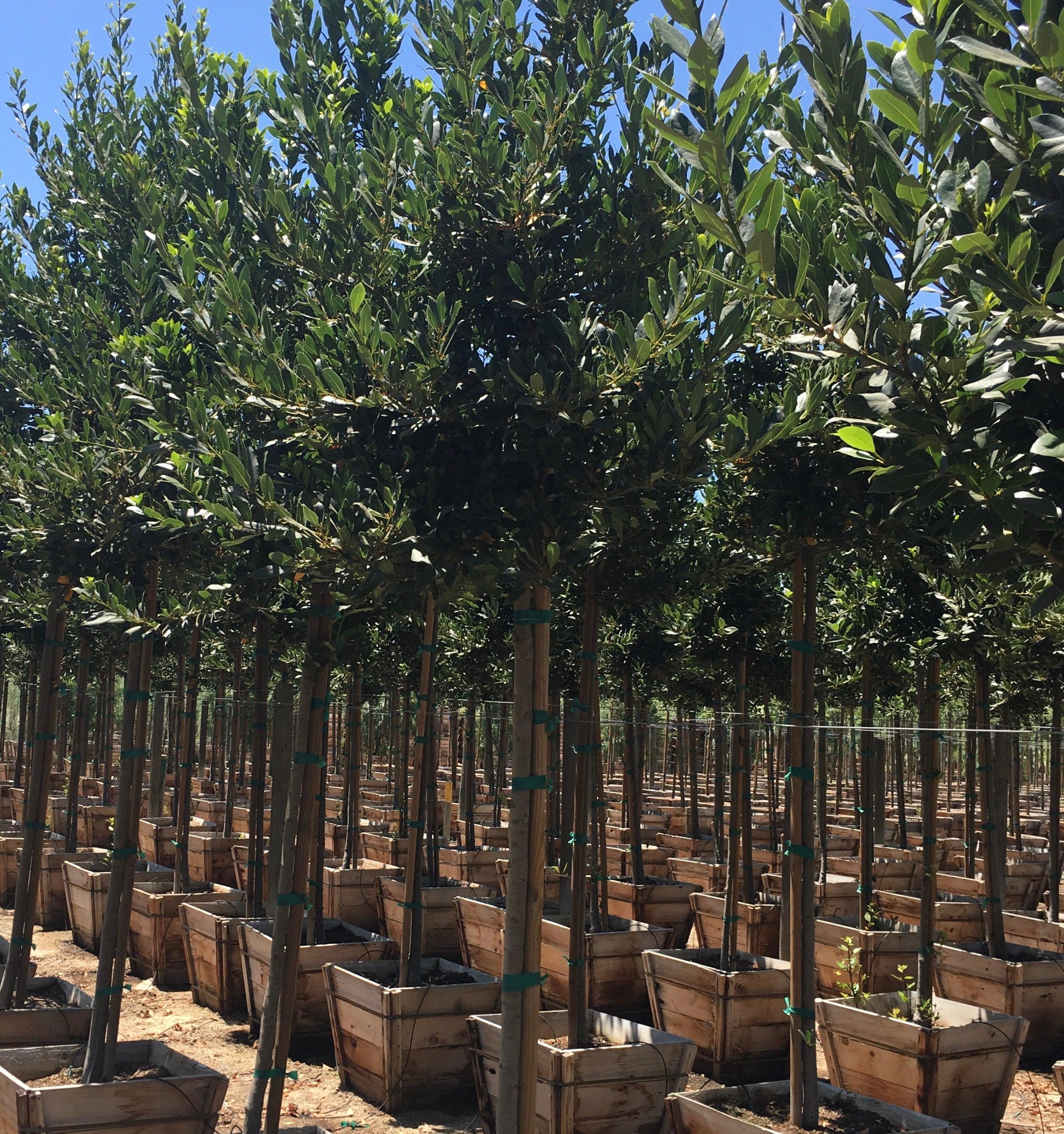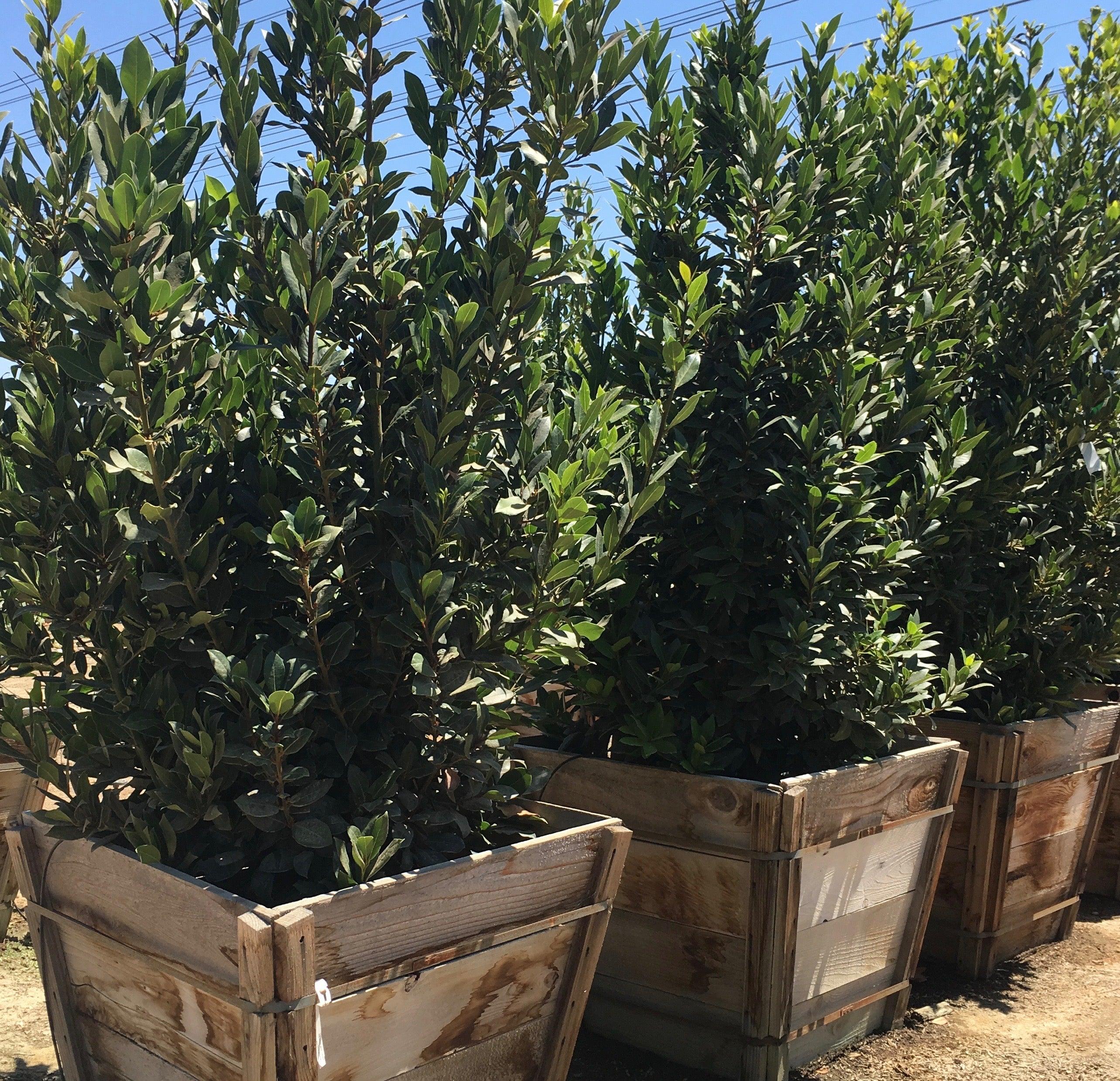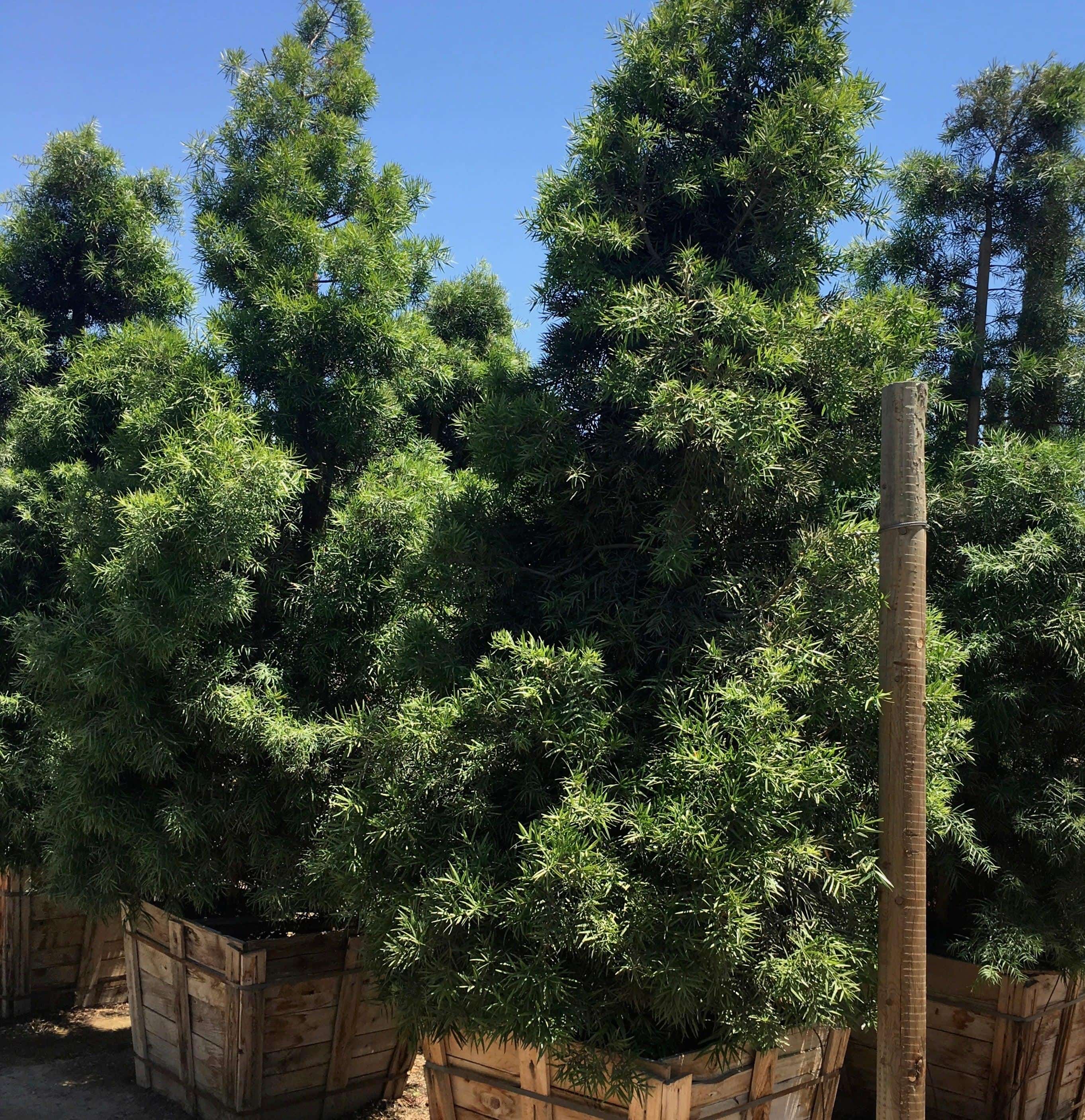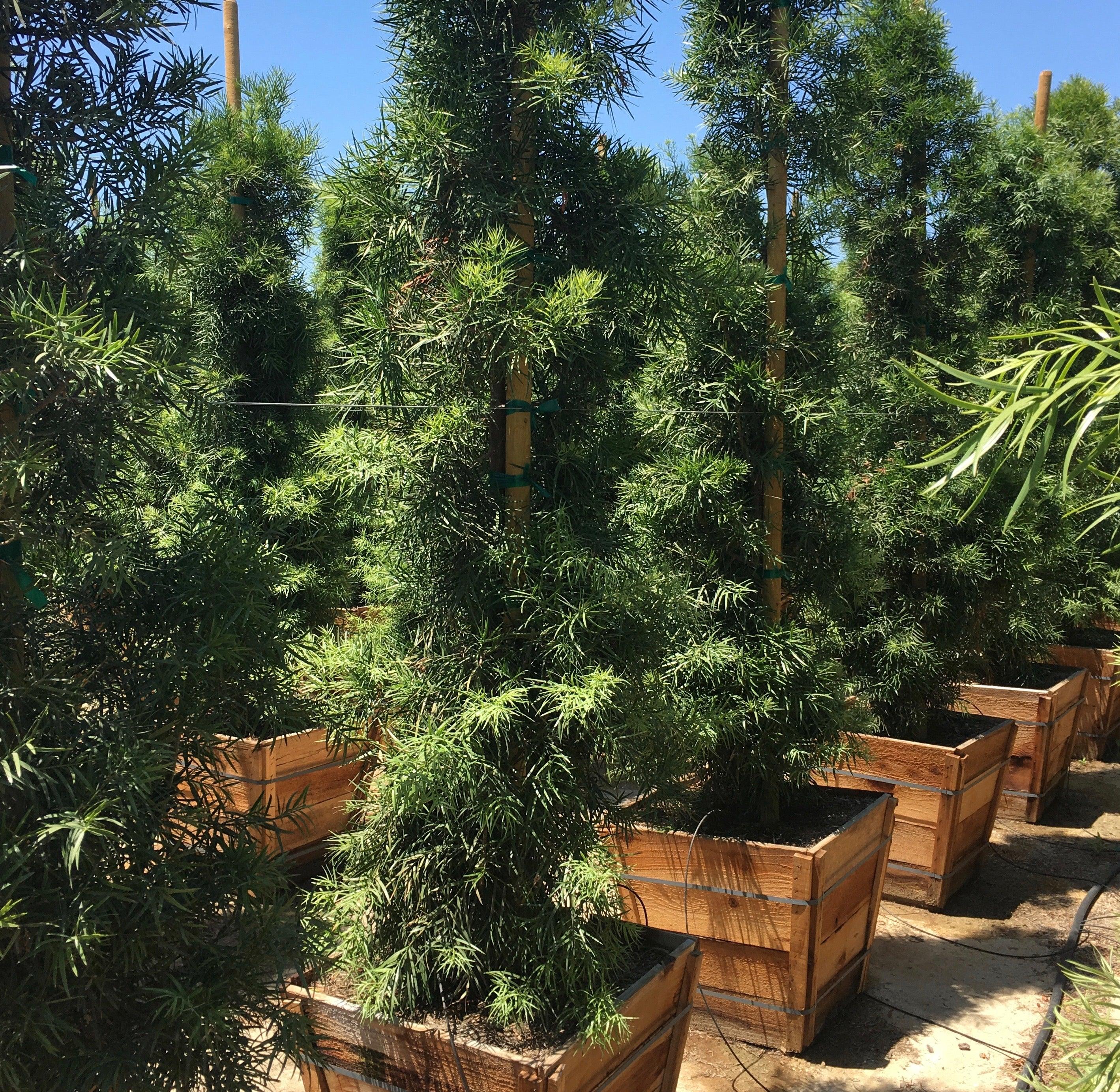
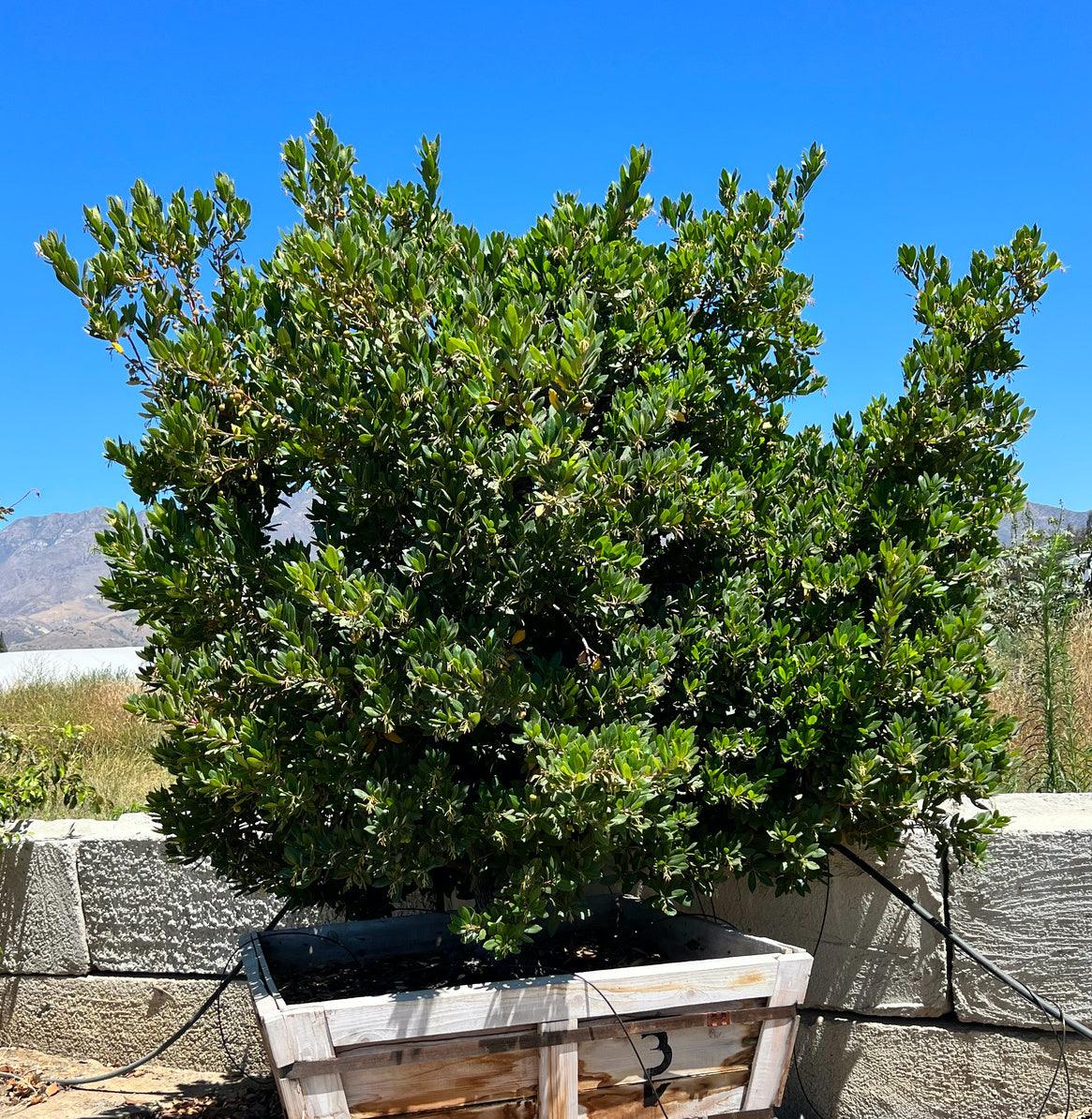


Arbutus Unedo 'Compacta' - Dwarf Strawberry Tree
Year-Round Beauty with Edible Fruit Rewards
Arbutus unedo gives California gardens an evergreen, drought tolerant small tree with white flowers, ornamental bark, and edible red berries that ripen from October to December.
Commonly known as the strawberry tree, this broadleaf evergreen shrub or small tree is ideal when you want year round interest without choosing between beauty and harvest. Its glossy evergreen leaves, winter blooms, strawberry like fruits, and sculptural form make it a standout plant for Mediterranean regions, coastal gardens, patios, screens, and wildlife-friendly landscapes.
Why You’ll Love It
-
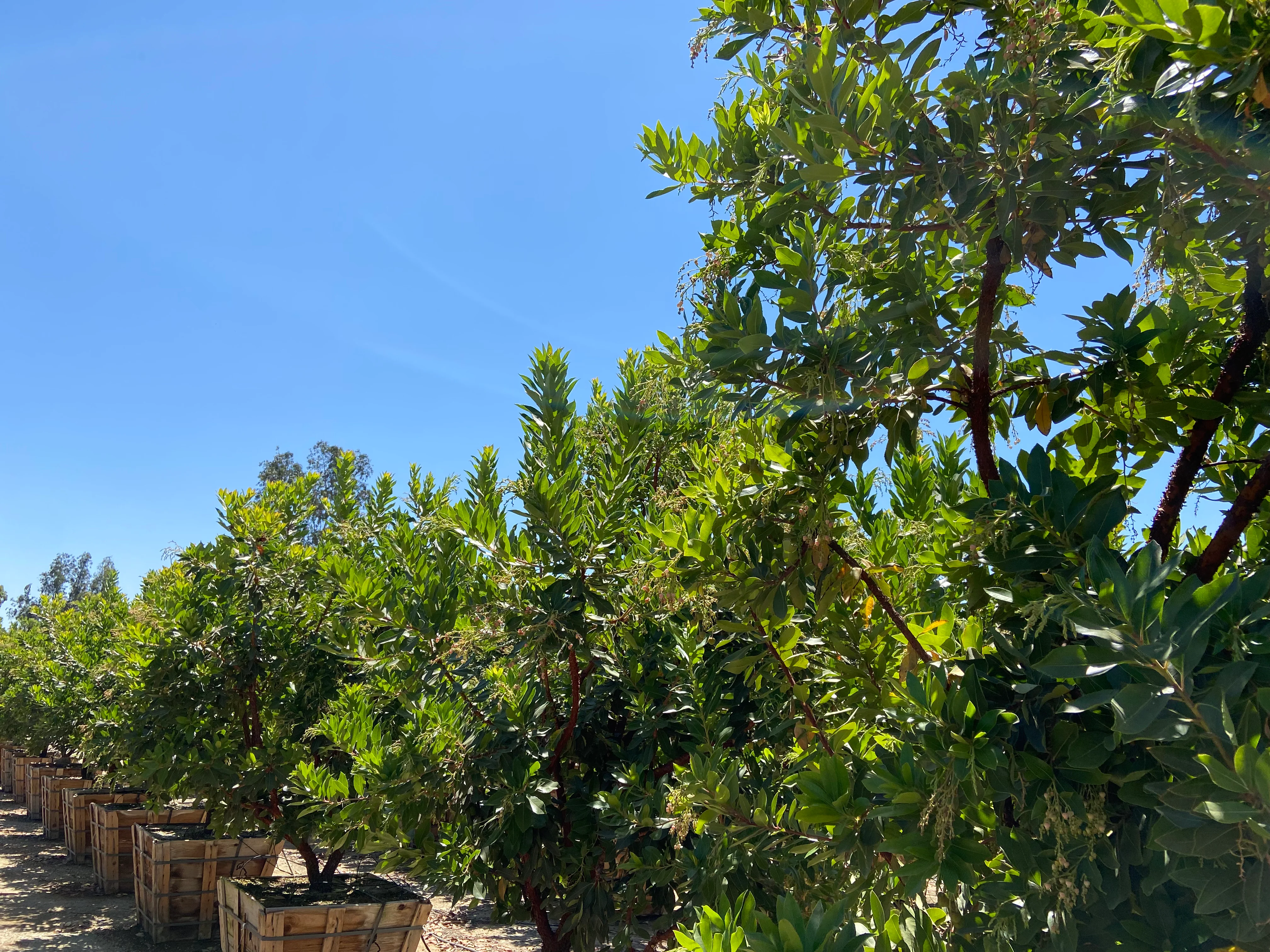
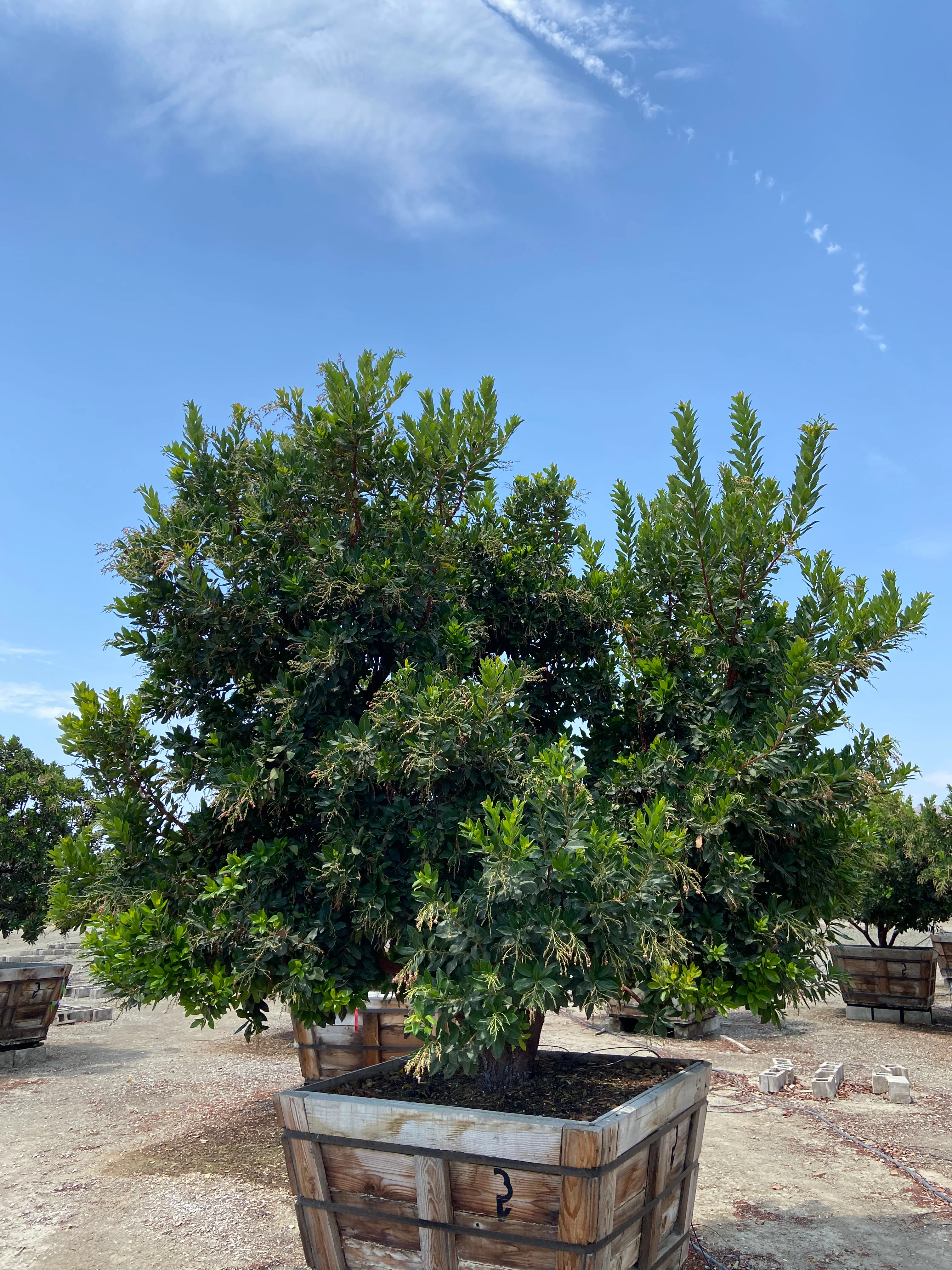
Evergreen Beauty – Glossy, leathery, dark green evergreen leaves provide structure and color in every season. The strawberry tree features glossy, leathery, dark green leaves that can grow up to 4 inches long, with serrate margins and red stems.
-
Edible Harvest – Sweet red berries can be eaten fresh when fully ripe, though the flavor is mild and the seeds are noticeable. The fruit of Arbutus unedo is edible and can be used in various culinary applications, including making jams, pies, and alcoholic beverages.
-
Pollinator Magnet – White flowers to pinkish-white flowers appear in fall and winter, giving bees and beneficial insects nectar when fewer plants are in bloom. Arbutus unedo provides valuable ecological support by providing nectar for late-season pollinators and winter fruit for birds.
-
Low Maintenance – This hardy tree is drought tolerant once established, making it suitable for California gardens, especially in full sun, partial shade, coastal fog, and water-wise landscapes, and it fits beautifully among other flowering trees for California gardens.
-
Multi-Season Interest – Flowers and fruit often appear together, with round green fruit slowly maturing to red while new blooms open. The bark of Arbutus unedo features striking grayish-brown to cinnamon color that actively peels and flakes away to expose a smooth reddish-brown inner layer.
What Makes It Different
Most ornamental trees are decorative, and most fruit trees are productive. Arbutus unedo does both in one compact, evergreen form: it brings flowers, fruit, bark texture, birds, bees, and usable harvests into the same landscape.
Arbutus unedo is built differently:
-
Dual Purpose Design – Arbutus unedo, commonly known as the strawberry tree, is valued for its ornamental beauty, producing attractive flowers and fruits that can be used in landscape design, much like the related Arbutus 'Marina' strawberry tree. It works as a large shrub, small tree, hedge, privacy screen, or patio accent while also producing edible ripe fruit.
-
Climate Adaptability – Arbutus unedo is native to the rocky slopes, shrublands, and coastal cliffs of the Mediterranean basin, western Asia, northern Africa, and parts of western Ireland. This makes it especially suitable for Mediterranean regions and California conditions, including places like San Francisco where coastal influence, sun, shade, and drainage all matter, similar to resilient natives like the Coast Live Oak (Quercus agrifolia).
-
Unique Fruiting Schedule – This plant produces urn-shaped, aromatic, pinkish-white flowers that bloom in drooping panicles, typically from October to January, while its spherical green fruits take almost a full year to ripen, turning strawberry red when mature. That unusual timing means fall and winter bring both blooms and berries, not bare branches.
It also has a story few landscape trees can match. The Latin name unedo is often linked to the phrase meaning “I eat one,” and the strawberry tree has long appeared in southern Europe, including cultural references tied to the Italian flag, Madrid’s madroño imagery, and writers such as Giovanni Pascoli. Historically, the wood of Arbutus unedo has been prized for its use in making flutes and has cultural significance in various regions, including being featured in art and folklore.
How To Have Success In Your Garden
-
Plant in Well-Draining Location
Choose a spot in full sun to partial shade with well drained soil. Arbutus unedo is notably salt-tolerant, making it excellent for coastal locations, and it can adapt to full sun or partial shade. -
Establish Root System
Water regularly during the first growing season so the plant can establish a healthy, deeply anchoring root system. This species prefers full sun to part shade and can tolerate some drought once established. The plant can be useful to manage soil erosion due to its deeply anchoring root system. -
Enjoy Continuous Rewards
Once established, the tree becomes easier to maintain and rewards you with flowers and fruit through the cooler months. Bees forage the late-season flowers of Arbutus unedo to yield a highly prized artisanal honey known as Sardinian corbezzolo honey, while birds eat the winter fruit.
Short-term care is simple: avoid saturated soils, protect young trees from extreme freezes where possible, and do not over-prune the branches if you want the best fruit set. Poor drainage can lead to root rot, so planting correctly matters more than frequent maintenance, especially if you pair your strawberry tree with other evergreen screens like Fern Pine (Podocarpus gracilior).
Product Details
-
Botanical Name: Arbutus unedo
-
Common Name: Strawberry tree, madrone, madroño
-
Plant Type: Broadleaf evergreen shrub or small tree
-
Mature Size: Arbutus unedo, commonly known as the strawberry tree, is a broadleaf evergreen shrub or small tree that typically matures to a height of 10-15 feet, but can occasionally reach up to 30 feet tall.
-
Typical Landscape Size: 15-25 feet tall, 10-15 feet wide
-
Sun Requirements: Full sun to partial shade
-
Soil Needs: Arbutus unedo is winter hardy to USDA Zones 7-10 and thrives in average, consistently moist to dry, well-drained soils.
-
Soil Adaptability: Arbutus unedo can grow in sandy to loamy soils and is tolerant of heavy clay, making it versatile for different soil types.
-
Hardiness: USDA zones 7-10
-
Water Needs: Moderate during establishment; low once established
-
Growth Rate: Moderate, usually forming a great shape over time
-
Flowers: Urn-shaped, aromatic, pinkish-white to white flowers in drooping clusters
-
Fruit: Round, strawberry like fruits that ripen red; edible and suitable for jams, pies, desserts, beverages, or being eaten fresh when ripe
-
Bark: Peeling grayish-brown to cinnamon bark with reddish-brown inner bark
-
Wildlife Value: Attracts bees, late-season pollinators, beneficial insects, and birds
-
Landscape Uses: Arbutus unedo is frequently utilized in water-wise landscaping as an architectural specimen, a thick privacy screen, or a coastal windbreak, and it combines well with other privacy trees and evergreen screens.
-
Resilience: Arbutus unedo features a specialized underground organ called a lignotuber, allowing the tree to vigorously resprout from the base following severe wildfires or heavy freezes.
-
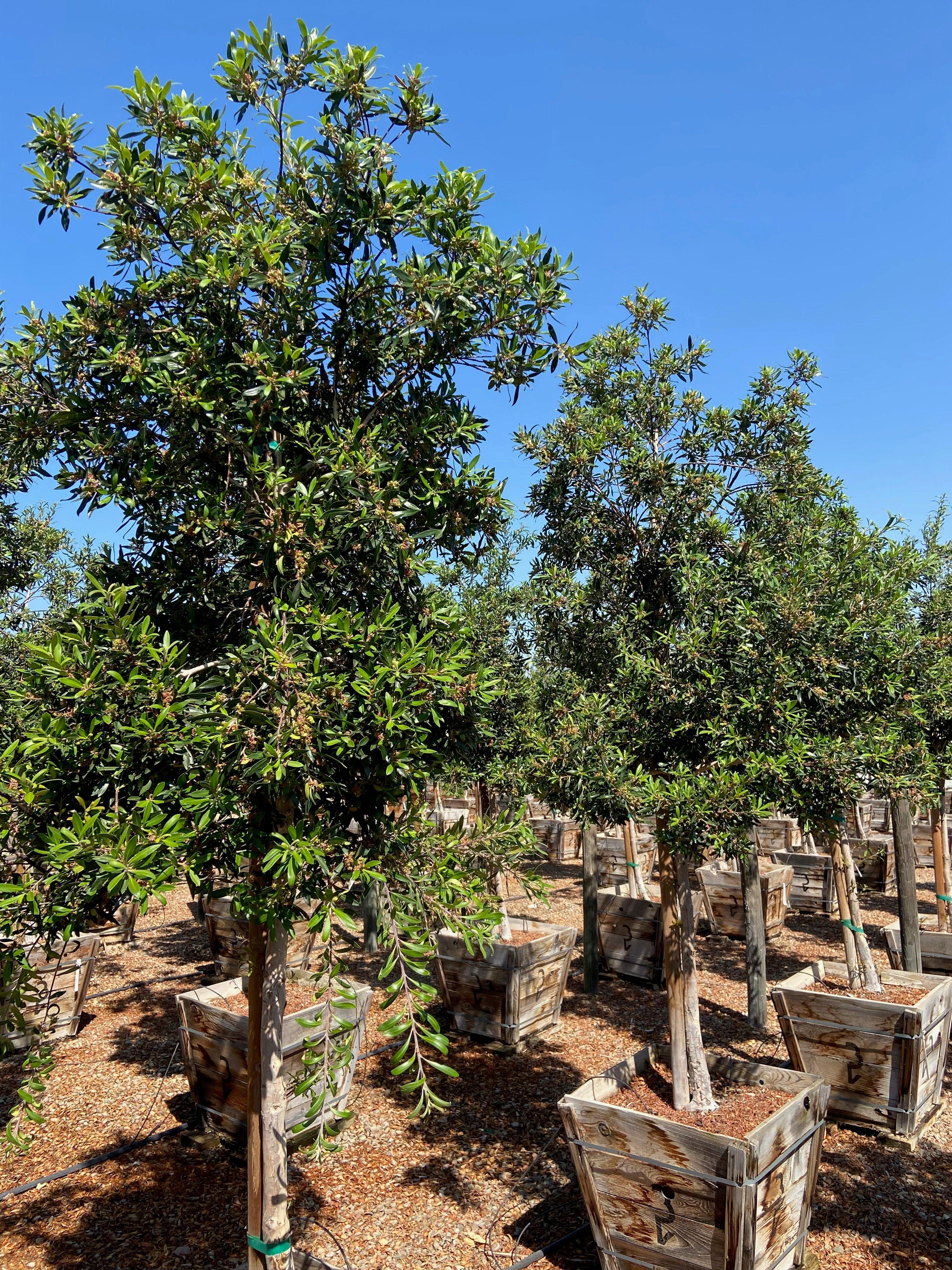
Available Sizes: 5-gallon, 15-gallon, and specimen sizes, including dwarf forms like the Dwarf Strawberry Tree Arbutus unedo 'Compacta'
Who It’s For
Ideal for:
-
Homeowners who want edible landscaping that looks polished year round
-
California gardeners looking for a drought tolerant tree with Mediterranean appeal
-
Designers creating coastal, water-wise, or wildlife-friendly gardens who may also be looking for a full-service plant nursery and landscape partner
-
Property owners who need evergreen structure, hedges, privacy, or a windbreak and might also compare with other drought-tolerant trees like the California Pepper Tree (Schinus molle)
-
Anyone who wants a patio-friendly small tree or large shrub with flowers, fruit, bark, and seasonal delight, perhaps alongside complementary specimens such as California Pepper Trees and other ornamentals
If you want a hardy evergreen that is easily grown in the right space, tolerates varied soils, supports bees and birds, and gives you edible fruit in fall and winter, Arbutus unedo fits the landscape beautifully.
Frequently Asked Questions
When do the berries ripen?
The fruit develops slowly and matures over almost a full year. Ripe fruit typically turns strawberry red from October through December, depending on climate, sun exposure, and local conditions.
Are the berries really edible?
Yes. The fruit is edible and can be eaten fresh when fully ripe. Many people prefer to cook or preserve the berries because the flavor is subtle and the seeds create a slightly gritty texture. They are excellent for jams, pies, desserts, and traditional alcoholic beverages.
How much water does it need?
Water regularly during establishment. Once established, Arbutus unedo is drought tolerant and usually needs minimal summer irrigation in many California gardens, as long as it is planted in well drained soil.
Will it attract wildlife?
Yes. The flowers attract bees and beneficial insects, while birds enjoy the winter fruit. This makes the strawberry tree a strong choice for healthy, wildlife-friendly gardens.
How fast does it grow?
It has a moderate growth rate and may take 10-15 years to reach a mature landscape size. It is not an instant giant, but its evergreen leaves, blooms, bark, and fruit provide interest while it matures.
Can it handle coastal conditions?
Yes. Arbutus unedo is notably salt-tolerant and suitable for coastal locations. It also tolerates coastal fog, sandy soils, loamy soils, and even heavy clay if drainage is good.
What problems should I watch for?
Avoid wet, poorly drained planting sites because root rot can develop in saturated soils. Dropped ripe fruit can be messy near paving, and frost may reduce flowers and fruit in colder locations.
Ready to Add Mediterranean Charm?
Stop settling for ordinary landscape trees that only look good for one season. Choose Arbutus unedo for evergreen structure, winter flowers, edible berries, wildlife value, and sculptural bark in one beautiful tree.
Yardwork can help California customers choose the right strawberry tree size, evaluate sun and shade exposure, test soil drainage, and plan placement for patios, hedges, privacy screens, or specimen planting.
Original: $85.00
-65%$85.00
$29.75Product Information
Product Information
Shipping & Returns
Shipping & Returns
Description
Year-Round Beauty with Edible Fruit Rewards
Arbutus unedo gives California gardens an evergreen, drought tolerant small tree with white flowers, ornamental bark, and edible red berries that ripen from October to December.
Commonly known as the strawberry tree, this broadleaf evergreen shrub or small tree is ideal when you want year round interest without choosing between beauty and harvest. Its glossy evergreen leaves, winter blooms, strawberry like fruits, and sculptural form make it a standout plant for Mediterranean regions, coastal gardens, patios, screens, and wildlife-friendly landscapes.
Why You’ll Love It
-
Evergreen Beauty – Glossy, leathery, dark green evergreen leaves provide structure and color in every season. The strawberry tree features glossy, leathery, dark green leaves that can grow up to 4 inches long, with serrate margins and red stems.
-
Edible Harvest – Sweet red berries can be eaten fresh when fully ripe, though the flavor is mild and the seeds are noticeable. The fruit of Arbutus unedo is edible and can be used in various culinary applications, including making jams, pies, and alcoholic beverages.
-
Pollinator Magnet – White flowers to pinkish-white flowers appear in fall and winter, giving bees and beneficial insects nectar when fewer plants are in bloom. Arbutus unedo provides valuable ecological support by providing nectar for late-season pollinators and winter fruit for birds.
-
Low Maintenance – This hardy tree is drought tolerant once established, making it suitable for California gardens, especially in full sun, partial shade, coastal fog, and water-wise landscapes, and it fits beautifully among other flowering trees for California gardens.
-
Multi-Season Interest – Flowers and fruit often appear together, with round green fruit slowly maturing to red while new blooms open. The bark of Arbutus unedo features striking grayish-brown to cinnamon color that actively peels and flakes away to expose a smooth reddish-brown inner layer.
What Makes It Different
Most ornamental trees are decorative, and most fruit trees are productive. Arbutus unedo does both in one compact, evergreen form: it brings flowers, fruit, bark texture, birds, bees, and usable harvests into the same landscape.
Arbutus unedo is built differently:
-
Dual Purpose Design – Arbutus unedo, commonly known as the strawberry tree, is valued for its ornamental beauty, producing attractive flowers and fruits that can be used in landscape design, much like the related Arbutus 'Marina' strawberry tree. It works as a large shrub, small tree, hedge, privacy screen, or patio accent while also producing edible ripe fruit.
-
Climate Adaptability – Arbutus unedo is native to the rocky slopes, shrublands, and coastal cliffs of the Mediterranean basin, western Asia, northern Africa, and parts of western Ireland. This makes it especially suitable for Mediterranean regions and California conditions, including places like San Francisco where coastal influence, sun, shade, and drainage all matter, similar to resilient natives like the Coast Live Oak (Quercus agrifolia).
-
Unique Fruiting Schedule – This plant produces urn-shaped, aromatic, pinkish-white flowers that bloom in drooping panicles, typically from October to January, while its spherical green fruits take almost a full year to ripen, turning strawberry red when mature. That unusual timing means fall and winter bring both blooms and berries, not bare branches.
It also has a story few landscape trees can match. The Latin name unedo is often linked to the phrase meaning “I eat one,” and the strawberry tree has long appeared in southern Europe, including cultural references tied to the Italian flag, Madrid’s madroño imagery, and writers such as Giovanni Pascoli. Historically, the wood of Arbutus unedo has been prized for its use in making flutes and has cultural significance in various regions, including being featured in art and folklore.
How To Have Success In Your Garden
-
Plant in Well-Draining Location
Choose a spot in full sun to partial shade with well drained soil. Arbutus unedo is notably salt-tolerant, making it excellent for coastal locations, and it can adapt to full sun or partial shade. -
Establish Root System
Water regularly during the first growing season so the plant can establish a healthy, deeply anchoring root system. This species prefers full sun to part shade and can tolerate some drought once established. The plant can be useful to manage soil erosion due to its deeply anchoring root system. -
Enjoy Continuous Rewards
Once established, the tree becomes easier to maintain and rewards you with flowers and fruit through the cooler months. Bees forage the late-season flowers of Arbutus unedo to yield a highly prized artisanal honey known as Sardinian corbezzolo honey, while birds eat the winter fruit.
Short-term care is simple: avoid saturated soils, protect young trees from extreme freezes where possible, and do not over-prune the branches if you want the best fruit set. Poor drainage can lead to root rot, so planting correctly matters more than frequent maintenance, especially if you pair your strawberry tree with other evergreen screens like Fern Pine (Podocarpus gracilior).
Product Details
-
Botanical Name: Arbutus unedo
-
Common Name: Strawberry tree, madrone, madroño
-
Plant Type: Broadleaf evergreen shrub or small tree
-
Mature Size: Arbutus unedo, commonly known as the strawberry tree, is a broadleaf evergreen shrub or small tree that typically matures to a height of 10-15 feet, but can occasionally reach up to 30 feet tall.
-
Typical Landscape Size: 15-25 feet tall, 10-15 feet wide
-
Sun Requirements: Full sun to partial shade
-
Soil Needs: Arbutus unedo is winter hardy to USDA Zones 7-10 and thrives in average, consistently moist to dry, well-drained soils.
-
Soil Adaptability: Arbutus unedo can grow in sandy to loamy soils and is tolerant of heavy clay, making it versatile for different soil types.
-
Hardiness: USDA zones 7-10
-
Water Needs: Moderate during establishment; low once established
-
Growth Rate: Moderate, usually forming a great shape over time
-
Flowers: Urn-shaped, aromatic, pinkish-white to white flowers in drooping clusters
-
Fruit: Round, strawberry like fruits that ripen red; edible and suitable for jams, pies, desserts, beverages, or being eaten fresh when ripe
-
Bark: Peeling grayish-brown to cinnamon bark with reddish-brown inner bark
-
Wildlife Value: Attracts bees, late-season pollinators, beneficial insects, and birds
-
Landscape Uses: Arbutus unedo is frequently utilized in water-wise landscaping as an architectural specimen, a thick privacy screen, or a coastal windbreak, and it combines well with other privacy trees and evergreen screens.
-
Resilience: Arbutus unedo features a specialized underground organ called a lignotuber, allowing the tree to vigorously resprout from the base following severe wildfires or heavy freezes.
-
Available Sizes: 5-gallon, 15-gallon, and specimen sizes, including dwarf forms like the Dwarf Strawberry Tree Arbutus unedo 'Compacta'
Who It’s For
Ideal for:
-
Homeowners who want edible landscaping that looks polished year round
-
California gardeners looking for a drought tolerant tree with Mediterranean appeal
-
Designers creating coastal, water-wise, or wildlife-friendly gardens who may also be looking for a full-service plant nursery and landscape partner
-
Property owners who need evergreen structure, hedges, privacy, or a windbreak and might also compare with other drought-tolerant trees like the California Pepper Tree (Schinus molle)
-
Anyone who wants a patio-friendly small tree or large shrub with flowers, fruit, bark, and seasonal delight, perhaps alongside complementary specimens such as California Pepper Trees and other ornamentals
If you want a hardy evergreen that is easily grown in the right space, tolerates varied soils, supports bees and birds, and gives you edible fruit in fall and winter, Arbutus unedo fits the landscape beautifully.
Frequently Asked Questions
When do the berries ripen?
The fruit develops slowly and matures over almost a full year. Ripe fruit typically turns strawberry red from October through December, depending on climate, sun exposure, and local conditions.
Are the berries really edible?
Yes. The fruit is edible and can be eaten fresh when fully ripe. Many people prefer to cook or preserve the berries because the flavor is subtle and the seeds create a slightly gritty texture. They are excellent for jams, pies, desserts, and traditional alcoholic beverages.
How much water does it need?
Water regularly during establishment. Once established, Arbutus unedo is drought tolerant and usually needs minimal summer irrigation in many California gardens, as long as it is planted in well drained soil.
Will it attract wildlife?
Yes. The flowers attract bees and beneficial insects, while birds enjoy the winter fruit. This makes the strawberry tree a strong choice for healthy, wildlife-friendly gardens.
How fast does it grow?
It has a moderate growth rate and may take 10-15 years to reach a mature landscape size. It is not an instant giant, but its evergreen leaves, blooms, bark, and fruit provide interest while it matures.
Can it handle coastal conditions?
Yes. Arbutus unedo is notably salt-tolerant and suitable for coastal locations. It also tolerates coastal fog, sandy soils, loamy soils, and even heavy clay if drainage is good.
What problems should I watch for?
Avoid wet, poorly drained planting sites because root rot can develop in saturated soils. Dropped ripe fruit can be messy near paving, and frost may reduce flowers and fruit in colder locations.
Ready to Add Mediterranean Charm?
Stop settling for ordinary landscape trees that only look good for one season. Choose Arbutus unedo for evergreen structure, winter flowers, edible berries, wildlife value, and sculptural bark in one beautiful tree.
Yardwork can help California customers choose the right strawberry tree size, evaluate sun and shade exposure, test soil drainage, and plan placement for patios, hedges, privacy screens, or specimen planting.