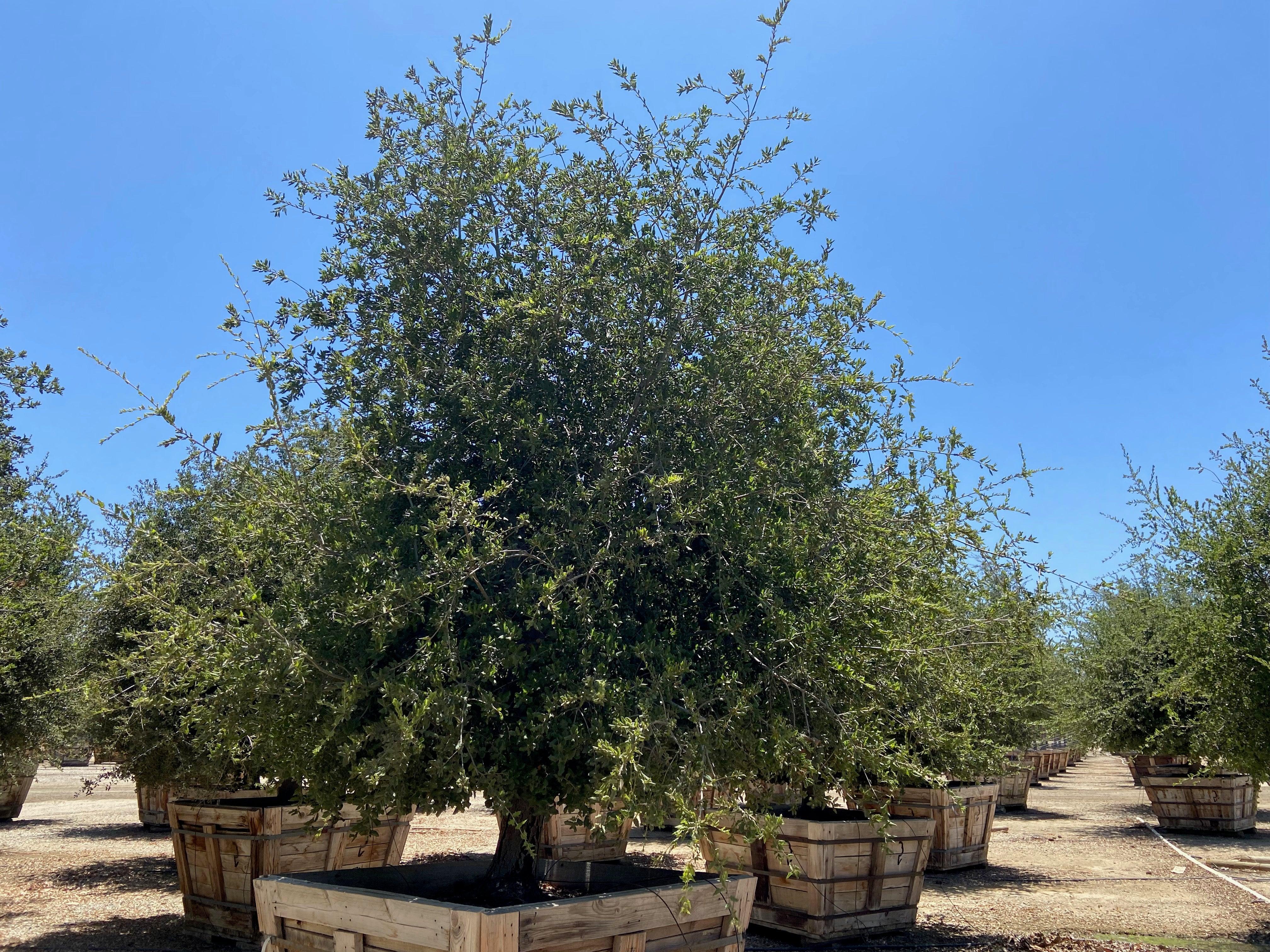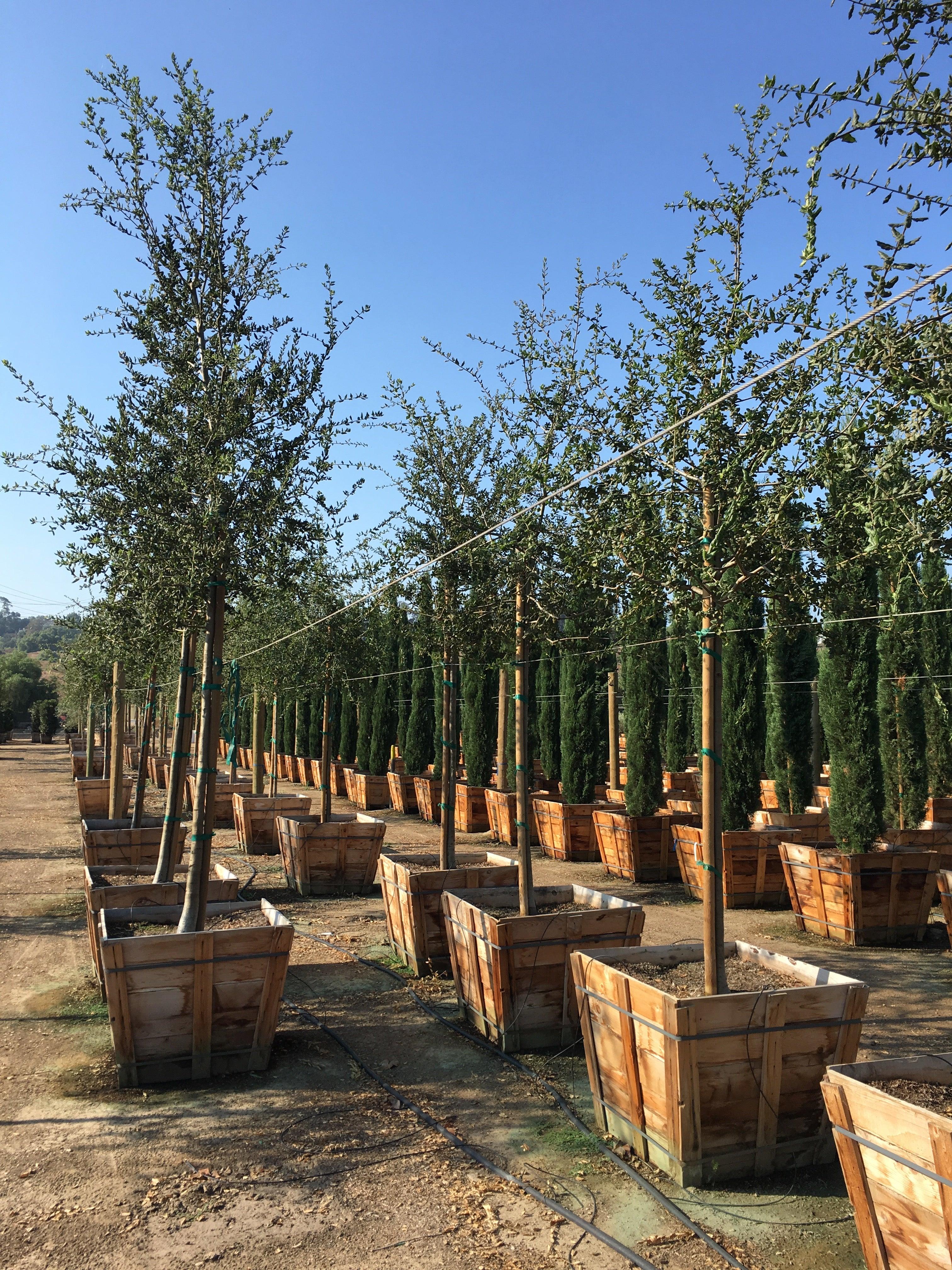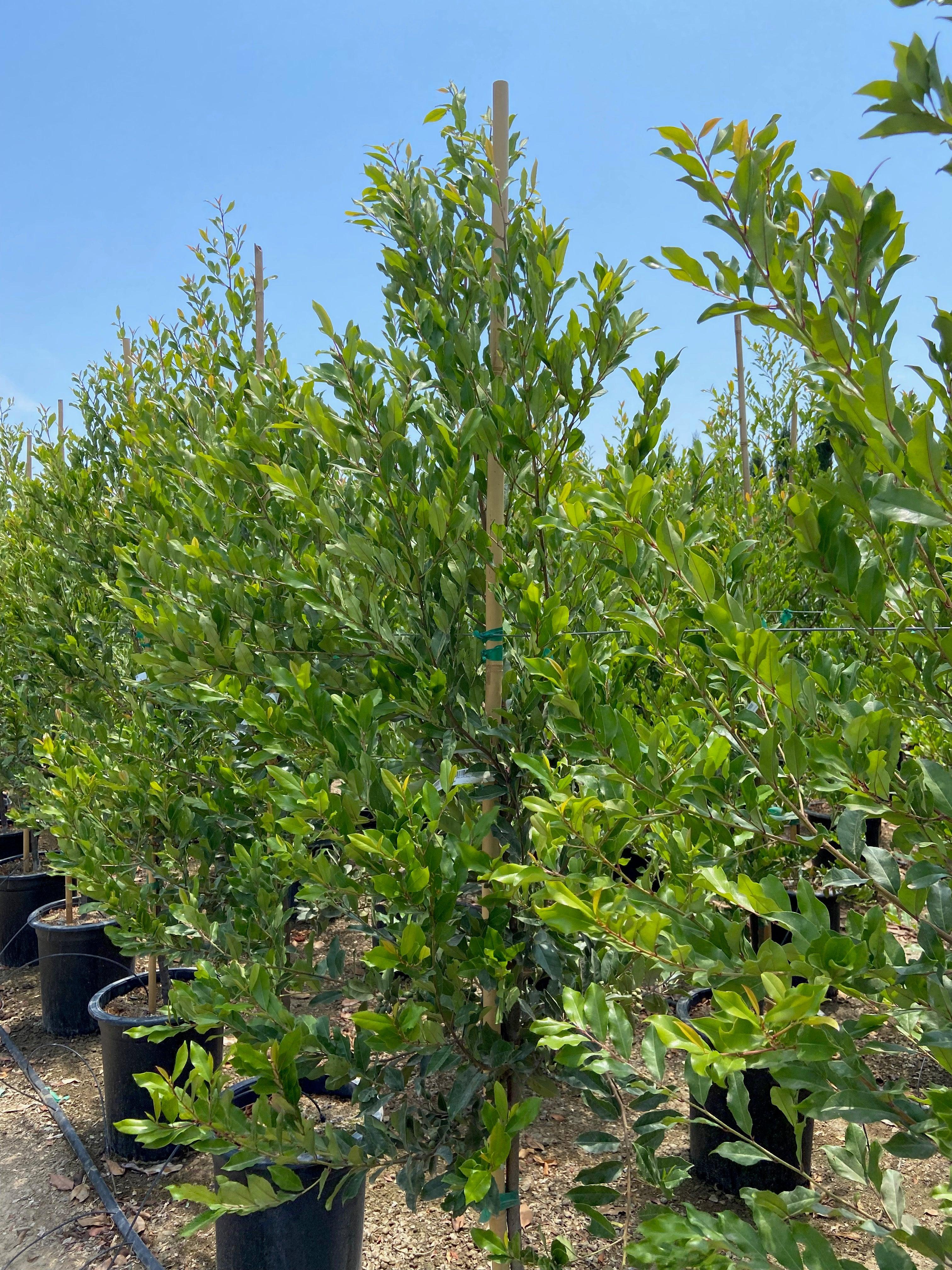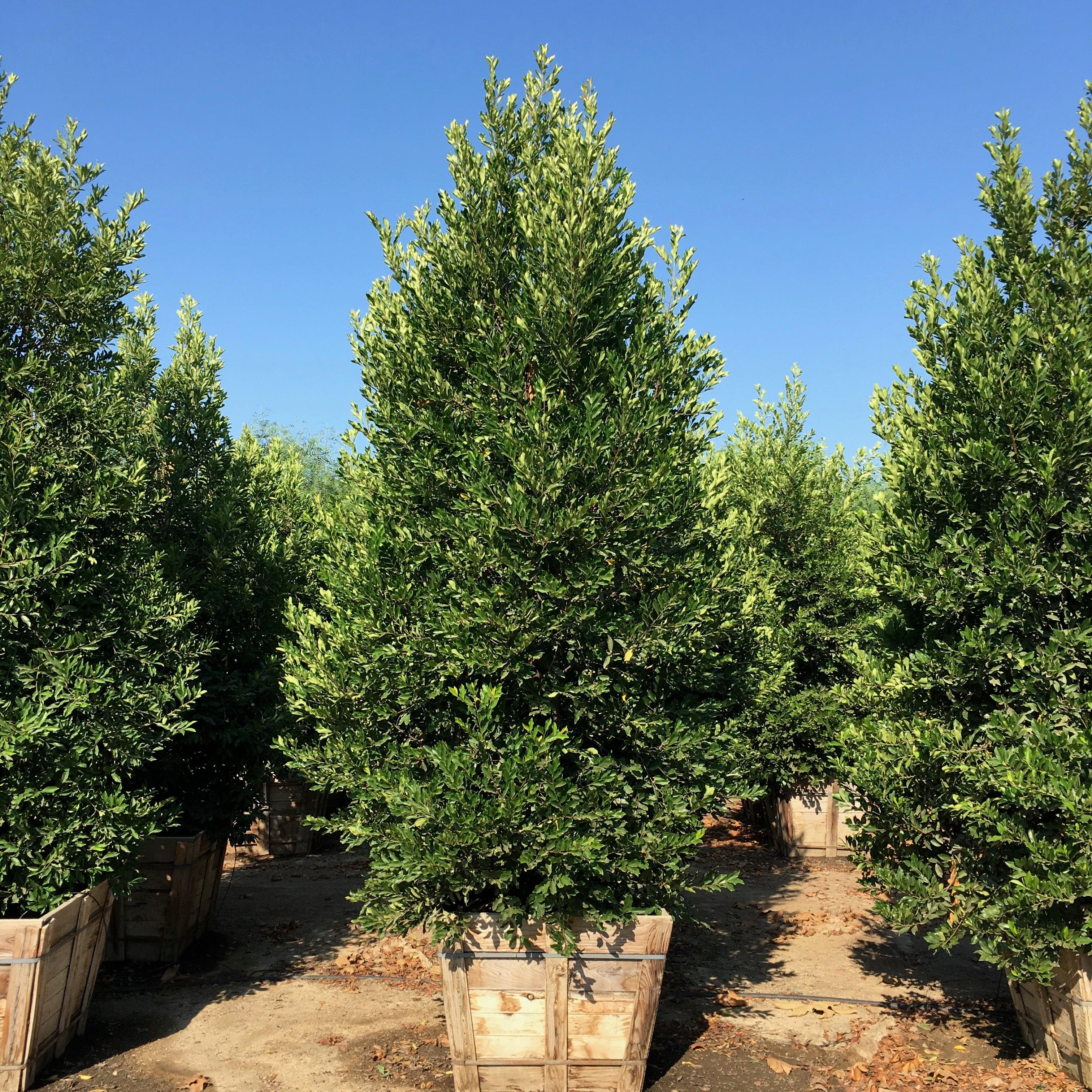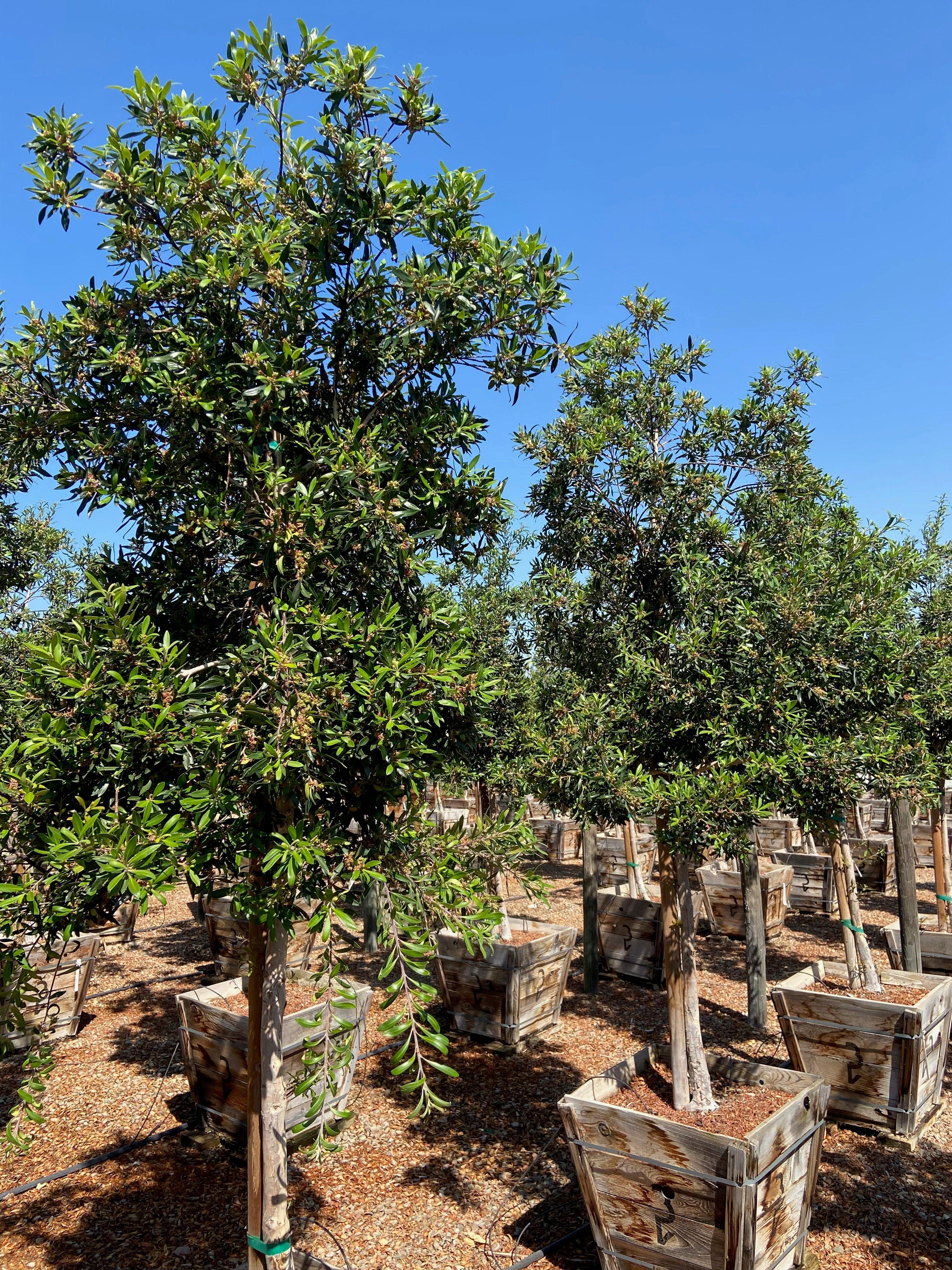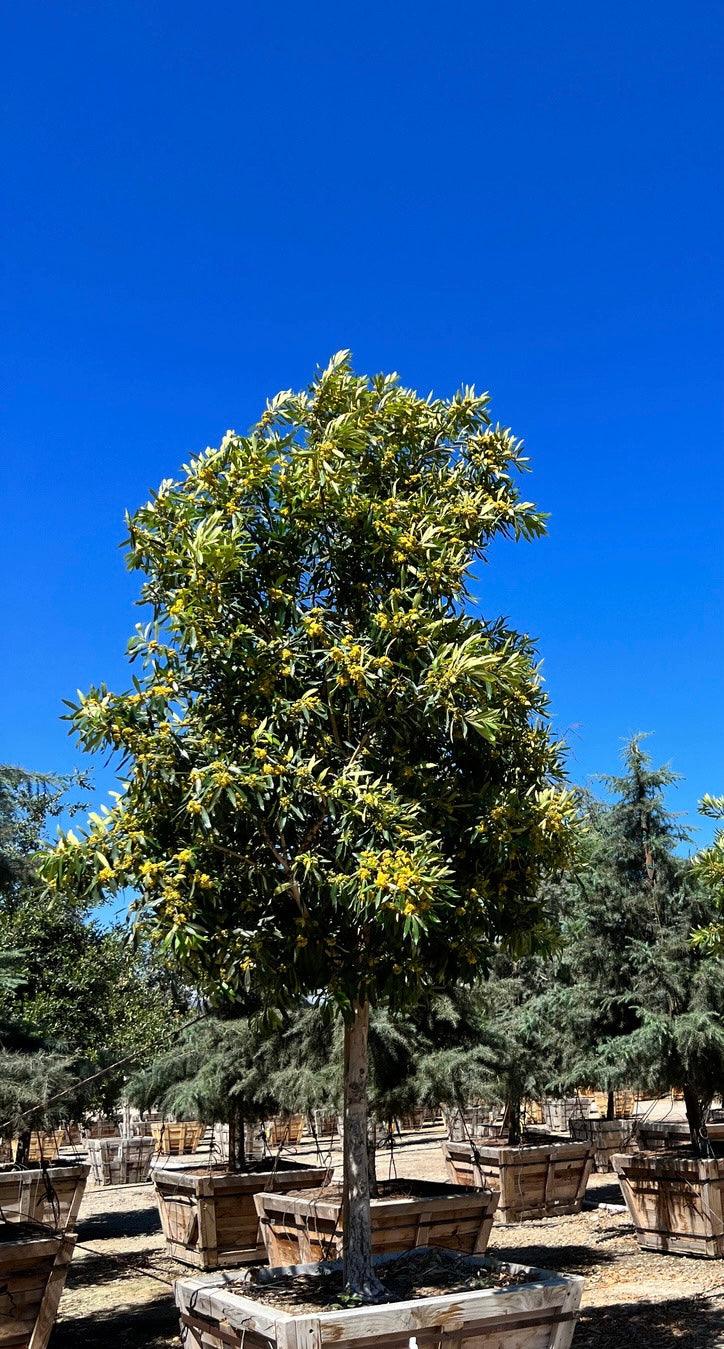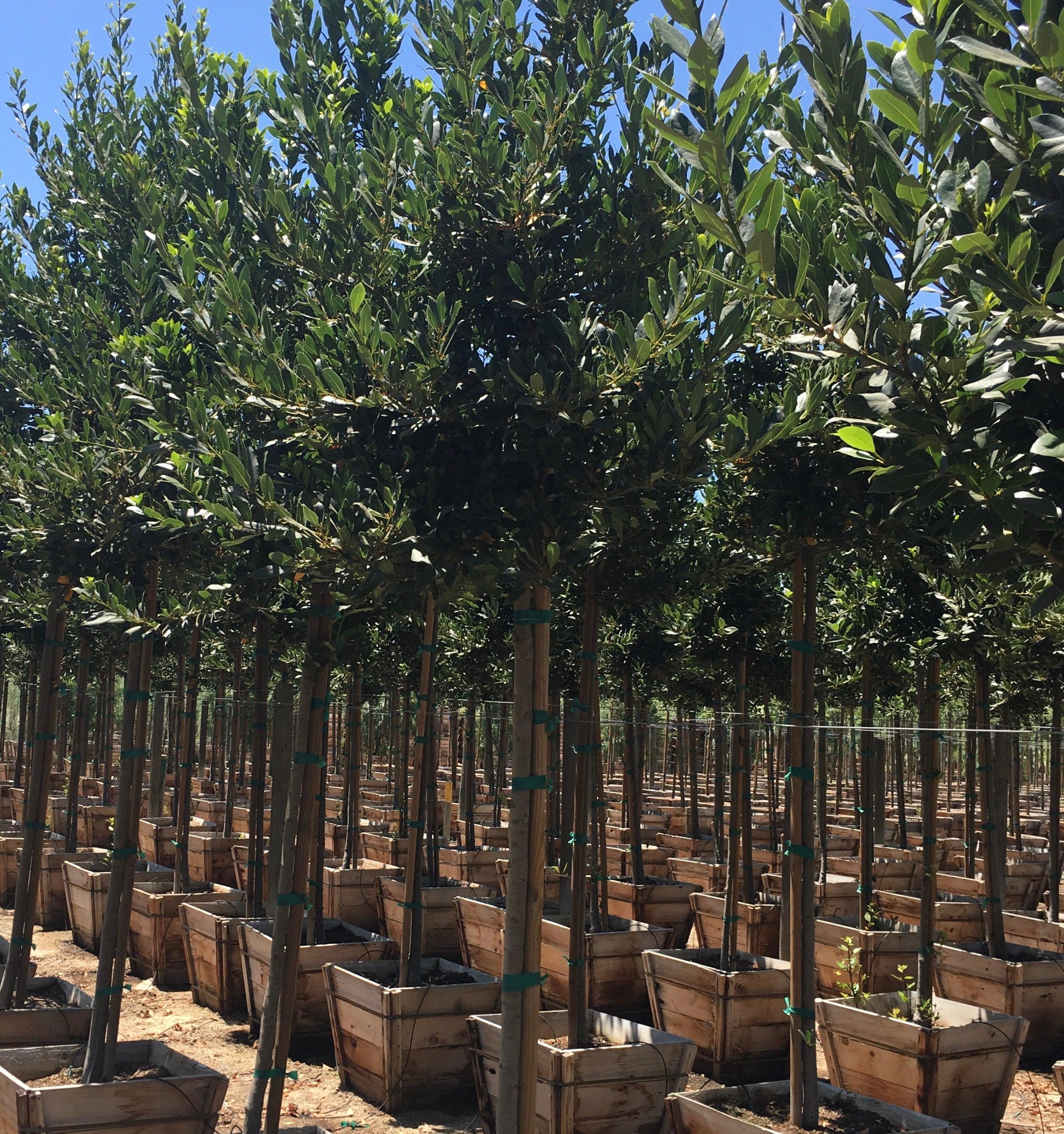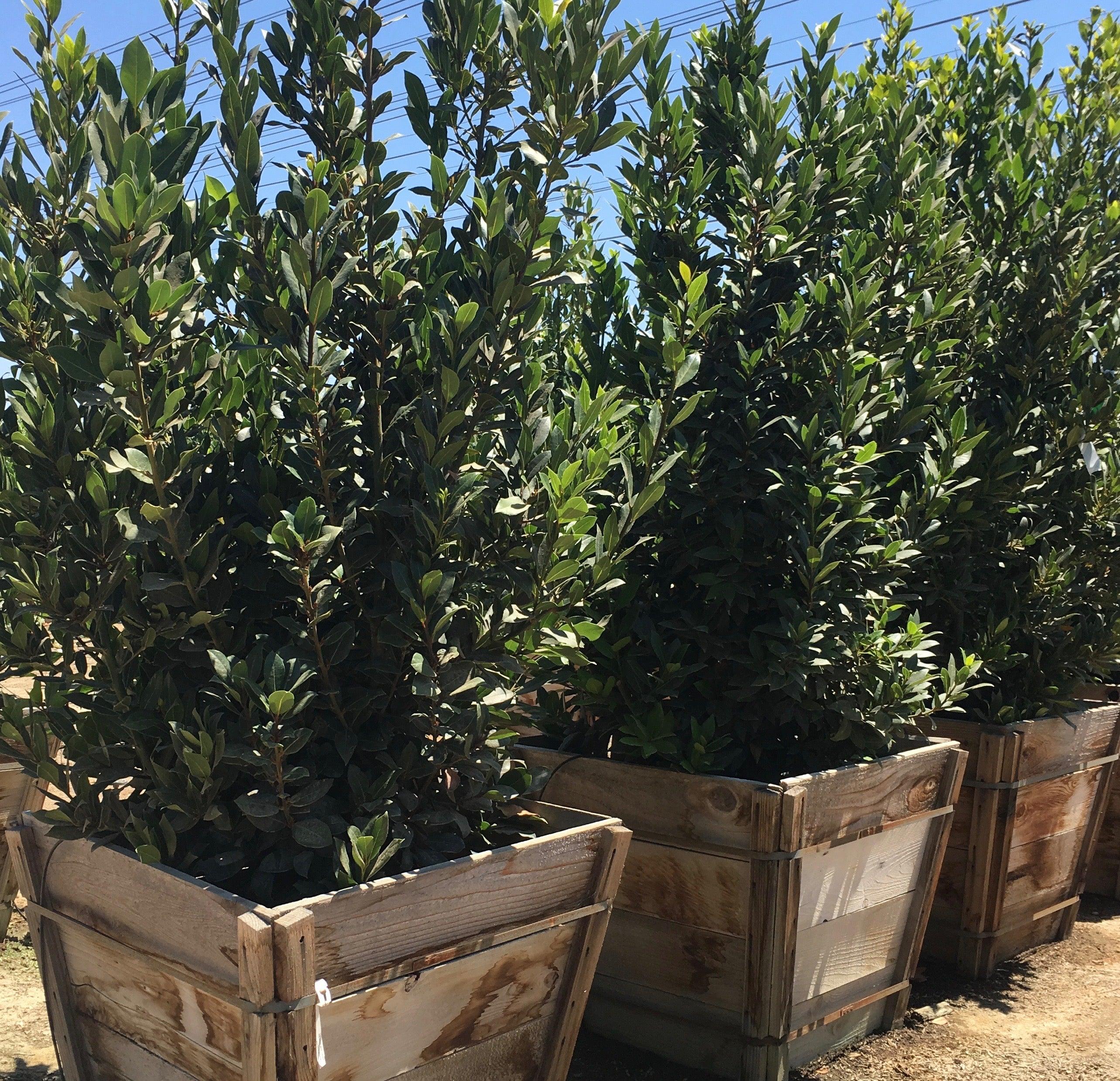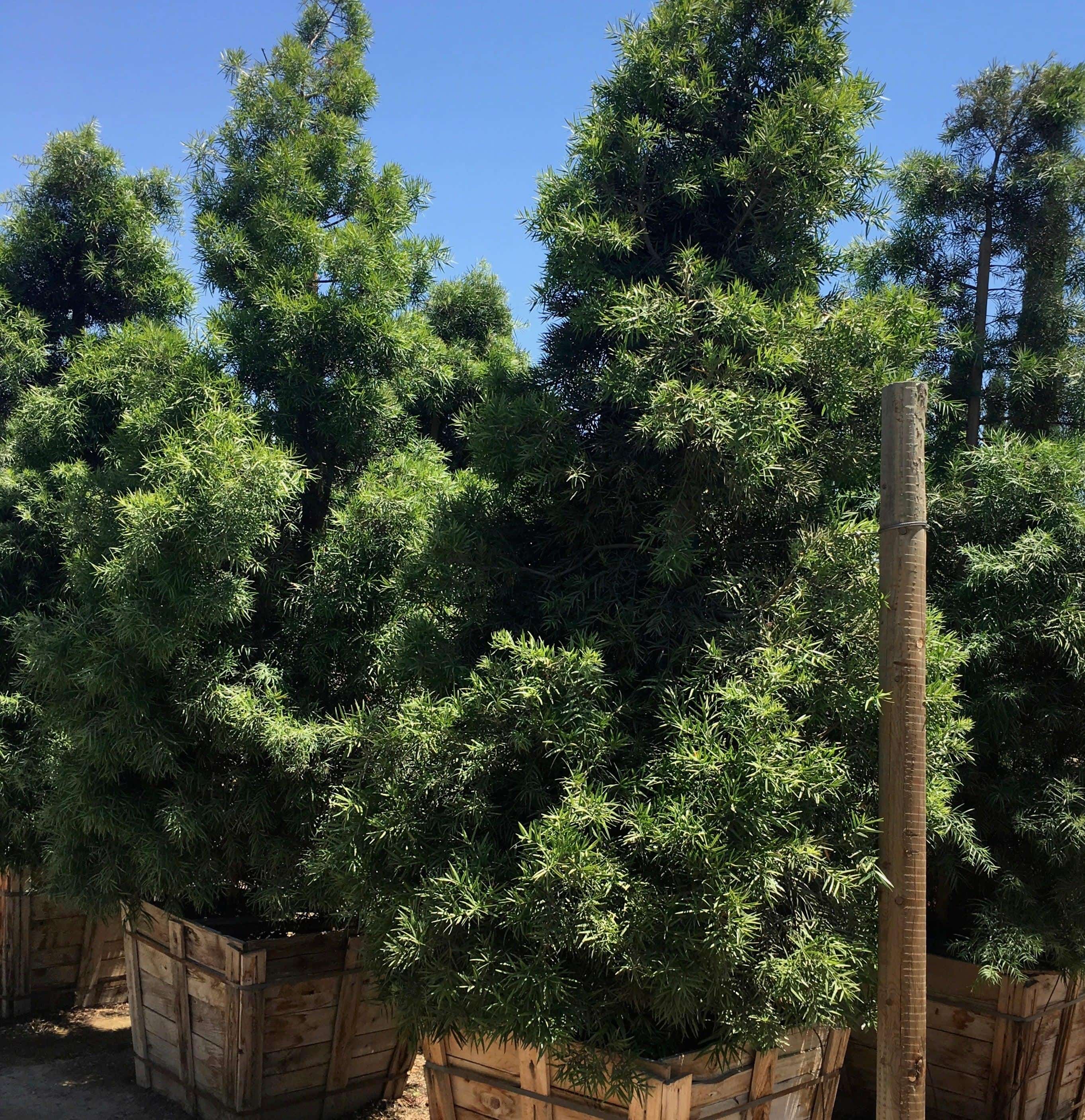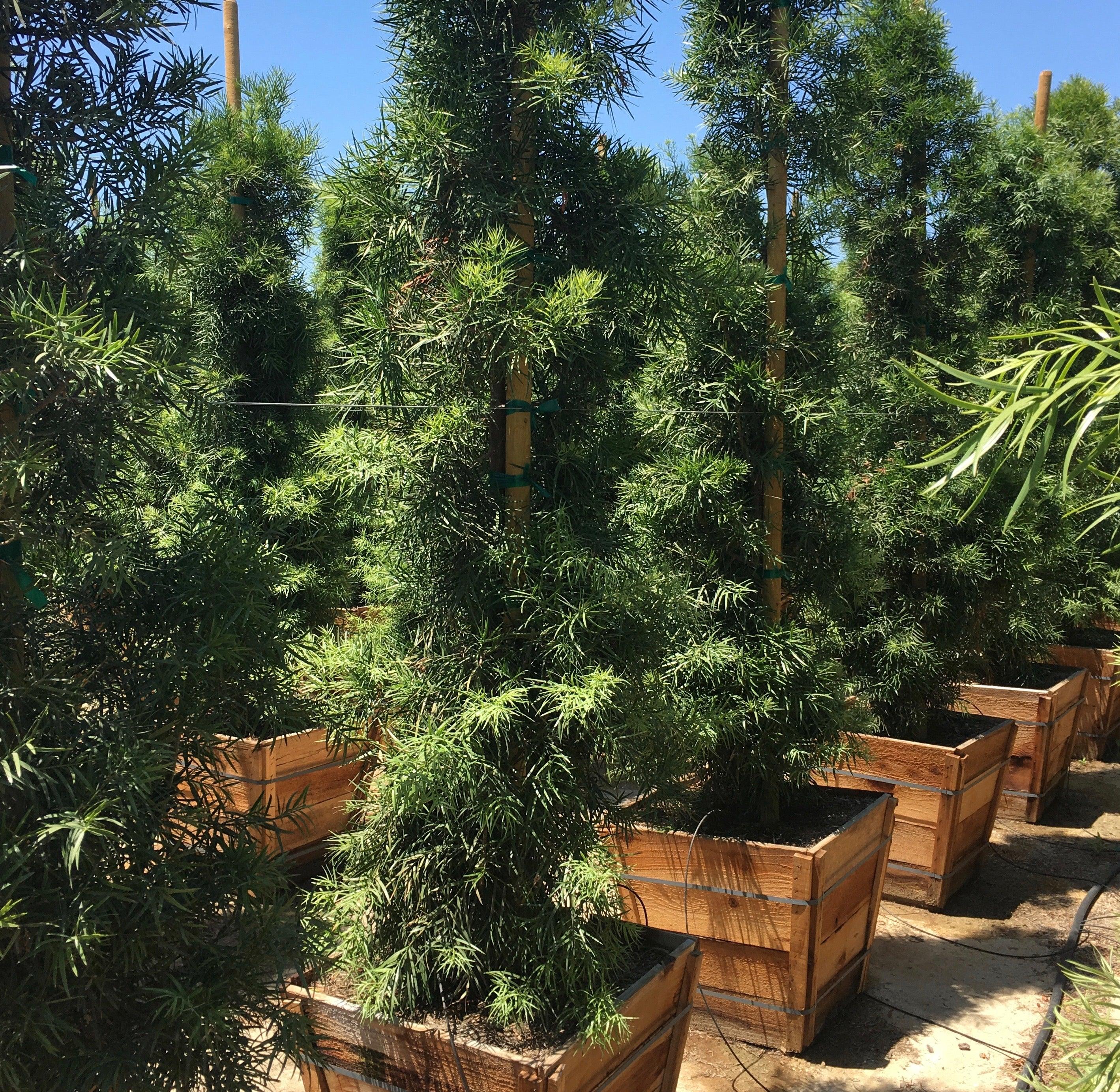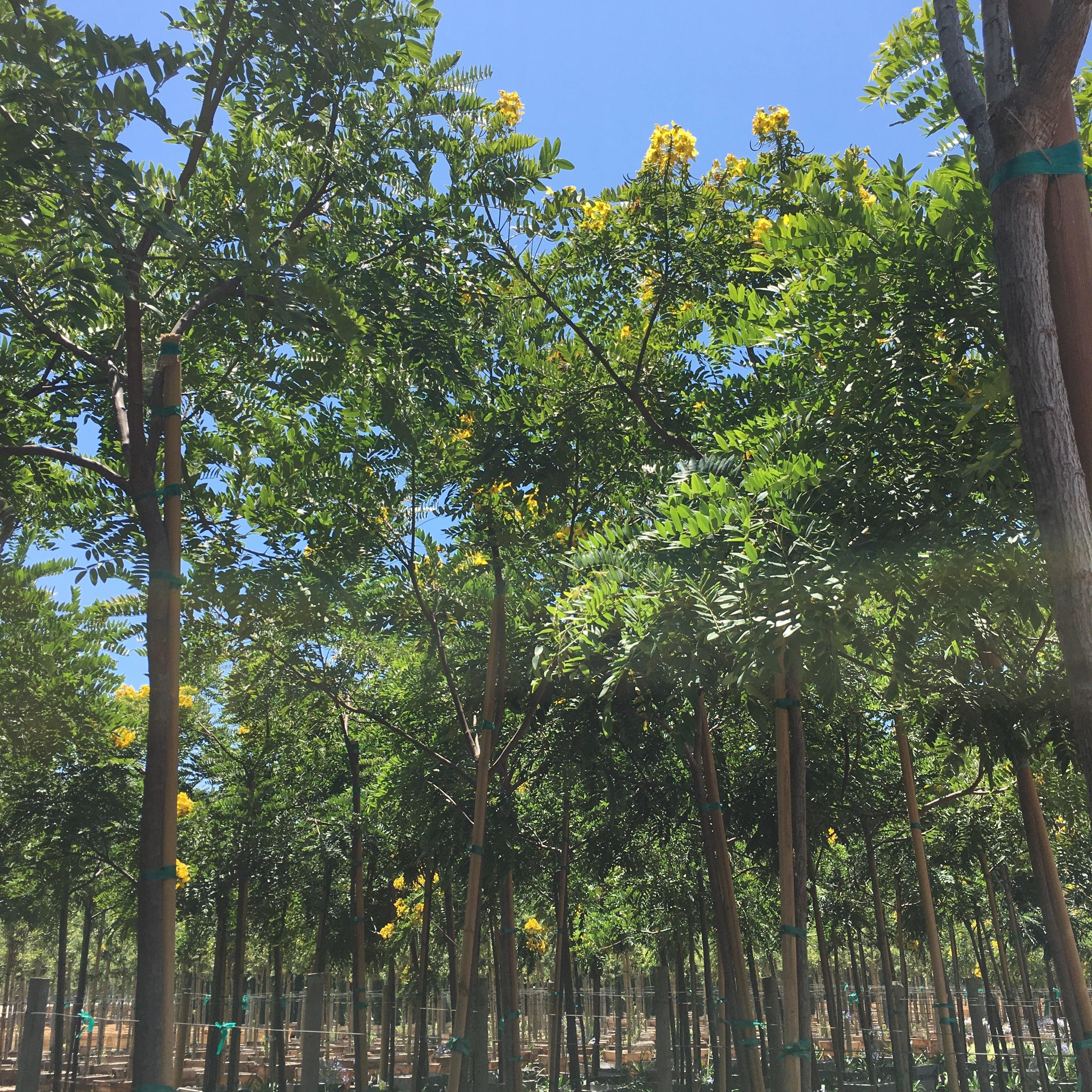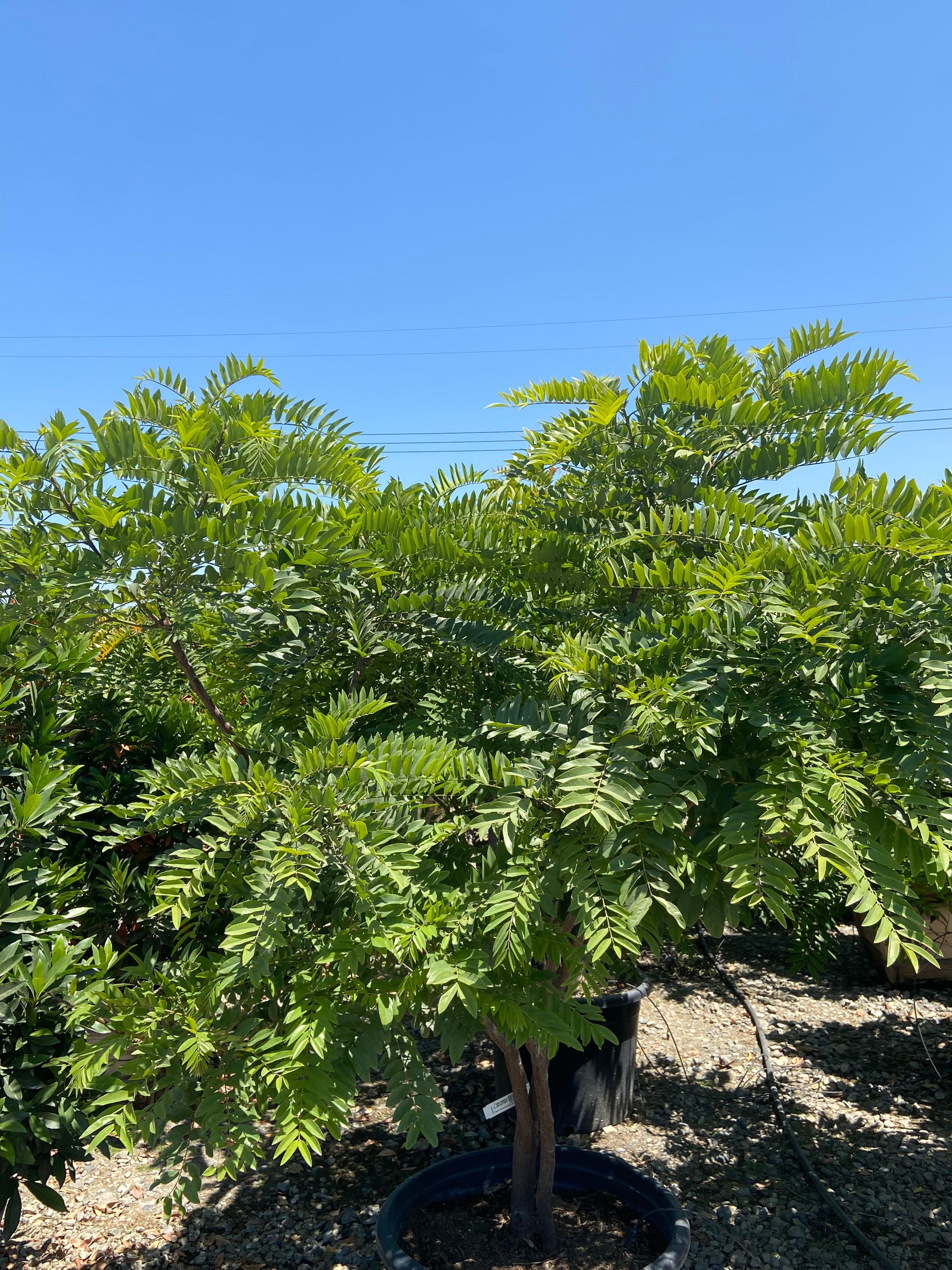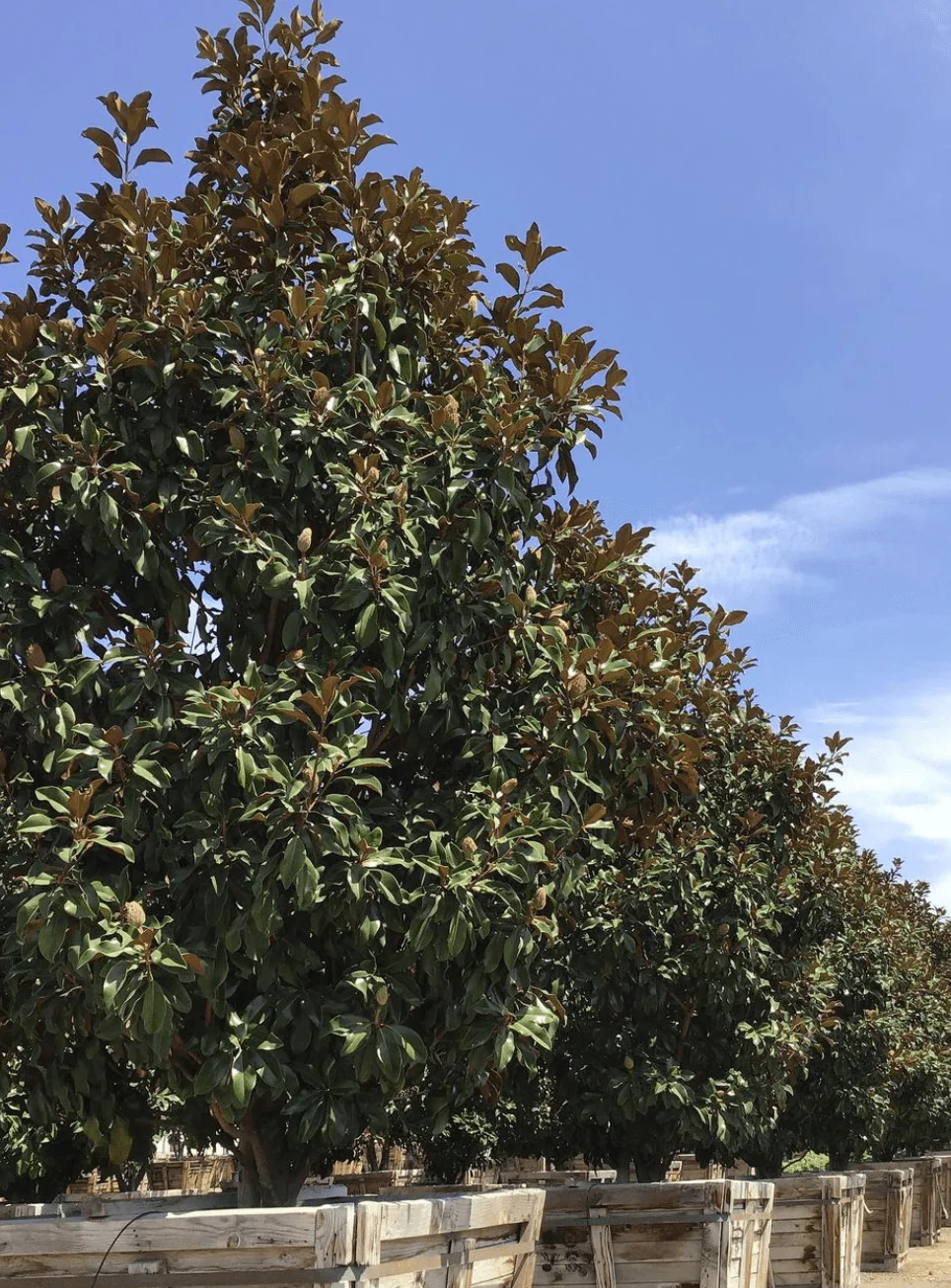
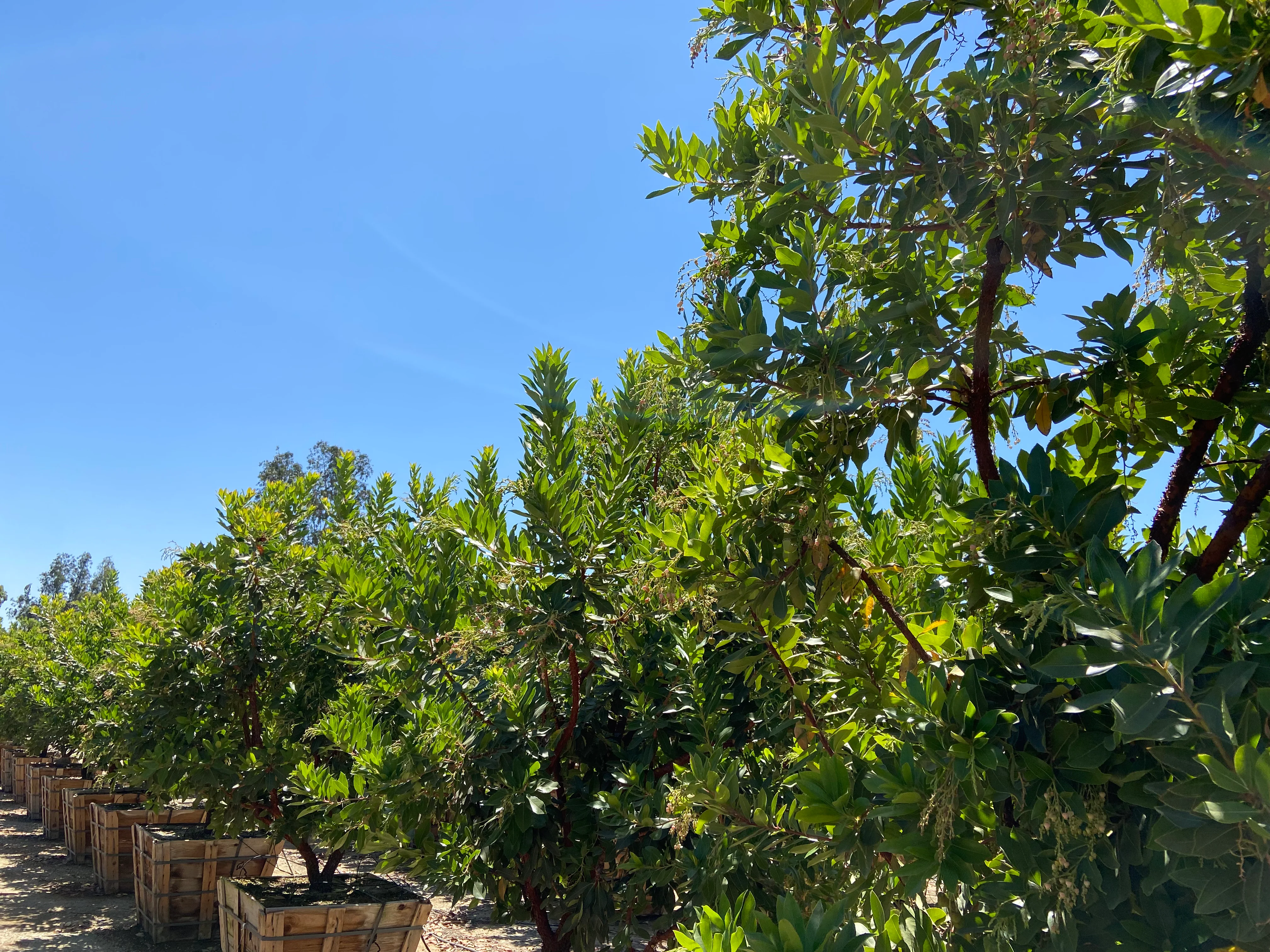
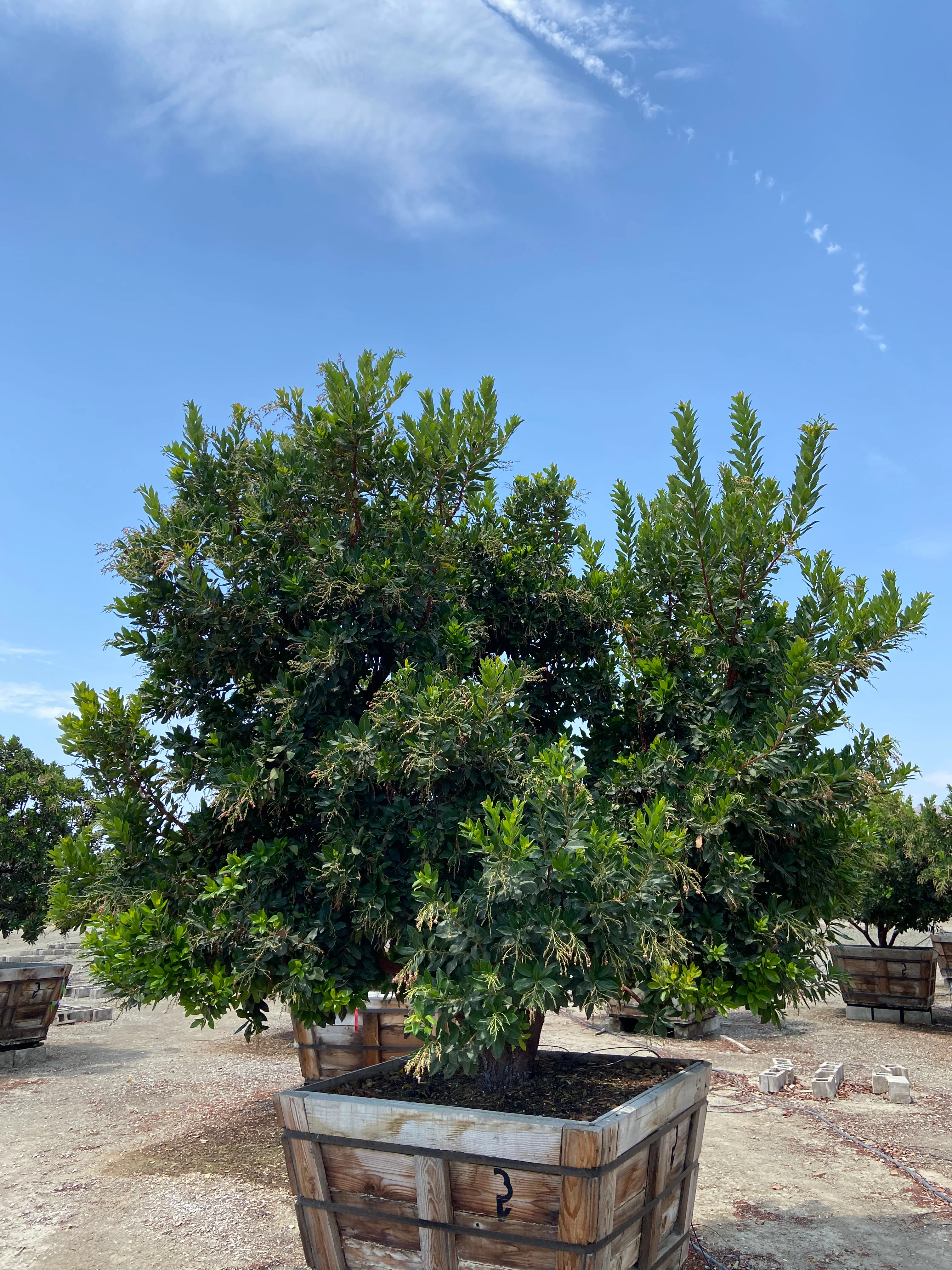
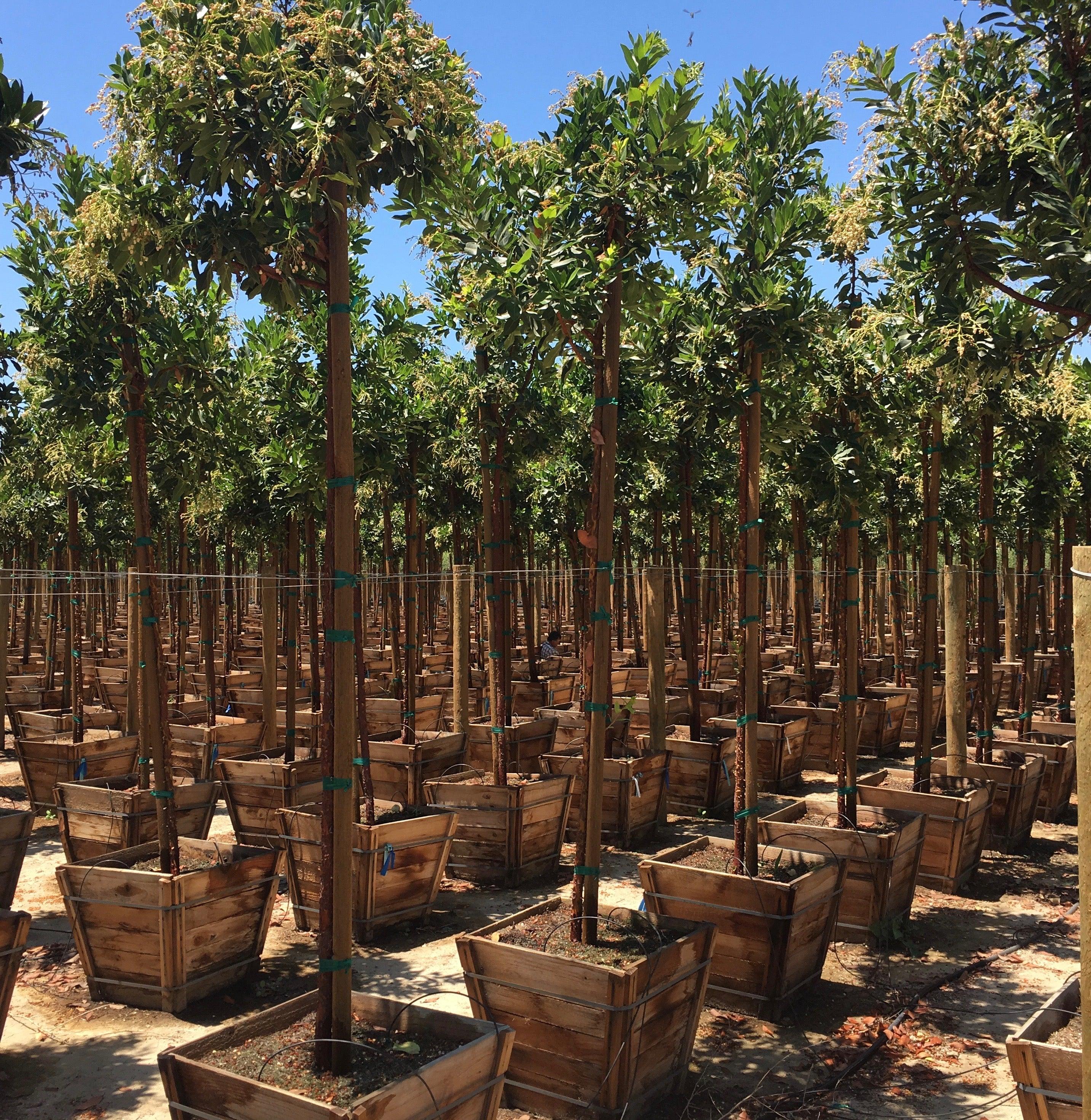
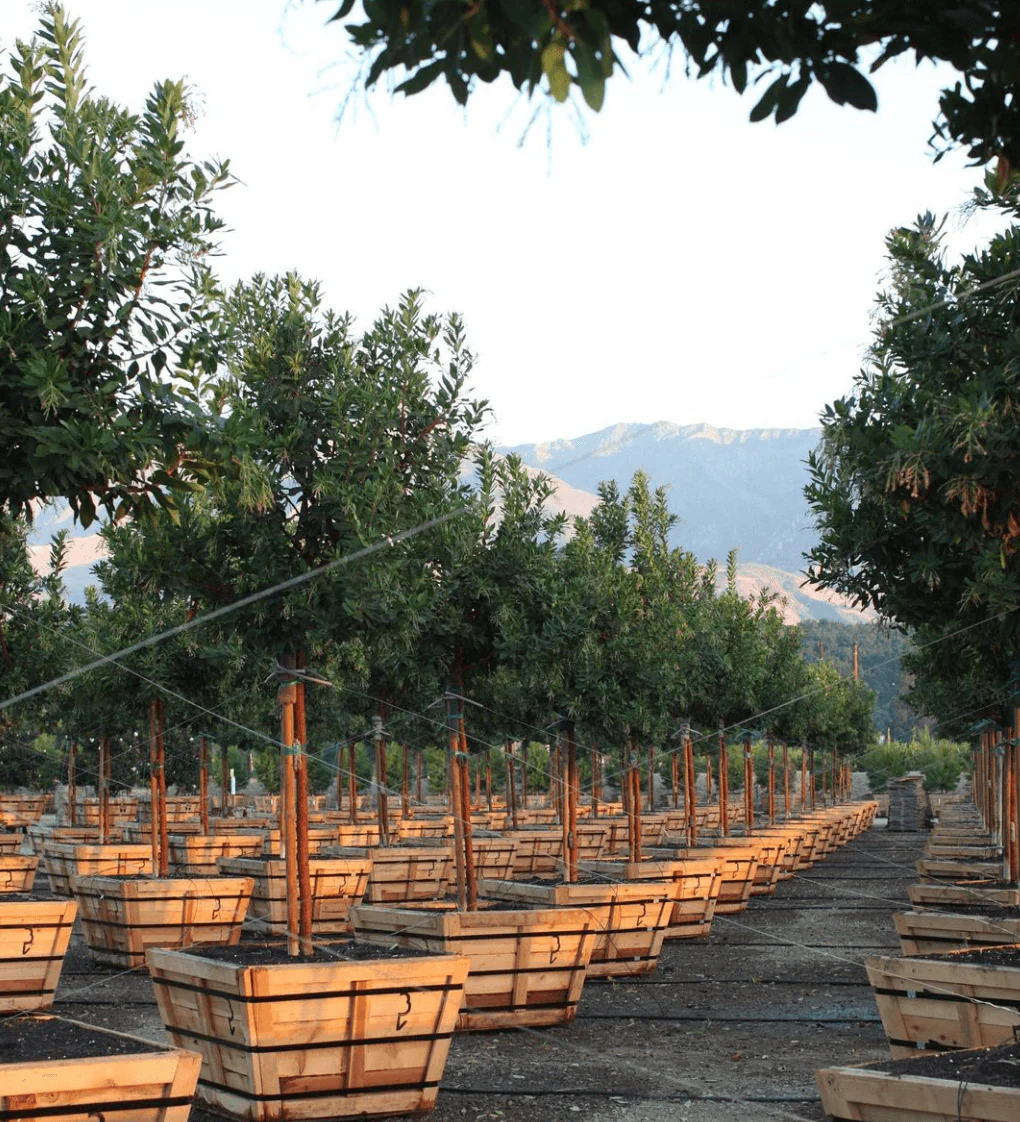
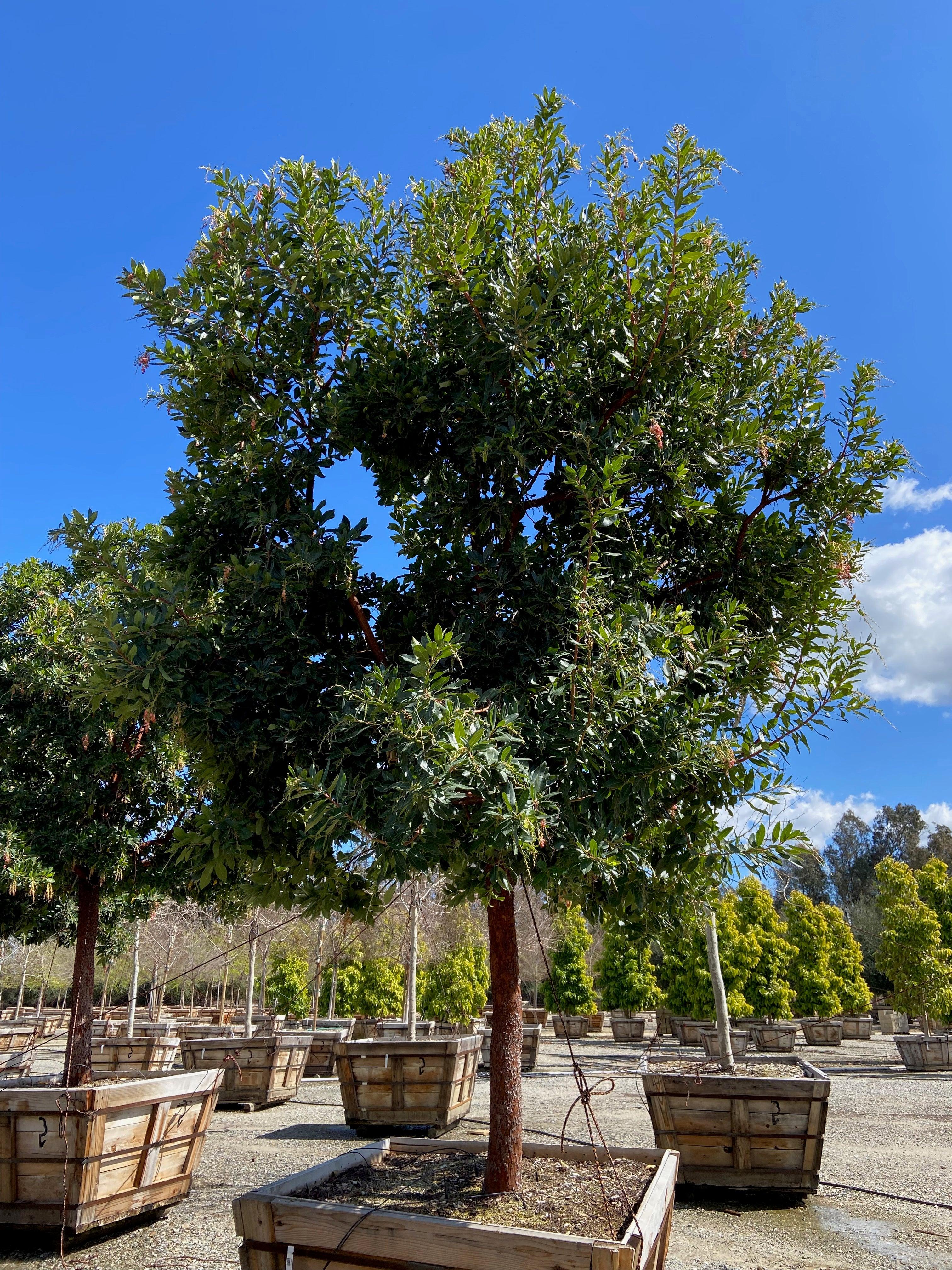
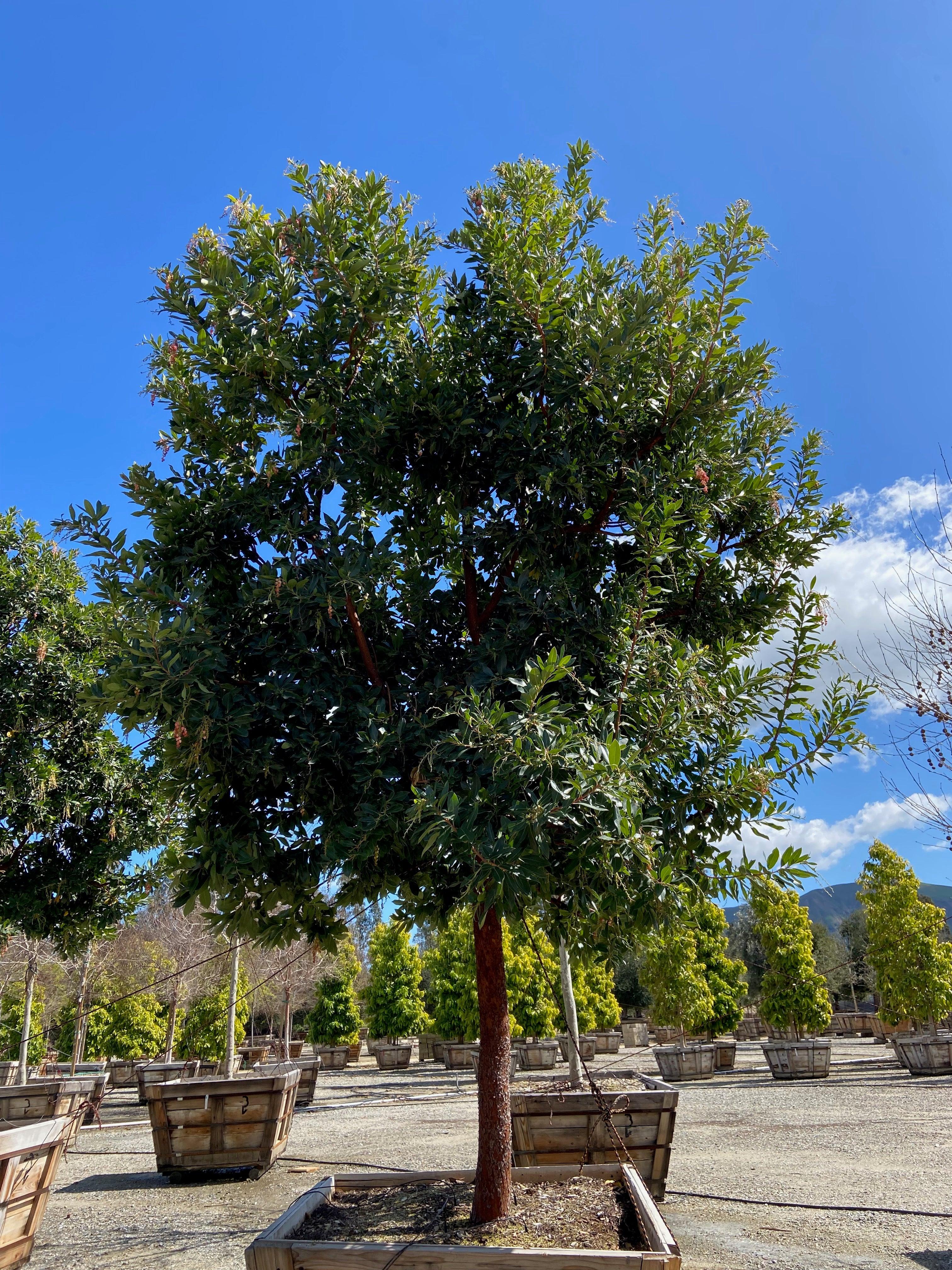
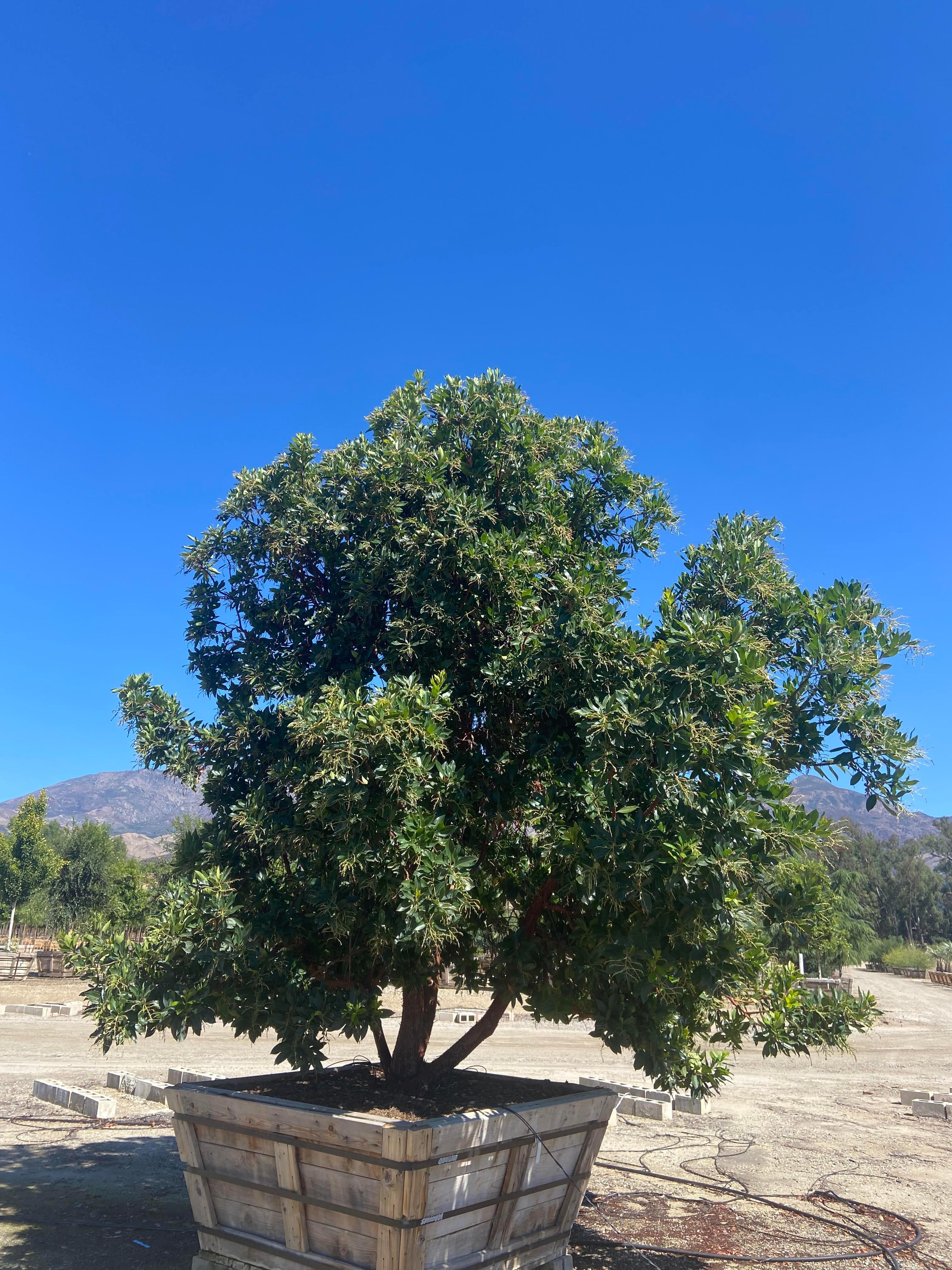
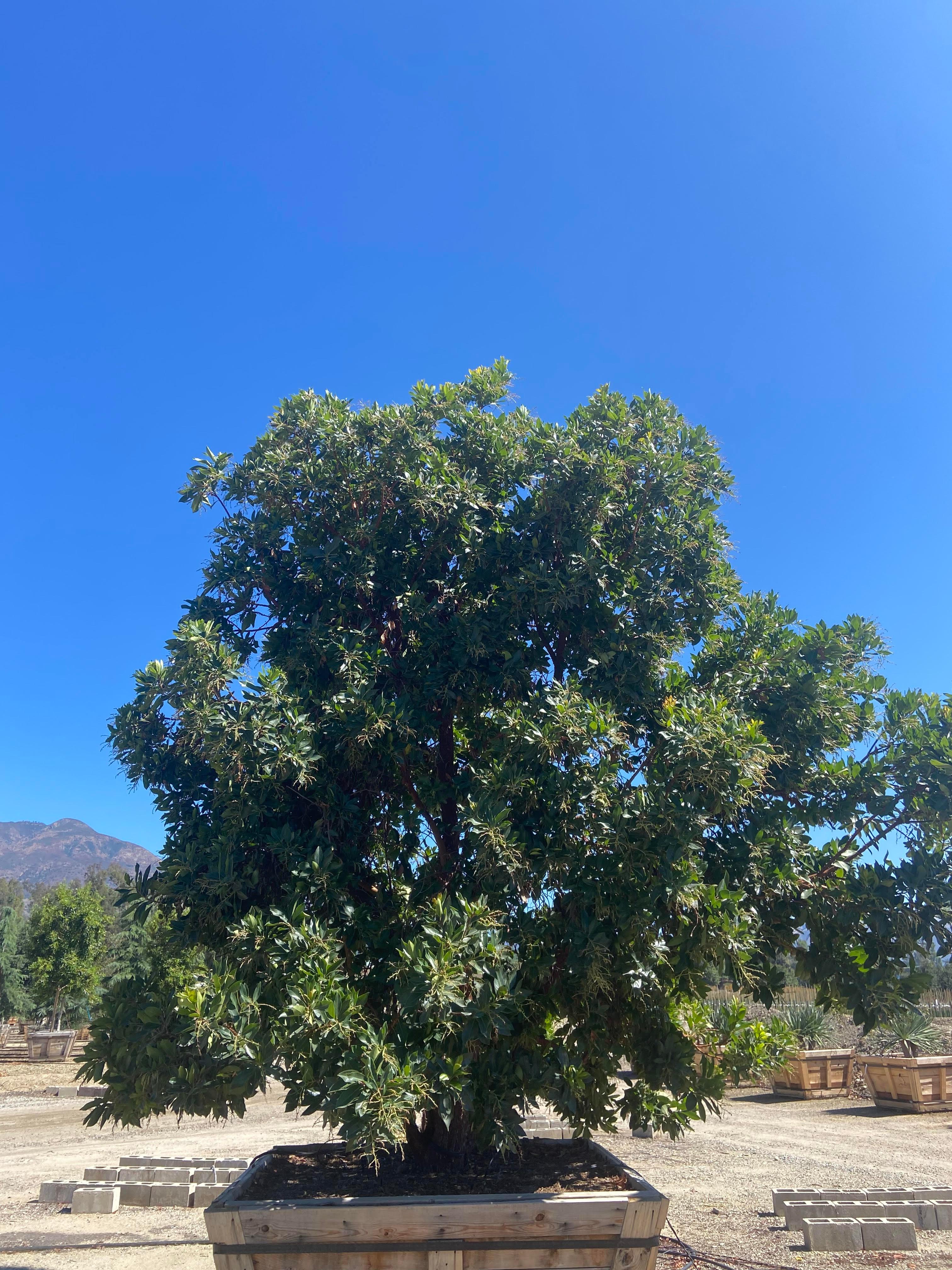
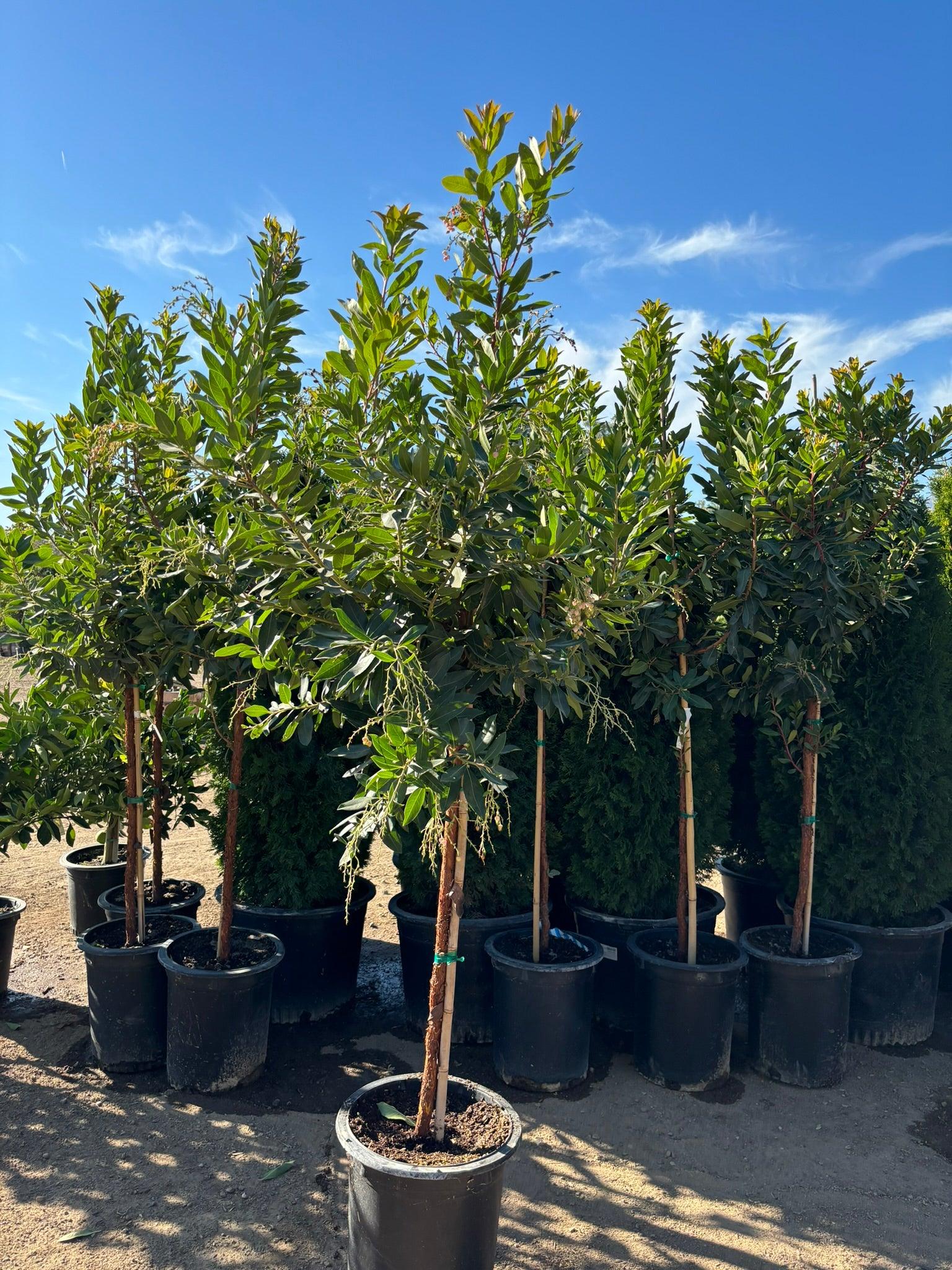
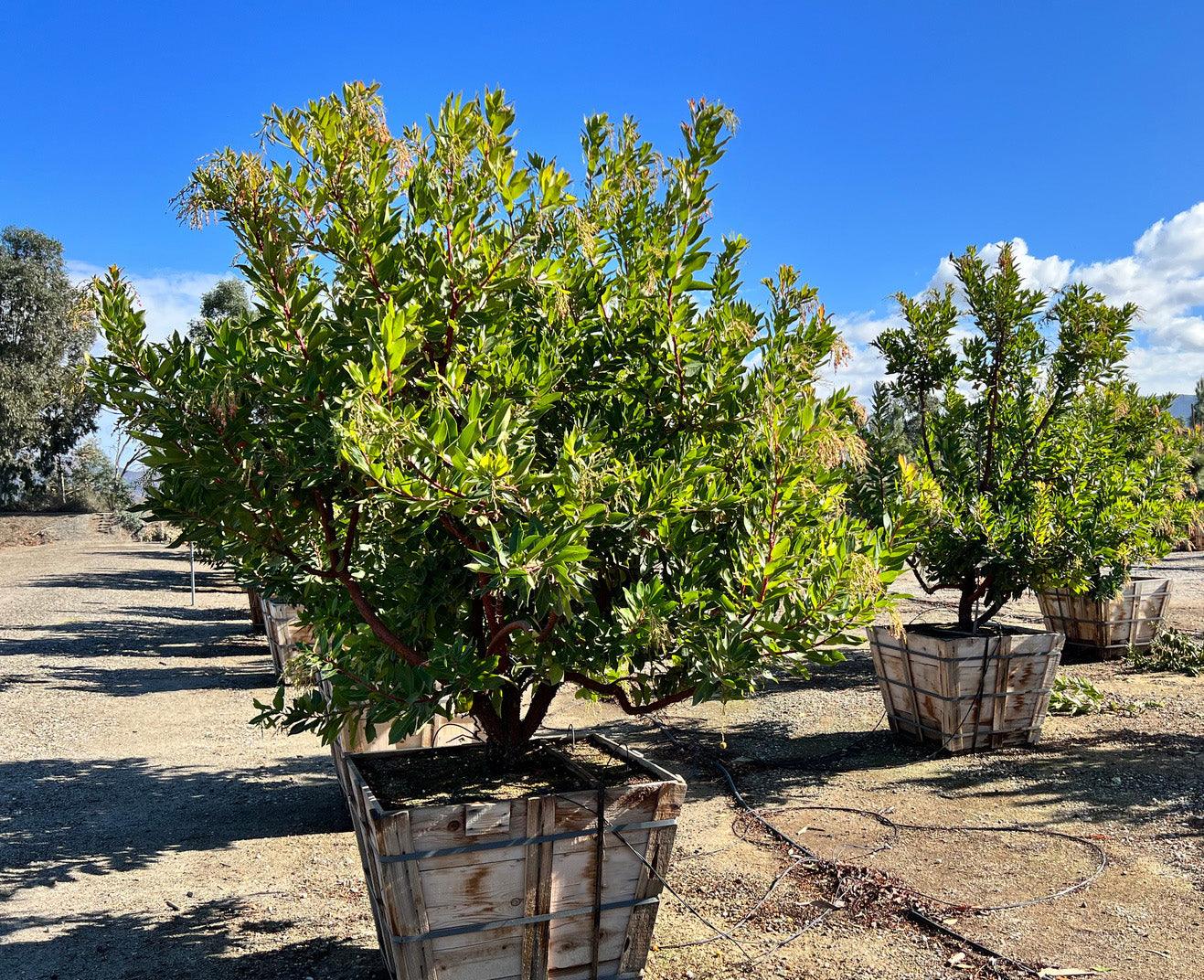
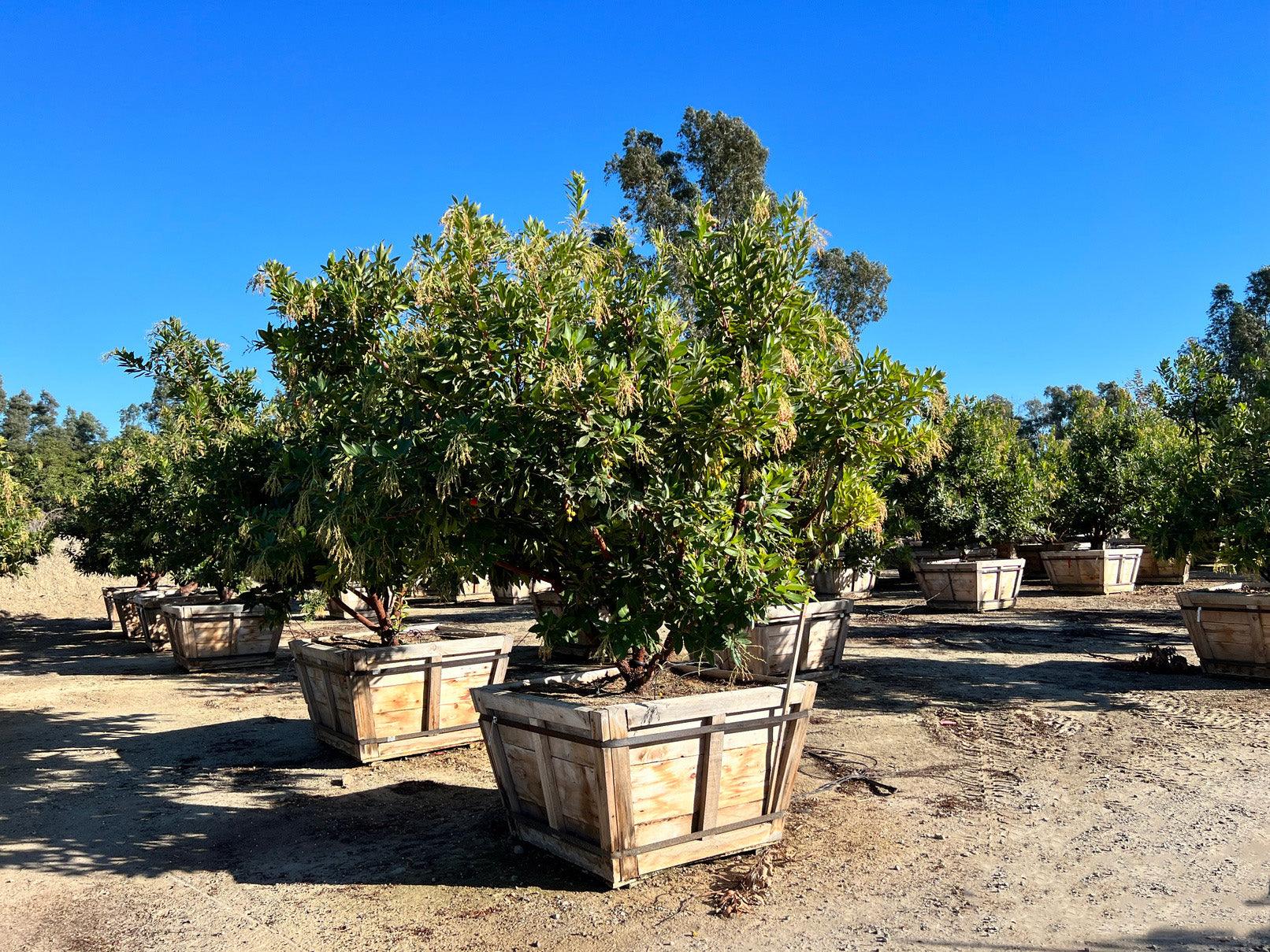
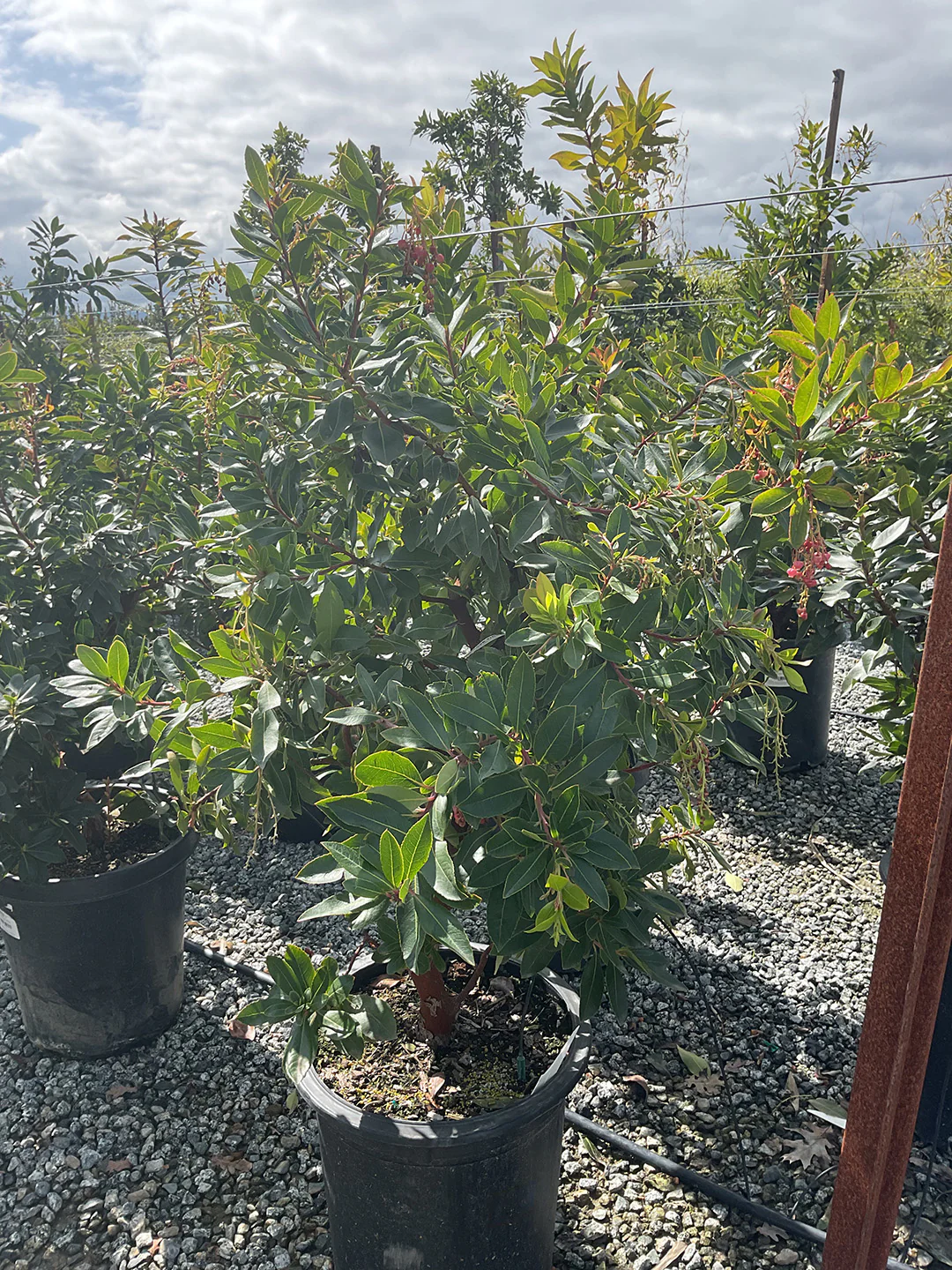
Strawberry Tree - Arbutus ‘Marina’
Strawberry Tree (Arbutus marina)
Year-Round Beauty with Edible Fruit and Fire-Resistant Durability
The Strawberry Tree gives California landscapes an evergreen, drought tolerant tree with white flowers, bright red edible fruit, textured bark, and strong fire-resistant landscape value in one low-maintenance plant.
Designed for dry summer climates, coastal wind, and water-wise yards, Arbutus marina is a good candidate if you want year round interest without relying on thirsty ornamental trees. It works beautifully as a small specimen tree, an evergreen shrub, a privacy screen, or a multi-stemmed focal point that stays colorful through fall, winter, and late summer as its fruit slowly ripen.
Why You’ll Love It
-
Built for California water savings – Once established, the strawberry tree is highly drought-tolerant, frost-resistant down to roughly 5°F (-15°C), and highly resistant to salty coastal winds, helping reduce irrigation needs in southern California and other Mediterranean areas.
-
Fire-resistant landscape value – The strawberry tree possesses a deep, extensive root system that stabilizes fragile soils and is highly fire-resistant, making it useful for ecological design, slopes, and degraded ecosystems.
-
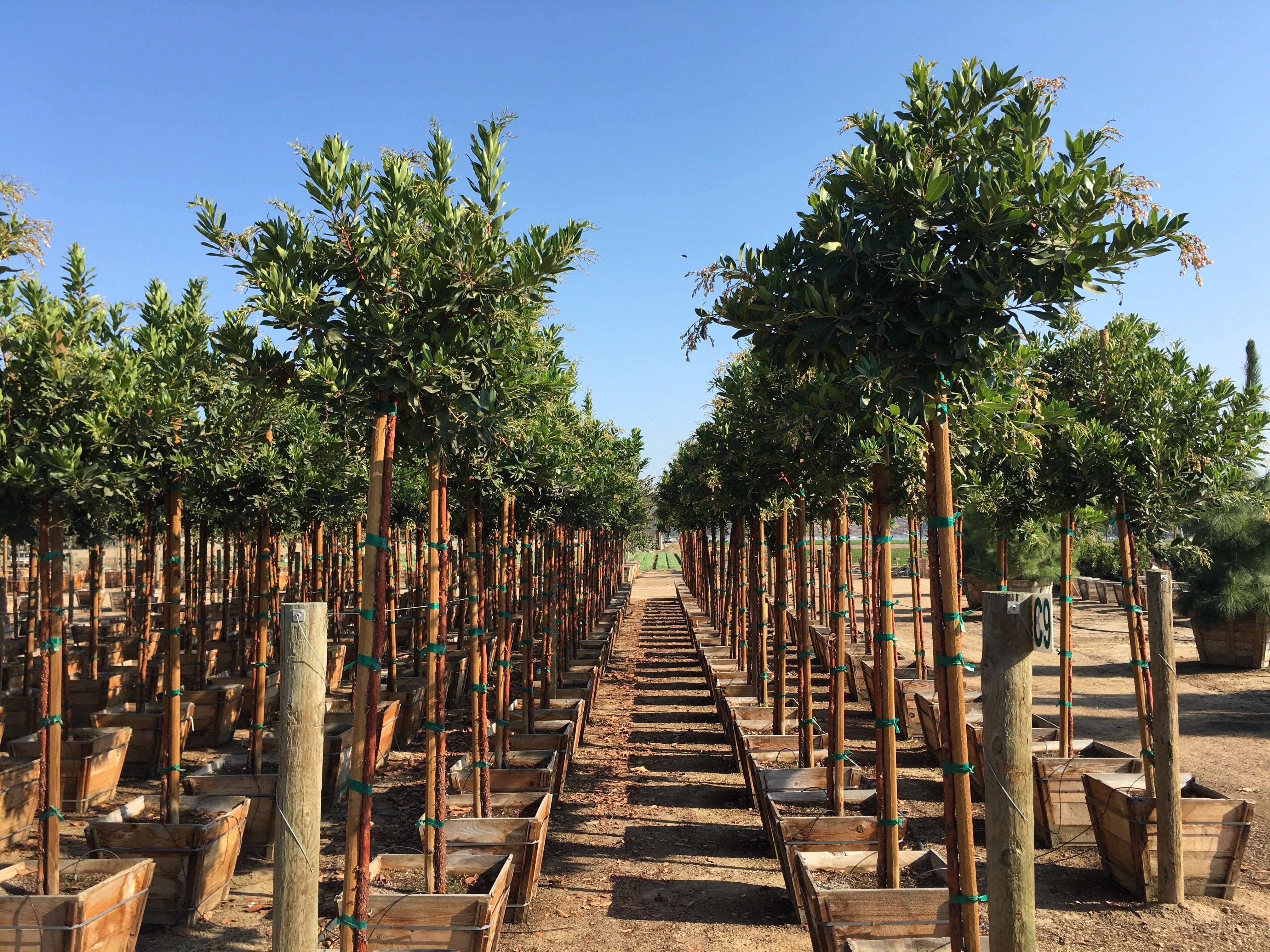
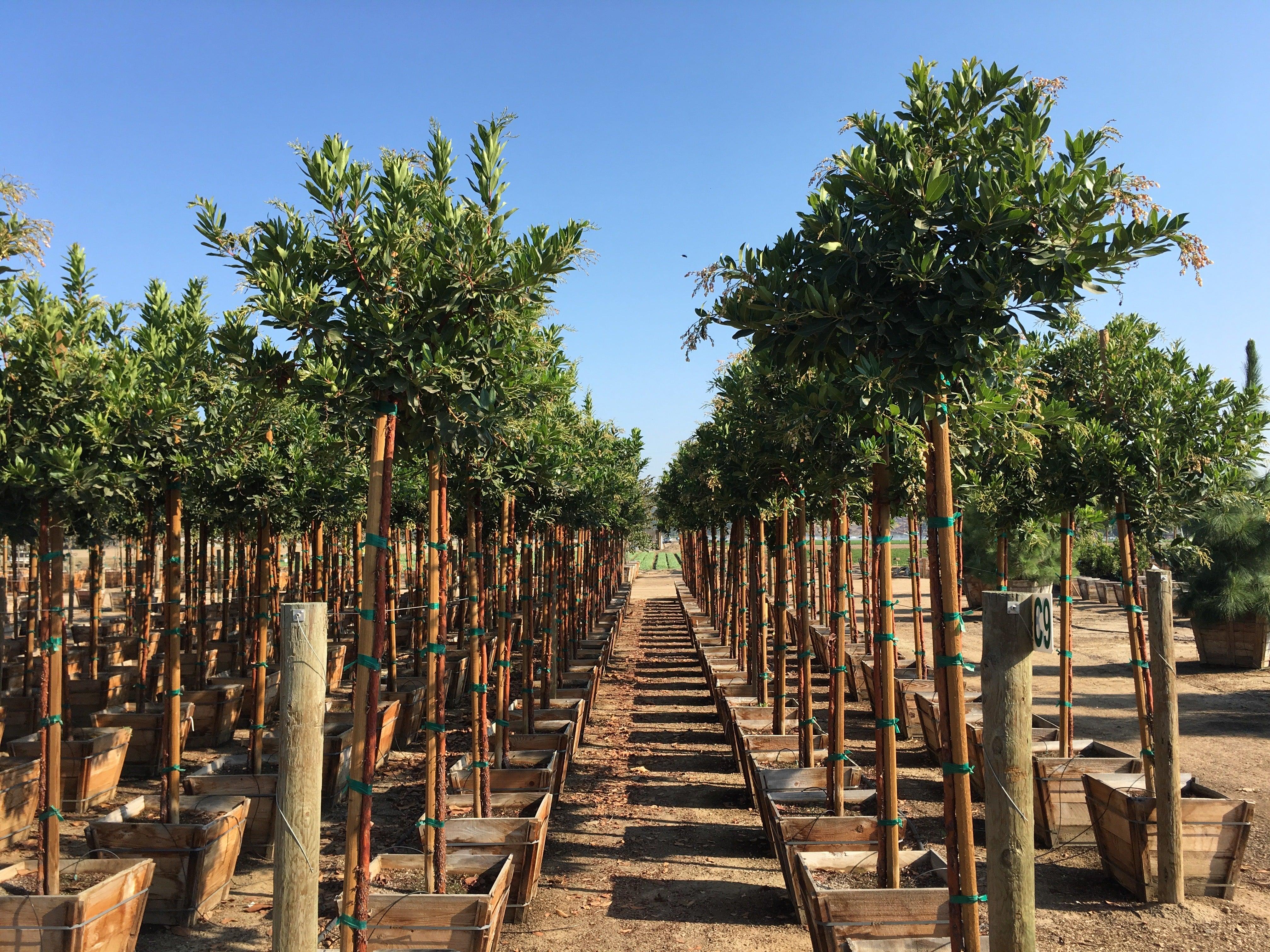
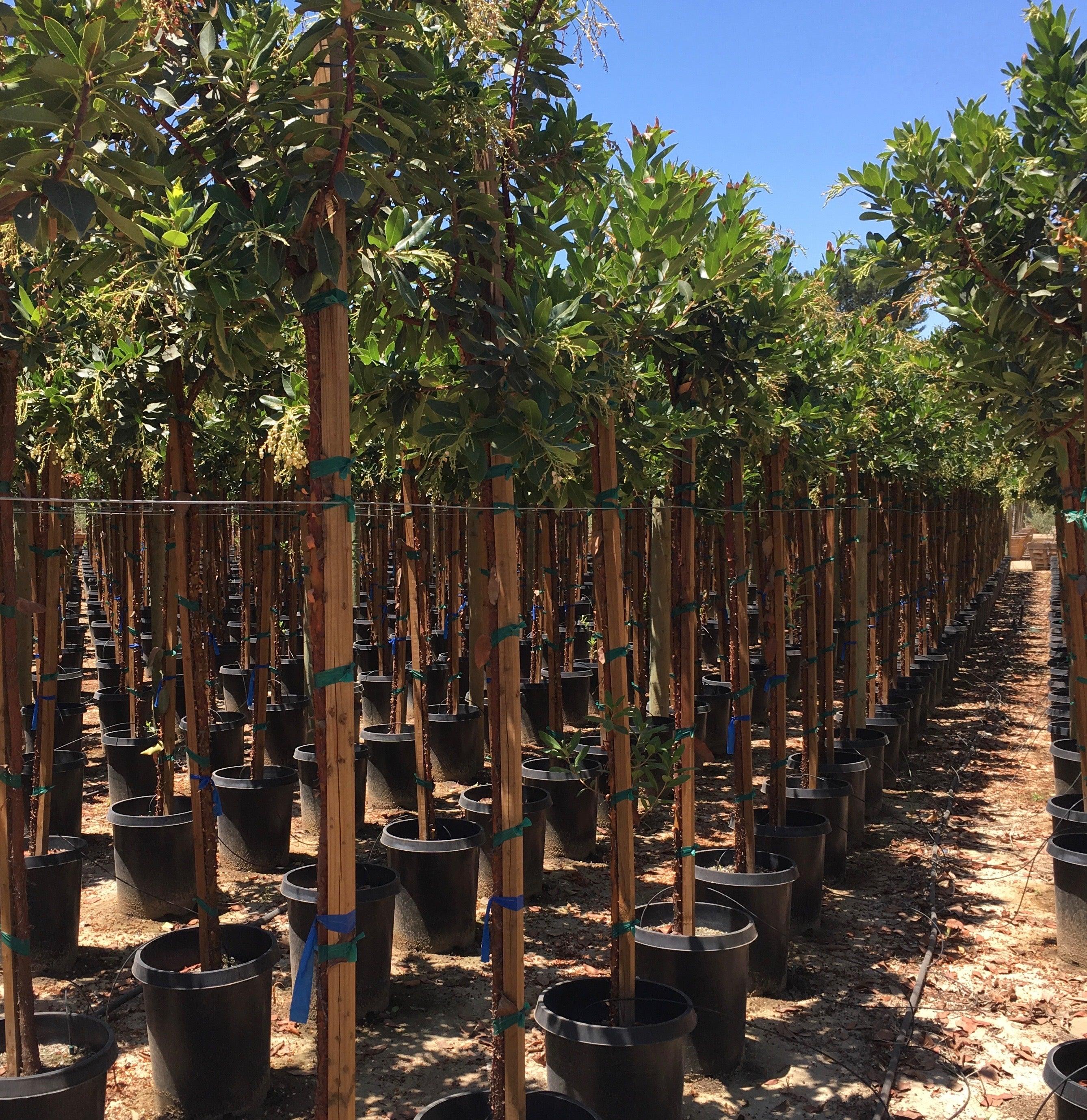
Year round interest – The leaves of the strawberry tree are oblong, glossy dark green, leathery with finely serrated edges, while its bark, flowers, and fruit create a striking multi-season display.
-
Flowers and fruit at the same time – The tree has an unusual 12-month fruit ripening cycle, displaying white or pink bell-shaped flowers while simultaneously ripening previous year’s fruits.
-
Supports bees, birds, and edible landscaping – Bees visit the winter bloom time for nectar and honey production, birds eat the ripe berries and spread seeds, and the edible fruit can be used in jams, sauces, jellies, pies, cakes, and even a traditional drink.
Strawberry tree berries can be eaten fresh when fully ripe, but they are not usually treated like strawberries or other fruits. Strawberry tree berries are delicate and highly perishable, making them rarely found in grocery stores, and the fruits are not commonly consumed fresh due to their gritty texture and muted flavor.
What Makes It Different
Most ornamental trees offer spring flowers, summer shade, or fall color-but few provide evergreen structure, winter bloom, edible fruit, coastal toughness, drought resistance, and fire-wise performance in the same landscape plant. If your priority is blossoms first, a curated selection of flowering trees for California gardens can complement strawberry trees in your landscape plan.
Strawberry Tree (Arbutus marina) provides:
-
A rare fall-to-winter flowering cycle – Instead of going dormant visually, the tree produces aromatic white flowers or pink bell-shaped flowers during a season when many other strawberry trees, fruit trees, and ornamentals are quiet.
-
A full-year fruit display – Strawberry tree fruits are small, averaging 1 to 3 centimeters in diameter, with a round to oval shape and a textured, bumpy surface covered in tiny bristle-like protrusions. These bright red fruits slowly ripen over about 12 months, so flowers and ripe fruit can appear together.
-
Mediterranean toughness for California gardens – Strawberry trees thrive in a range of soils and are native to temperate regions of Asia and Europe, particularly in the Mediterranean, Portugal, France, and Spain. Their native adaptation to the mediterranean region, north africa, and dry summer climates makes them especially useful in southern california, coastal gardens, and even many pacific northwest sites with well drained soil, much like the resilient Coast Live Oak tree (Quercus agrifolia) used in long-lived, drought-tolerant plantings.
Botanically, strawberry trees are classified as Arbutus marina, evergreen shrubs or small trees known for ornamental qualities including textured bark and aromatic flowers. Carl Linnaeus formally named the species in Species Plantarum, and the name unedo is often linked to the Latin idea “I eat one.” The plant is also called the irish strawberry tree in some places, and its green leaves, white flowers, and red fruit have been compared to the italian flag; poet Giovanni Pascoli even referenced it as a national symbol.
How It Works
-
Choose the right site Plant your strawberry tree in full sun for the best flowering, fruit production, and dense evergreen growth. It will tolerate some shade, drought, and frost, but full sun and well drained soil give the strongest long-term results. Avoid low spots where winter water collects, especially in clay soils, and consider pairing it with versatile evergreens like Fern Pine trees (Podocarpus gracilior) for additional screening or structure.
-
Plant and establish with steady care Once planted, water deeply through the first season so the root system can establish. Mulch around the base while keeping mulch away from the trunk. These trees are easy to cultivate and are tolerant of shade, drought, and frost, making them suitable for various growing conditions, but young plants still perform best with consistent water during establishment, just like many citrus fruit trees for home orchardsthat need steady moisture while they root in.
-
Enjoy low-maintenance growth After the tree is established, reduce irrigation and prune lightly to create either a single-trunk tree or a multi-stemmed shrub. The strawberry tree can be trained as a single-trunk tree or a multi-stemmed shrub, making it a versatile ornamental addition to landscapes. Expect fruit production to become more noticeable as the plant matures, with the most dramatic display when fall flowers overlap with ripe fruit from the previous year.
The strawberry tree is highly adaptable, drought-resistant, and provides year-round interest with its foliage, flowers, and fruit. It is primarily cultivated for ornamental features rather than for fruit volume, but its culinary uses make it a rewarding edible landscape choice, and compact options like the Dwarf Strawberry Tree Arbutus unedo 'Compacta' can bring similar benefits to smaller spaces or container plantings.
Product Details
-
Botanical name: Arbutus marina
-
Plant type: Evergreen shrub or small tree
-
Common names: Strawberry tree, irish strawberry tree, cain apple
-
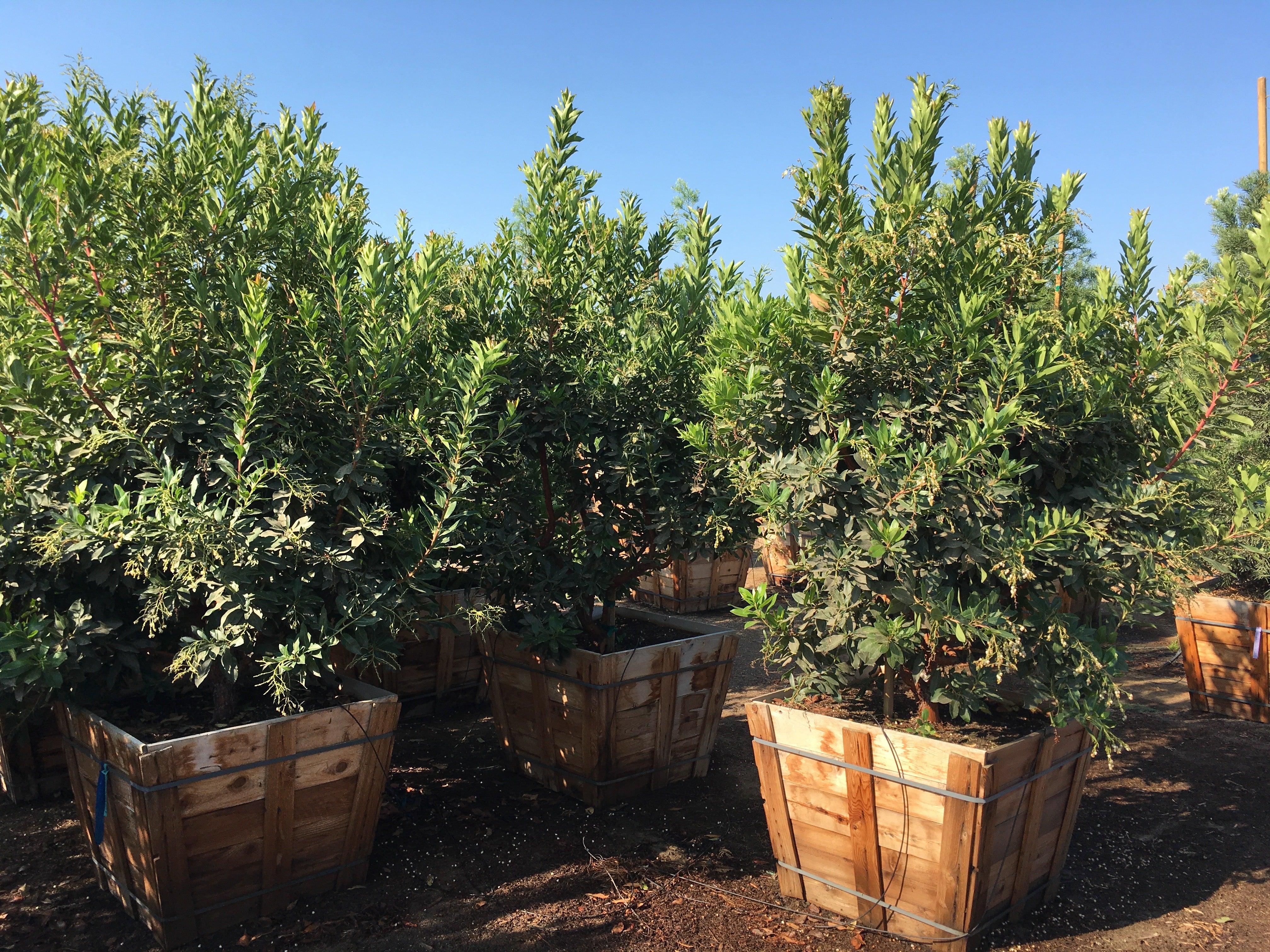
Mature size: The strawberry tree typically grows 10 to 15 feet tall, occasionally reaching up to 30 feet; Yardwork landscape sizing is commonly planned around approximately 15–20 feet in height and 10–15 feet in spread.
-
Hardiness: USDA Zones 7–9; once established, it is frost-resistant down to roughly 5°F (-15°C).
-
California suitability: Excellent for southern california, coastal landscapes, inland Mediterranean areas, and dry summer climates where drainage is reliable.
-
Sun exposure: Full sun is best; light shade is tolerated.
-
Soil: Thrives in a range of soils, but requires well drained soil for long-term health.
-
Water needs: Moderate during establishment; low once established.
-
Growth habit: Can be trained as a small tree, multi-stemmed evergreen shrub, hedge, screen, or specimen.
-
Fruit: Small edible berries, 1 to 3 centimeters wide, bright red when ripe, with a rough surface and tiny bristle-like protrusions.
-
Fruit flavor and texture: Strawberry tree fruits have a subtly fruity, sweet-tart, and woody flavor with nuances of mango, apricot, guava, and peach, and they pair well with citrus fruits and various cheeses. The texture can be gritty, which is why the fruit is often cooked rather than eaten fresh.
-
Nutrition: The bumpy red berries of the strawberry tree are exceptionally high in Vitamin C, containing roughly three times the amount found in an orange. Strawberry tree fruits are also a rich source of dietary fiber, vegetal proteins, and antioxidant polyphenols.
-
Culinary uses: The fruits of the strawberry tree are not commonly consumed fresh due to their gritty texture and muted flavor, but they are often used in sauces, jams, and jellies. In Portugal, the fruit is fermented and distilled into aguardente de medronhos, also known as aguardente de medronho or a strong brandy called medronho brandy.
-
Traditional uses: In traditional folk medicine, infusions made from strawberry tree leaves act as a natural urinary antiseptic and are used to soothe intestinal inflammation and diarrhea.
Who It’s For
Ideal for:
-
California homeowners who want a drought tolerant tree that stays evergreen, colorful, and practical in low-water landscapes.
-
Property owners in fire-prone areas who need plants with fire-resistant traits, deep roots, and value for defensible-space planting; many homeowners also combine strawberry trees with native Coast Live Oak trees for habitat and shade.
-
Coastal gardeners looking for a tree well-adapted to marine salt spray, wind, and drought once established, sometimes pairing strawberry trees with California Pepper Trees (Schinus molle) for a feathery canopy and contrasting berries.
-
Edible landscape gardeners who want unusual fruit for jams, jellies, sauces, cakes, pies, brandy, or a traditional drink rather than standard grocery-store fruit.
-
Landscape designers creating Mediterranean, ecological design, restoration, or native-style gardens with year round interest often mix strawberry trees with other structural species available through a full-service plant nursery and landscape supplier, including options like the California Pepper Tree for sale (Schinus molle) for larger, park-like plantings.
-
Homeowners with slopes or fragile soils who want roots that help stabilize soil while adding ornamental value.
If you want a tree that brings evergreen structure, white flowers, bright red fruit, wildlife value, and lower water demand into one landscape feature, Arbutus marina fits your needs.
Frequently Asked Questions
Is it easy to grow in California?
Yes. The Strawberry tree (Arbutus Marina) is a strong fit for many California landscapes, especially southern california, coastal zones, and dry summer climates. It prefers full sun and well drained soil, but these trees are easy to cultivate and are tolerant of shade, drought, and frost once established.
How long before it produces fruit?
Fruit production is usually modest at first. The tree’s unusual 12-month cycle means fruits slowly ripen from the previous year while new flowers appear in fall or winter. With good sun, water during establishment, and healthy soil, fruiting becomes more visible as the tree matures.
What if it doesn’t thrive in my yard?
Yardwork can help you choose the right location, check drainage, and select the best container size before planting. If your site has heavy clay, standing water, or harsh reflected heat, a Yardwork consultation can help create a better planting plan.
Does it need special care during establishment?
Young strawberry trees need regular deep watering while roots establish. After that, they become highly drought tolerant and need far less water. Light pruning can shape the branches into a small tree or multi-stemmed shrub.
Can I eat the strawberry-like fruit?
Yes, the fruit is edible and can be eaten fresh when fully ripe, but it is more often used in jams, jellies, sauces, pies, cakes, and fermented drinks. The ripe fruit has a sweet-tart flavor, but the gritty texture and delicate skin make it less common as a fresh market fruit.
Is it the same as strawberries?
No. The name comes from the fruit’s bumpy red appearance, not from a relationship to true strawberries. Strawberry tree belongs to the arbutus group, and the species plantarum name is Arbutus marina.
Does it attract wildlife?
Yes. Bees visit the flowers during the cooler bloom time, and birds eat the ripe berries. This makes it useful for wildlife-friendly landscape design and garden biodiversity.
Ready to Transform Your Landscape?
Stop settling for short-season ornamentals that need extra water, extra cleanup, or constant attention. Choose Strawberry Tree (Arbutus marina) for an evergreen, drought tolerant, fire-resistant tree with white flowers, colorful fruit, textured bark, and year round interest.
Yardwork can help you select the right size, plan the best planting location, and arrange delivery for your landscape.
Original: $395.00
-65%$395.00
$138.25Product Information
Product Information
Shipping & Returns
Shipping & Returns
Description
Strawberry Tree (Arbutus marina)
Year-Round Beauty with Edible Fruit and Fire-Resistant Durability
The Strawberry Tree gives California landscapes an evergreen, drought tolerant tree with white flowers, bright red edible fruit, textured bark, and strong fire-resistant landscape value in one low-maintenance plant.
Designed for dry summer climates, coastal wind, and water-wise yards, Arbutus marina is a good candidate if you want year round interest without relying on thirsty ornamental trees. It works beautifully as a small specimen tree, an evergreen shrub, a privacy screen, or a multi-stemmed focal point that stays colorful through fall, winter, and late summer as its fruit slowly ripen.
Why You’ll Love It
-
Built for California water savings – Once established, the strawberry tree is highly drought-tolerant, frost-resistant down to roughly 5°F (-15°C), and highly resistant to salty coastal winds, helping reduce irrigation needs in southern California and other Mediterranean areas.
-
Fire-resistant landscape value – The strawberry tree possesses a deep, extensive root system that stabilizes fragile soils and is highly fire-resistant, making it useful for ecological design, slopes, and degraded ecosystems.
-
Year round interest – The leaves of the strawberry tree are oblong, glossy dark green, leathery with finely serrated edges, while its bark, flowers, and fruit create a striking multi-season display.
-
Flowers and fruit at the same time – The tree has an unusual 12-month fruit ripening cycle, displaying white or pink bell-shaped flowers while simultaneously ripening previous year’s fruits.
-
Supports bees, birds, and edible landscaping – Bees visit the winter bloom time for nectar and honey production, birds eat the ripe berries and spread seeds, and the edible fruit can be used in jams, sauces, jellies, pies, cakes, and even a traditional drink.
Strawberry tree berries can be eaten fresh when fully ripe, but they are not usually treated like strawberries or other fruits. Strawberry tree berries are delicate and highly perishable, making them rarely found in grocery stores, and the fruits are not commonly consumed fresh due to their gritty texture and muted flavor.
What Makes It Different
Most ornamental trees offer spring flowers, summer shade, or fall color-but few provide evergreen structure, winter bloom, edible fruit, coastal toughness, drought resistance, and fire-wise performance in the same landscape plant. If your priority is blossoms first, a curated selection of flowering trees for California gardens can complement strawberry trees in your landscape plan.
Strawberry Tree (Arbutus marina) provides:
-
A rare fall-to-winter flowering cycle – Instead of going dormant visually, the tree produces aromatic white flowers or pink bell-shaped flowers during a season when many other strawberry trees, fruit trees, and ornamentals are quiet.
-
A full-year fruit display – Strawberry tree fruits are small, averaging 1 to 3 centimeters in diameter, with a round to oval shape and a textured, bumpy surface covered in tiny bristle-like protrusions. These bright red fruits slowly ripen over about 12 months, so flowers and ripe fruit can appear together.
-
Mediterranean toughness for California gardens – Strawberry trees thrive in a range of soils and are native to temperate regions of Asia and Europe, particularly in the Mediterranean, Portugal, France, and Spain. Their native adaptation to the mediterranean region, north africa, and dry summer climates makes them especially useful in southern california, coastal gardens, and even many pacific northwest sites with well drained soil, much like the resilient Coast Live Oak tree (Quercus agrifolia) used in long-lived, drought-tolerant plantings.
Botanically, strawberry trees are classified as Arbutus marina, evergreen shrubs or small trees known for ornamental qualities including textured bark and aromatic flowers. Carl Linnaeus formally named the species in Species Plantarum, and the name unedo is often linked to the Latin idea “I eat one.” The plant is also called the irish strawberry tree in some places, and its green leaves, white flowers, and red fruit have been compared to the italian flag; poet Giovanni Pascoli even referenced it as a national symbol.
How It Works
-
Choose the right site Plant your strawberry tree in full sun for the best flowering, fruit production, and dense evergreen growth. It will tolerate some shade, drought, and frost, but full sun and well drained soil give the strongest long-term results. Avoid low spots where winter water collects, especially in clay soils, and consider pairing it with versatile evergreens like Fern Pine trees (Podocarpus gracilior) for additional screening or structure.
-
Plant and establish with steady care Once planted, water deeply through the first season so the root system can establish. Mulch around the base while keeping mulch away from the trunk. These trees are easy to cultivate and are tolerant of shade, drought, and frost, making them suitable for various growing conditions, but young plants still perform best with consistent water during establishment, just like many citrus fruit trees for home orchardsthat need steady moisture while they root in.
-
Enjoy low-maintenance growth After the tree is established, reduce irrigation and prune lightly to create either a single-trunk tree or a multi-stemmed shrub. The strawberry tree can be trained as a single-trunk tree or a multi-stemmed shrub, making it a versatile ornamental addition to landscapes. Expect fruit production to become more noticeable as the plant matures, with the most dramatic display when fall flowers overlap with ripe fruit from the previous year.
The strawberry tree is highly adaptable, drought-resistant, and provides year-round interest with its foliage, flowers, and fruit. It is primarily cultivated for ornamental features rather than for fruit volume, but its culinary uses make it a rewarding edible landscape choice, and compact options like the Dwarf Strawberry Tree Arbutus unedo 'Compacta' can bring similar benefits to smaller spaces or container plantings.
Product Details
-
Botanical name: Arbutus marina
-
Plant type: Evergreen shrub or small tree
-
Common names: Strawberry tree, irish strawberry tree, cain apple
-
Mature size: The strawberry tree typically grows 10 to 15 feet tall, occasionally reaching up to 30 feet; Yardwork landscape sizing is commonly planned around approximately 15–20 feet in height and 10–15 feet in spread.
-
Hardiness: USDA Zones 7–9; once established, it is frost-resistant down to roughly 5°F (-15°C).
-
California suitability: Excellent for southern california, coastal landscapes, inland Mediterranean areas, and dry summer climates where drainage is reliable.
-
Sun exposure: Full sun is best; light shade is tolerated.
-
Soil: Thrives in a range of soils, but requires well drained soil for long-term health.
-
Water needs: Moderate during establishment; low once established.
-
Growth habit: Can be trained as a small tree, multi-stemmed evergreen shrub, hedge, screen, or specimen.
-
Fruit: Small edible berries, 1 to 3 centimeters wide, bright red when ripe, with a rough surface and tiny bristle-like protrusions.
-
Fruit flavor and texture: Strawberry tree fruits have a subtly fruity, sweet-tart, and woody flavor with nuances of mango, apricot, guava, and peach, and they pair well with citrus fruits and various cheeses. The texture can be gritty, which is why the fruit is often cooked rather than eaten fresh.
-
Nutrition: The bumpy red berries of the strawberry tree are exceptionally high in Vitamin C, containing roughly three times the amount found in an orange. Strawberry tree fruits are also a rich source of dietary fiber, vegetal proteins, and antioxidant polyphenols.
-
Culinary uses: The fruits of the strawberry tree are not commonly consumed fresh due to their gritty texture and muted flavor, but they are often used in sauces, jams, and jellies. In Portugal, the fruit is fermented and distilled into aguardente de medronhos, also known as aguardente de medronho or a strong brandy called medronho brandy.
-
Traditional uses: In traditional folk medicine, infusions made from strawberry tree leaves act as a natural urinary antiseptic and are used to soothe intestinal inflammation and diarrhea.
Who It’s For
Ideal for:
-
California homeowners who want a drought tolerant tree that stays evergreen, colorful, and practical in low-water landscapes.
-
Property owners in fire-prone areas who need plants with fire-resistant traits, deep roots, and value for defensible-space planting; many homeowners also combine strawberry trees with native Coast Live Oak trees for habitat and shade.
-
Coastal gardeners looking for a tree well-adapted to marine salt spray, wind, and drought once established, sometimes pairing strawberry trees with California Pepper Trees (Schinus molle) for a feathery canopy and contrasting berries.
-
Edible landscape gardeners who want unusual fruit for jams, jellies, sauces, cakes, pies, brandy, or a traditional drink rather than standard grocery-store fruit.
-
Landscape designers creating Mediterranean, ecological design, restoration, or native-style gardens with year round interest often mix strawberry trees with other structural species available through a full-service plant nursery and landscape supplier, including options like the California Pepper Tree for sale (Schinus molle) for larger, park-like plantings.
-
Homeowners with slopes or fragile soils who want roots that help stabilize soil while adding ornamental value.
If you want a tree that brings evergreen structure, white flowers, bright red fruit, wildlife value, and lower water demand into one landscape feature, Arbutus marina fits your needs.
Frequently Asked Questions
Is it easy to grow in California?
Yes. The Strawberry tree (Arbutus Marina) is a strong fit for many California landscapes, especially southern california, coastal zones, and dry summer climates. It prefers full sun and well drained soil, but these trees are easy to cultivate and are tolerant of shade, drought, and frost once established.
How long before it produces fruit?
Fruit production is usually modest at first. The tree’s unusual 12-month cycle means fruits slowly ripen from the previous year while new flowers appear in fall or winter. With good sun, water during establishment, and healthy soil, fruiting becomes more visible as the tree matures.
What if it doesn’t thrive in my yard?
Yardwork can help you choose the right location, check drainage, and select the best container size before planting. If your site has heavy clay, standing water, or harsh reflected heat, a Yardwork consultation can help create a better planting plan.
Does it need special care during establishment?
Young strawberry trees need regular deep watering while roots establish. After that, they become highly drought tolerant and need far less water. Light pruning can shape the branches into a small tree or multi-stemmed shrub.
Can I eat the strawberry-like fruit?
Yes, the fruit is edible and can be eaten fresh when fully ripe, but it is more often used in jams, jellies, sauces, pies, cakes, and fermented drinks. The ripe fruit has a sweet-tart flavor, but the gritty texture and delicate skin make it less common as a fresh market fruit.
Is it the same as strawberries?
No. The name comes from the fruit’s bumpy red appearance, not from a relationship to true strawberries. Strawberry tree belongs to the arbutus group, and the species plantarum name is Arbutus marina.
Does it attract wildlife?
Yes. Bees visit the flowers during the cooler bloom time, and birds eat the ripe berries. This makes it useful for wildlife-friendly landscape design and garden biodiversity.
Ready to Transform Your Landscape?
Stop settling for short-season ornamentals that need extra water, extra cleanup, or constant attention. Choose Strawberry Tree (Arbutus marina) for an evergreen, drought tolerant, fire-resistant tree with white flowers, colorful fruit, textured bark, and year round interest.
Yardwork can help you select the right size, plan the best planting location, and arrange delivery for your landscape.