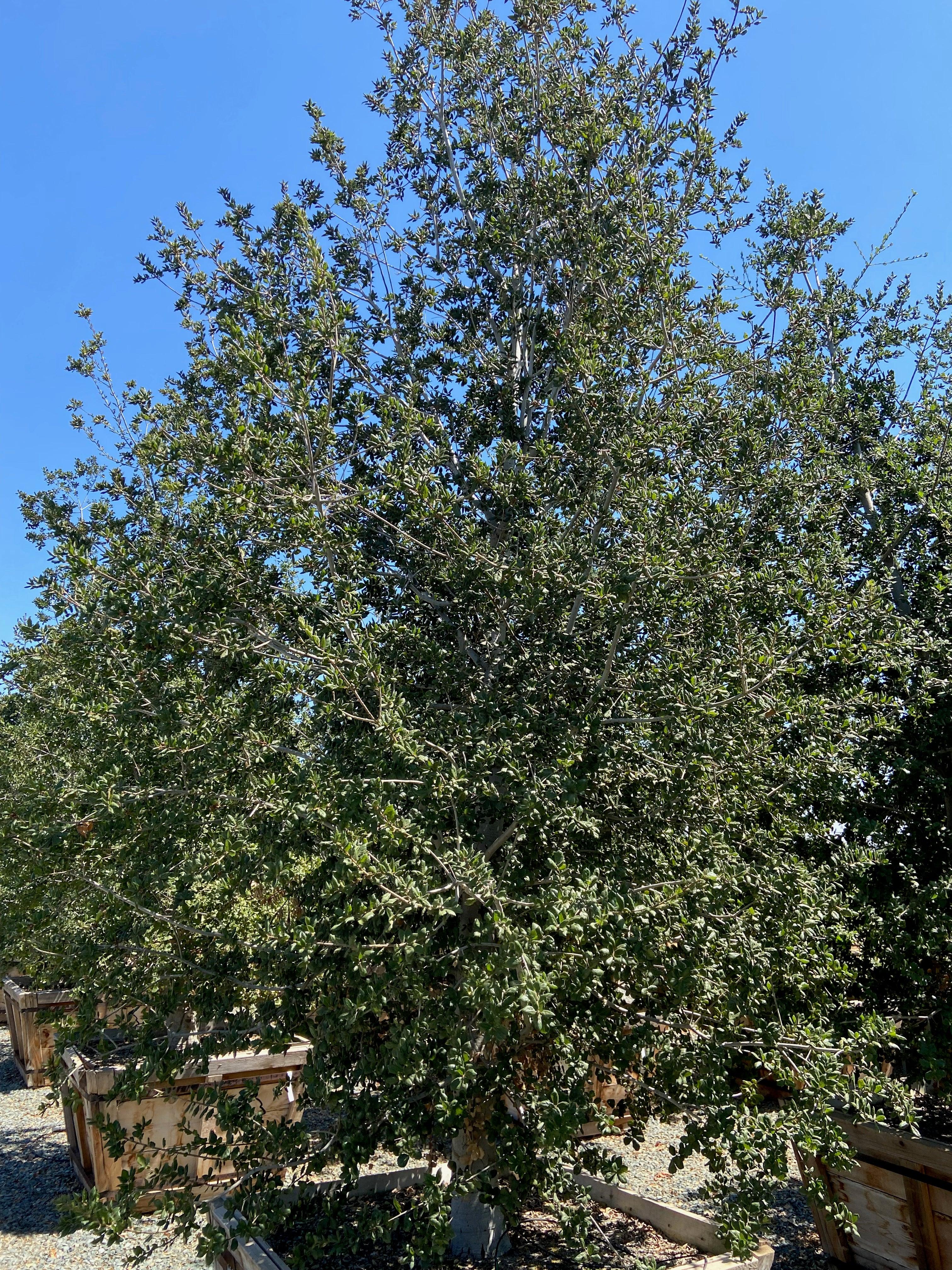
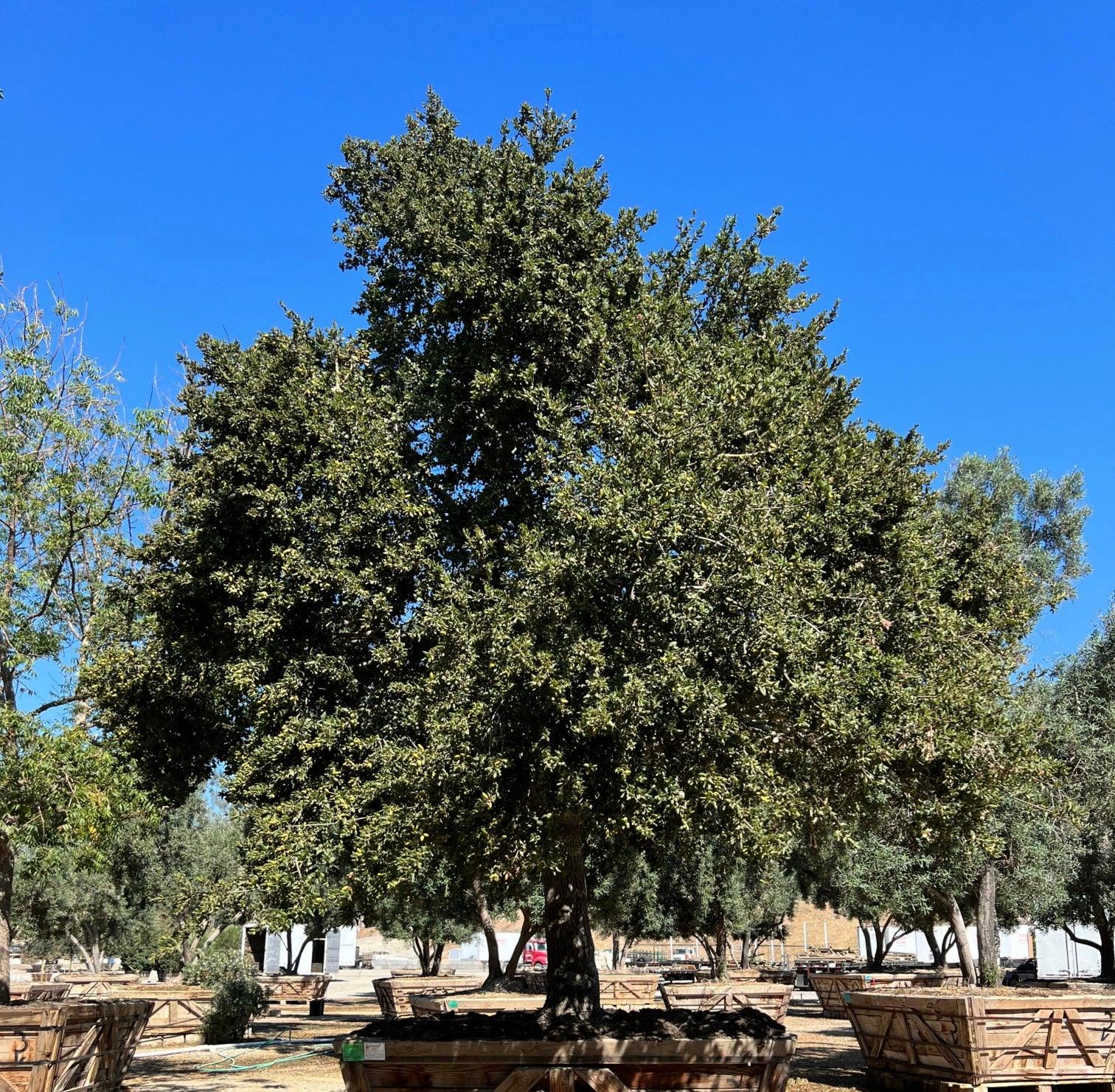
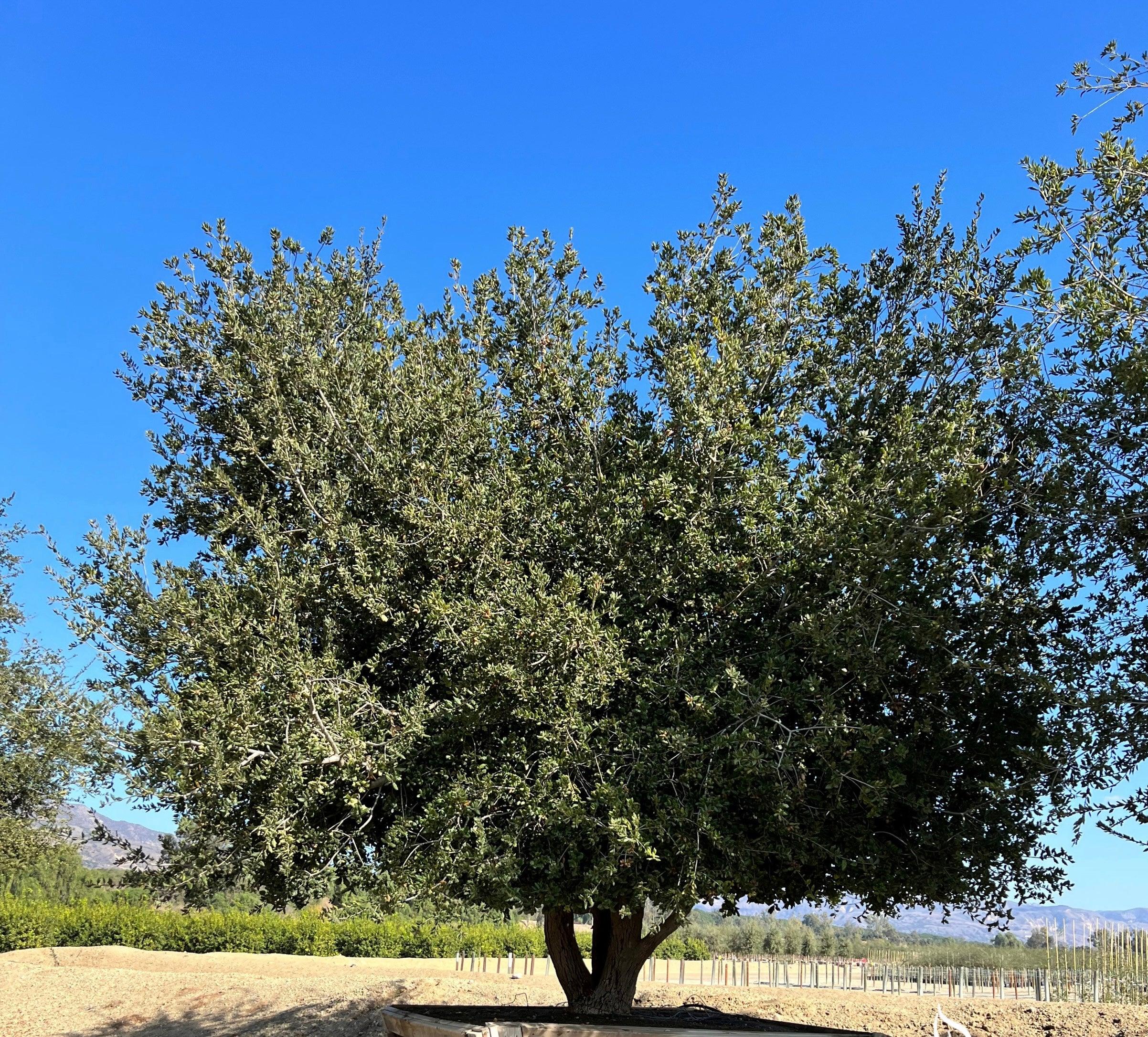
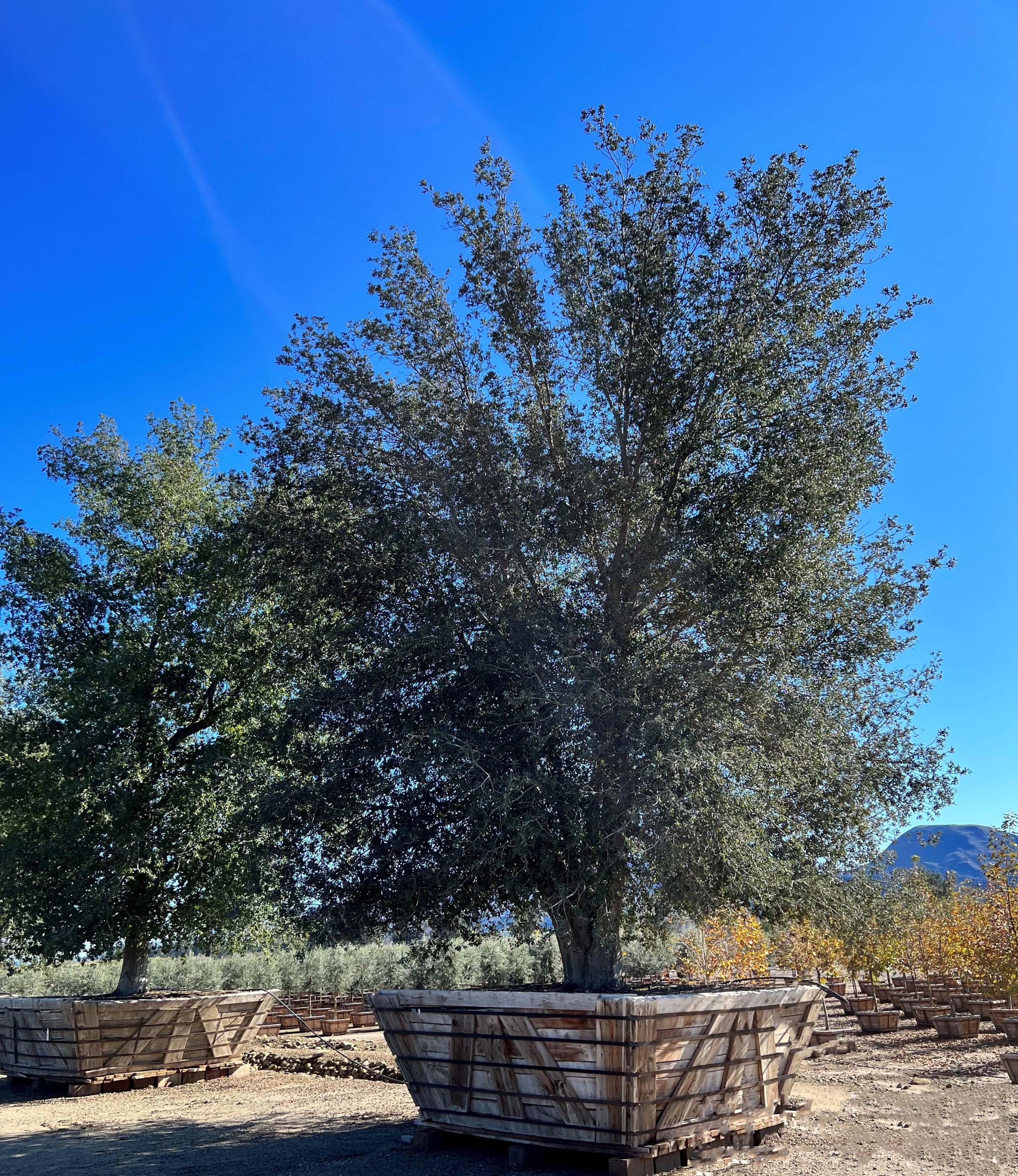
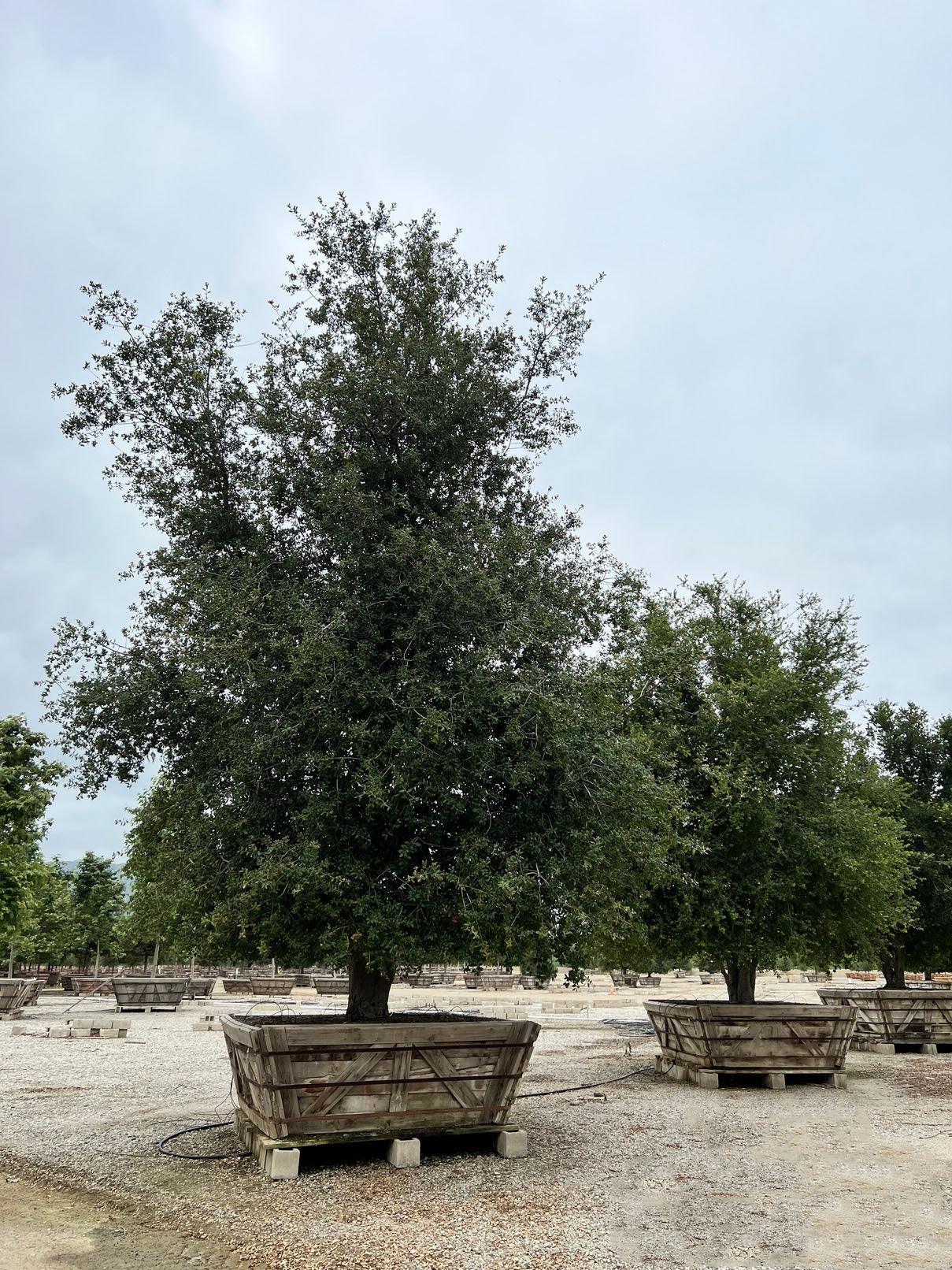
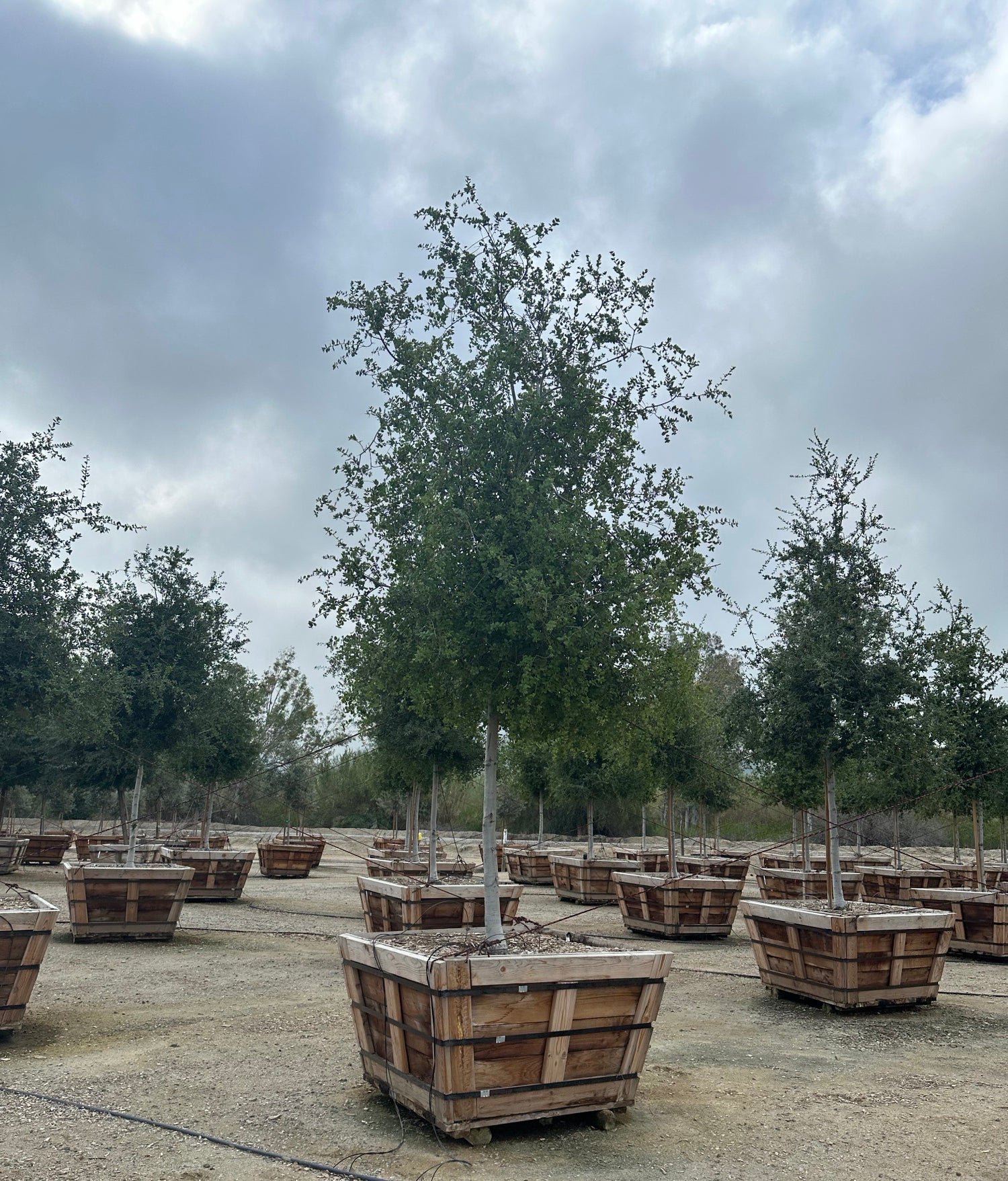
Coast Live Oak Tree (Quercus Agrifolia)
Coast Live Oak Trees (Quercus Agrifolia) grow slowly but last generations.
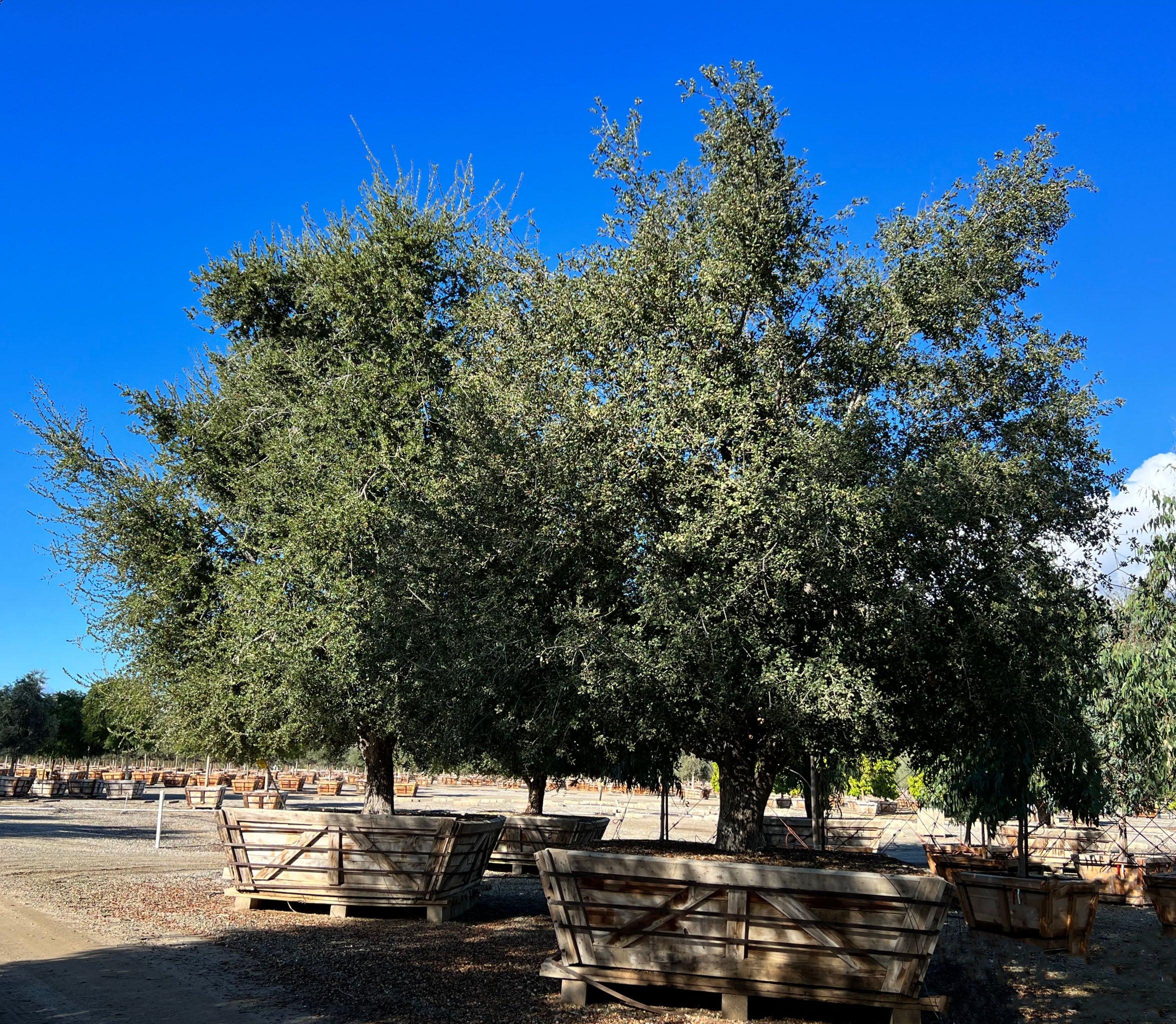
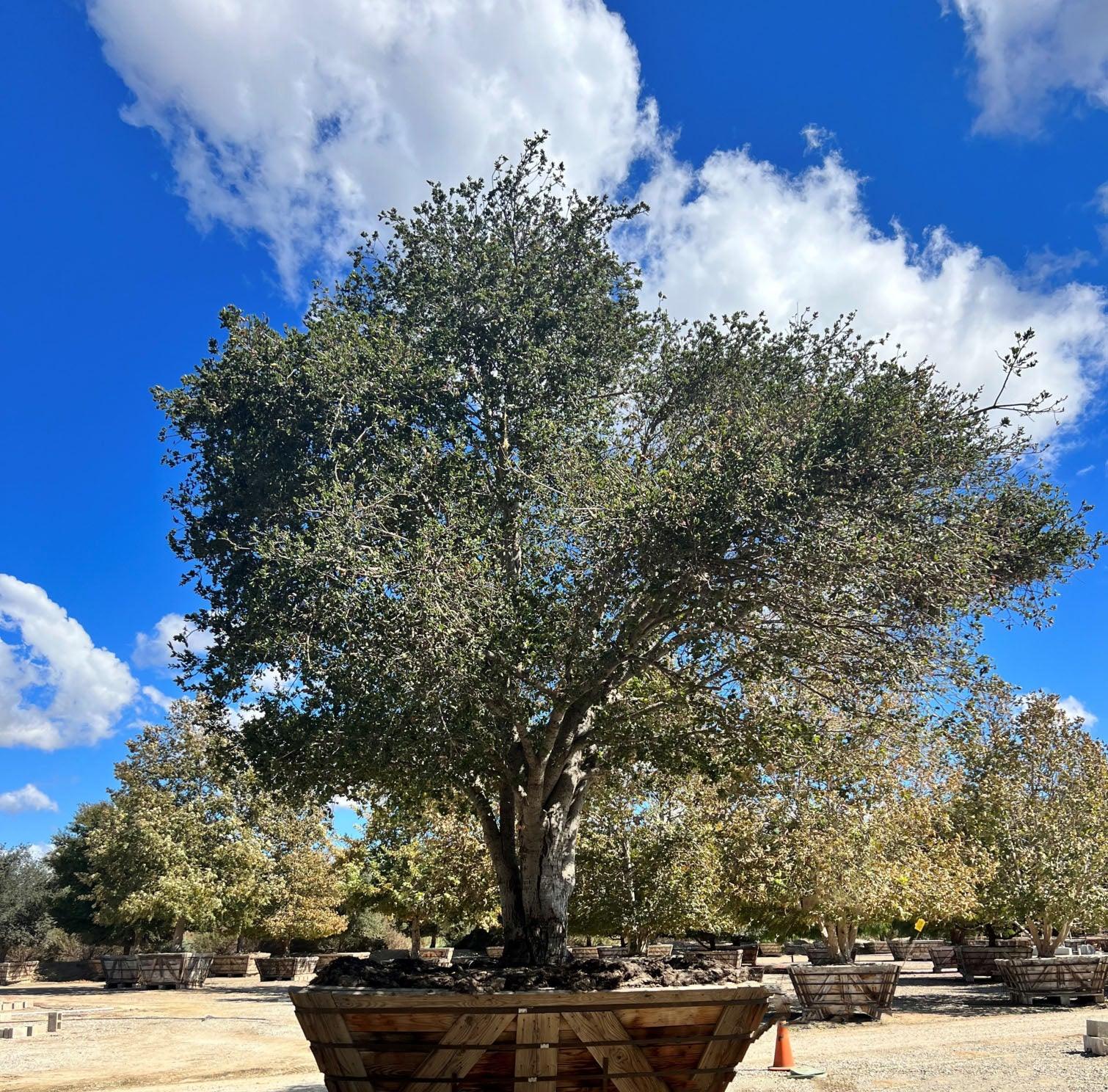
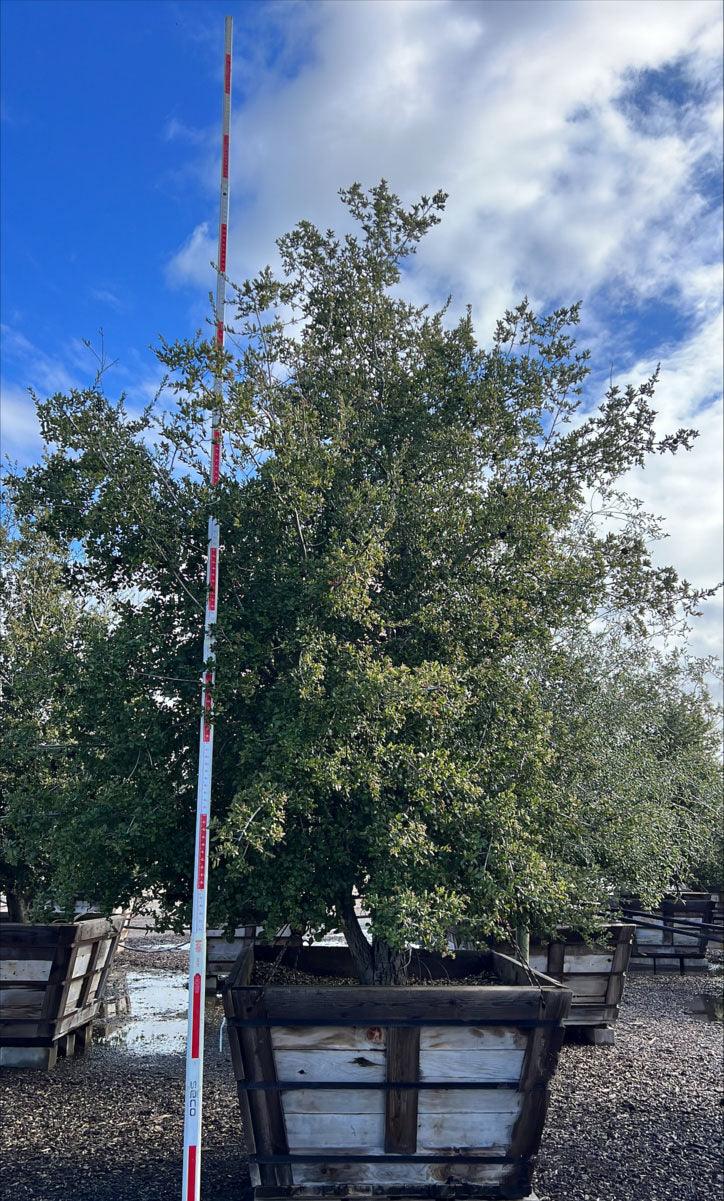
Despite its common name, the coast live oak is notable for its abundance in natural habitats, supporting local wildlife and ecosystems. It can be found growing naturally in habitats miles from the coast, even near the Sierra Nevadas, from lowlands up to elevations of around 5,000 feet, with elevation influencing its distribution. It is also the only oak that thrives near the ocean. Expected to eventually (but slowly) reach 70’ in height and 80’ in spread, the Coast Live Oak is a considerable but worthwhile commitment. In optimal conditions, coast live oaks (Quercus agrifolia) can grow up to 100 feet tall, with a crown spread that often exceeds their height, characterized by a short trunk and numerous large, crooked, spreading branches.
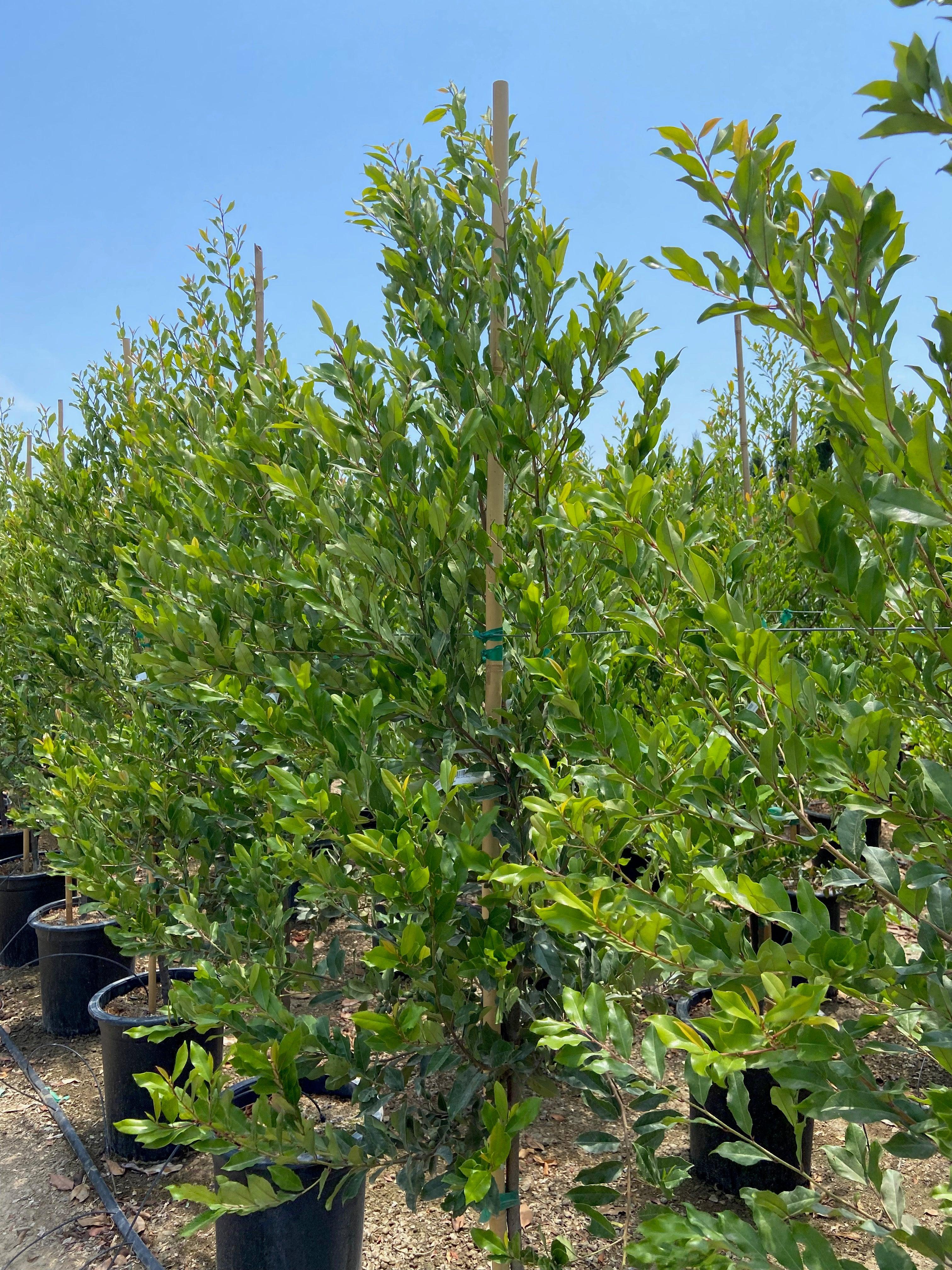
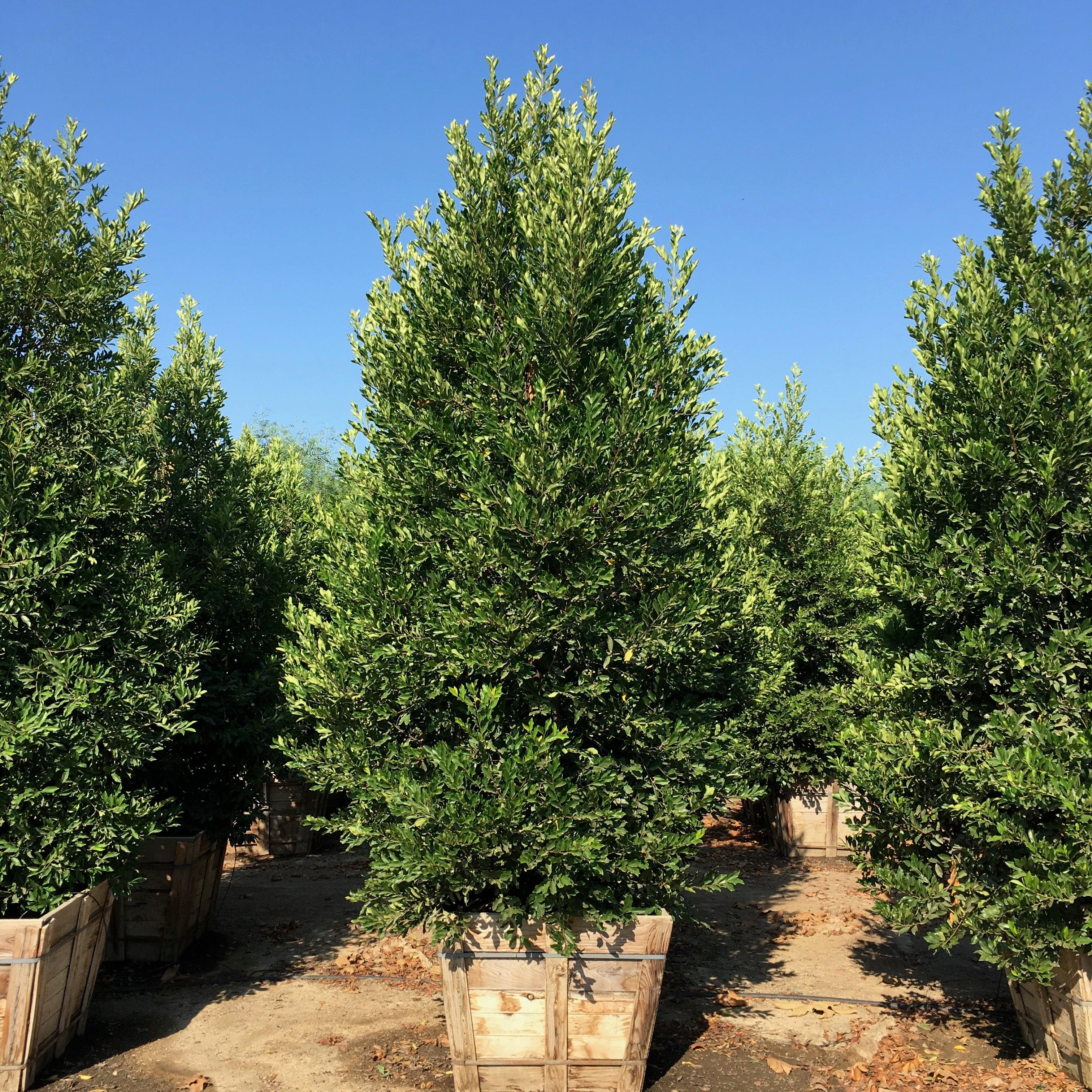
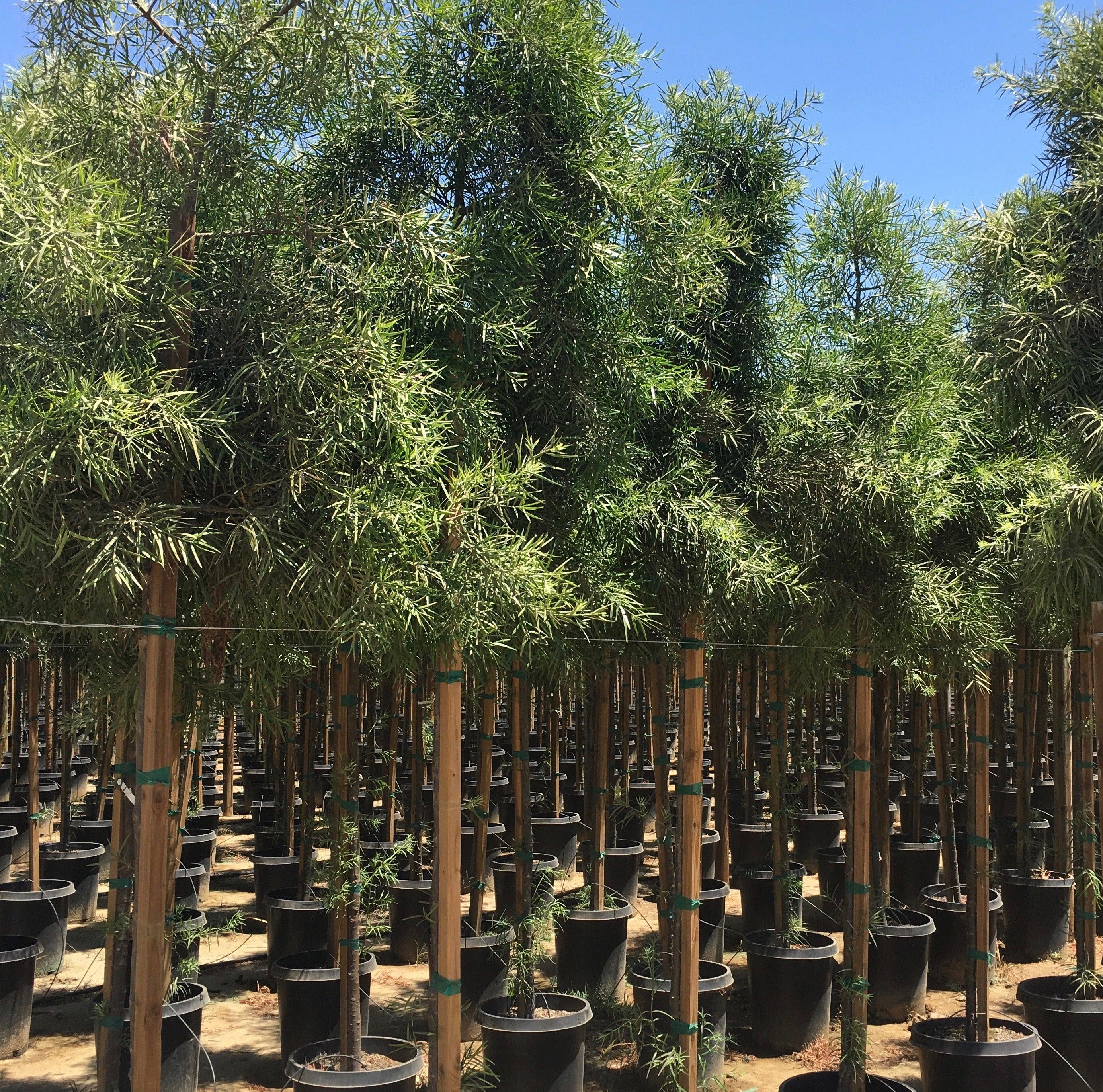
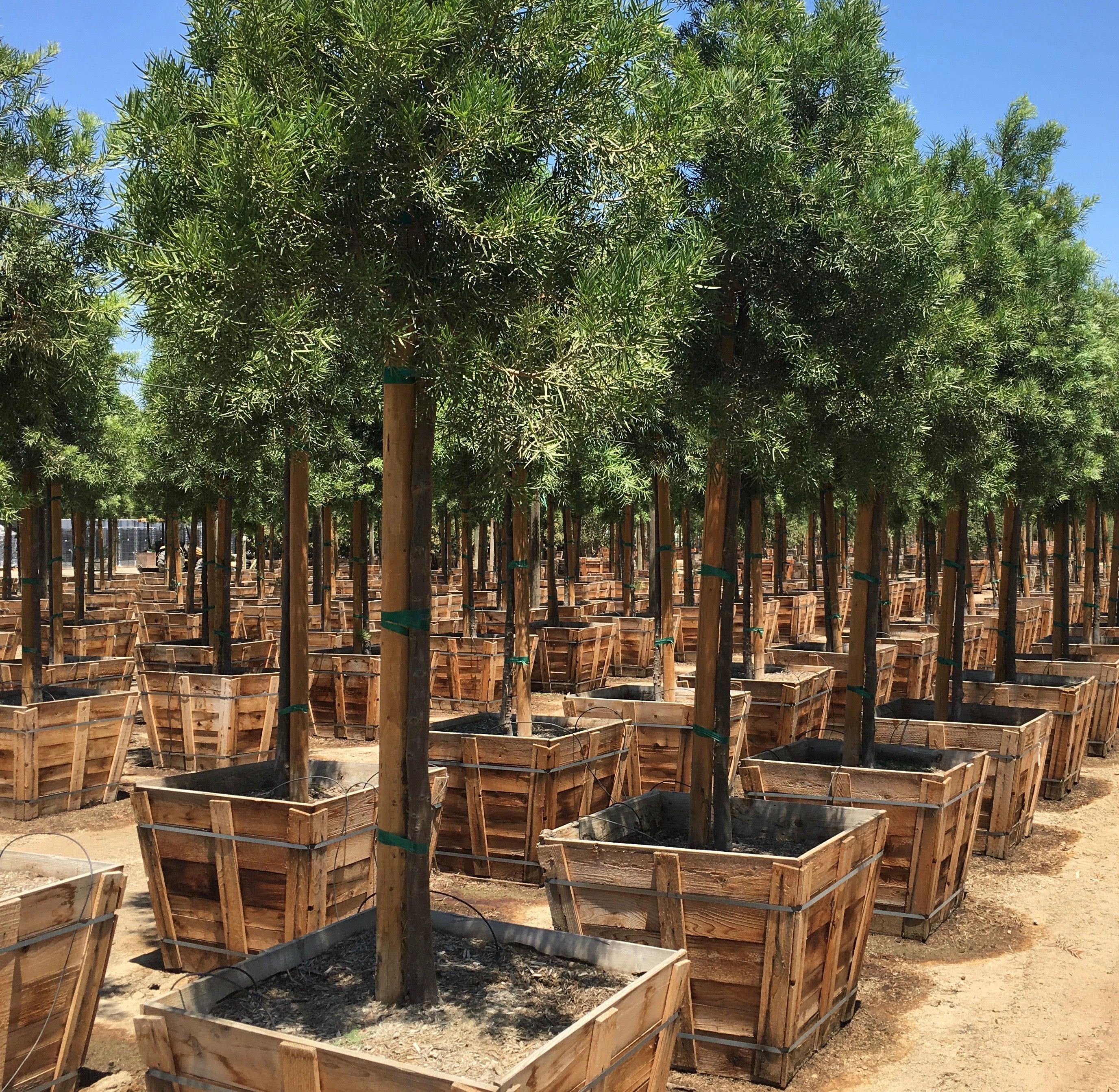
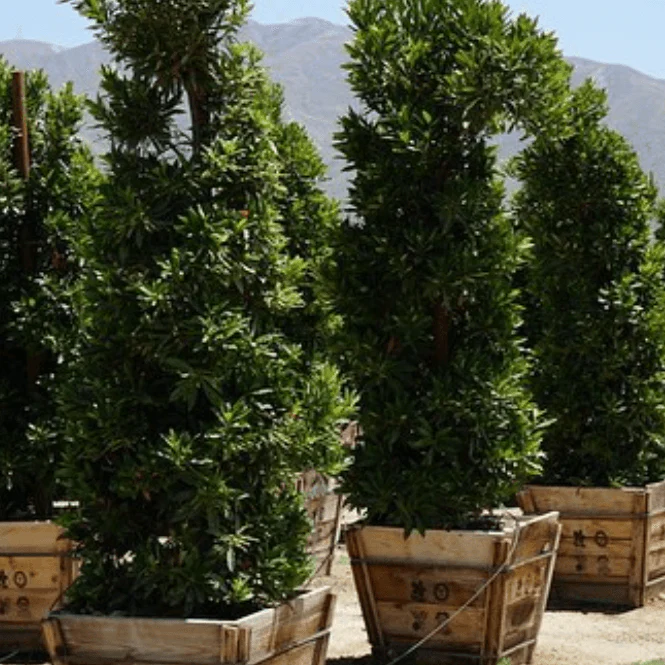
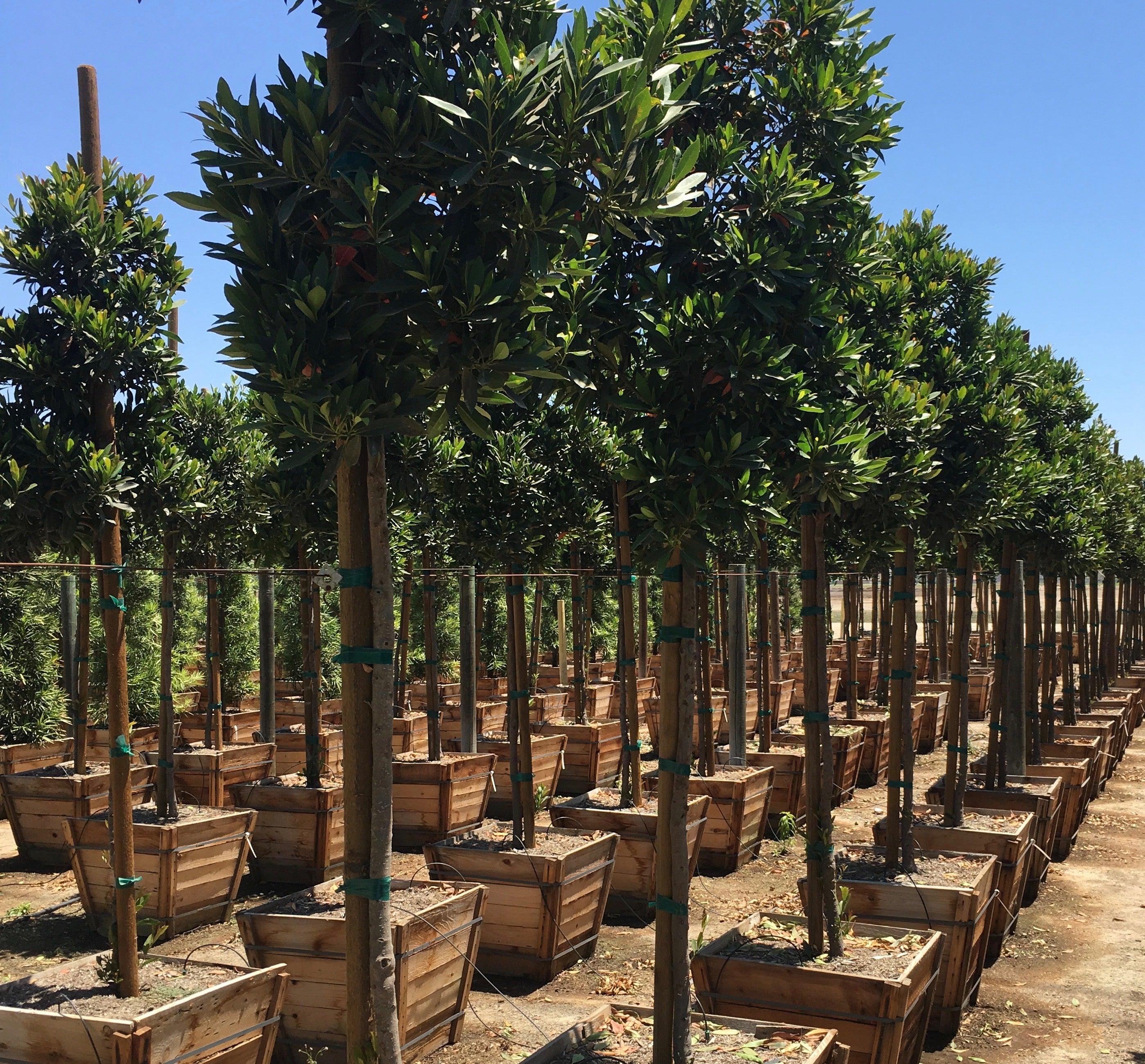
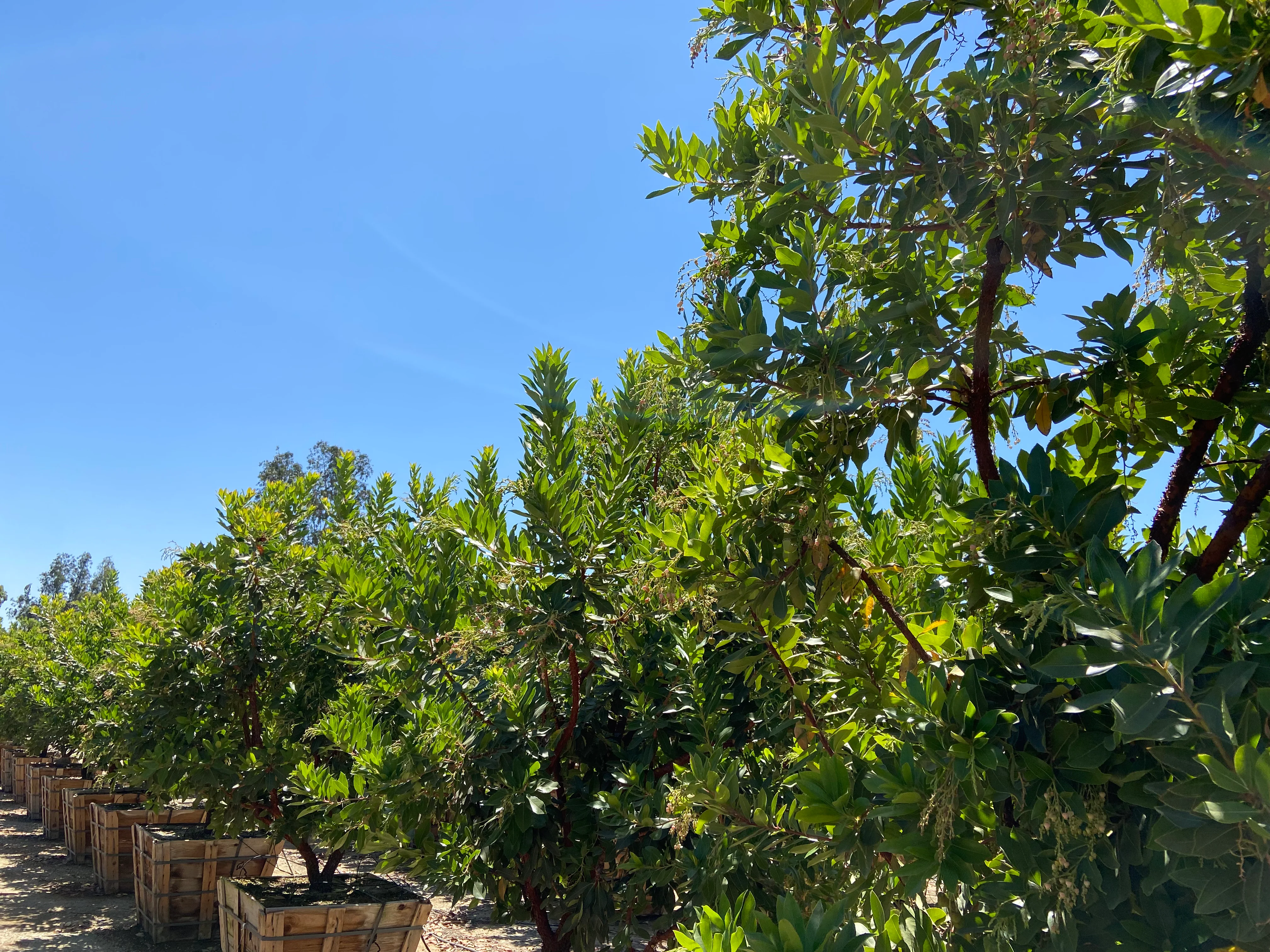
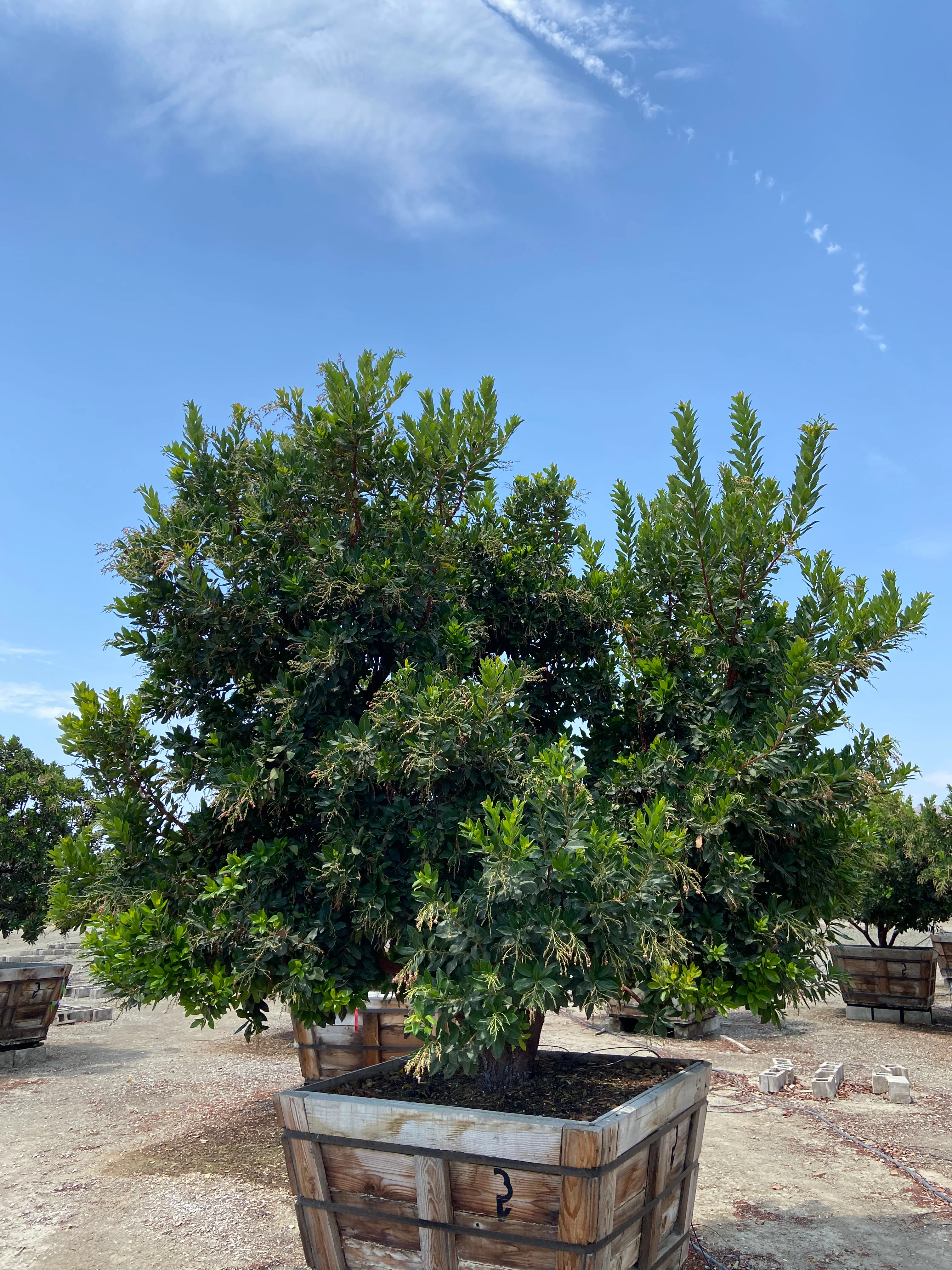
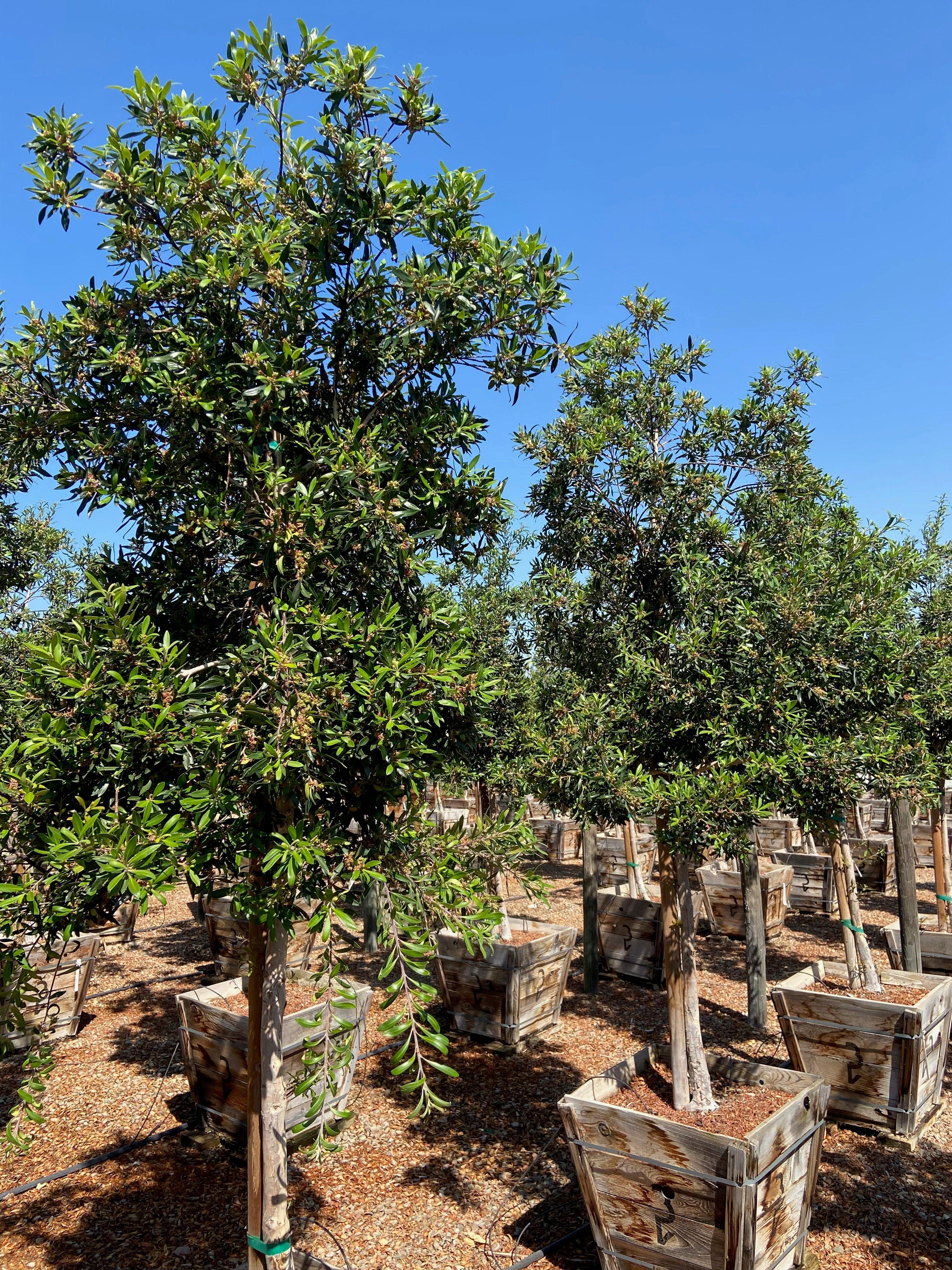
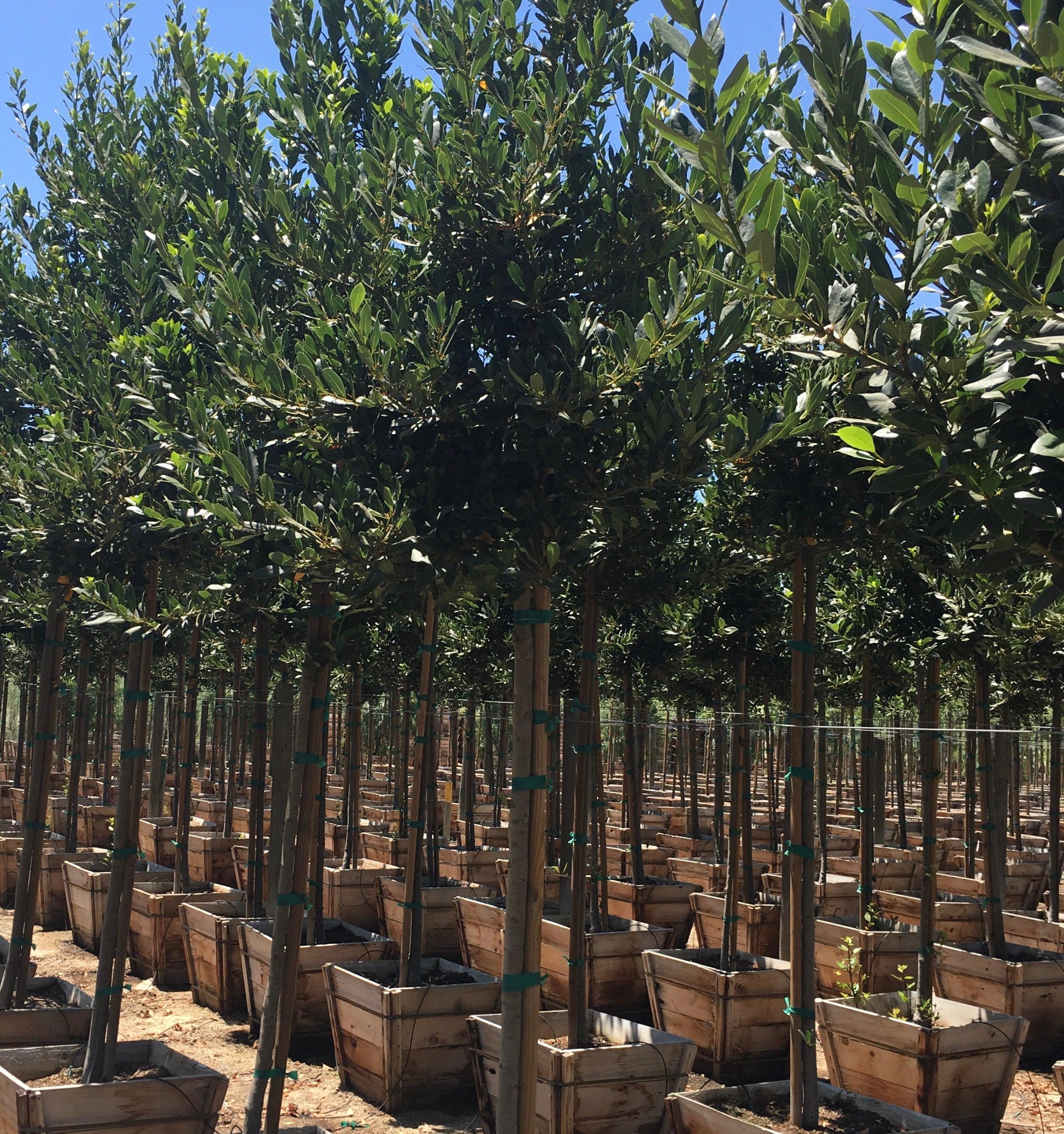
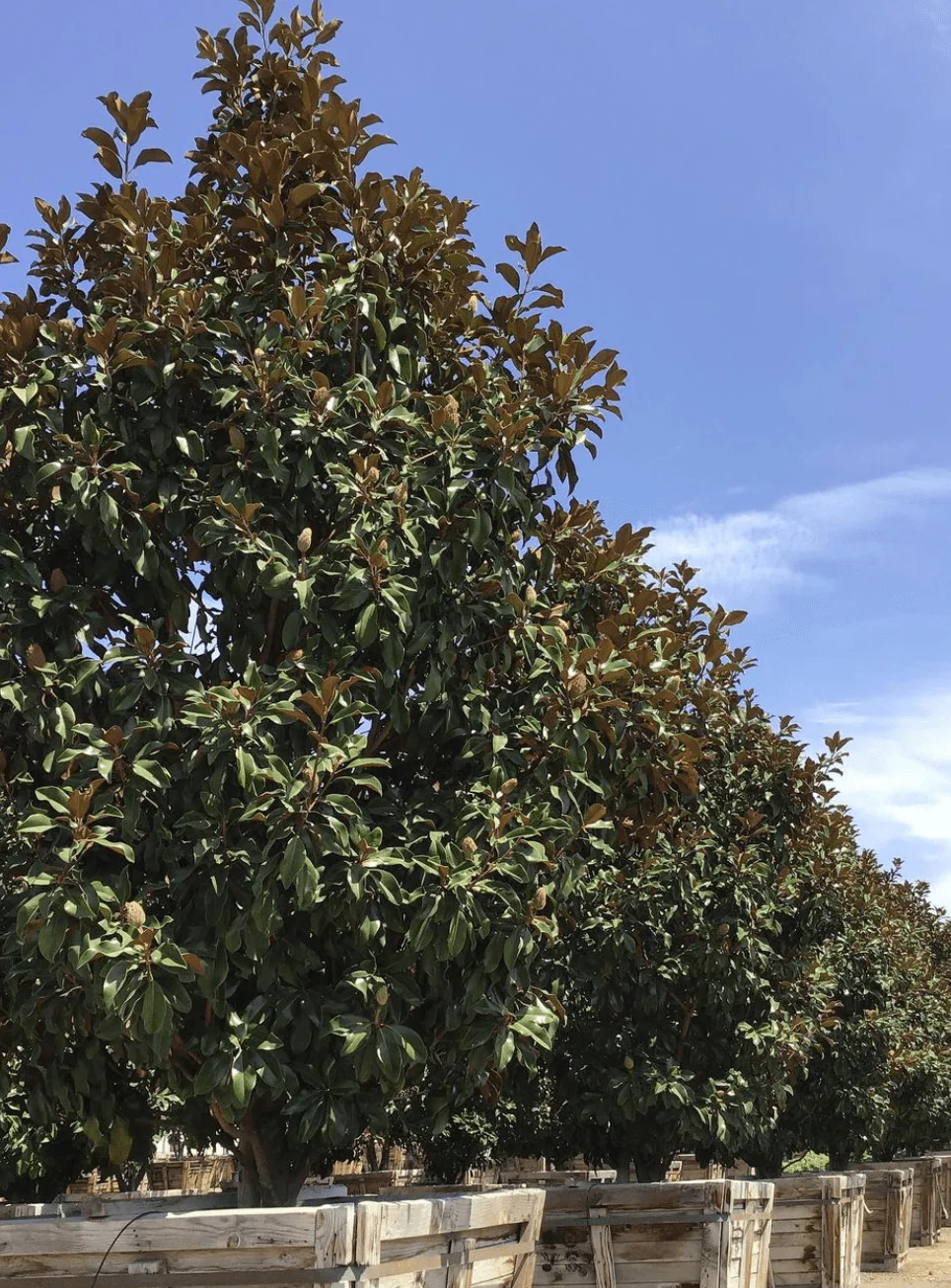
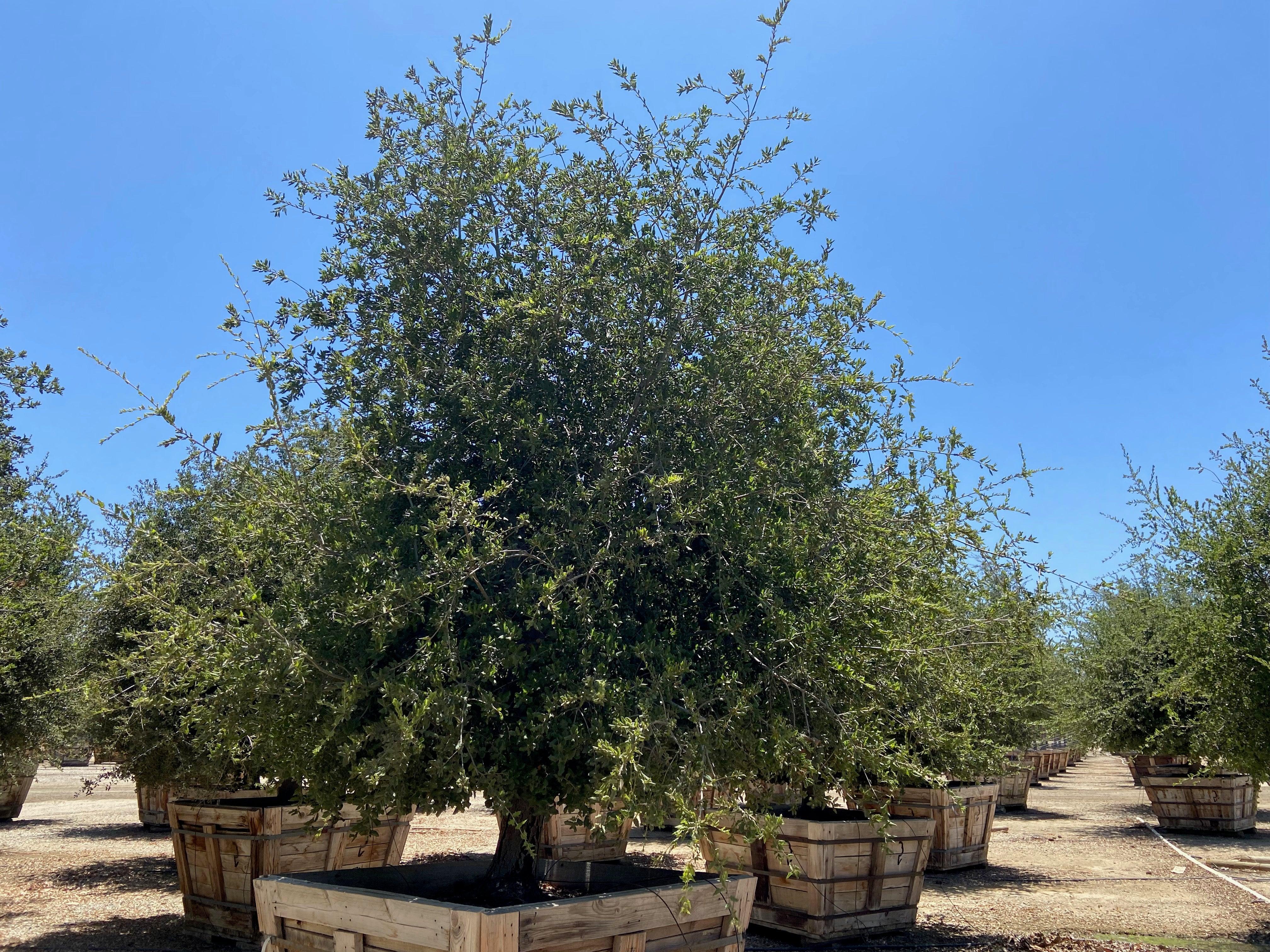
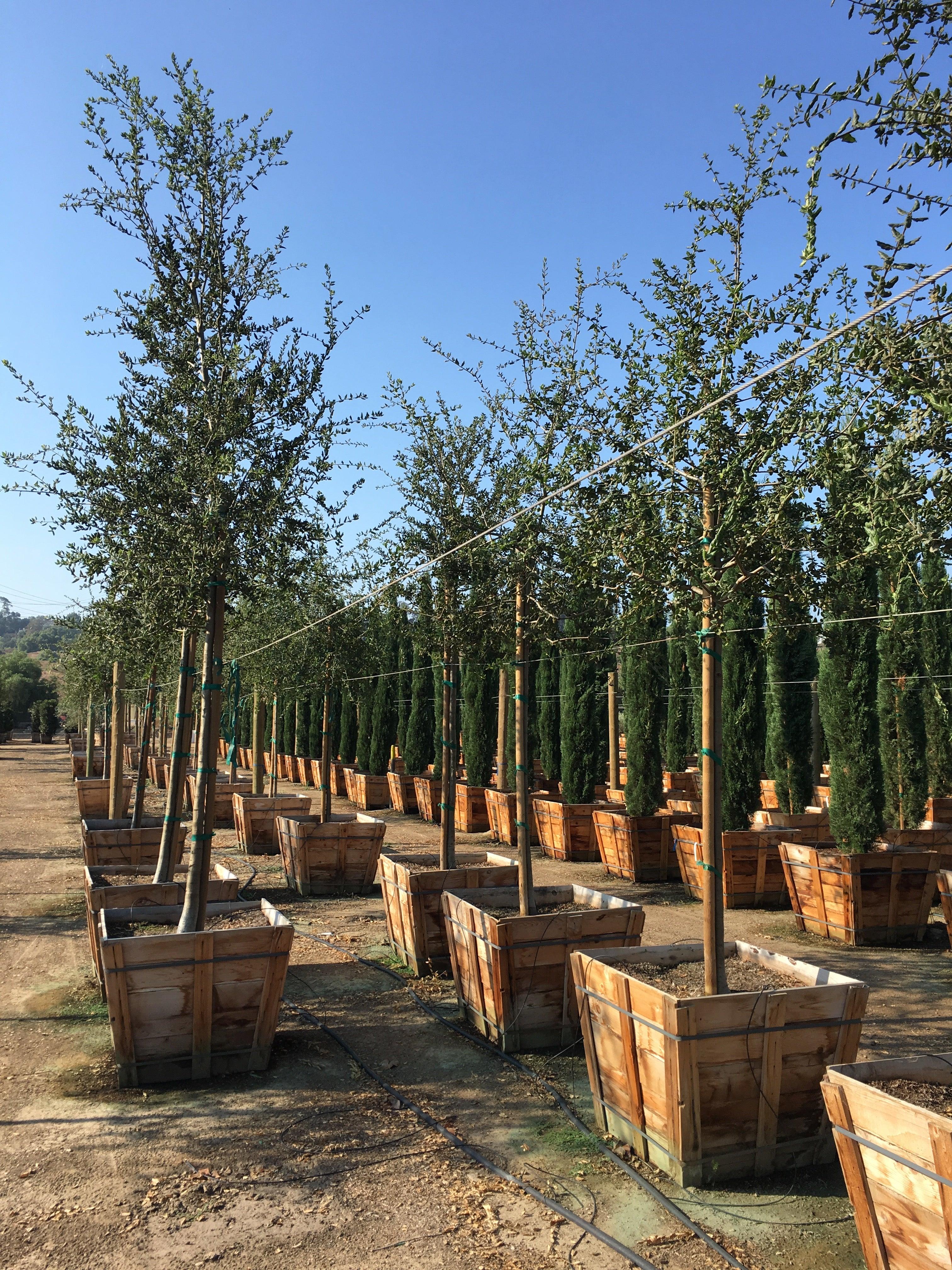
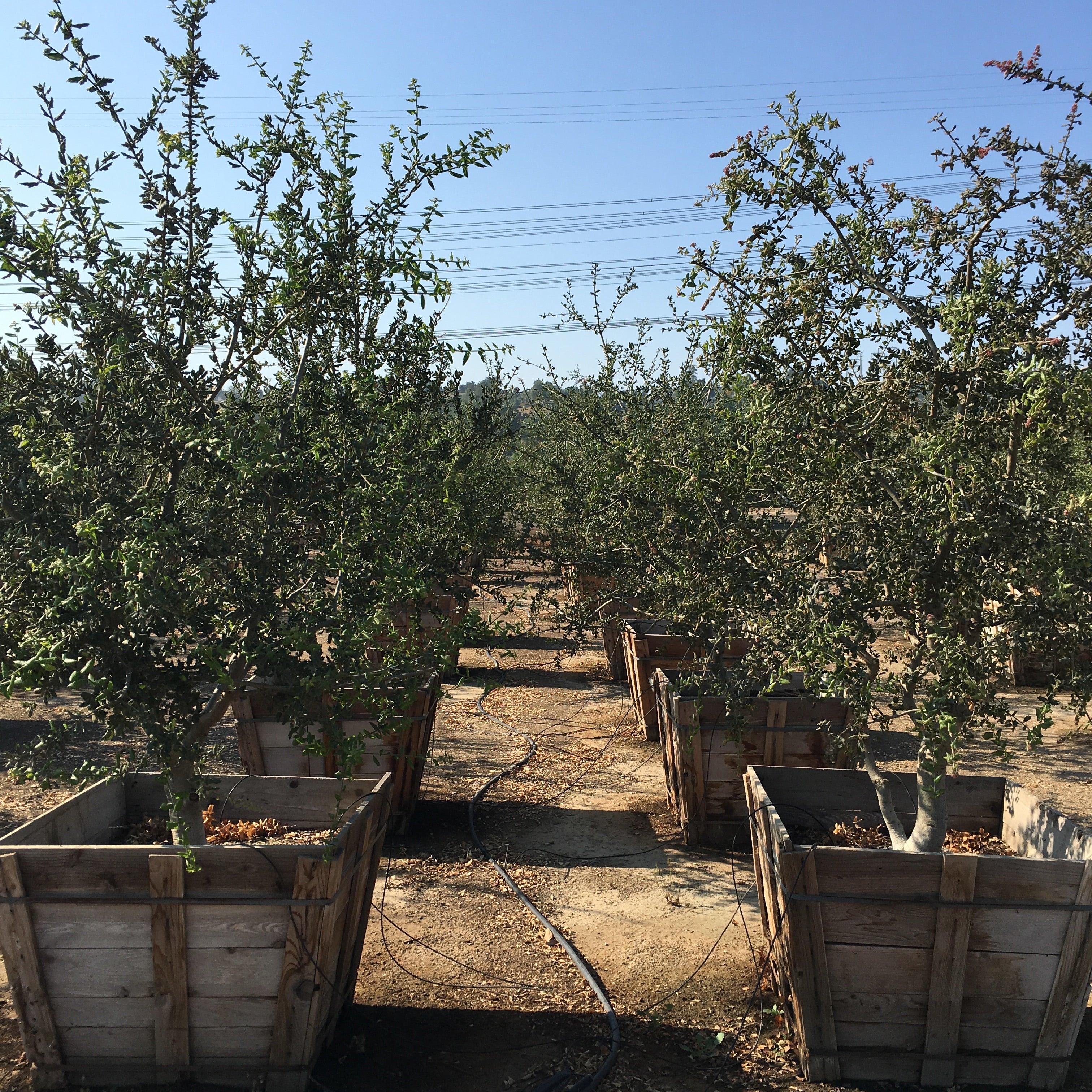
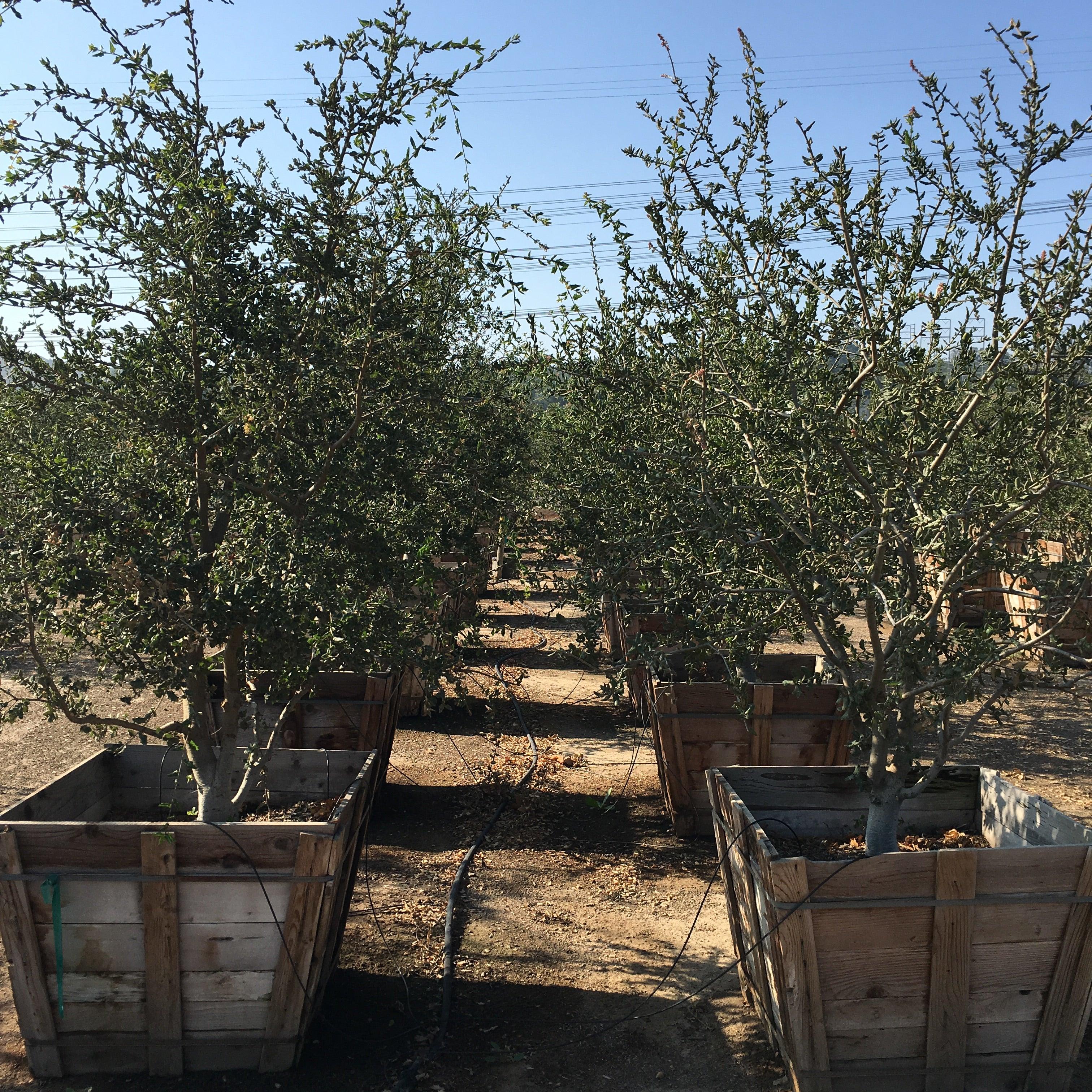
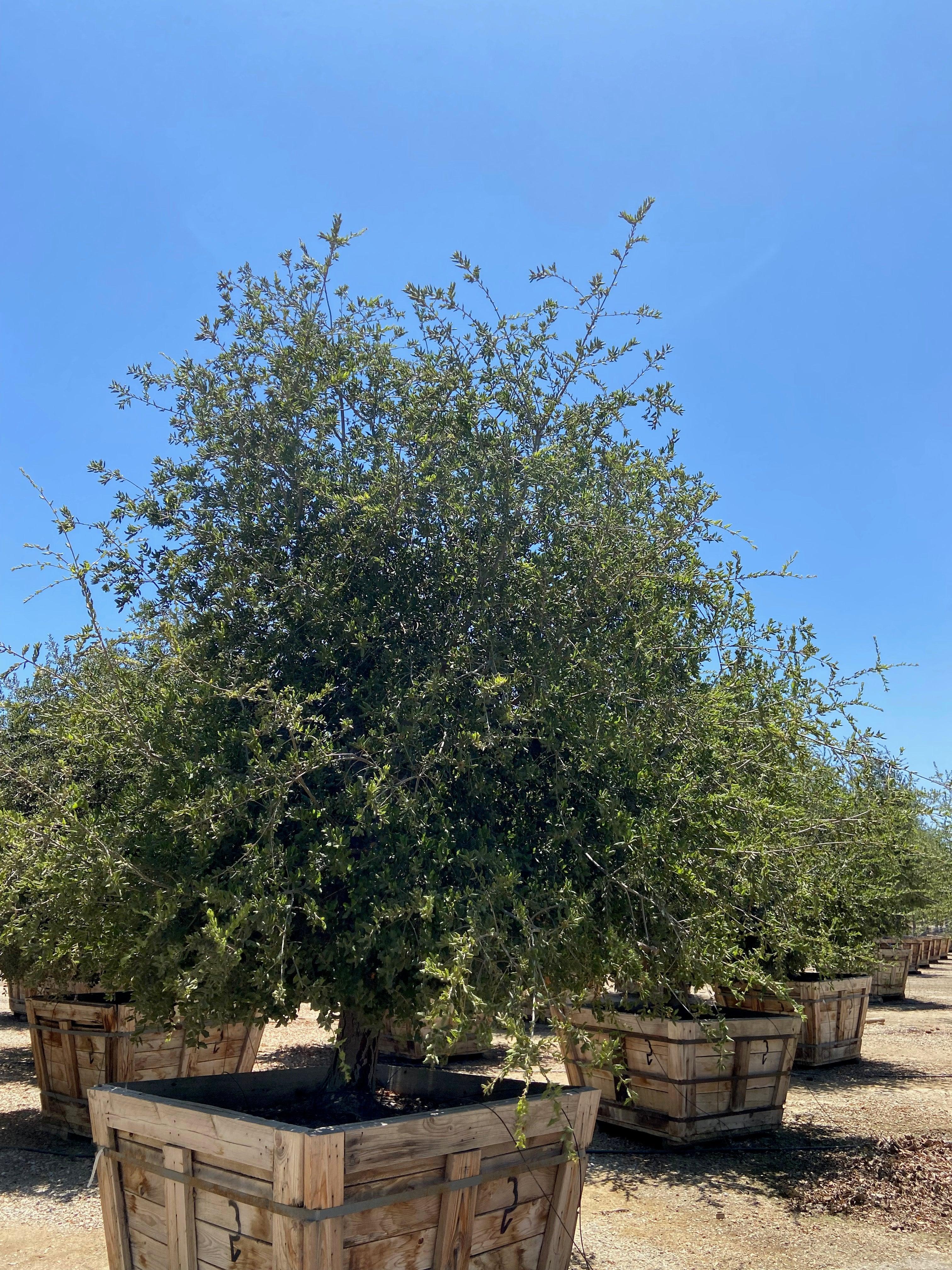
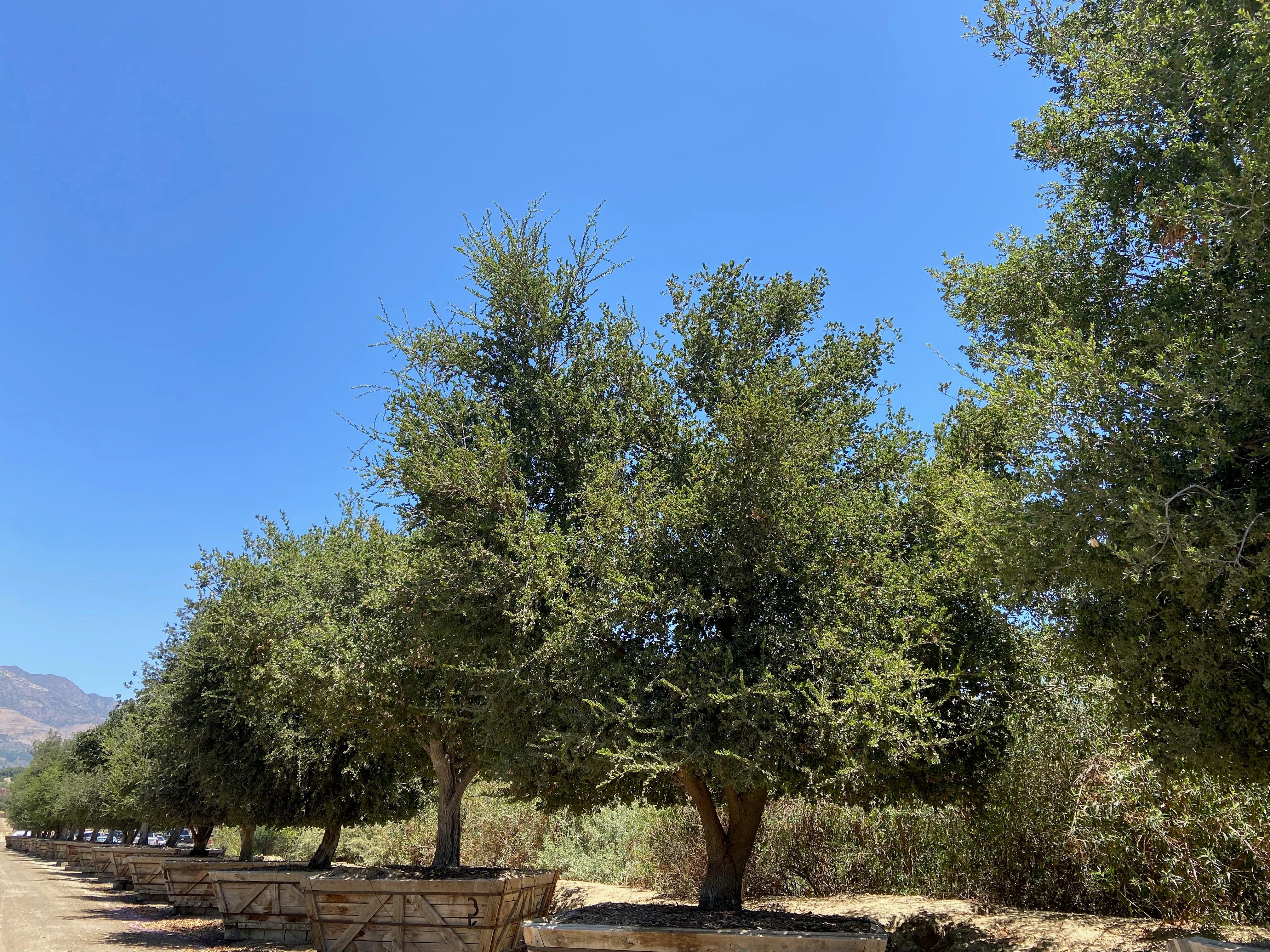
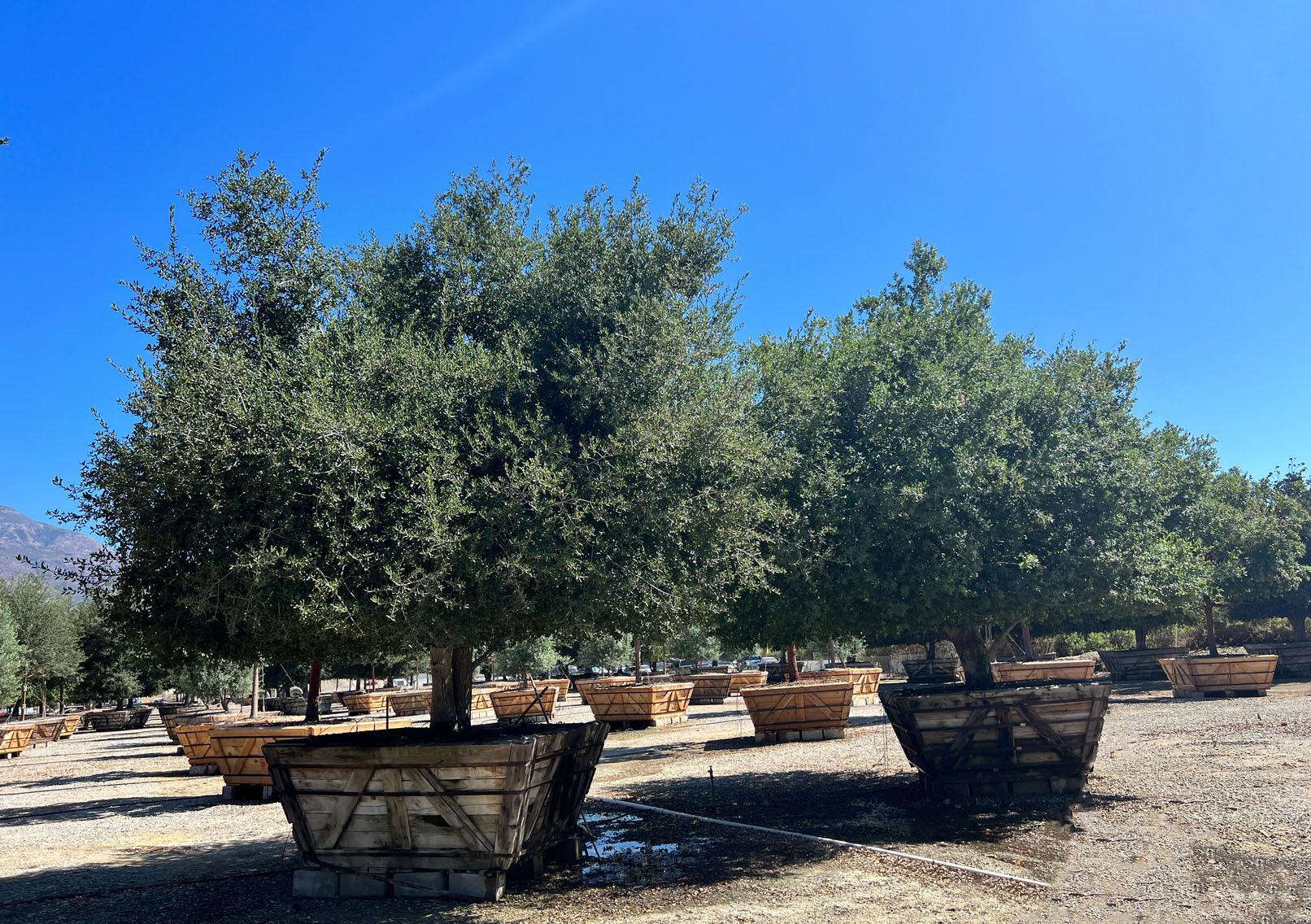
Coastal Live Oak is naturally round-headed and available as a single, multi-trunk or natural low-branching specimen.
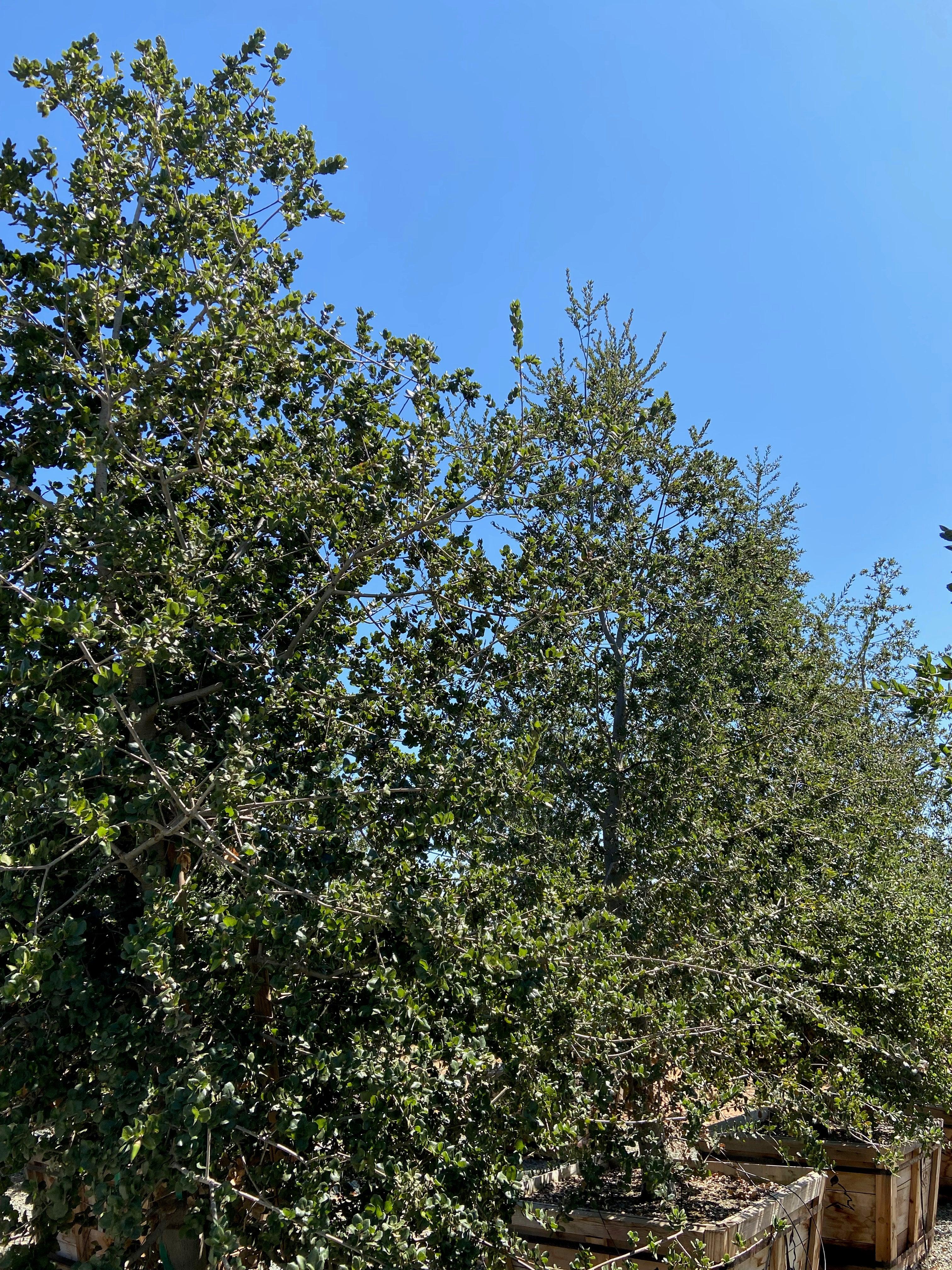
This evergreen tree thrives in Sunset Garden zones 7-9 and 14-24. Coast live oaks thrive in coastal environments, typically within 100 kilometers of the Pacific Ocean, and can tolerate airborne salinity and coastal fog, which helps them survive dry summers. Full sun and adequate but deep water fulfill its requirements. Coast live oaks prefer well-drained soil and are often found in soils with good drainage. The leaves are alternate, evergreen, simple, and can be 1 to 2.5 inches long, with thick, leathery, shiny green surfaces and spiny margins resembling holly. Their shape is elliptical to oblong.
Coast Live Oak is prized for its attractive bark, deer and drought resistance and its ability to attract birds and butterflies.
The small and cone-shaped acorns (seeds) of the Coast Live Oak were a staple for Native Americans. The acorns of the coast live oak were a primary food source for tribes such as the Ohlone, Kameyaay, and Cahuilla, who ground them into a flour-like paste for cooking. Many Indigenous Californians still forage for acorns from the coast live oak as a food source, especially during special events, reflecting a return to traditional diets. Quercus agrifolia is Latin for “field” oak, with the genus name derived from Latin and Celtic roots—'fine' referring to a characteristic of the tree. Its Spanish name, “encino,” was used to name more than a few of the original land grants in California, and the coast live oak has influenced place names in California, with cities like Oakland and Encinitas and valleys named after oaks, reflecting its cultural and historical significance—get our coast live oak tree for sale today!
Coast Live Oak Trees (Quercus Agrifolia) grow slowly but last generations.
Despite its common name, it can be found growing naturally in habitats miles from the coast, even near the Sierra Nevadas. It is also the only oak that thrives near the ocean. Expected to eventually (but slowly) reach 70' in height and 80' in spread, the Coast Live Oak is a considerable but worthwhile commitment.
Coastal Live Oak is naturally round-headed and available as a single, multi-trunk or natural low-branching specimen.
This evergreen tree thrives in Sunset Garden zones 7-9 and 14-24. Full sun and adequate but deep water fulfill its requirements. Oval dark green leathery leaves have serrated edges and are 1-3 inches long.
Coast Live Oak is prized for its attractive bark, deer and drought resistance and its ability to attract birds and butterflies.
The small and cone-shaped acorns of the Coast Live Oak were a staple for Native Americans. Quercus agrifolia is Latin for “field” oak. Its Spanish name, “encino” was used to name more than a few of the original land grants in California – get our coast live oak tree for sale today!
You may also like...
Distribution and Habitat of Coast Live Oak
The coast live oak (Quercus agrifolia) is a defining species of California’s oak woodlands, stretching from the rolling coastal hills of Mendocino County in Northern California all the way down to San Diego County in Southern California, and even into Baja California, Mexico. This evergreen oak thrives in well-drained soils and is often found along perennial streams, where its deep roots can access reliable moisture, just as coast redwood trees (Sequoia sempervirens) flourish in moist, foggy habitats. Coast live oaks are a cornerstone of mixed evergreen forests and open plains, shaping the ecology of these communities by providing shade, shelter, and food for countless species.
Research by the US Forest Service and the Pacific Southwest Research Station underscores the coast live oak’s vital role in maintaining biodiversity across its range. It often grows alongside other oak species, such as the interior live oak and Shreve oak (Quercus parvula var. shrevei), and can even hybridize with them, contributing to the rich genetic diversity of California’s forests, much like cork oak (Quercus suber) in Mediterranean climates and Engelmann oak (Quercus engelmannii) in Southern California woodlands. Whether scattered across sun-drenched slopes or forming dense stands in valleys, the coast live oak’s gnarled branches and broad canopy are a familiar and cherished sight throughout the Pacific Southwest.
Ethnobotanical Significance of Live Oak
For centuries, the coast live oak has been woven into the daily lives and traditions of Native American communities in both Northern and Southern California. Its acorns were a staple food, gathered each fall and carefully processed—often ground into flour and leached in a cloth bag to remove bitterness—before being transformed into nourishing bread or used to thicken stews, a contrast to modern landscape trees like the Swan Hill Olives® fruitless olive tree that are selected specifically to avoid messy, edible fruit. This reliable food source helped sustain generations, making the coast live oak an essential part of California’s cultural heritage.
Beyond its acorns, the tree’s strong wood was prized for crafting tools, furniture, and even wagon wheels, while the bark found use in traditional medicine. The leaves and branches played roles in ceremonies and daily life, reflecting the deep connection between people and the land. Coast live oaks also support a vibrant web of wildlife: acorn woodpeckers, for example, depend on the tree’s annual bounty of acorns, storing them in granaries for year-round sustenance, while drought-adapted species like the Desert Ironwood tree (Olneya tesota) fill a similar ecological role in arid landscapes.
Today, coast live oaks face new challenges, most notably sudden oak death—a disease caused by the plant pathogen Phytophthora ramorum. This threat has impacted oak woodlands from San Luis Obispo to Oakland, prompting conservation efforts to protect these iconic trees and the communities, both human and wild, that rely on them. By planting and caring for coast live oaks, we help preserve a living legacy that enriches California’s landscapes and supports its unique biodiversity.
Product Information
Product Information
Shipping & Returns
Shipping & Returns
Description
Coast Live Oak Trees (Quercus Agrifolia) grow slowly but last generations.
Despite its common name, the coast live oak is notable for its abundance in natural habitats, supporting local wildlife and ecosystems. It can be found growing naturally in habitats miles from the coast, even near the Sierra Nevadas, from lowlands up to elevations of around 5,000 feet, with elevation influencing its distribution. It is also the only oak that thrives near the ocean. Expected to eventually (but slowly) reach 70’ in height and 80’ in spread, the Coast Live Oak is a considerable but worthwhile commitment. In optimal conditions, coast live oaks (Quercus agrifolia) can grow up to 100 feet tall, with a crown spread that often exceeds their height, characterized by a short trunk and numerous large, crooked, spreading branches.
Coastal Live Oak is naturally round-headed and available as a single, multi-trunk or natural low-branching specimen.
This evergreen tree thrives in Sunset Garden zones 7-9 and 14-24. Coast live oaks thrive in coastal environments, typically within 100 kilometers of the Pacific Ocean, and can tolerate airborne salinity and coastal fog, which helps them survive dry summers. Full sun and adequate but deep water fulfill its requirements. Coast live oaks prefer well-drained soil and are often found in soils with good drainage. The leaves are alternate, evergreen, simple, and can be 1 to 2.5 inches long, with thick, leathery, shiny green surfaces and spiny margins resembling holly. Their shape is elliptical to oblong.
Coast Live Oak is prized for its attractive bark, deer and drought resistance and its ability to attract birds and butterflies.
The small and cone-shaped acorns (seeds) of the Coast Live Oak were a staple for Native Americans. The acorns of the coast live oak were a primary food source for tribes such as the Ohlone, Kameyaay, and Cahuilla, who ground them into a flour-like paste for cooking. Many Indigenous Californians still forage for acorns from the coast live oak as a food source, especially during special events, reflecting a return to traditional diets. Quercus agrifolia is Latin for “field” oak, with the genus name derived from Latin and Celtic roots—'fine' referring to a characteristic of the tree. Its Spanish name, “encino,” was used to name more than a few of the original land grants in California, and the coast live oak has influenced place names in California, with cities like Oakland and Encinitas and valleys named after oaks, reflecting its cultural and historical significance—get our coast live oak tree for sale today!
Coast Live Oak Trees (Quercus Agrifolia) grow slowly but last generations.
Despite its common name, it can be found growing naturally in habitats miles from the coast, even near the Sierra Nevadas. It is also the only oak that thrives near the ocean. Expected to eventually (but slowly) reach 70' in height and 80' in spread, the Coast Live Oak is a considerable but worthwhile commitment.
Coastal Live Oak is naturally round-headed and available as a single, multi-trunk or natural low-branching specimen.
This evergreen tree thrives in Sunset Garden zones 7-9 and 14-24. Full sun and adequate but deep water fulfill its requirements. Oval dark green leathery leaves have serrated edges and are 1-3 inches long.
Coast Live Oak is prized for its attractive bark, deer and drought resistance and its ability to attract birds and butterflies.
The small and cone-shaped acorns of the Coast Live Oak were a staple for Native Americans. Quercus agrifolia is Latin for “field” oak. Its Spanish name, “encino” was used to name more than a few of the original land grants in California – get our coast live oak tree for sale today!
You may also like...
Distribution and Habitat of Coast Live Oak
The coast live oak (Quercus agrifolia) is a defining species of California’s oak woodlands, stretching from the rolling coastal hills of Mendocino County in Northern California all the way down to San Diego County in Southern California, and even into Baja California, Mexico. This evergreen oak thrives in well-drained soils and is often found along perennial streams, where its deep roots can access reliable moisture, just as coast redwood trees (Sequoia sempervirens) flourish in moist, foggy habitats. Coast live oaks are a cornerstone of mixed evergreen forests and open plains, shaping the ecology of these communities by providing shade, shelter, and food for countless species.
Research by the US Forest Service and the Pacific Southwest Research Station underscores the coast live oak’s vital role in maintaining biodiversity across its range. It often grows alongside other oak species, such as the interior live oak and Shreve oak (Quercus parvula var. shrevei), and can even hybridize with them, contributing to the rich genetic diversity of California’s forests, much like cork oak (Quercus suber) in Mediterranean climates and Engelmann oak (Quercus engelmannii) in Southern California woodlands. Whether scattered across sun-drenched slopes or forming dense stands in valleys, the coast live oak’s gnarled branches and broad canopy are a familiar and cherished sight throughout the Pacific Southwest.
Ethnobotanical Significance of Live Oak
For centuries, the coast live oak has been woven into the daily lives and traditions of Native American communities in both Northern and Southern California. Its acorns were a staple food, gathered each fall and carefully processed—often ground into flour and leached in a cloth bag to remove bitterness—before being transformed into nourishing bread or used to thicken stews, a contrast to modern landscape trees like the Swan Hill Olives® fruitless olive tree that are selected specifically to avoid messy, edible fruit. This reliable food source helped sustain generations, making the coast live oak an essential part of California’s cultural heritage.
Beyond its acorns, the tree’s strong wood was prized for crafting tools, furniture, and even wagon wheels, while the bark found use in traditional medicine. The leaves and branches played roles in ceremonies and daily life, reflecting the deep connection between people and the land. Coast live oaks also support a vibrant web of wildlife: acorn woodpeckers, for example, depend on the tree’s annual bounty of acorns, storing them in granaries for year-round sustenance, while drought-adapted species like the Desert Ironwood tree (Olneya tesota) fill a similar ecological role in arid landscapes.
Today, coast live oaks face new challenges, most notably sudden oak death—a disease caused by the plant pathogen Phytophthora ramorum. This threat has impacted oak woodlands from San Luis Obispo to Oakland, prompting conservation efforts to protect these iconic trees and the communities, both human and wild, that rely on them. By planting and caring for coast live oaks, we help preserve a living legacy that enriches California’s landscapes and supports its unique biodiversity.