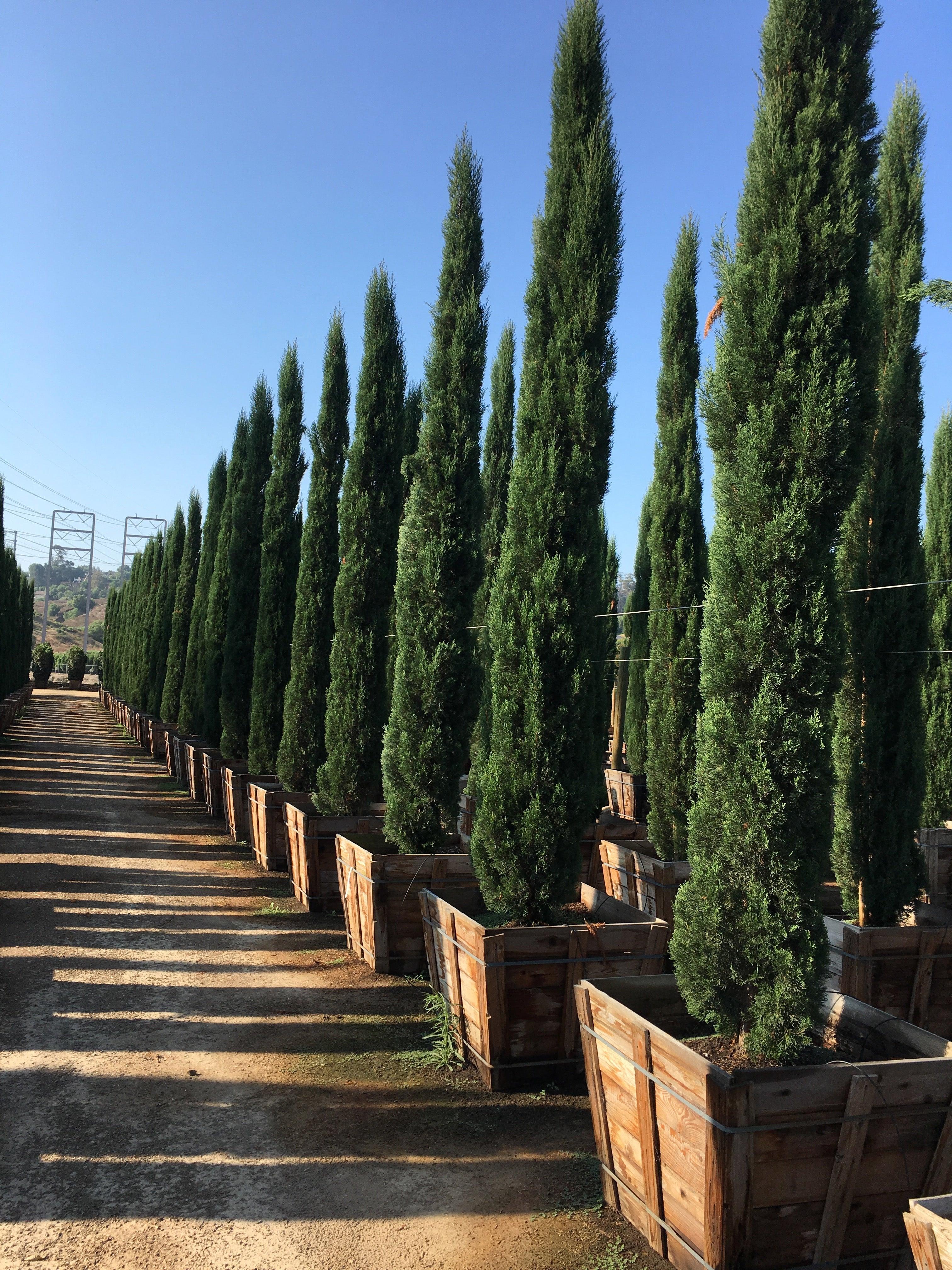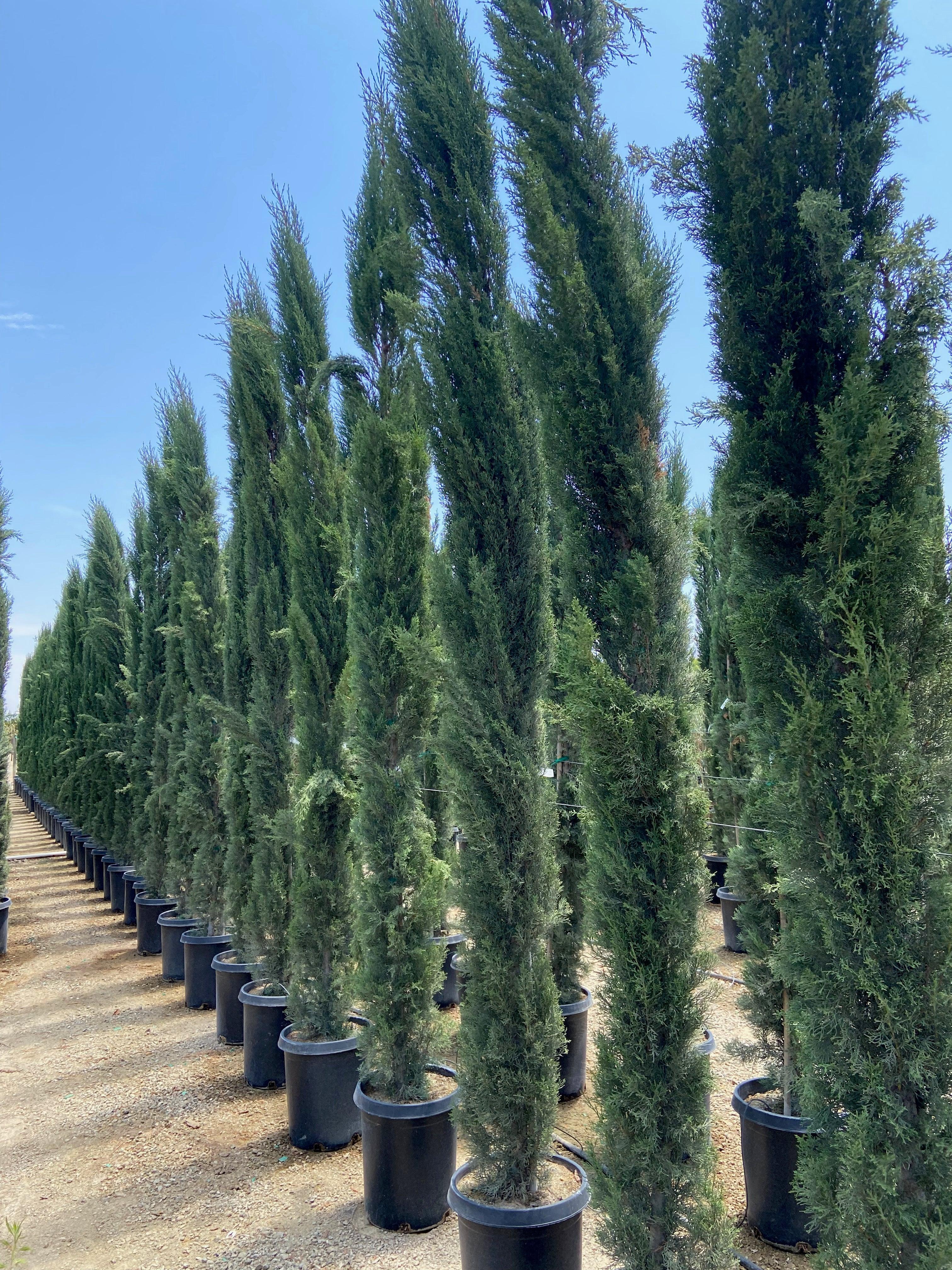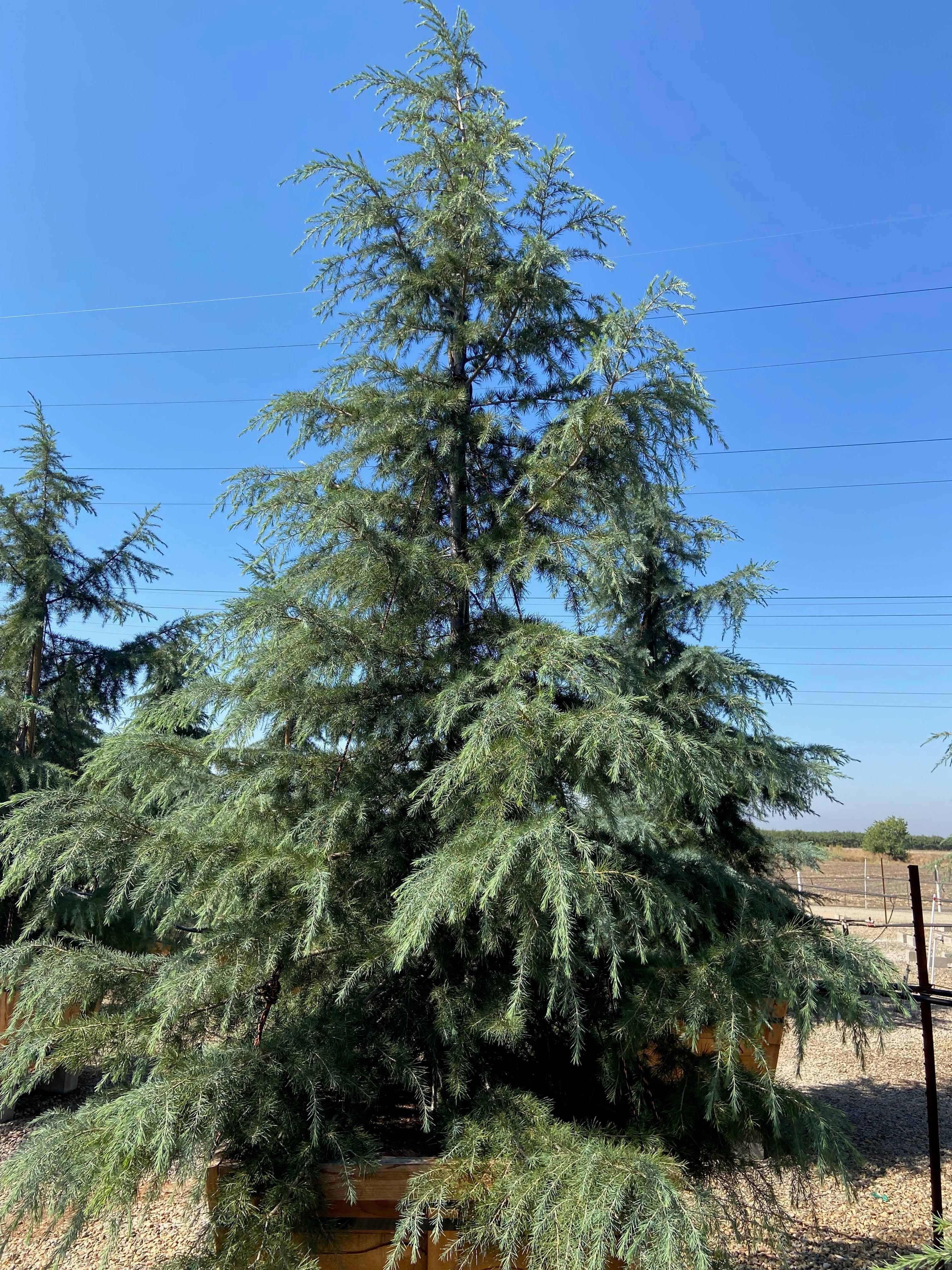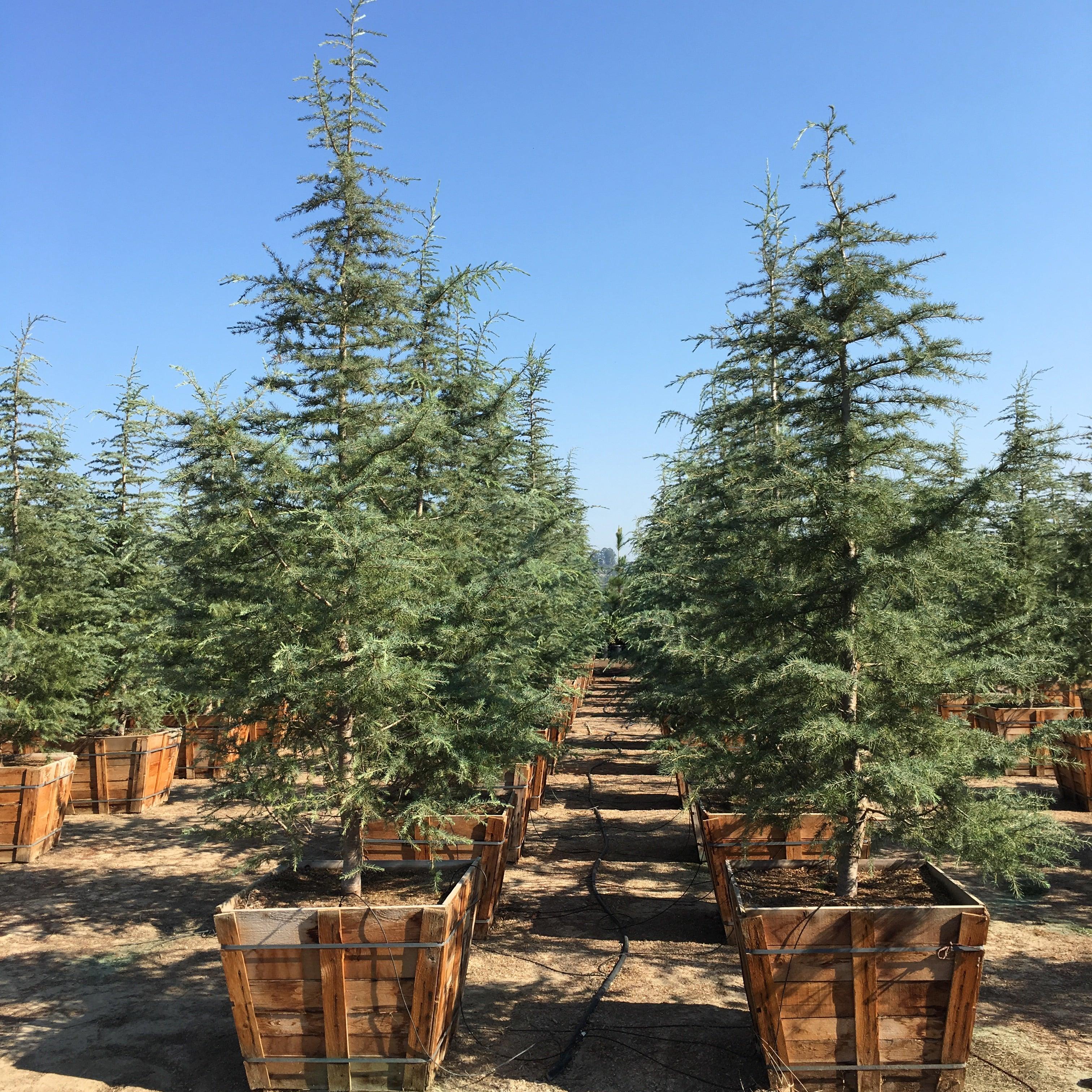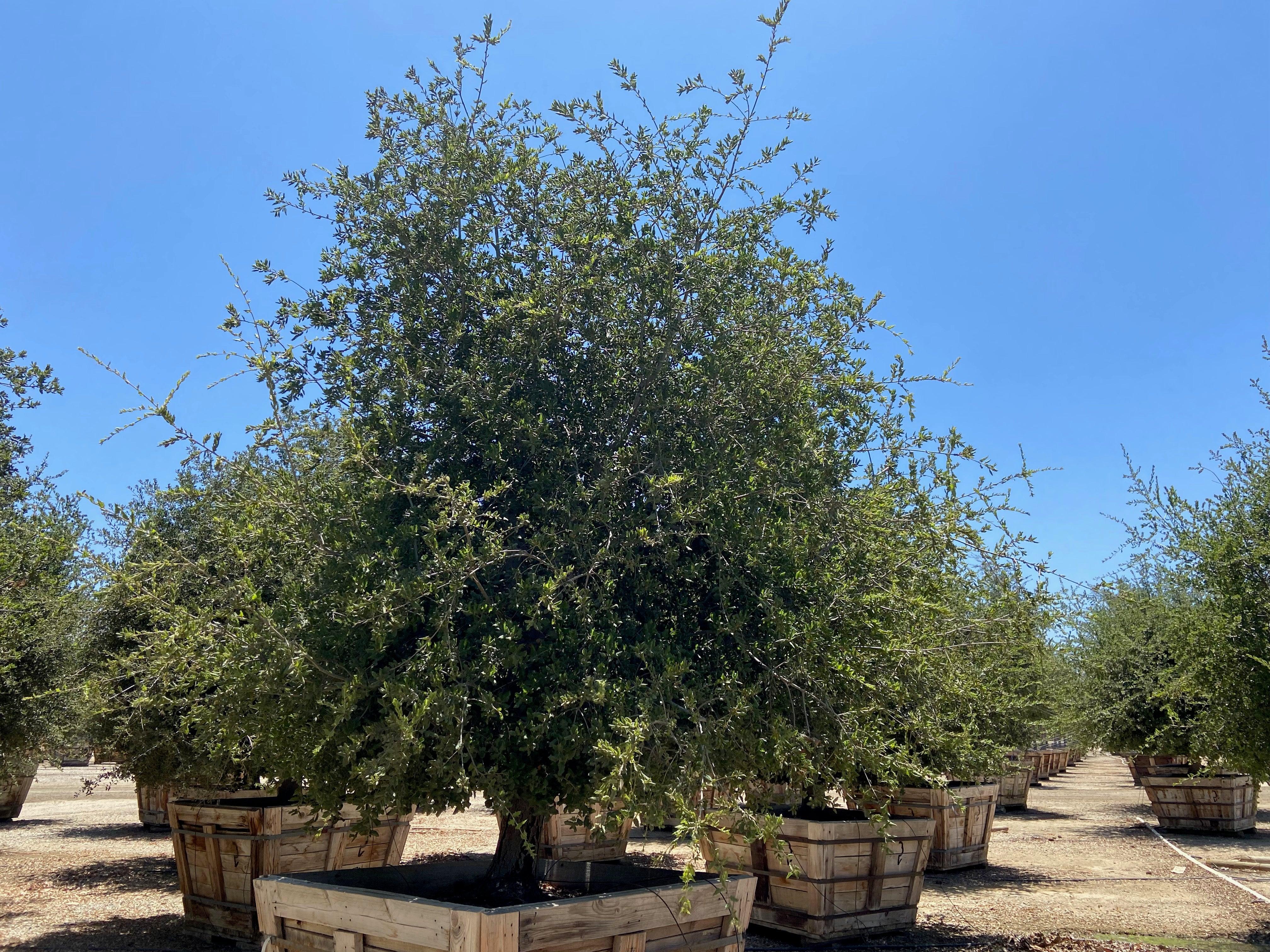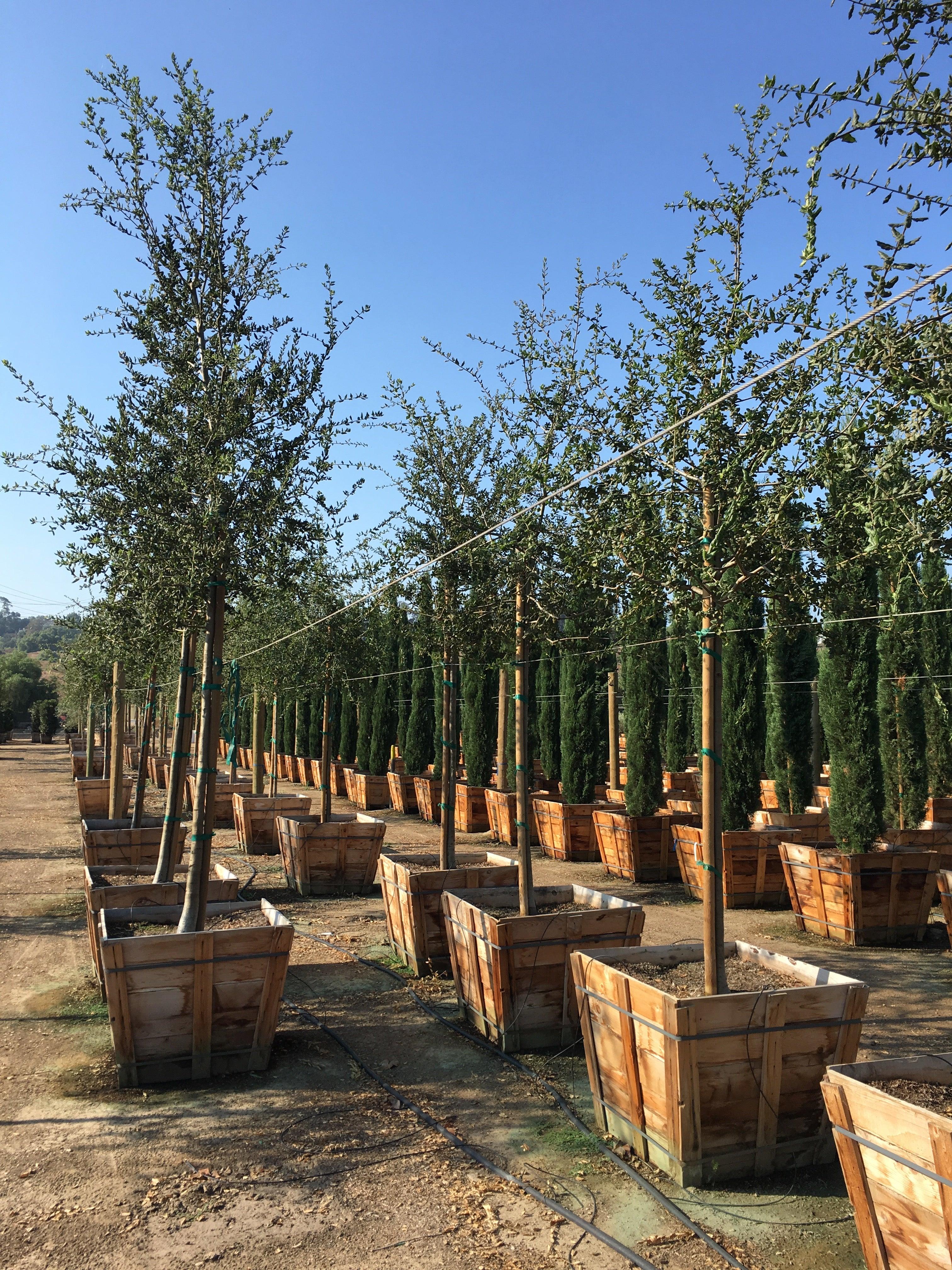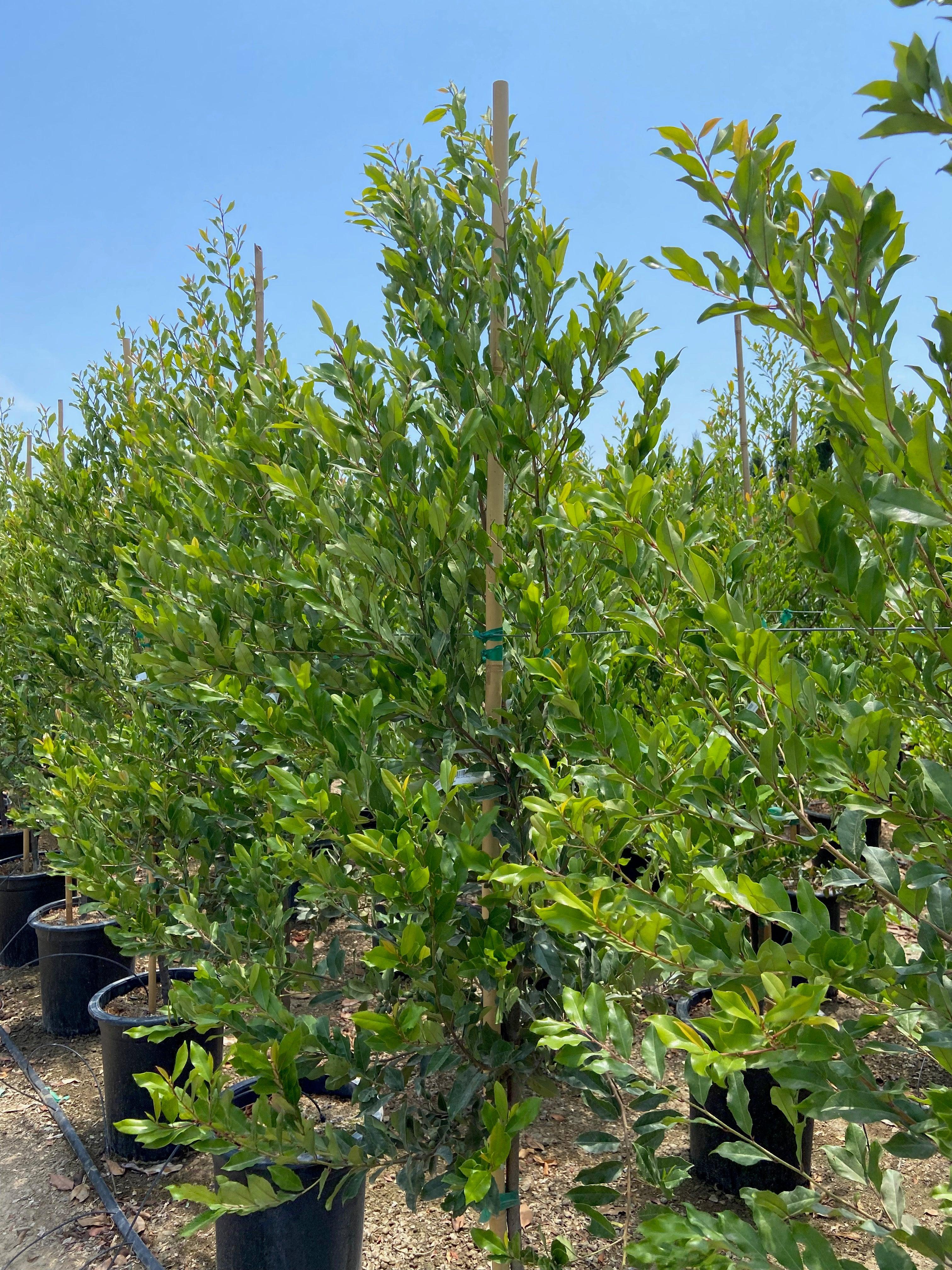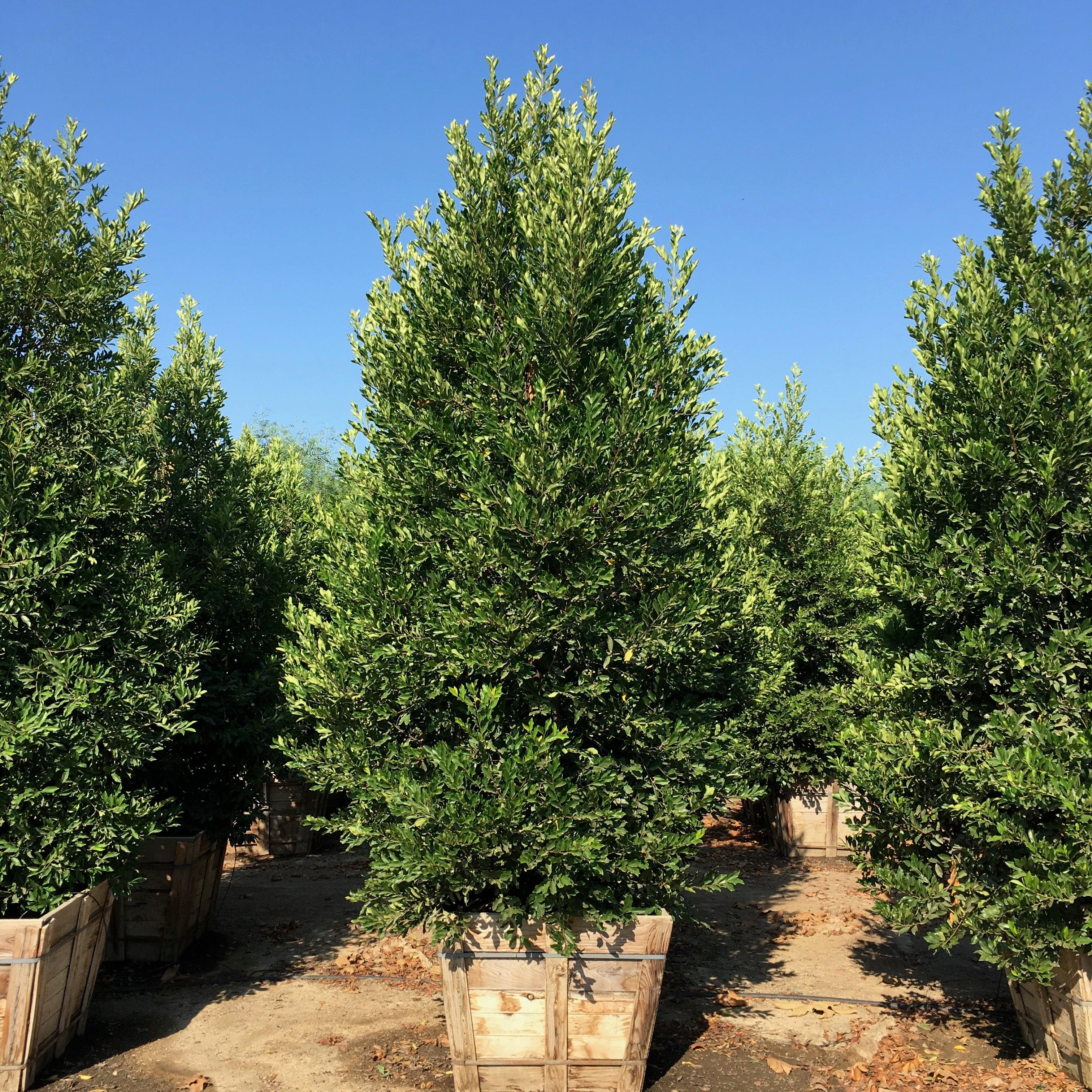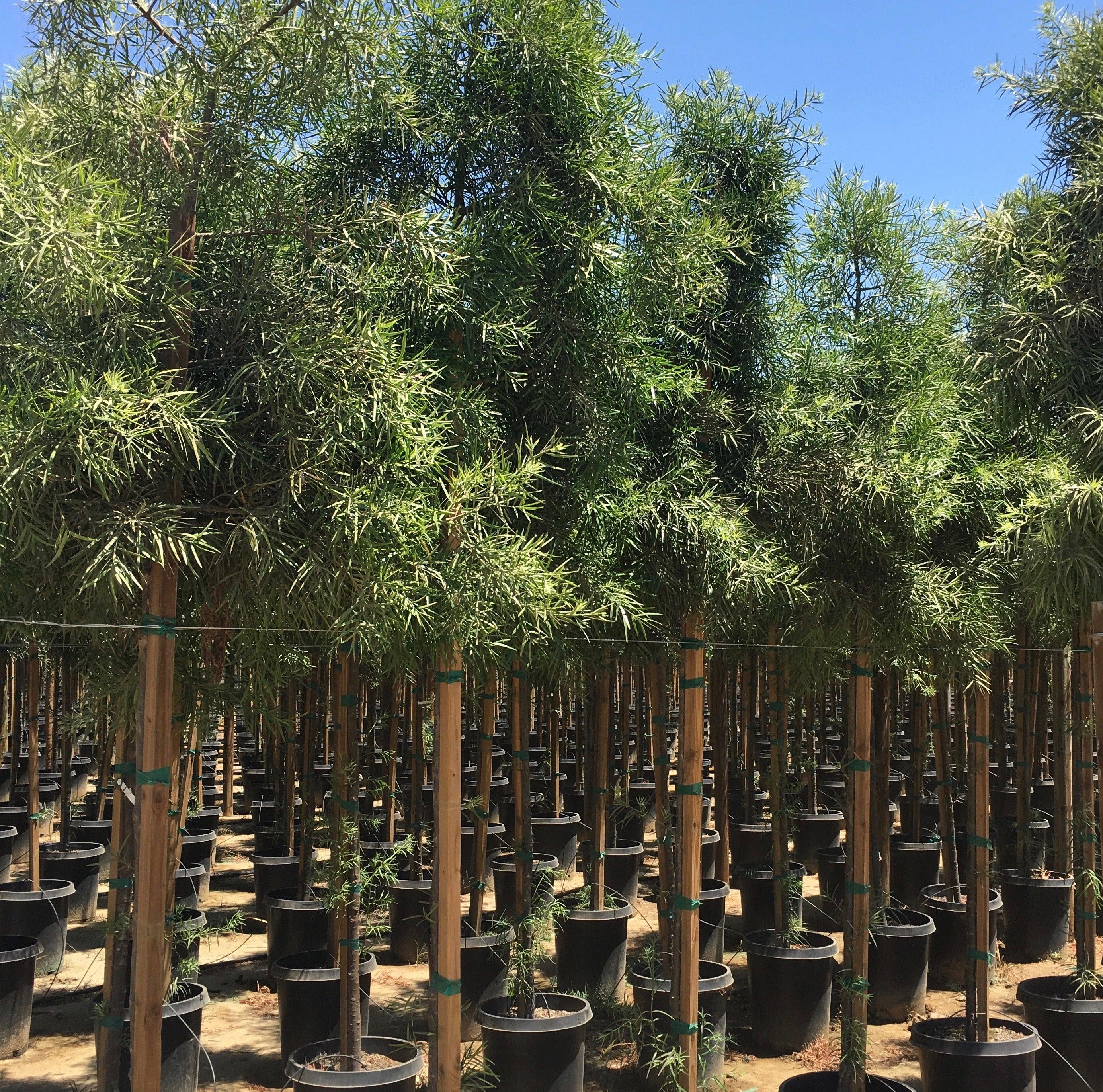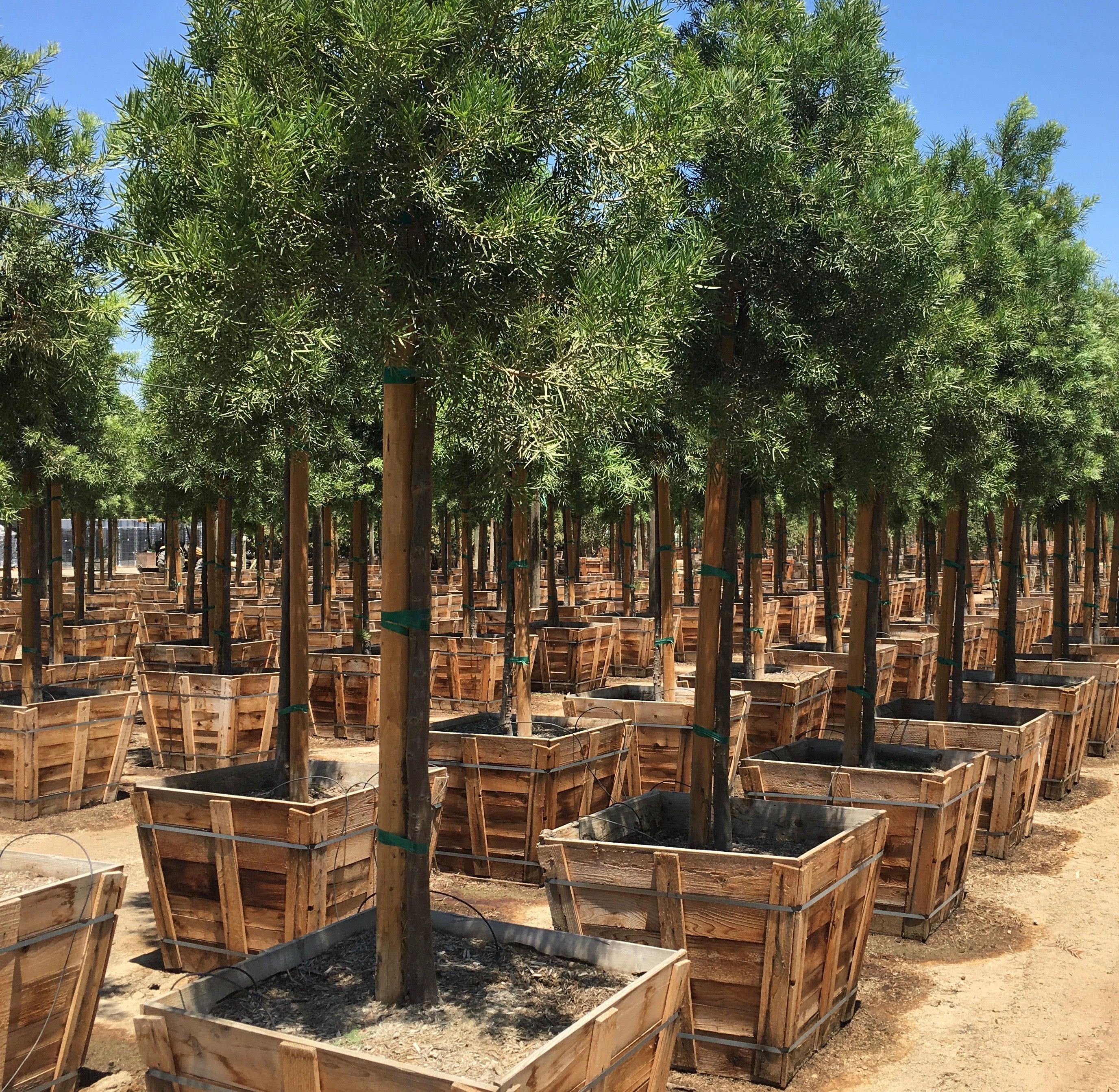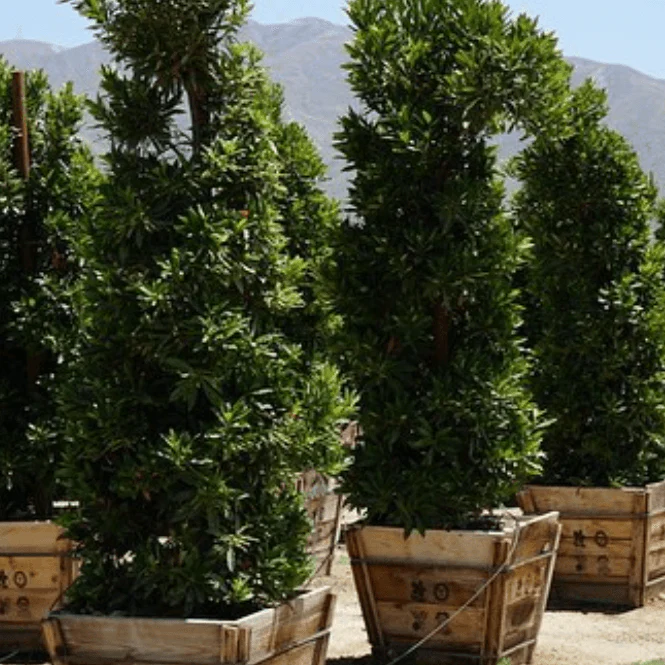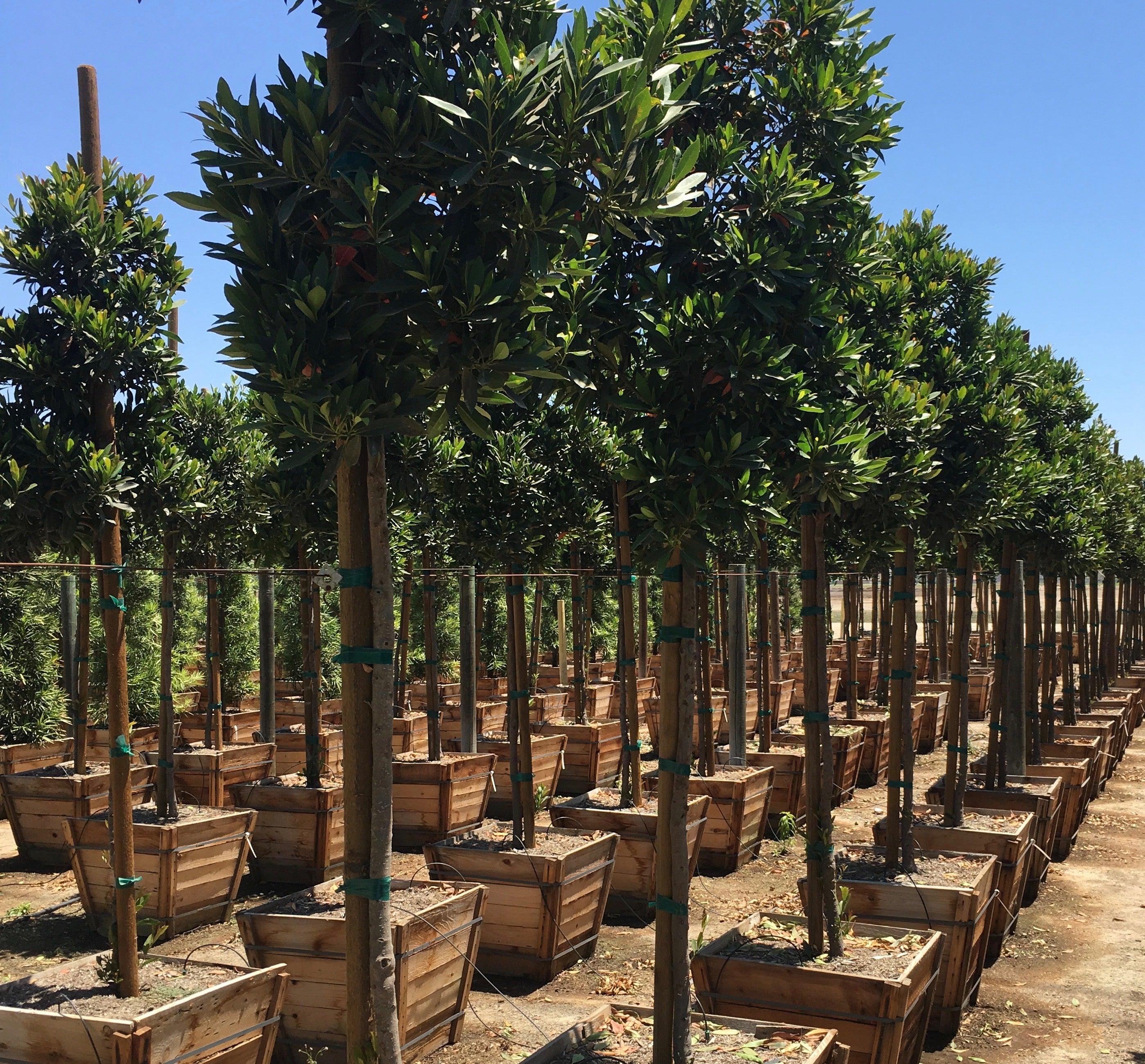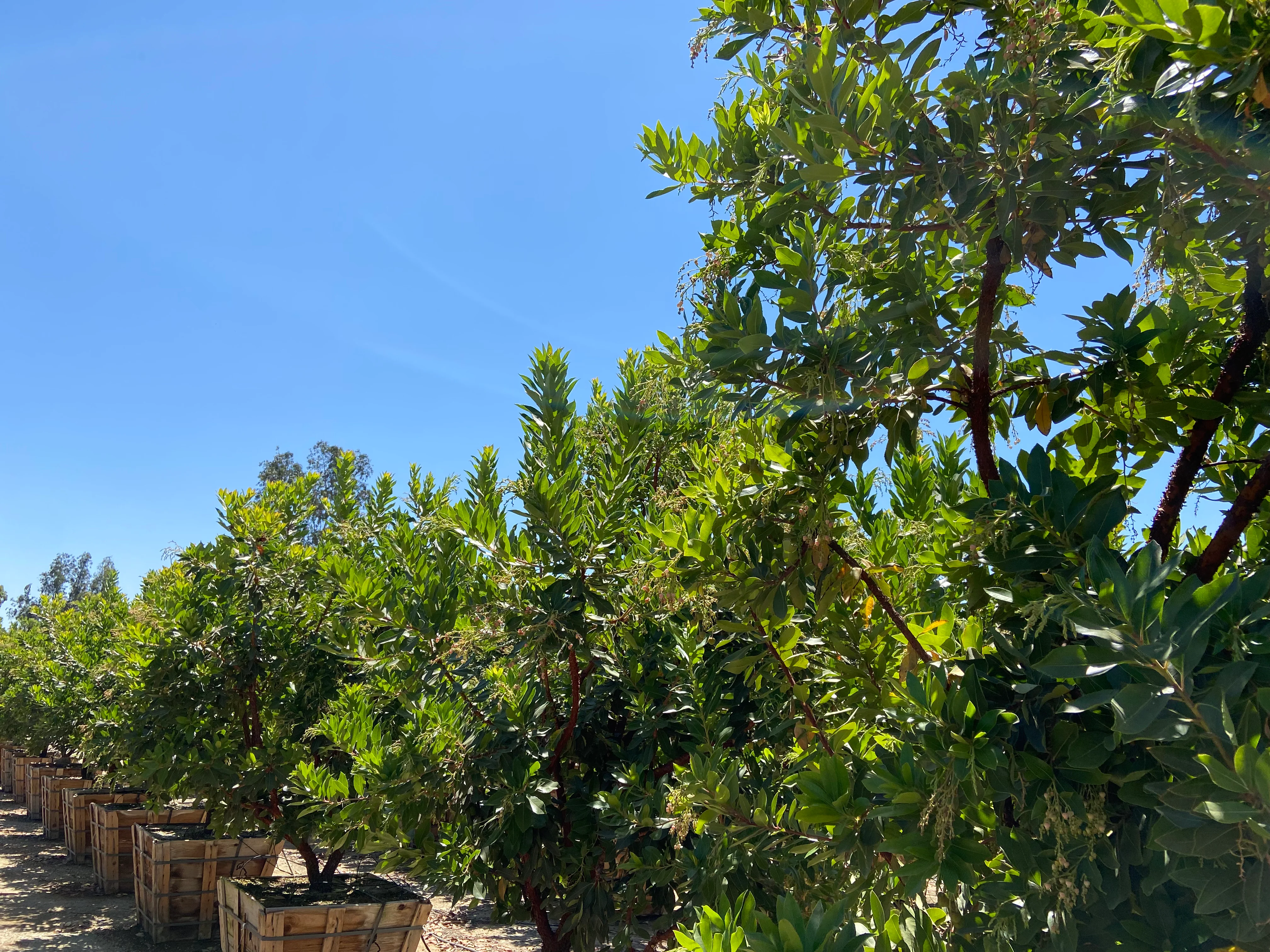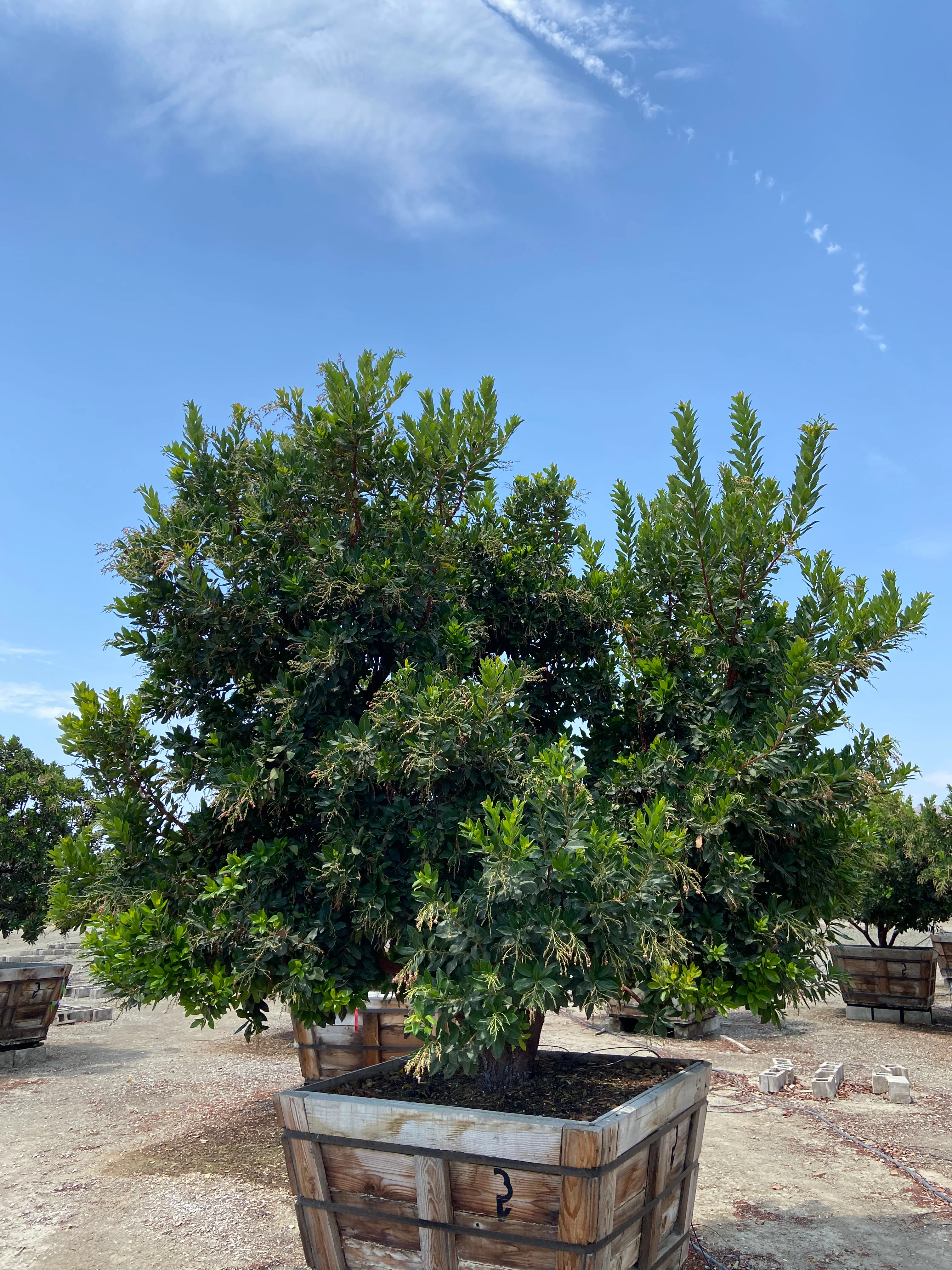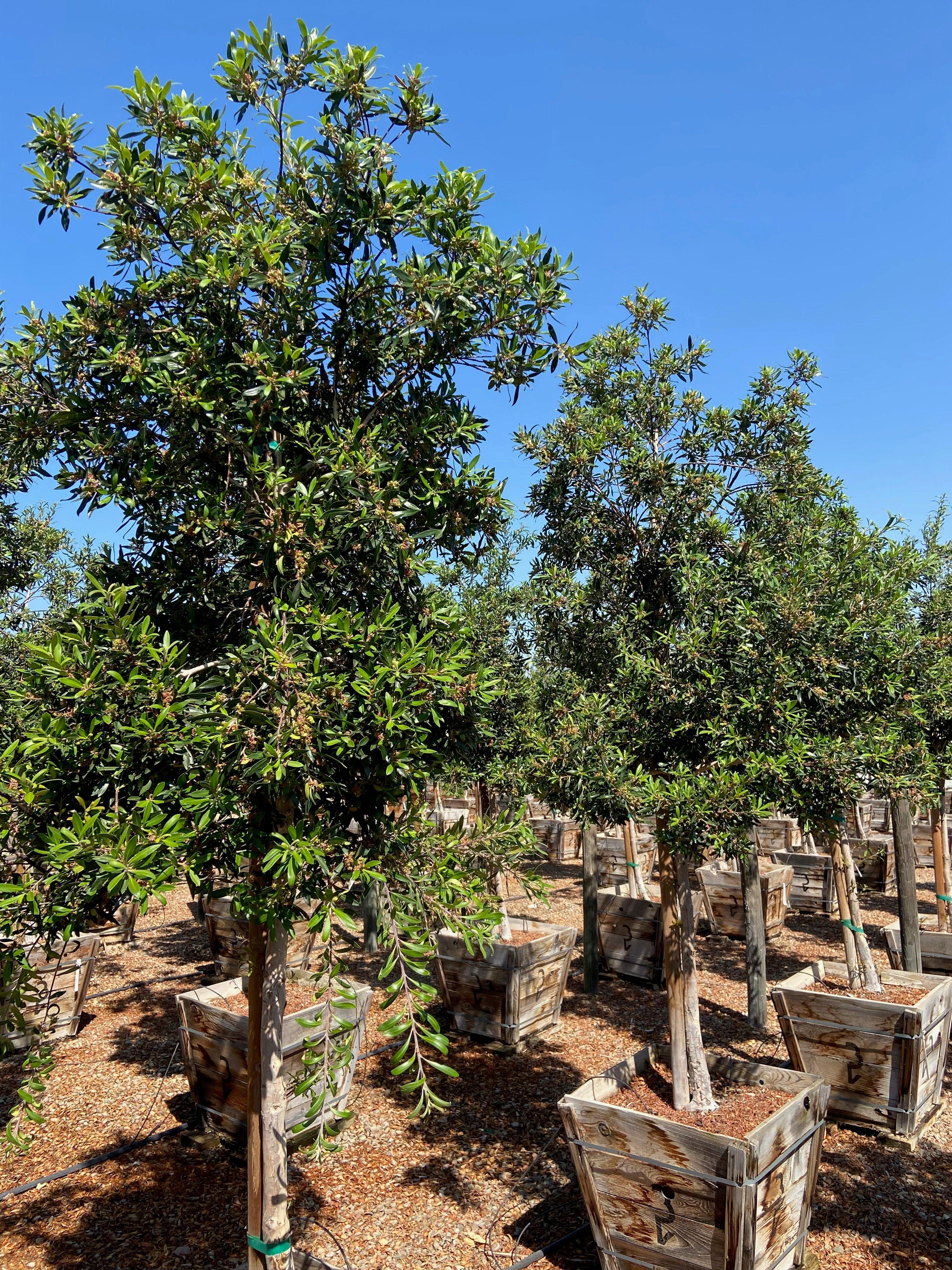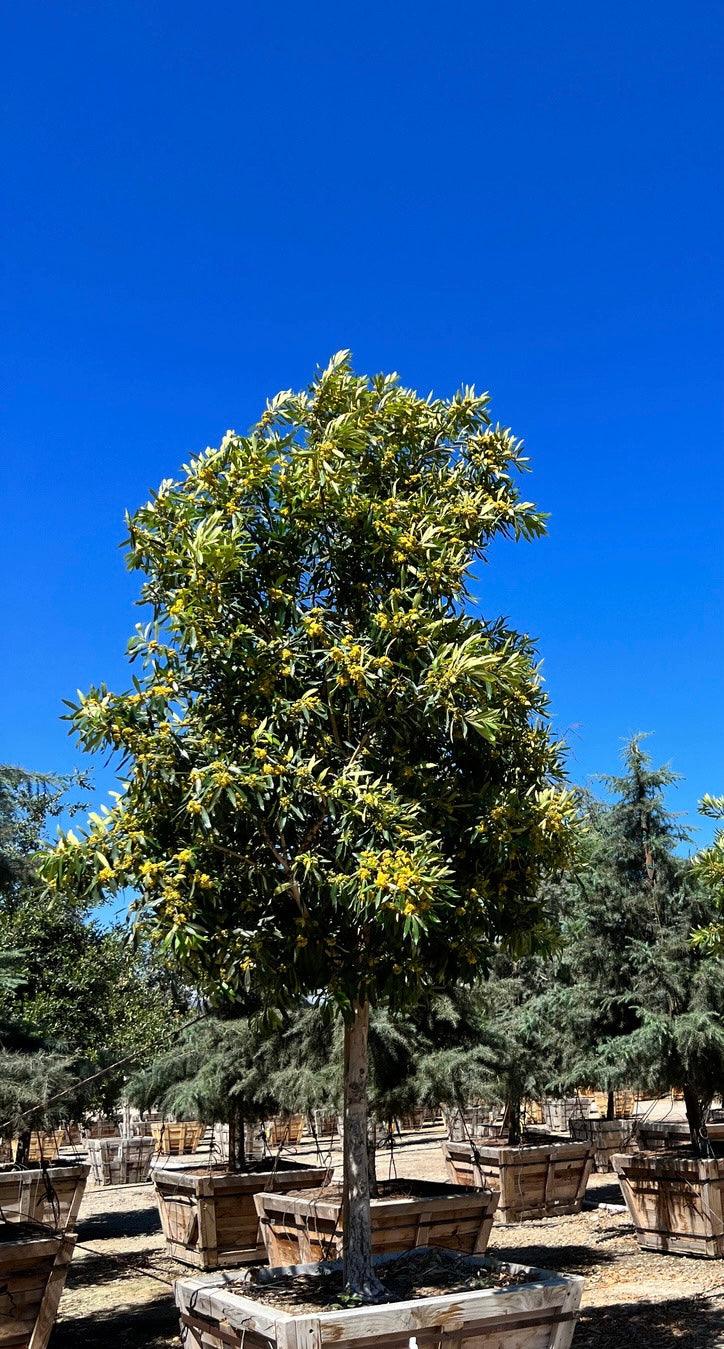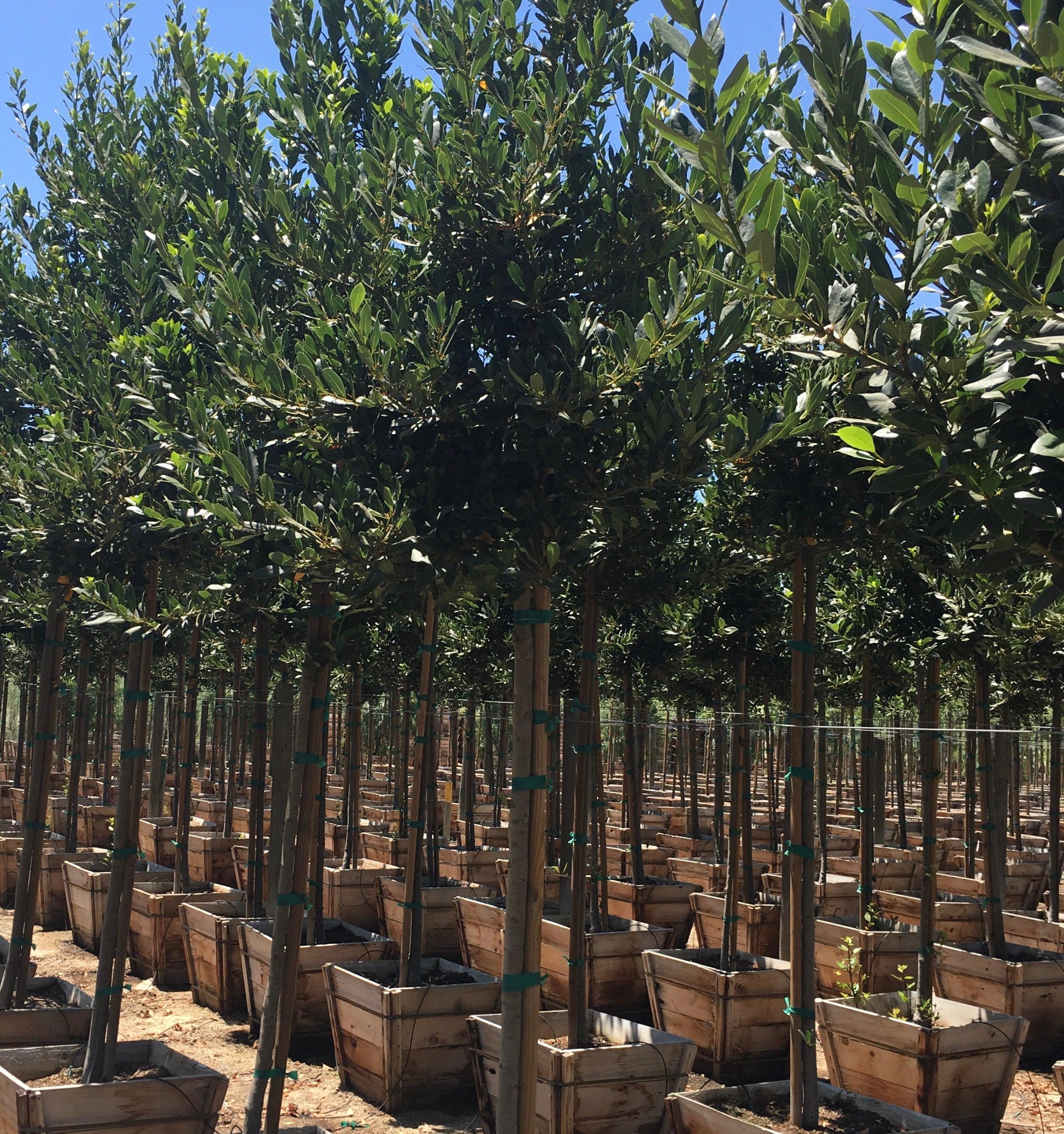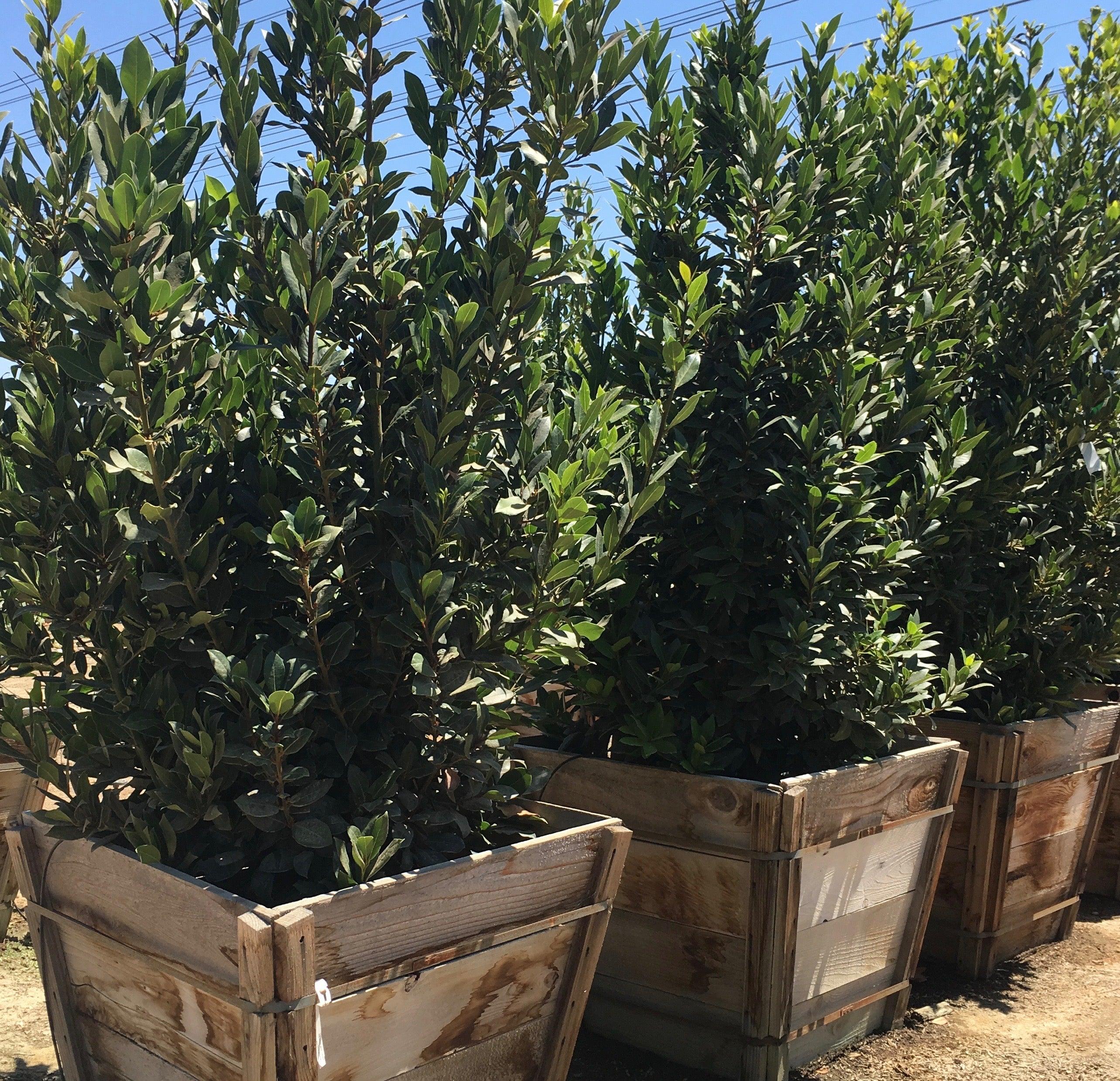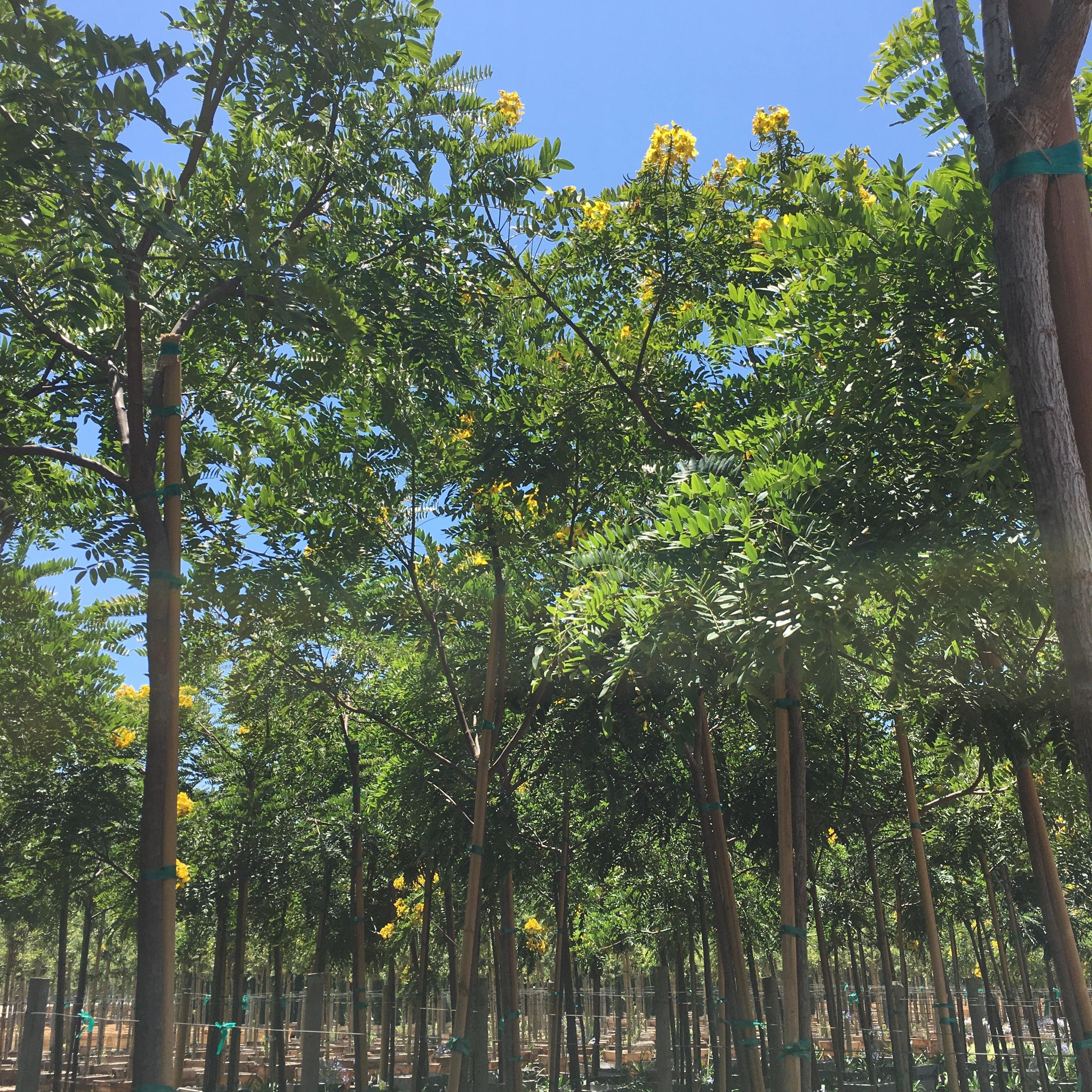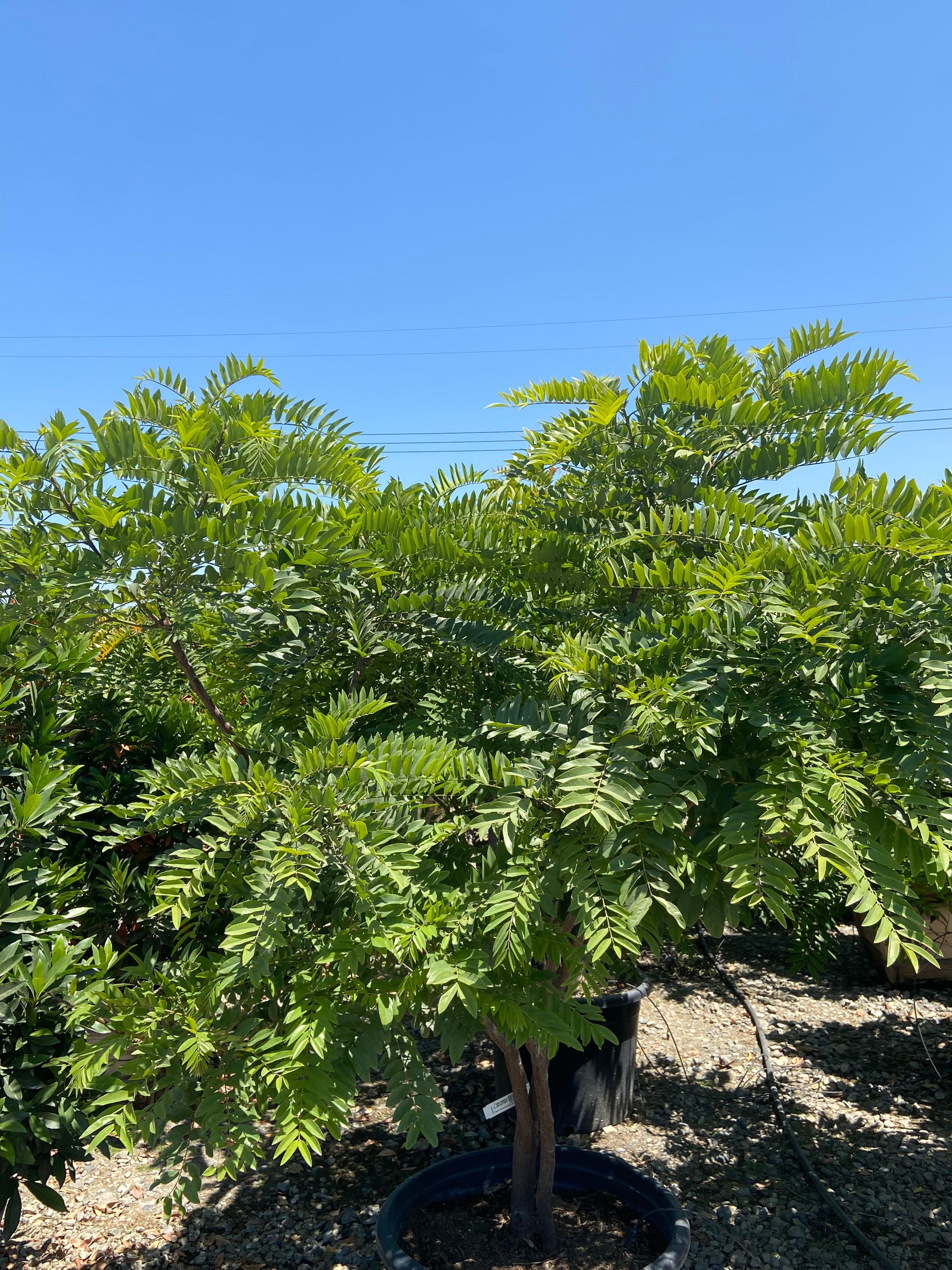
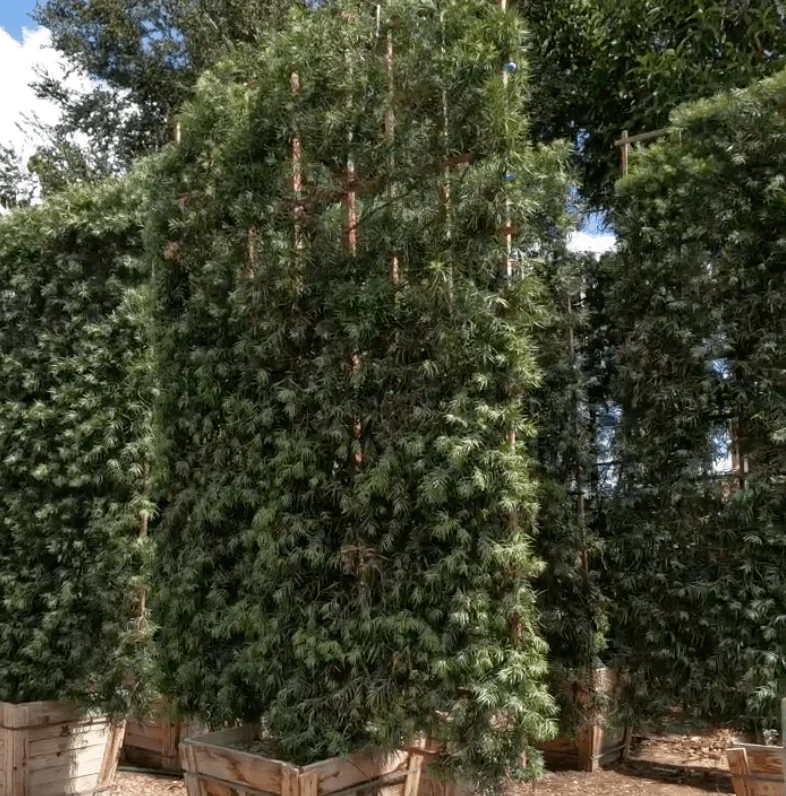
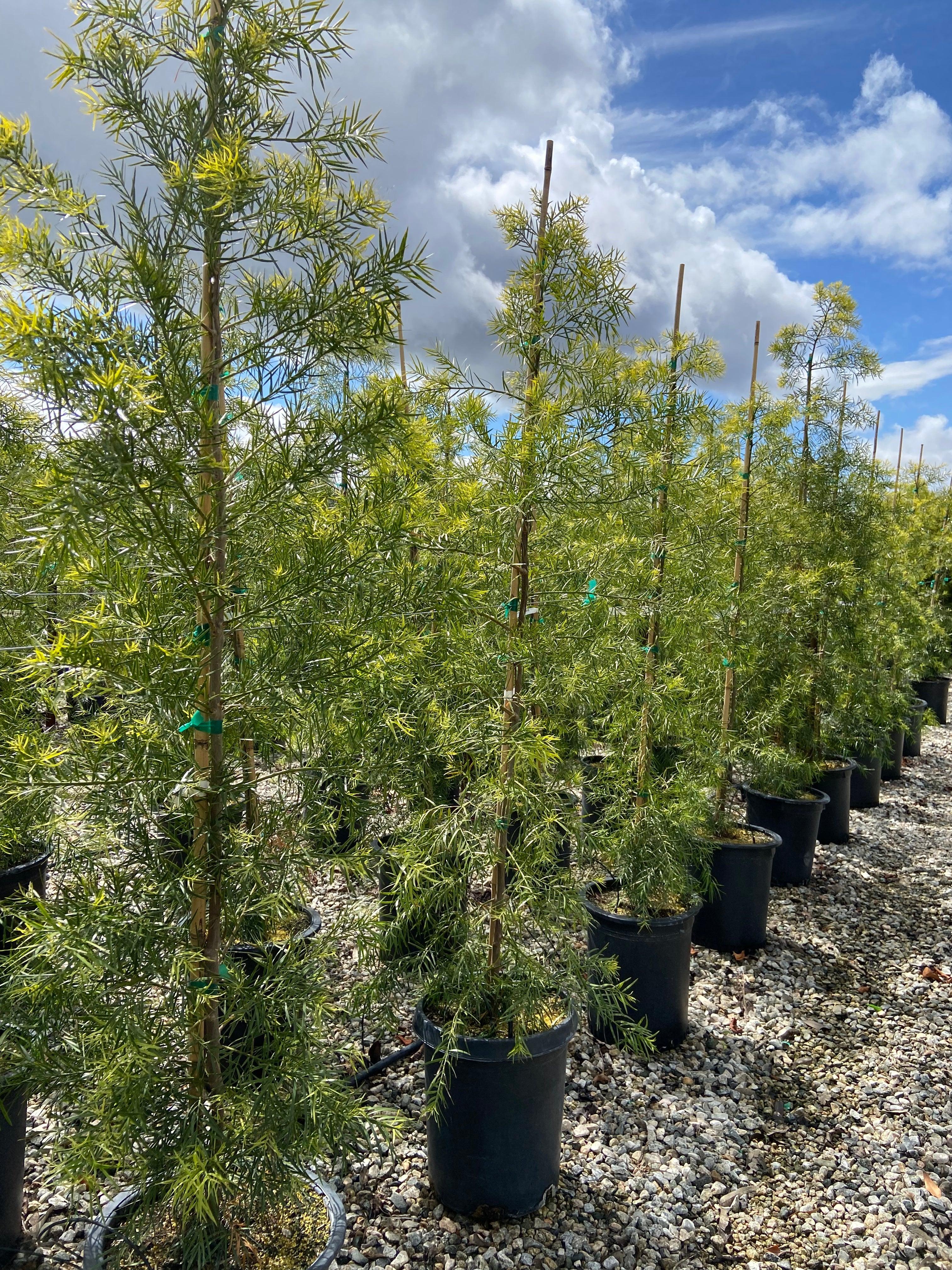
Podocarpus - Fern Pine Hedge
Podocarpus: The Perfect Evergreen for Privacy and Landscaping
Create Beautiful Privacy Screens with Minimal Maintenance
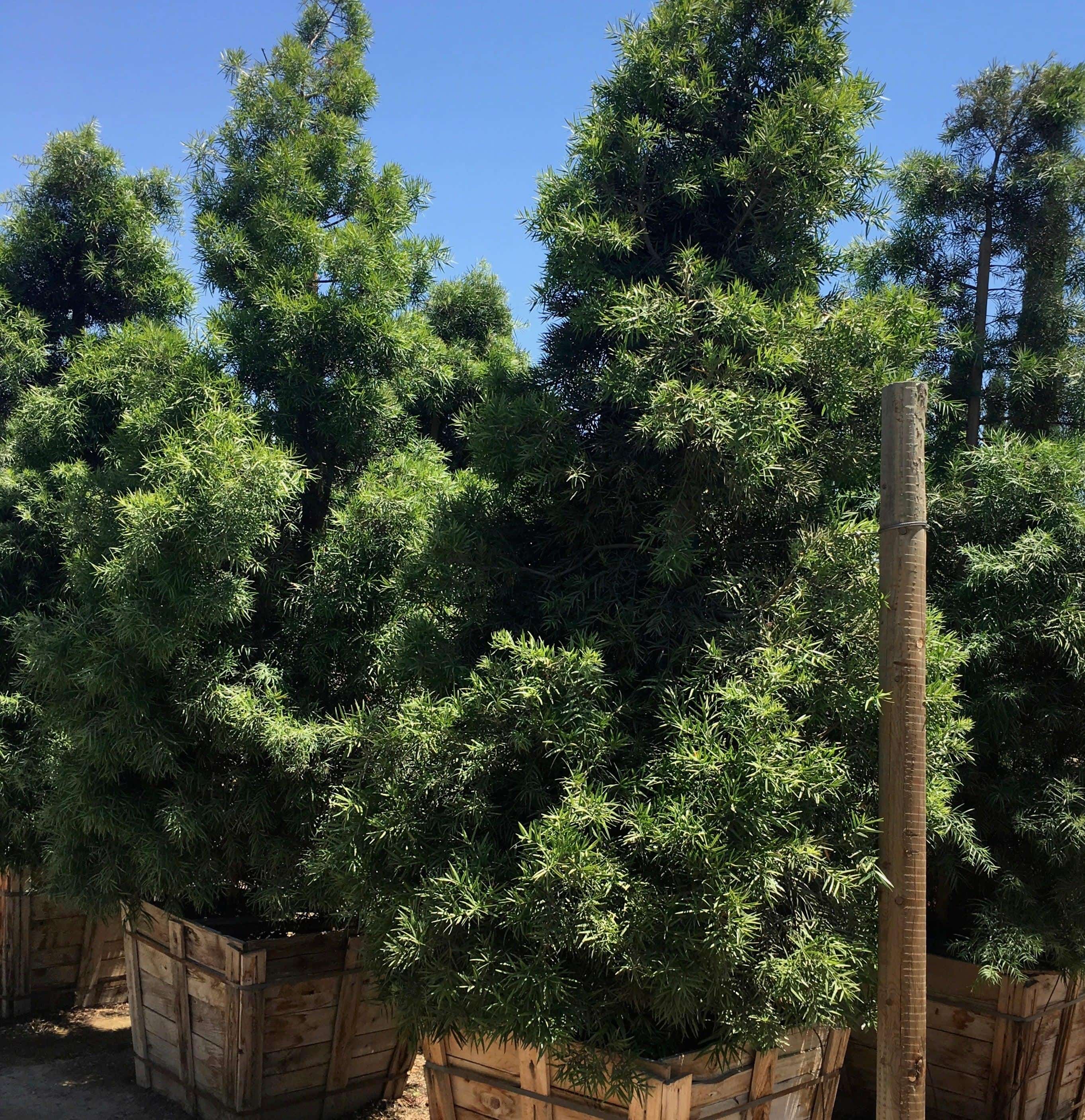
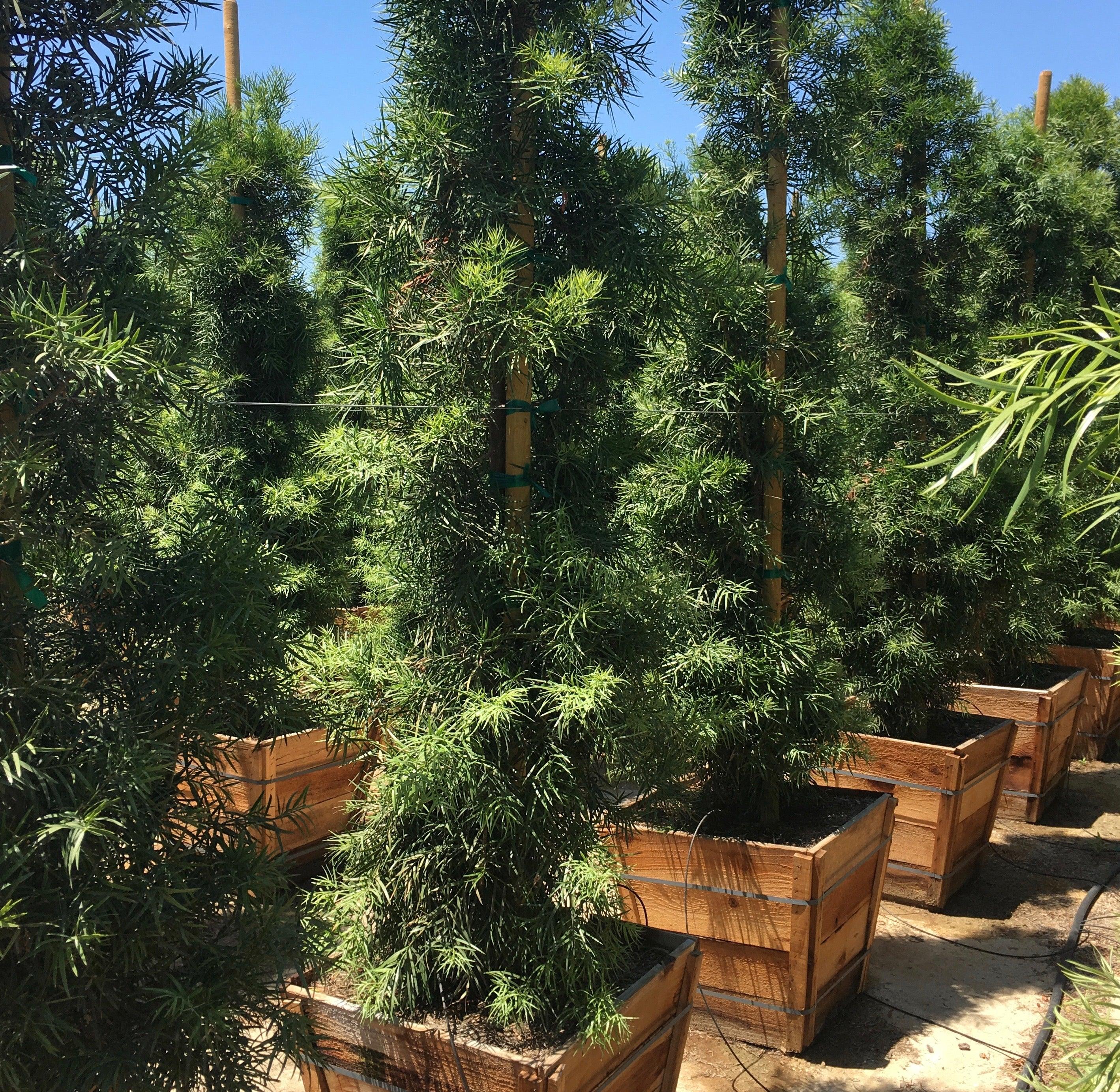
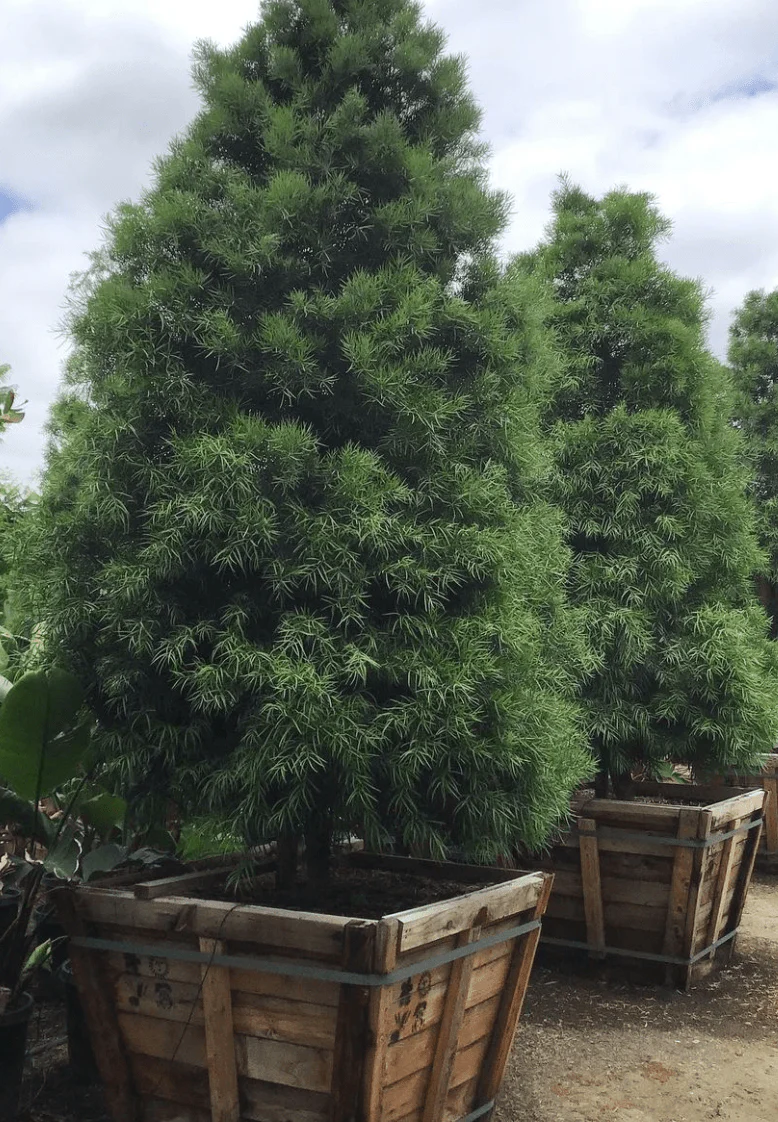
Podocarpus gives you year-round privacy, dense dark green structure, and a polished landscape look without the constant upkeep many screening plants demand. This evergreen conifer is valued as a hedge, windbreak, large shrub, specimen podocarpus tree, and formal topiary because it keeps a clean architectural form while staying adaptable to full sun, partial shade, pruning, and shaping.
Often sold under common names like yew pine, Buddhist pine, yew podocarpus, Japanese yew, and plum pine, Podocarpus macrophyllus is especially popular for privacy screens because its glossy foliage creates a refined green wall that can improve curb appeal and property value. It is low maintenance once established, drought tolerant, and well suited to California gardens, coastal properties, and urban landscapes where salt spray, wind, heat, and pollution can stress less durable shrubs.
Why You’ll Love Podocarpus
-
Excellent privacy all year – Dense, upright foliage forms elegant evergreen screens that protect outdoor spaces without looking bulky or overgrown.
-
Low maintenance once established – Podocarpus requires regular watering during the first year after planting to establish, but once established, it is drought-resistant and requires no special watering.
-
Beautifully shapeable – Podocarpus is low-maintenance, thriving in full sun to partial shade and showing exceptional adaptability to pruning and shaping for formal hedges, columns, and topiary.
-
Strong landscape performance – Podocarpus is highly resistant to deer, sea-salt spray, urban pollution, and strong winds, making it exceptional for coastal and city landscaping.
-
Refined evergreen texture – Podocarpus foliage features linear, strap-like, glossy dark green leaves resembling yew needles but longer and softer.
-
Adaptable light tolerance – Podocarpus thrives in full sun to partial shade, with more sunshine leading to better growth and denser form.
-
Reliable long-term structure – Podocarpus naturally displays a slow-to-moderate growth rate with an upright, symmetrical, and dense canopy.
Female Podocarpus plants may also produce fleshy, purple-to-red ornamental arils that attract birds. The fleshy aril portion is ornamental in the garden, but the interior round seeds are toxic if ingested and should not be eaten.
What Makes Podocarpus Different
Most privacy plants force a compromise: fast growth with constant pruning, lush foliage with heavy watering, or quick coverage with pest problems and frequent replacement.
Podocarpus provides:
-
Architectural privacy without constant chaos – Podocarpus is a tough, versatile evergreen conifer highly valued for its dense foliage and architectural adaptability.
-
Better performance in difficult sites – Certain Podocarpus species are highly wind-resistant and drought-tolerant once established, which makes them suitable for urban and coastal environments.
-
Versatile use across the landscape – Podocarpus species are commonly used in landscaping for hedges, screens, and topiary due to their dense growth habit and adaptability.
-
Elegant foliage that holds its look – The leathery green leaves resist the tired, browned appearance that many shrubs develop under sun, wind, or sea-salt spray stress.
-
More than one useful form – The genus Podocarpus contains over 100 species of versatile, narrow-leaved evergreen conifers, five of which dominate the landscaping industry.
Common varieties of Podocarpus include Buddhist Pine (Podocarpus macrophyllus), Fern Pine hedge (Podocarpus gracilior), and Henkel’s Podocarp (Podocarpus henkelii), each with specific growth and care requirements. Podocarpus macrophyllus, also known as Yew Podocarpus or Buddhist Pine, is a versatile evergreen shrub or small tree that can be used for foundation plantings and privacy screens. Fern pine trees are often chosen where a taller tree-like form is desired, while dwarf varieties of Podocarpus, like ‘Pringles’, provide durable features while staying naturally shorter, making them suitable for low border hedges.
Podocarpus also has a long horticultural history. Native forms of Podocarpus macrophyllus come from southern China and Japan, and the broader genus includes podocarpus species cultivated across many regions, including parts of China, Asia, and eastern Africa. In California and the American West, native oaks such as Coast Live Oak (Quercus agrifolia)and Engelmann Oak (Quercus engelmannii) offer another option for long-lived, drought-tolerant structure alongside Podocarpus in larger landscapes. References such as the Missouri Botanical Garden recognize the plant’s value as an evergreen landscape species with durable structure and fine-textured foliage.
How To Have Success With Podocarpus
-
Choose the right location
Plant Podocarpus in full sun to partial shade. More sun produces denser new growth and better screening, while partial shade can still work well if the site has good airflow and enough light. For the best long-term result, choose a spot with rich, slightly acidic, well-drained soil. -
Plant with proper spacing and drainage
Podocarpus prefers rich, slightly acidic, well-draining soils and cannot handle soggy, waterlogged conditions that lead to root rot. Podocarpus also prefers rich, organic soil that is moist and drains well, and it tolerates a variety of well-draining soils including sandy soil. Before planting, dig a wide hole, keep roots near the correct grade, and avoid low spots where winter rain or irrigation water collects; if you’re designing a broader screen, consider combining Podocarpus with other evergreen privacy trees that share similar soil and drainage needs. -
Water well during establishment
Water a new podocarpus regularly through the first year after planting so the root system can become established. After that, podocarpus is drought tolerant and usually needs only occasional deep watering during extended drought or high heat. -
Prune and feed with intention
Prune in late winter or early spring for major shaping, then lightly trim during the growing season to maintain a formal hedge or topiary. Podocarpus can be effectively pruned to maintain shape or size, making them suitable for formal hedges and topiary designs in landscaping. Use a slow-release fertilizer in spring if needed, especially in containers or sandy soil where plants may develop chlorosis from nutrient imbalance.
Healthy plants have fewer pests, but stressed Podocarpus may occasionally attract aphids, scale, or mites. Insecticidal soap can help manage minor pest issues. Avoid overwatering, protect young plants from extreme cold, and do not prune harshly into old bare branches because older wood may not regrow as reliably as green, active foliage. Yardwork’s nursery for privacy trees and shrubs can also help you choose companion plants that thrive in similar conditions.
Plant Specifications
-
Scientific name: Podocarpus macrophyllus
-
Common names: Yew pine, Buddhist pine, yew podocarpus, Japanese yew, plum pine
-
Plant type: Evergreen conifer; large shrub or small tree
-
Typical landscape size: Often maintained around 15–25 feet tall and 6–10 feet wide as a hedge or screen
-
Unpruned mature potential: Unpruned Podocarpus species can reach 30 to 40 feet tall
-
Growth rate: Moderate to fast in favorable early conditions, though Podocarpus naturally displays a slow-to-moderate growth rate with an upright, symmetrical, and dense canopy
-
Hardiness: Podocarpus typically thrives in USDA Hardiness Zones 7 through 11
-
Light: Full sun to partial shade; more sunshine leads to better growth and denser foliage
-
Soil: Rich, organic, slightly acidic, well drained soil; tolerates sandy soil if drainage is good
-
Water: Regular first-year watering; drought tolerant once established
-
Landscape uses: Privacy hedge, screens, foundation plantings, containers, windbreak, topiary, specimen trees
-
Wildlife note: Female plants produce fleshy purple-to-red arils that attract birds, but the interior round seeds are toxic if ingested
-
Allergy note: Male Podocarpus spp. are extremely allergenic, with an OPALS allergy-scale rating of 10 out of 10. Completely female Podocarpus plants have an OPALS rating of 1 and are considered “allergy-fighting” as they capture pollen while producing none. The male Podocarpus blooms and releases cytotoxic pollen in the spring and early summer, contributing to its high allergenic potential.
-
Available from Yardwork: Podocarpus may be sold in nursery container sizes suitable for hedges, screens, specimen plantings, and containers. Yardwork’s team can help match available sizes to your privacy goals, spacing plan, and delivery needs.
Who Podocarpus Is Perfect For
Ideal for:
-
California homeowners who want elegant privacy screening with year-round green foliage and minimal maintenance
-
Landscapers and designers creating formal hedge installations, columnar screens, foundation plantings, or topiary
-
Gardeners who want structure from a tough evergreen plant that can thrive in full sun or partial shade
-
Coastal property owners needing shrubs or trees with strong tolerance to sea-salt spray, wind, and drought once established, whether that’s Podocarpus, Monterey Cypress for wind-tolerant screening, or colorful purple bougainvillea for drought-tolerant privacy
-
Urban landscapes where pollution, reflected heat, and limited space require a durable, adaptable species; in tight city yards you can pair Podocarpus with fast-growing options like Purple Hopseed Bush for quick privacy or a classic English Laurel hedge to soften walls and fences
-
Container gardeners who want a refined evergreen form that can be overwintered in protected areas in colder edge climates
If you want dense privacy without constantly replacing thirsty, pest-prone shrubs, Podocarpus fits beautifully. It works as a formal hedge, a narrow screen, a clipped topiary, a large shrub, or a small podocarpus tree depending on the species, pruning style, and planting location.
Frequently Asked Questions
How fast does podocarpus grow for privacy screening?
Podocarpus grows at a slow-to-moderate rate naturally, with faster new growth possible when planted in full sun, rich well drained soil, and given regular water during establishment. For quicker coverage, choose larger plants and space them appropriately for a dense hedge.
Can podocarpus handle California drought conditions?
Yes. Podocarpus requires regular watering during the first year after planting to establish, but once established, it is drought-resistant and requires no special watering in normal conditions. During extended drought or extreme heat, occasional deep watering helps protect foliage and roots.
What’s the best spacing for a podocarpus hedge?
For a dense privacy screen, Podocarpus is commonly planted close enough for branches to knit together as plants mature. Exact spacing depends on the variety, container size, and desired form. Yardwork can help plan spacing for a continuous hedge, individual columns, or a more natural screen.
Does podocarpus work in containers for smaller spaces?
Yes. Podocarpus can grow well in containers when the pot has drainage, the soil stays moist but not soggy, and the plant receives enough sun. Compact selections and dwarf varieties like ‘Pringles’ are especially useful where a shorter border hedge or patio accent is needed.
When should I prune my podocarpus hedge?
Major pruning is best in late winter or early spring before strong seasonal growth begins. Light trimming can be done during the growing season to maintain shape. Always prune into green foliage rather than old bare wood, and avoid removing too much growth at once.
Is podocarpus toxic?
Female Podocarpus plants produce fleshy, purple-to-red ornamental arils that attract birds; however, the interior round seeds are toxic if ingested. Keep seeds away from children and pets.
Can podocarpus develop chlorosis?
Yes. Podocarpus may develop chlorosis if roots sit in soggy soil, if drainage is poor, or if nutrients are unavailable in the soil. Plant in rich, slightly acidic, well drained soil and avoid overwatering.
Ready to Transform Your Landscape?
Stop struggling with high-maintenance privacy plants that need constant watering, frequent replacement, or heavy pruning. Choose Podocarpus for a refined evergreen screen that brings dense foliage, elegant form, drought tolerance, and long-term landscape value.
Yardwork can help you select the right Podocarpus species, choose the best container size, plan hedge spacing, review soil and drainage, and coordinate California delivery for your project.
Original: $75.00
-65%$75.00
$26.25Product Information
Product Information
Shipping & Returns
Shipping & Returns
Description
Podocarpus: The Perfect Evergreen for Privacy and Landscaping
Create Beautiful Privacy Screens with Minimal Maintenance
Podocarpus gives you year-round privacy, dense dark green structure, and a polished landscape look without the constant upkeep many screening plants demand. This evergreen conifer is valued as a hedge, windbreak, large shrub, specimen podocarpus tree, and formal topiary because it keeps a clean architectural form while staying adaptable to full sun, partial shade, pruning, and shaping.
Often sold under common names like yew pine, Buddhist pine, yew podocarpus, Japanese yew, and plum pine, Podocarpus macrophyllus is especially popular for privacy screens because its glossy foliage creates a refined green wall that can improve curb appeal and property value. It is low maintenance once established, drought tolerant, and well suited to California gardens, coastal properties, and urban landscapes where salt spray, wind, heat, and pollution can stress less durable shrubs.
Why You’ll Love Podocarpus
-
Excellent privacy all year – Dense, upright foliage forms elegant evergreen screens that protect outdoor spaces without looking bulky or overgrown.
-
Low maintenance once established – Podocarpus requires regular watering during the first year after planting to establish, but once established, it is drought-resistant and requires no special watering.
-
Beautifully shapeable – Podocarpus is low-maintenance, thriving in full sun to partial shade and showing exceptional adaptability to pruning and shaping for formal hedges, columns, and topiary.
-
Strong landscape performance – Podocarpus is highly resistant to deer, sea-salt spray, urban pollution, and strong winds, making it exceptional for coastal and city landscaping.
-
Refined evergreen texture – Podocarpus foliage features linear, strap-like, glossy dark green leaves resembling yew needles but longer and softer.
-
Adaptable light tolerance – Podocarpus thrives in full sun to partial shade, with more sunshine leading to better growth and denser form.
-
Reliable long-term structure – Podocarpus naturally displays a slow-to-moderate growth rate with an upright, symmetrical, and dense canopy.
Female Podocarpus plants may also produce fleshy, purple-to-red ornamental arils that attract birds. The fleshy aril portion is ornamental in the garden, but the interior round seeds are toxic if ingested and should not be eaten.
What Makes Podocarpus Different
Most privacy plants force a compromise: fast growth with constant pruning, lush foliage with heavy watering, or quick coverage with pest problems and frequent replacement.
Podocarpus provides:
-
Architectural privacy without constant chaos – Podocarpus is a tough, versatile evergreen conifer highly valued for its dense foliage and architectural adaptability.
-
Better performance in difficult sites – Certain Podocarpus species are highly wind-resistant and drought-tolerant once established, which makes them suitable for urban and coastal environments.
-
Versatile use across the landscape – Podocarpus species are commonly used in landscaping for hedges, screens, and topiary due to their dense growth habit and adaptability.
-
Elegant foliage that holds its look – The leathery green leaves resist the tired, browned appearance that many shrubs develop under sun, wind, or sea-salt spray stress.
-
More than one useful form – The genus Podocarpus contains over 100 species of versatile, narrow-leaved evergreen conifers, five of which dominate the landscaping industry.
Common varieties of Podocarpus include Buddhist Pine (Podocarpus macrophyllus), Fern Pine hedge (Podocarpus gracilior), and Henkel’s Podocarp (Podocarpus henkelii), each with specific growth and care requirements. Podocarpus macrophyllus, also known as Yew Podocarpus or Buddhist Pine, is a versatile evergreen shrub or small tree that can be used for foundation plantings and privacy screens. Fern pine trees are often chosen where a taller tree-like form is desired, while dwarf varieties of Podocarpus, like ‘Pringles’, provide durable features while staying naturally shorter, making them suitable for low border hedges.
Podocarpus also has a long horticultural history. Native forms of Podocarpus macrophyllus come from southern China and Japan, and the broader genus includes podocarpus species cultivated across many regions, including parts of China, Asia, and eastern Africa. In California and the American West, native oaks such as Coast Live Oak (Quercus agrifolia)and Engelmann Oak (Quercus engelmannii) offer another option for long-lived, drought-tolerant structure alongside Podocarpus in larger landscapes. References such as the Missouri Botanical Garden recognize the plant’s value as an evergreen landscape species with durable structure and fine-textured foliage.
How To Have Success With Podocarpus
-
Choose the right location
Plant Podocarpus in full sun to partial shade. More sun produces denser new growth and better screening, while partial shade can still work well if the site has good airflow and enough light. For the best long-term result, choose a spot with rich, slightly acidic, well-drained soil. -
Plant with proper spacing and drainage
Podocarpus prefers rich, slightly acidic, well-draining soils and cannot handle soggy, waterlogged conditions that lead to root rot. Podocarpus also prefers rich, organic soil that is moist and drains well, and it tolerates a variety of well-draining soils including sandy soil. Before planting, dig a wide hole, keep roots near the correct grade, and avoid low spots where winter rain or irrigation water collects; if you’re designing a broader screen, consider combining Podocarpus with other evergreen privacy trees that share similar soil and drainage needs. -
Water well during establishment
Water a new podocarpus regularly through the first year after planting so the root system can become established. After that, podocarpus is drought tolerant and usually needs only occasional deep watering during extended drought or high heat. -
Prune and feed with intention
Prune in late winter or early spring for major shaping, then lightly trim during the growing season to maintain a formal hedge or topiary. Podocarpus can be effectively pruned to maintain shape or size, making them suitable for formal hedges and topiary designs in landscaping. Use a slow-release fertilizer in spring if needed, especially in containers or sandy soil where plants may develop chlorosis from nutrient imbalance.
Healthy plants have fewer pests, but stressed Podocarpus may occasionally attract aphids, scale, or mites. Insecticidal soap can help manage minor pest issues. Avoid overwatering, protect young plants from extreme cold, and do not prune harshly into old bare branches because older wood may not regrow as reliably as green, active foliage. Yardwork’s nursery for privacy trees and shrubs can also help you choose companion plants that thrive in similar conditions.
Plant Specifications
-
Scientific name: Podocarpus macrophyllus
-
Common names: Yew pine, Buddhist pine, yew podocarpus, Japanese yew, plum pine
-
Plant type: Evergreen conifer; large shrub or small tree
-
Typical landscape size: Often maintained around 15–25 feet tall and 6–10 feet wide as a hedge or screen
-
Unpruned mature potential: Unpruned Podocarpus species can reach 30 to 40 feet tall
-
Growth rate: Moderate to fast in favorable early conditions, though Podocarpus naturally displays a slow-to-moderate growth rate with an upright, symmetrical, and dense canopy
-
Hardiness: Podocarpus typically thrives in USDA Hardiness Zones 7 through 11
-
Light: Full sun to partial shade; more sunshine leads to better growth and denser foliage
-
Soil: Rich, organic, slightly acidic, well drained soil; tolerates sandy soil if drainage is good
-
Water: Regular first-year watering; drought tolerant once established
-
Landscape uses: Privacy hedge, screens, foundation plantings, containers, windbreak, topiary, specimen trees
-
Wildlife note: Female plants produce fleshy purple-to-red arils that attract birds, but the interior round seeds are toxic if ingested
-
Allergy note: Male Podocarpus spp. are extremely allergenic, with an OPALS allergy-scale rating of 10 out of 10. Completely female Podocarpus plants have an OPALS rating of 1 and are considered “allergy-fighting” as they capture pollen while producing none. The male Podocarpus blooms and releases cytotoxic pollen in the spring and early summer, contributing to its high allergenic potential.
-
Available from Yardwork: Podocarpus may be sold in nursery container sizes suitable for hedges, screens, specimen plantings, and containers. Yardwork’s team can help match available sizes to your privacy goals, spacing plan, and delivery needs.
Who Podocarpus Is Perfect For
Ideal for:
-
California homeowners who want elegant privacy screening with year-round green foliage and minimal maintenance
-
Landscapers and designers creating formal hedge installations, columnar screens, foundation plantings, or topiary
-
Gardeners who want structure from a tough evergreen plant that can thrive in full sun or partial shade
-
Coastal property owners needing shrubs or trees with strong tolerance to sea-salt spray, wind, and drought once established, whether that’s Podocarpus, Monterey Cypress for wind-tolerant screening, or colorful purple bougainvillea for drought-tolerant privacy
-
Urban landscapes where pollution, reflected heat, and limited space require a durable, adaptable species; in tight city yards you can pair Podocarpus with fast-growing options like Purple Hopseed Bush for quick privacy or a classic English Laurel hedge to soften walls and fences
-
Container gardeners who want a refined evergreen form that can be overwintered in protected areas in colder edge climates
If you want dense privacy without constantly replacing thirsty, pest-prone shrubs, Podocarpus fits beautifully. It works as a formal hedge, a narrow screen, a clipped topiary, a large shrub, or a small podocarpus tree depending on the species, pruning style, and planting location.
Frequently Asked Questions
How fast does podocarpus grow for privacy screening?
Podocarpus grows at a slow-to-moderate rate naturally, with faster new growth possible when planted in full sun, rich well drained soil, and given regular water during establishment. For quicker coverage, choose larger plants and space them appropriately for a dense hedge.
Can podocarpus handle California drought conditions?
Yes. Podocarpus requires regular watering during the first year after planting to establish, but once established, it is drought-resistant and requires no special watering in normal conditions. During extended drought or extreme heat, occasional deep watering helps protect foliage and roots.
What’s the best spacing for a podocarpus hedge?
For a dense privacy screen, Podocarpus is commonly planted close enough for branches to knit together as plants mature. Exact spacing depends on the variety, container size, and desired form. Yardwork can help plan spacing for a continuous hedge, individual columns, or a more natural screen.
Does podocarpus work in containers for smaller spaces?
Yes. Podocarpus can grow well in containers when the pot has drainage, the soil stays moist but not soggy, and the plant receives enough sun. Compact selections and dwarf varieties like ‘Pringles’ are especially useful where a shorter border hedge or patio accent is needed.
When should I prune my podocarpus hedge?
Major pruning is best in late winter or early spring before strong seasonal growth begins. Light trimming can be done during the growing season to maintain shape. Always prune into green foliage rather than old bare wood, and avoid removing too much growth at once.
Is podocarpus toxic?
Female Podocarpus plants produce fleshy, purple-to-red ornamental arils that attract birds; however, the interior round seeds are toxic if ingested. Keep seeds away from children and pets.
Can podocarpus develop chlorosis?
Yes. Podocarpus may develop chlorosis if roots sit in soggy soil, if drainage is poor, or if nutrients are unavailable in the soil. Plant in rich, slightly acidic, well drained soil and avoid overwatering.
Ready to Transform Your Landscape?
Stop struggling with high-maintenance privacy plants that need constant watering, frequent replacement, or heavy pruning. Choose Podocarpus for a refined evergreen screen that brings dense foliage, elegant form, drought tolerance, and long-term landscape value.
Yardwork can help you select the right Podocarpus species, choose the best container size, plan hedge spacing, review soil and drainage, and coordinate California delivery for your project.