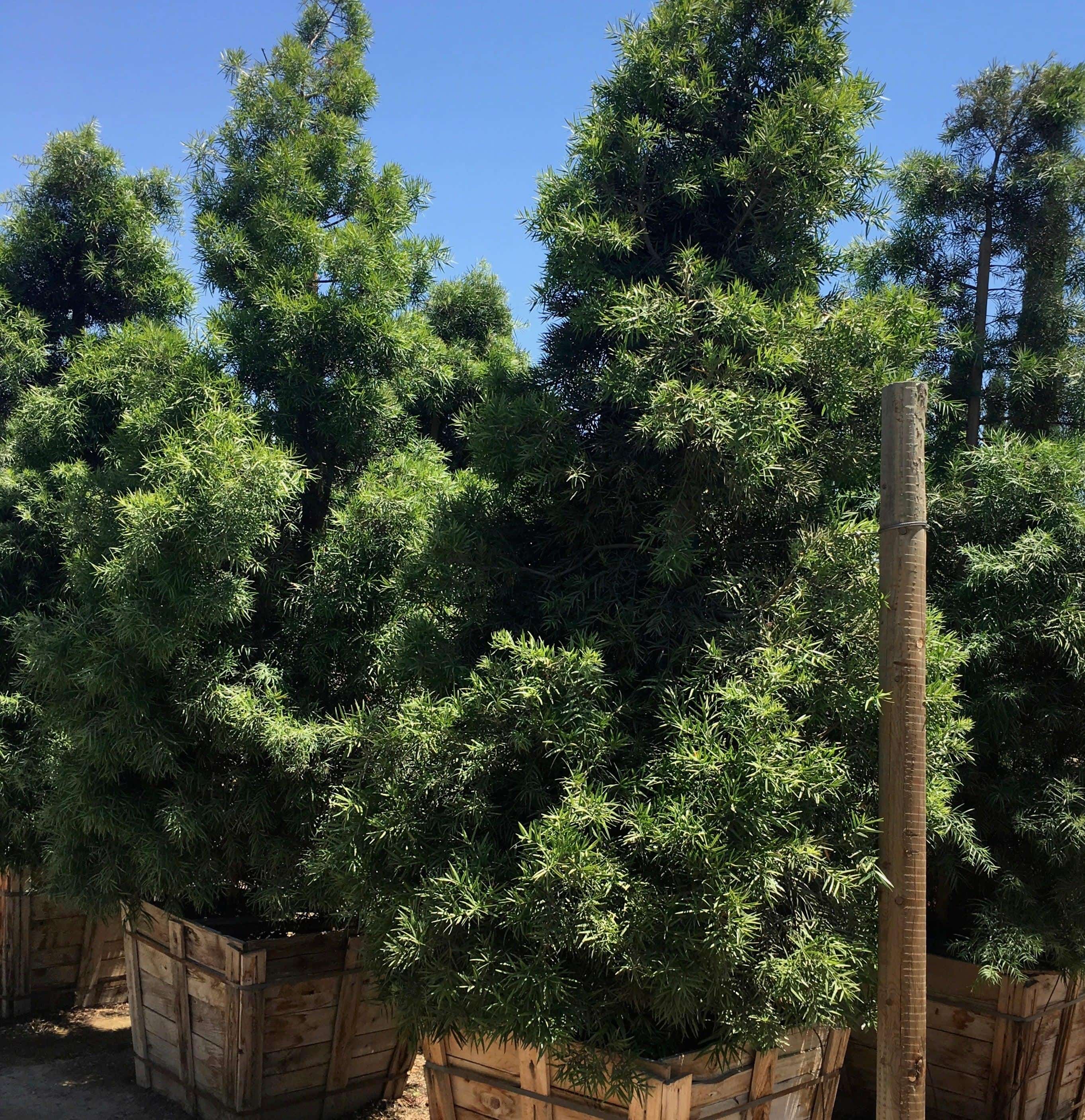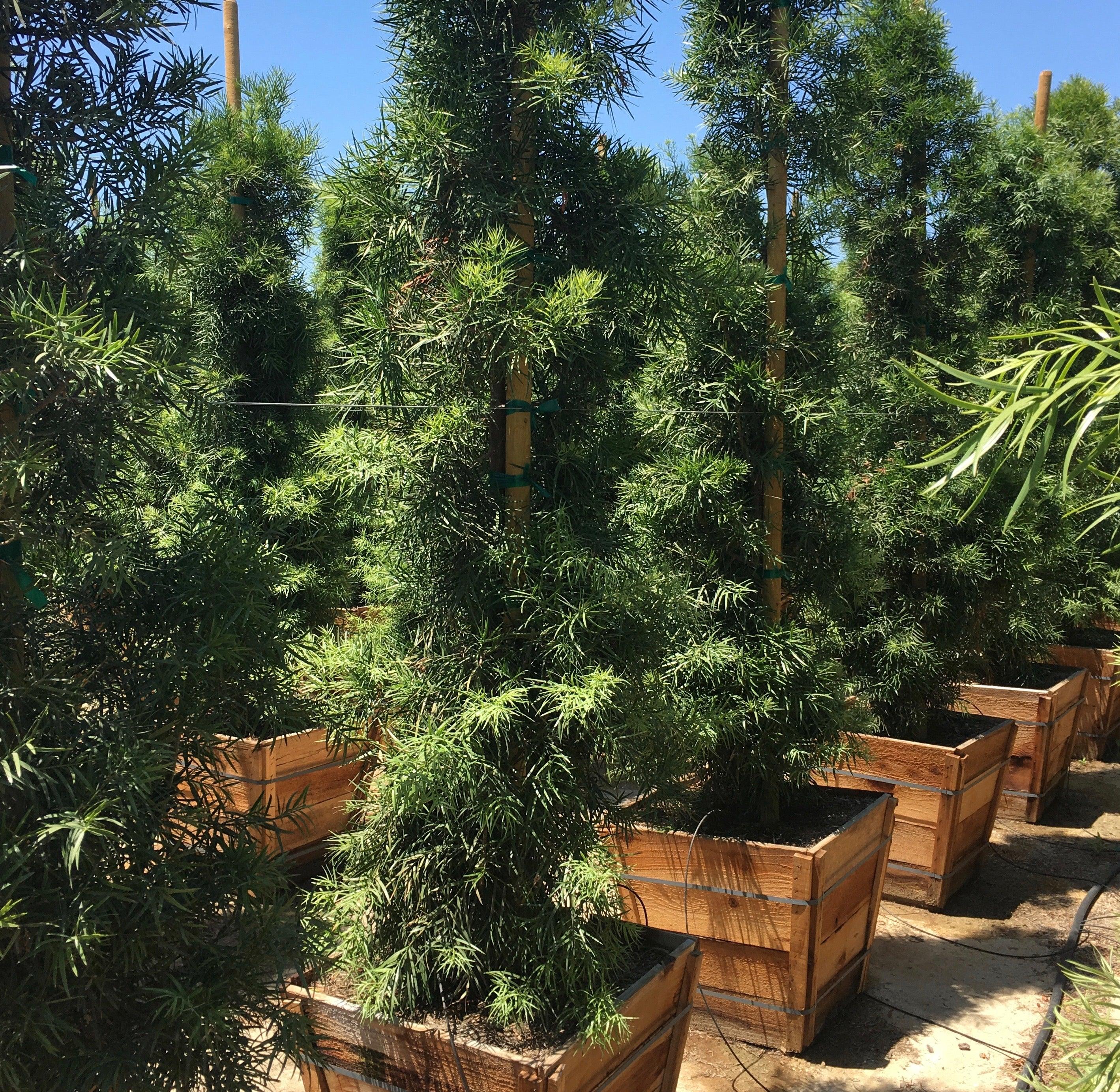
Cedrus Deodara - Deodar Cedar
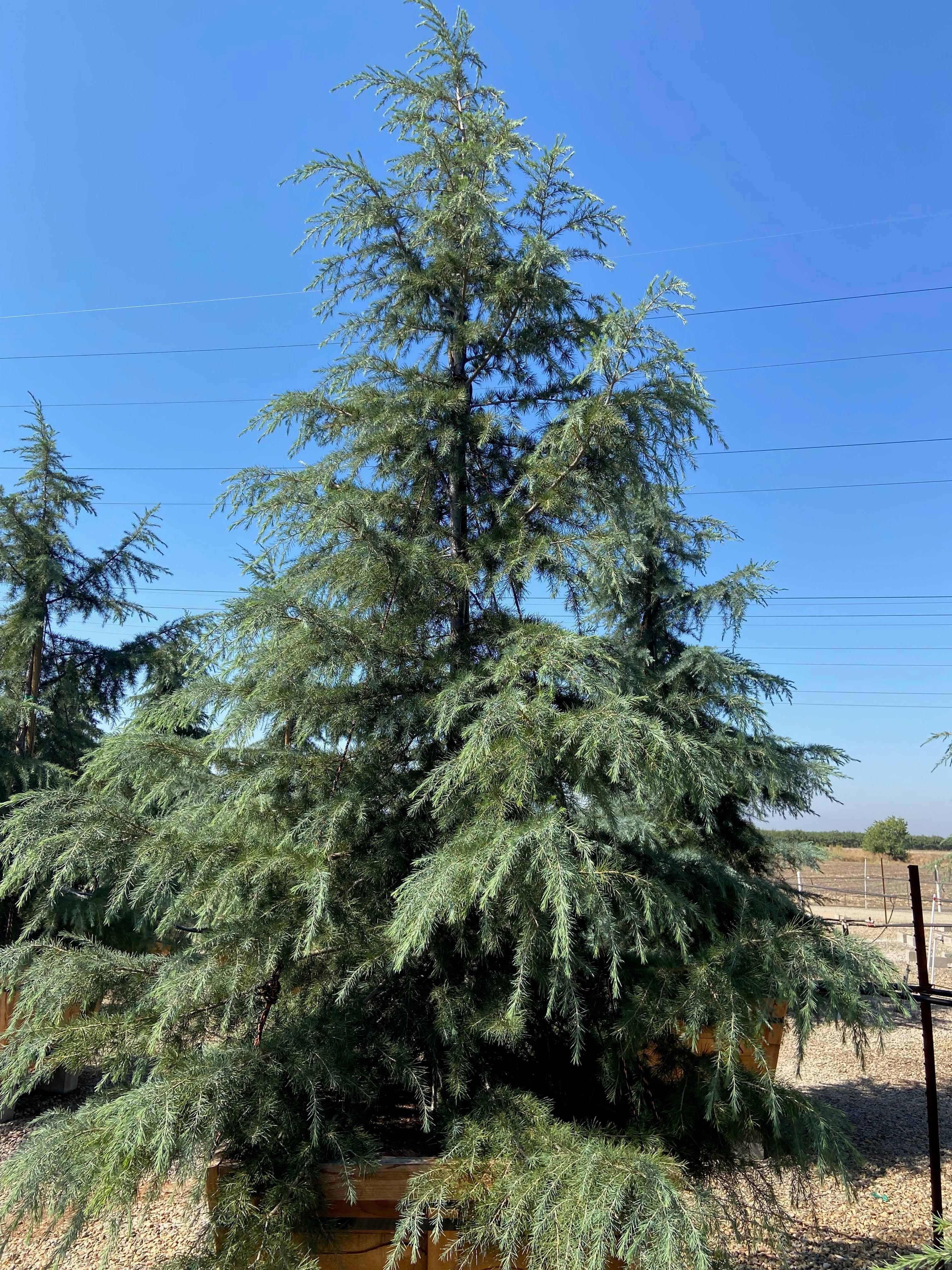
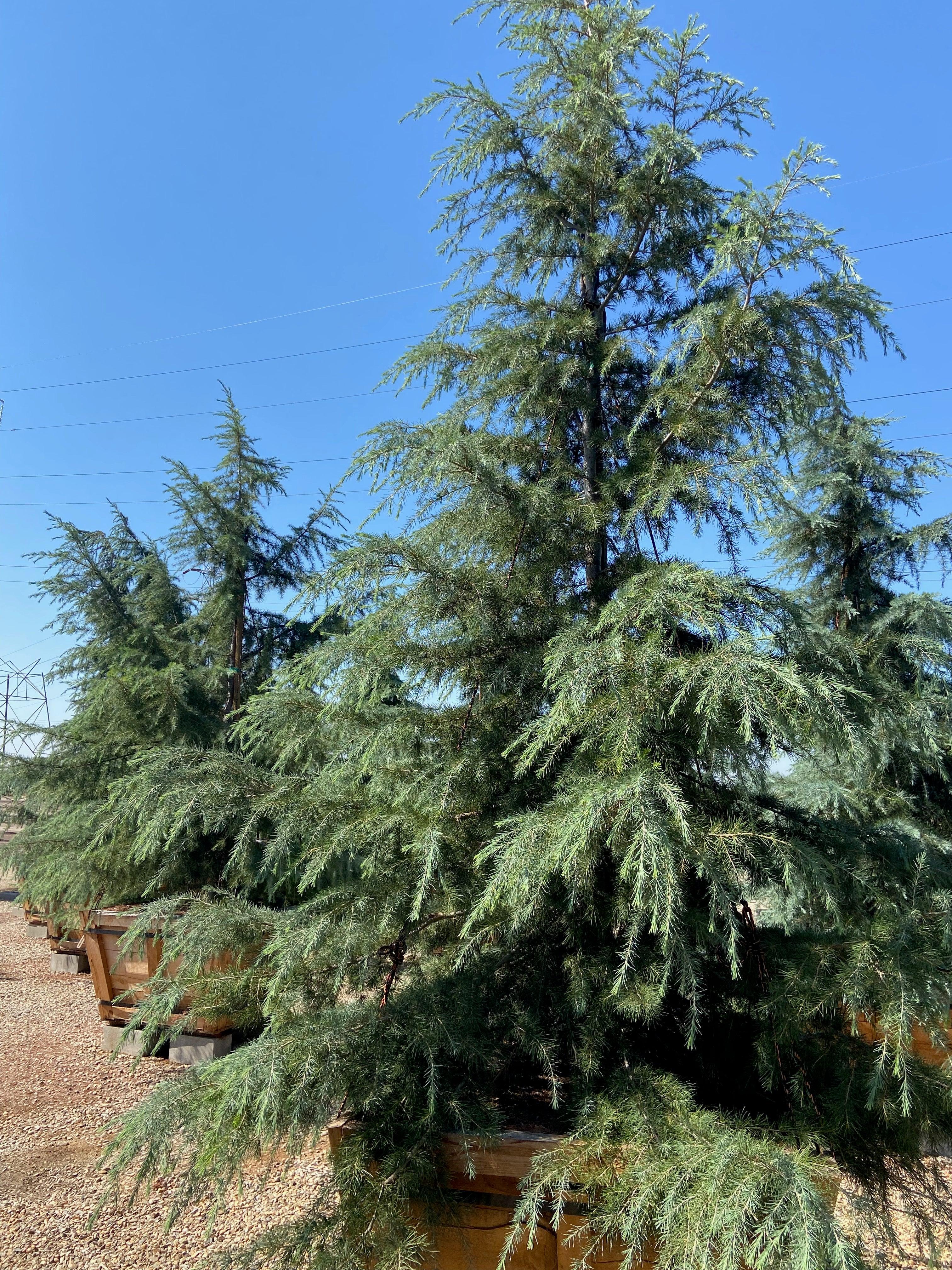
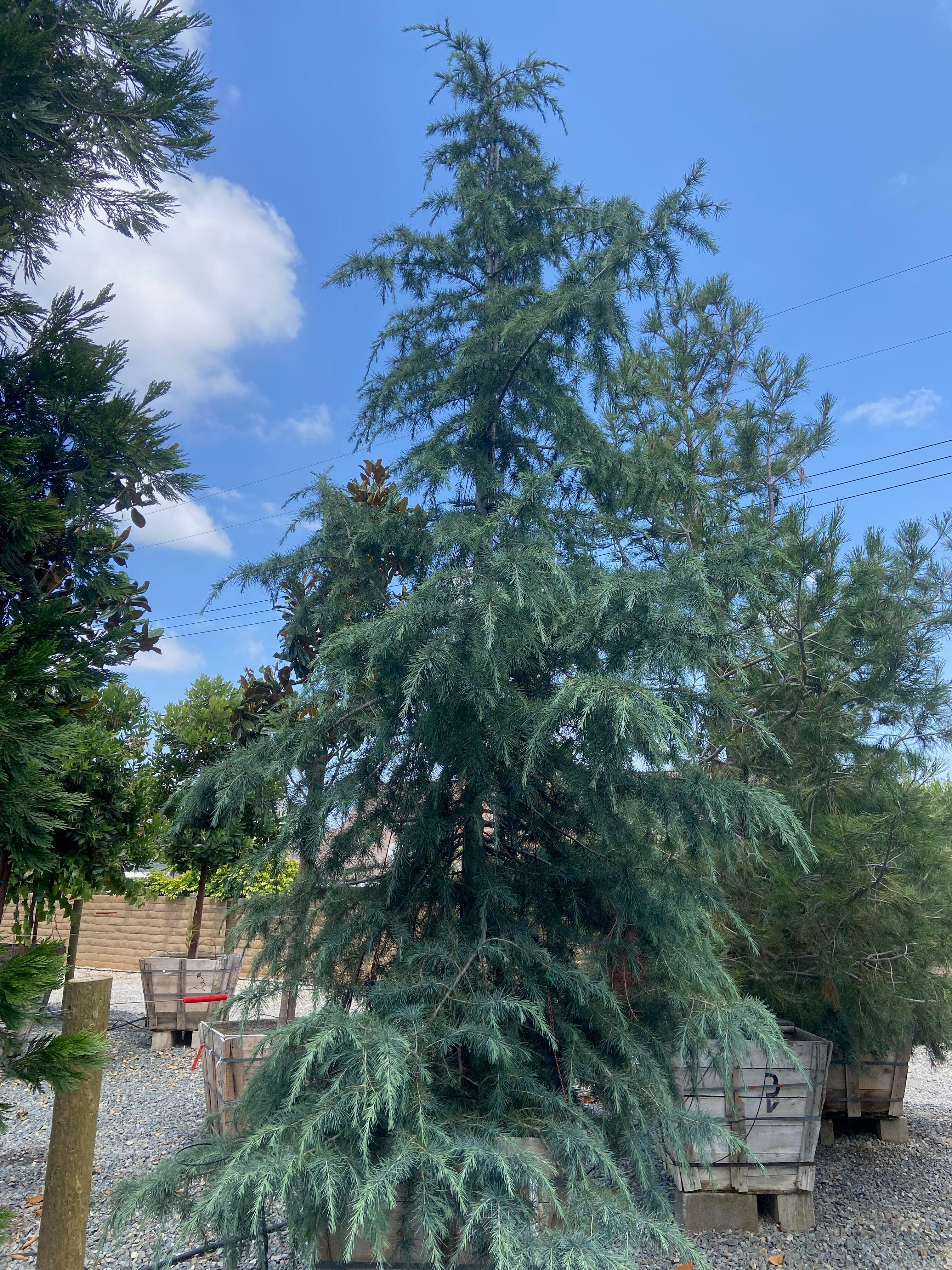
Cedrus deodara gives large California landscapes a graceful evergreen focal point with pendulous branches, blue green needles, and a sculptural form that looks refined year-round.
Commonly known as Deodar cedar, this evergreen conifer is native to the western Himalayas and is valued for both ornamental impact and practical screening. Planted with enough ground space, the tree works beautifully as a specimen, privacy screen, windbreak, or estate-style anchor for large gardens, parks, and broad residential landscapes.
Why You’ll Love Cedrus Deodara
-
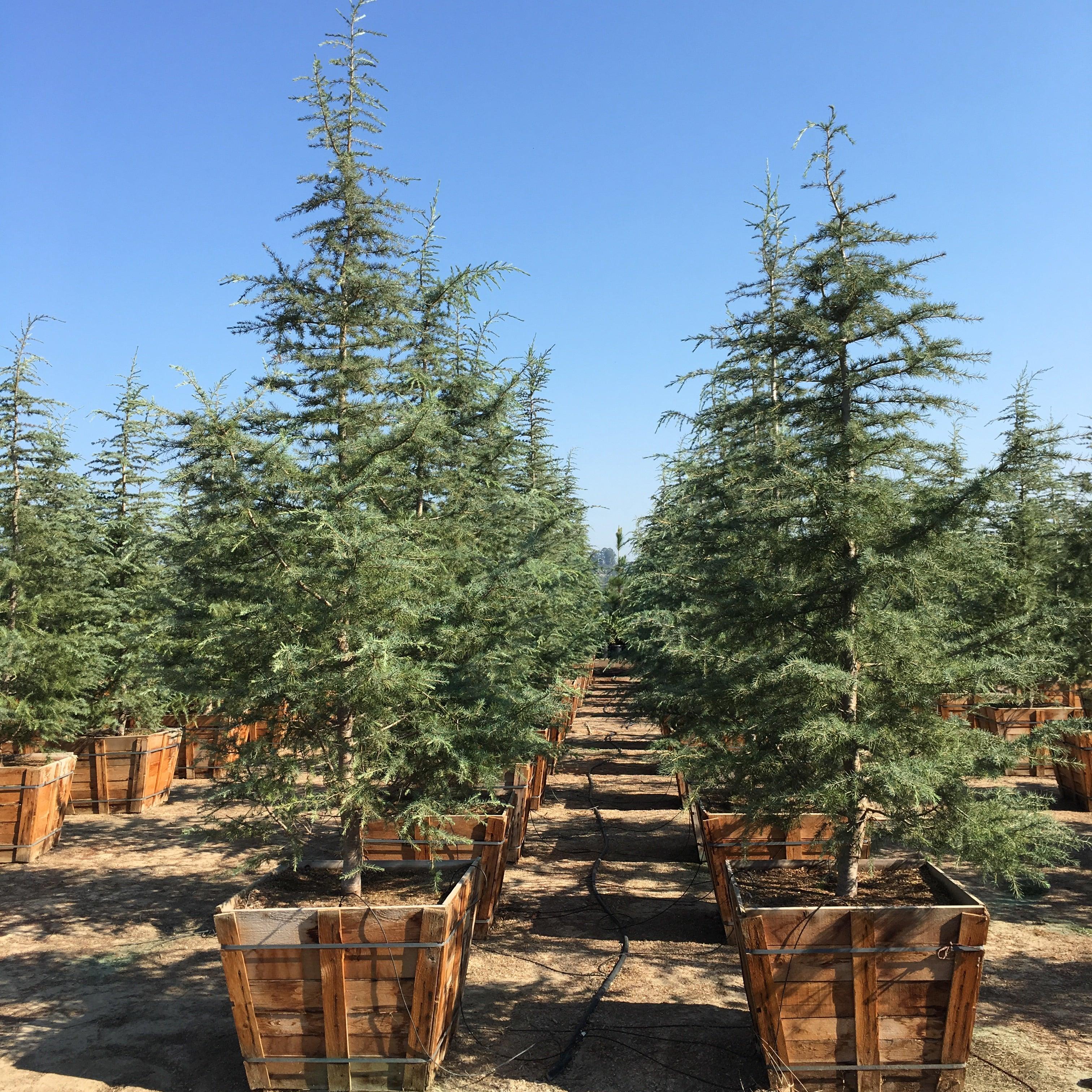
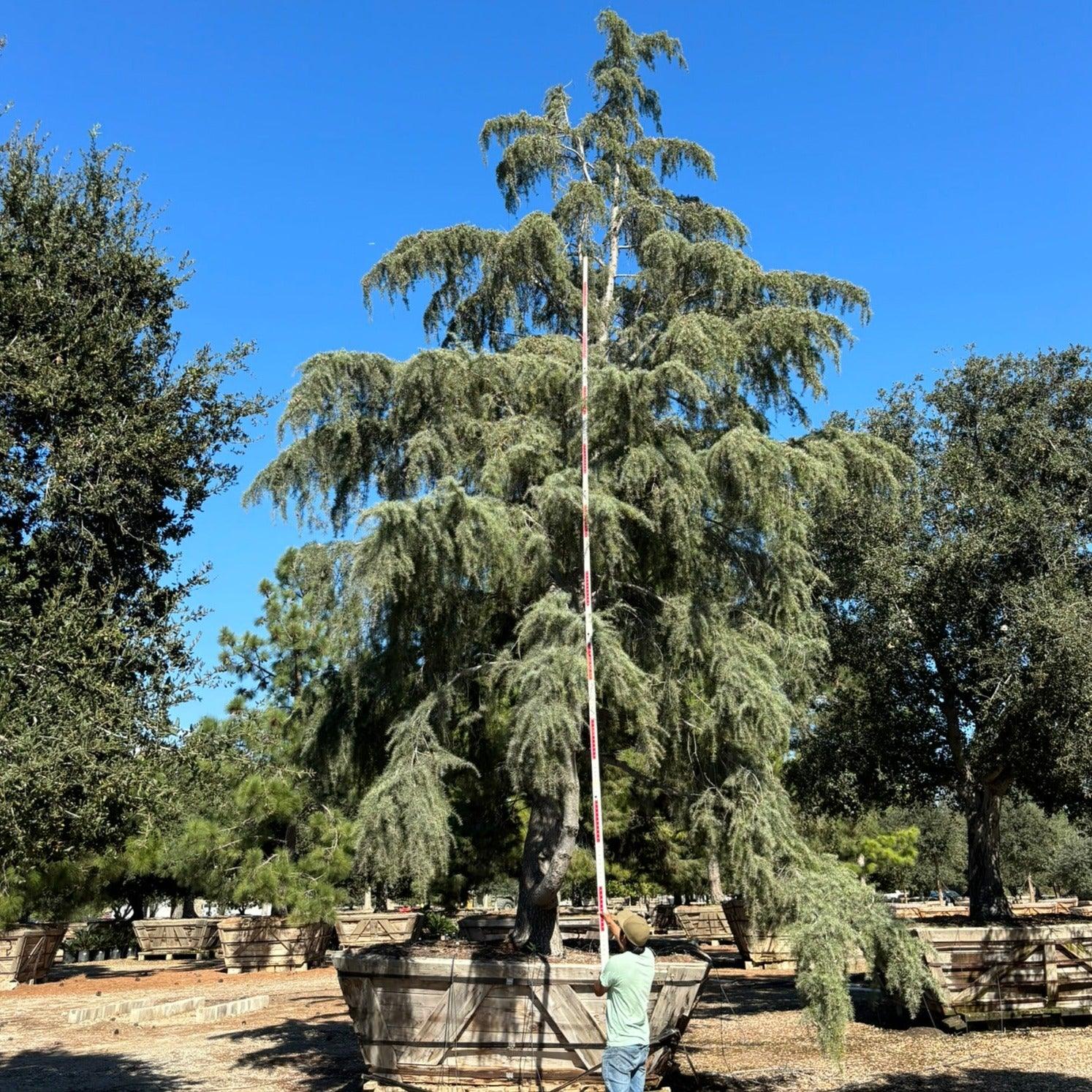
Graceful natural form – Deodar cedar is characterized by its pyramidal shape when young, maturing to a flat-topped form with broad-spreading horizontal branches and drooping branchlets.
-
Quick landscape impact – Cedrus deodara grows at a moderate rate of 1 to 3 feet per year, making this medium growing tree a strong choice when you want visible progress without an overly aggressive growth habit.
-
Year-round evergreen color – Cedrus deodara has soft, pliable needles 1 to 2 inches long that grow in dense clusters, with needle like foliage that can appear bright green, blue-green, or silvery depending on environmental conditions.
-
California-ready resilience – This species grows best in deep, moist but well-drained, acidic loams and is intolerant of poorly drained wet soils, making it drought tolerant once established.
-
Aromatic, useful wood – The inner wood of the deodar tree is aromatic and is used to make incense, while its essential oil serves as an insect repellent and has antifungal properties.
Cedrus deodara is known for its visual appeal, making it a popular choice for landscaping as a specimen tree and windbreak, especially for homeowners exploring evergreen trees for year-round privacy and beauty. Some customers also choose the tree for its holiday-like silhouette, giving the landscape the feel of a living California Christmas tree without seasonal replacement.
What Makes It Different
Most evergreen trees grow stiffly upright, but Cedrus deodara offers something softer, broader, and more architectural.
Cedrus Deodara provides:
-
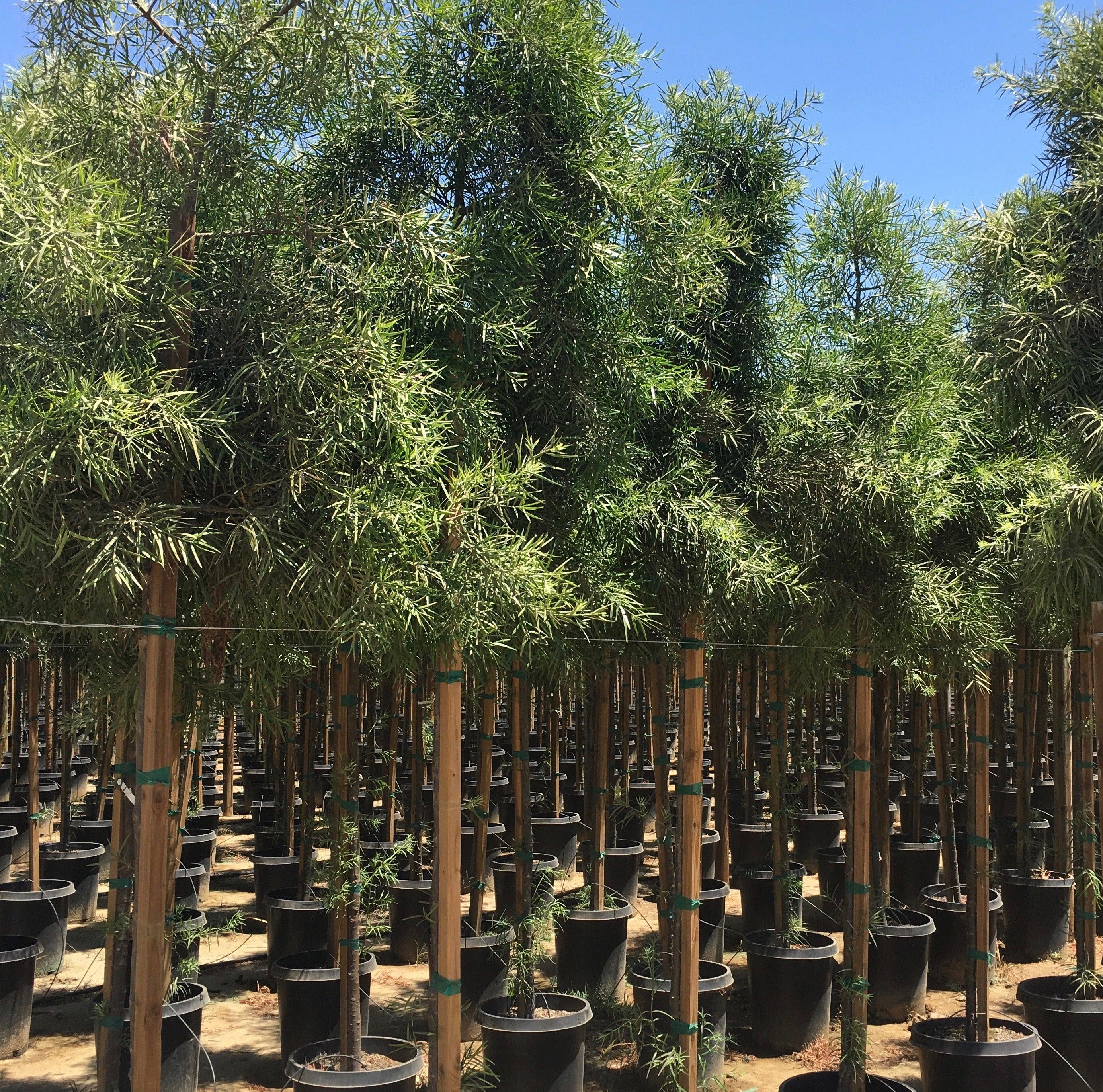
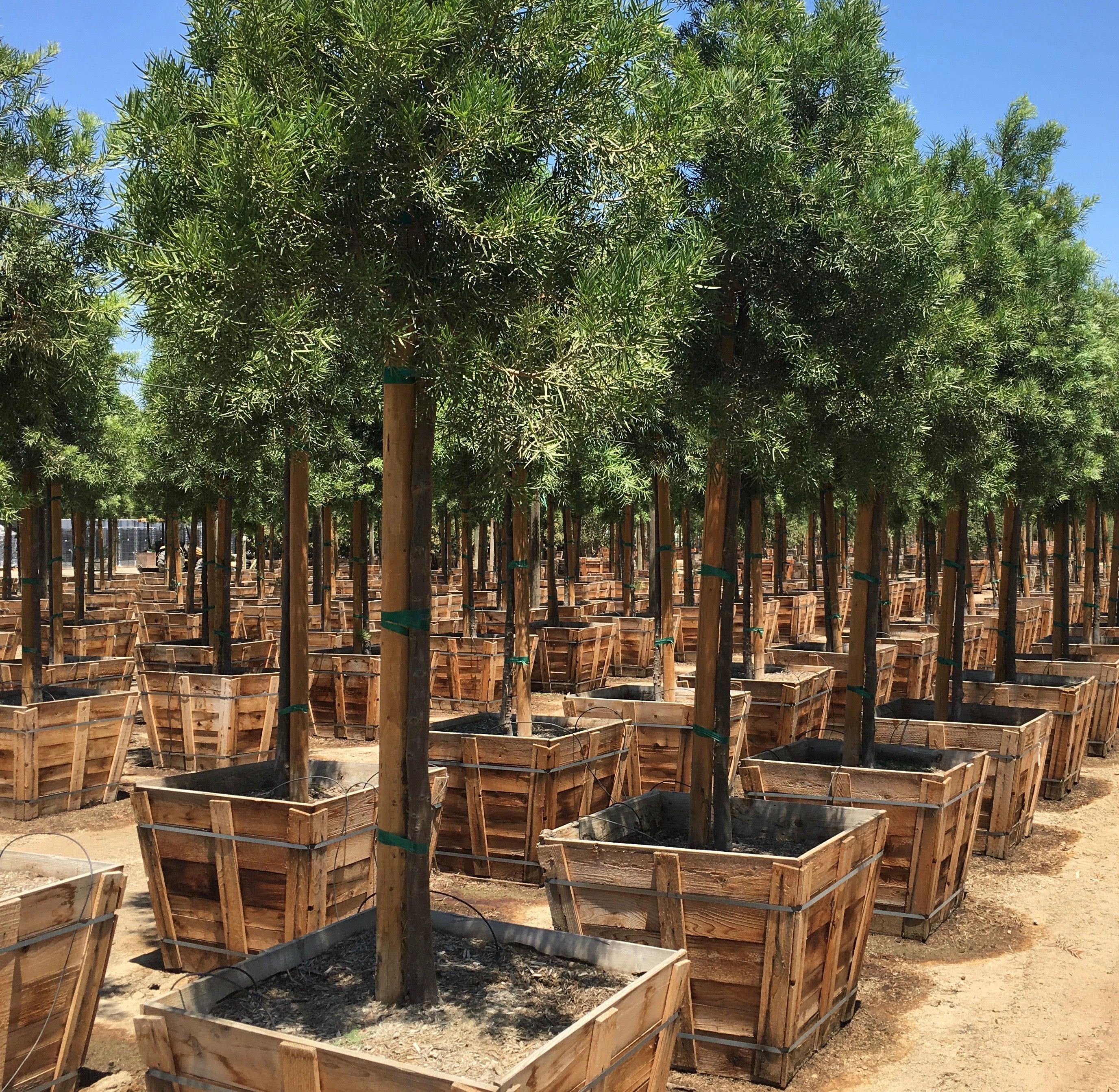
Pendulous branch structure – Gracefully drooping branchlets and lower branches create movement and shade, unlike rigid pine trees or many upright conifers.
-
Distinctive foliage and cones – Cedrus deodara produces large, upright cones up to 4 inches long; mature cones are often barrel shaped, while male cones shed pollen in fall.
-
Naturally aromatic protection – Cedrus deodara is used in aromatherapy and acts as a natural insecticide and antifungal due to its cedarwood essential oil.
The name “Deodar” translates from Sanskrit as “wood of the gods,” and that culture and history still shape how the species is appreciated today. Historically, deodar wood has been used to construct religious temples and is also utilized in landscaping around these temples.
How It Grows
-
Initial establishment phase: first 2 years
Plant Cedrus deodara in full sun with deep, moist but well-drained soil. Young trees need moderate water while roots establish, especially during dry California summers. Avoid poorly drained wet soils because excess moisture can lead to root rot. -
Rapid growth phase: years 3–10
Once established, Cedrus deodara becomes more drought tolerant and can add 1 to 3 feet per year under good cultivation. New growth fills in the branches, needles become denser, and the tree can begin reaching 20 to 30 feet in height depending on soil types, water, sun exposure, and local environmental conditions. -
Maturity phase: long-term landscape structure
Cedrus deodara, commonly known as Deodar cedar, is a medium-growing evergreen conifer that typically matures to a height of 40-50 feet within its first 25 years, and can reach heights of 150-200 feet in its native habitat. In California landscapes, mature trees are often maintained as large evergreen specimens, screens, or windbreaks with a broad, pendulous canopy.
Tree Specifications
-
Botanical name: Cedrus deodara
-
Common name: Deodar cedar, Himalayan cedar
-
Plant type: Evergreen conifer tree in the genus Cedrus, offered alongside broadleaf options such as Glossy Privet for structured hedges and privacy
-
Native range: Cedrus deodara is an evergreen conifer native to the western Himalayas, including regions such as Afghanistan, Kashmir, Tibet, northern India, Nepal, and northern Pakistan.
-
Mature size: Common landscape size is 40-80 feet tall and 30-40 feet wide; Cedrus deodara can reach heights of 150-200 feet in its native habitat.
-
Growth rate: Cedrus deodara grows at a moderate rate of 1 to 3 feet per year.
-
Hardiness: Cedrus deodara is best suited for USDA hardiness zones 7 and warmer, as Cedrus deodara is not reliably winter hardy in areas with temperatures below about -25 °C (-13 °F).
-
Sunlight: Cedrus deodara thrives best in deep, moist but well-drained, acidic loams and requires full sun for optimal growth.
-
Soil: Best in deep, moist but well-drained, acidic loams; adaptable to various soil types, including sandy or clay soil, when drainage is excellent.
-
Water: Moderate water while young; this species is intolerant of poorly drained wet soils and is drought tolerant once established, much like Fern Pine trees used for adaptable evergreen screening.
-
Foliage: Soft, pliable needles 1 to 2 inches long grow in dense clusters.
-
Cones: Large upright cones grow up to 4 inches long.
-
Wood value: The heartwood of Cedrus deodara is highly prized for its durability and rot resistance, making it ideal for construction and furniture.
-
Timber quality: Deodar wood is in great demand as a building material due to its durability, rot-resistant character, and fine, close grain, which can take a high polish, similar to other high-value species like Engelmann Oak used in construction and landscaping.
-
Traditional uses: In Ayurvedic medicine, various parts of Cedrus deodara are utilized for health benefits, including treatment for respiratory issues and arthritis, while related conifers such as Incense Cedar are valued for aromatic wood and landscape use.
Who It’s Perfect For
Ideal for:
-
California homeowners seeking an elegant evergreen privacy screen, whether with Cedrus deodara or a Fern Pine hedge for dense evergreen coverage
-
Property owners with large yards, broad entrances, or estate-style landscapes
-
Landscape designers creating Mediterranean, contemporary, or naturalistic gardens who may combine Cedrus deodara with flowering trees suited to California landscapes
-
Gardeners who want a drought tolerant tree after establishment and may pair Deodar cedar with Indian Laurel trees for fast-growing shade and privacy
-
Parks, large gardens, and open properties needing a long-lived specimen conifer, often sourced through a local nursery with privacy and evergreen trees
Cedrus deodara is not the best plant for tight spaces, small patios, or narrow side yards. The tree needs room for wide branches, lower branches, and long-term root development. For smaller residential lots, ask Yardwork about compact cultivars or alternative conifers such as the Tiny Tower® Italian Cypress for small gardens before planting.
Frequently Asked Questions
How fast does Cedrus deodara grow?
Cedrus deodara grows at a moderate rate of 1 to 3 feet per year. Under favorable California conditions, young trees can create noticeable height and screen value within a few growing seasons.
Does it need special care in California climate?
Cedrus deodara needs full sun, deep watering during establishment, and well drained soil. Once established, the tree is drought tolerant, but young trees should be protected from prolonged drought, extreme heat, and poorly drained wet soils.
How much space does it need to reach full size?
Plan for a large tree. In cultivation, Cedrus deodara commonly reaches 40-80 feet tall and 30-40 feet wide, while Cedrus deodara can reach heights of 150-200 feet in its native habitat.
Is it suitable for smaller residential lots?
Usually, Cedrus deodara is better for large gardens, parks, estate landscapes, and wide properties. Smaller lots may need a compact cultivar, careful placement, or a different evergreen species.
Is Deodar cedar resistant to pests?
The aromatic wood and cedarwood essential oil help repel insects, and the essential oil has antifungal properties. Stressed trees can still attract pests, so proper sun, water, and drainage are important.
How do you pronounce Cedrus deodara?
Many gardeners read Cedrus as “see drus,” followed by “dee-oh-DAR-uh.” Deodar means “wood of the gods,” which reflects the tree’s sacred history in its native culture.
Ready to Add Himalayan Majesty to Your Landscape?
Stop settling for ordinary evergreen trees when you can plant a long-lived Deodar cedar with pendulous branches, blue green needles, aromatic wood, and strong year-round presence.
Choose Cedrus Deodara for a dramatic specimen, privacy screen, or windbreak-and let Yardwork help with proper placement, mature tree availability, and California delivery options.
Original: $895.00
-65%$895.00
$313.25Product Information
Product Information
Shipping & Returns
Shipping & Returns
Description
Cedrus deodara gives large California landscapes a graceful evergreen focal point with pendulous branches, blue green needles, and a sculptural form that looks refined year-round.
Commonly known as Deodar cedar, this evergreen conifer is native to the western Himalayas and is valued for both ornamental impact and practical screening. Planted with enough ground space, the tree works beautifully as a specimen, privacy screen, windbreak, or estate-style anchor for large gardens, parks, and broad residential landscapes.
Why You’ll Love Cedrus Deodara
-
Graceful natural form – Deodar cedar is characterized by its pyramidal shape when young, maturing to a flat-topped form with broad-spreading horizontal branches and drooping branchlets.
-
Quick landscape impact – Cedrus deodara grows at a moderate rate of 1 to 3 feet per year, making this medium growing tree a strong choice when you want visible progress without an overly aggressive growth habit.
-
Year-round evergreen color – Cedrus deodara has soft, pliable needles 1 to 2 inches long that grow in dense clusters, with needle like foliage that can appear bright green, blue-green, or silvery depending on environmental conditions.
-
California-ready resilience – This species grows best in deep, moist but well-drained, acidic loams and is intolerant of poorly drained wet soils, making it drought tolerant once established.
-
Aromatic, useful wood – The inner wood of the deodar tree is aromatic and is used to make incense, while its essential oil serves as an insect repellent and has antifungal properties.
Cedrus deodara is known for its visual appeal, making it a popular choice for landscaping as a specimen tree and windbreak, especially for homeowners exploring evergreen trees for year-round privacy and beauty. Some customers also choose the tree for its holiday-like silhouette, giving the landscape the feel of a living California Christmas tree without seasonal replacement.
What Makes It Different
Most evergreen trees grow stiffly upright, but Cedrus deodara offers something softer, broader, and more architectural.
Cedrus Deodara provides:
-
Pendulous branch structure – Gracefully drooping branchlets and lower branches create movement and shade, unlike rigid pine trees or many upright conifers.
-
Distinctive foliage and cones – Cedrus deodara produces large, upright cones up to 4 inches long; mature cones are often barrel shaped, while male cones shed pollen in fall.
-
Naturally aromatic protection – Cedrus deodara is used in aromatherapy and acts as a natural insecticide and antifungal due to its cedarwood essential oil.
The name “Deodar” translates from Sanskrit as “wood of the gods,” and that culture and history still shape how the species is appreciated today. Historically, deodar wood has been used to construct religious temples and is also utilized in landscaping around these temples.
How It Grows
-
Initial establishment phase: first 2 years
Plant Cedrus deodara in full sun with deep, moist but well-drained soil. Young trees need moderate water while roots establish, especially during dry California summers. Avoid poorly drained wet soils because excess moisture can lead to root rot. -
Rapid growth phase: years 3–10
Once established, Cedrus deodara becomes more drought tolerant and can add 1 to 3 feet per year under good cultivation. New growth fills in the branches, needles become denser, and the tree can begin reaching 20 to 30 feet in height depending on soil types, water, sun exposure, and local environmental conditions. -
Maturity phase: long-term landscape structure
Cedrus deodara, commonly known as Deodar cedar, is a medium-growing evergreen conifer that typically matures to a height of 40-50 feet within its first 25 years, and can reach heights of 150-200 feet in its native habitat. In California landscapes, mature trees are often maintained as large evergreen specimens, screens, or windbreaks with a broad, pendulous canopy.
Tree Specifications
-
Botanical name: Cedrus deodara
-
Common name: Deodar cedar, Himalayan cedar
-
Plant type: Evergreen conifer tree in the genus Cedrus, offered alongside broadleaf options such as Glossy Privet for structured hedges and privacy
-
Native range: Cedrus deodara is an evergreen conifer native to the western Himalayas, including regions such as Afghanistan, Kashmir, Tibet, northern India, Nepal, and northern Pakistan.
-
Mature size: Common landscape size is 40-80 feet tall and 30-40 feet wide; Cedrus deodara can reach heights of 150-200 feet in its native habitat.
-
Growth rate: Cedrus deodara grows at a moderate rate of 1 to 3 feet per year.
-
Hardiness: Cedrus deodara is best suited for USDA hardiness zones 7 and warmer, as Cedrus deodara is not reliably winter hardy in areas with temperatures below about -25 °C (-13 °F).
-
Sunlight: Cedrus deodara thrives best in deep, moist but well-drained, acidic loams and requires full sun for optimal growth.
-
Soil: Best in deep, moist but well-drained, acidic loams; adaptable to various soil types, including sandy or clay soil, when drainage is excellent.
-
Water: Moderate water while young; this species is intolerant of poorly drained wet soils and is drought tolerant once established, much like Fern Pine trees used for adaptable evergreen screening.
-
Foliage: Soft, pliable needles 1 to 2 inches long grow in dense clusters.
-
Cones: Large upright cones grow up to 4 inches long.
-
Wood value: The heartwood of Cedrus deodara is highly prized for its durability and rot resistance, making it ideal for construction and furniture.
-
Timber quality: Deodar wood is in great demand as a building material due to its durability, rot-resistant character, and fine, close grain, which can take a high polish, similar to other high-value species like Engelmann Oak used in construction and landscaping.
-
Traditional uses: In Ayurvedic medicine, various parts of Cedrus deodara are utilized for health benefits, including treatment for respiratory issues and arthritis, while related conifers such as Incense Cedar are valued for aromatic wood and landscape use.
Who It’s Perfect For
Ideal for:
-
California homeowners seeking an elegant evergreen privacy screen, whether with Cedrus deodara or a Fern Pine hedge for dense evergreen coverage
-
Property owners with large yards, broad entrances, or estate-style landscapes
-
Landscape designers creating Mediterranean, contemporary, or naturalistic gardens who may combine Cedrus deodara with flowering trees suited to California landscapes
-
Gardeners who want a drought tolerant tree after establishment and may pair Deodar cedar with Indian Laurel trees for fast-growing shade and privacy
-
Parks, large gardens, and open properties needing a long-lived specimen conifer, often sourced through a local nursery with privacy and evergreen trees
Cedrus deodara is not the best plant for tight spaces, small patios, or narrow side yards. The tree needs room for wide branches, lower branches, and long-term root development. For smaller residential lots, ask Yardwork about compact cultivars or alternative conifers such as the Tiny Tower® Italian Cypress for small gardens before planting.
Frequently Asked Questions
How fast does Cedrus deodara grow?
Cedrus deodara grows at a moderate rate of 1 to 3 feet per year. Under favorable California conditions, young trees can create noticeable height and screen value within a few growing seasons.
Does it need special care in California climate?
Cedrus deodara needs full sun, deep watering during establishment, and well drained soil. Once established, the tree is drought tolerant, but young trees should be protected from prolonged drought, extreme heat, and poorly drained wet soils.
How much space does it need to reach full size?
Plan for a large tree. In cultivation, Cedrus deodara commonly reaches 40-80 feet tall and 30-40 feet wide, while Cedrus deodara can reach heights of 150-200 feet in its native habitat.
Is it suitable for smaller residential lots?
Usually, Cedrus deodara is better for large gardens, parks, estate landscapes, and wide properties. Smaller lots may need a compact cultivar, careful placement, or a different evergreen species.
Is Deodar cedar resistant to pests?
The aromatic wood and cedarwood essential oil help repel insects, and the essential oil has antifungal properties. Stressed trees can still attract pests, so proper sun, water, and drainage are important.
How do you pronounce Cedrus deodara?
Many gardeners read Cedrus as “see drus,” followed by “dee-oh-DAR-uh.” Deodar means “wood of the gods,” which reflects the tree’s sacred history in its native culture.
Ready to Add Himalayan Majesty to Your Landscape?
Stop settling for ordinary evergreen trees when you can plant a long-lived Deodar cedar with pendulous branches, blue green needles, aromatic wood, and strong year-round presence.
Choose Cedrus Deodara for a dramatic specimen, privacy screen, or windbreak-and let Yardwork help with proper placement, mature tree availability, and California delivery options.