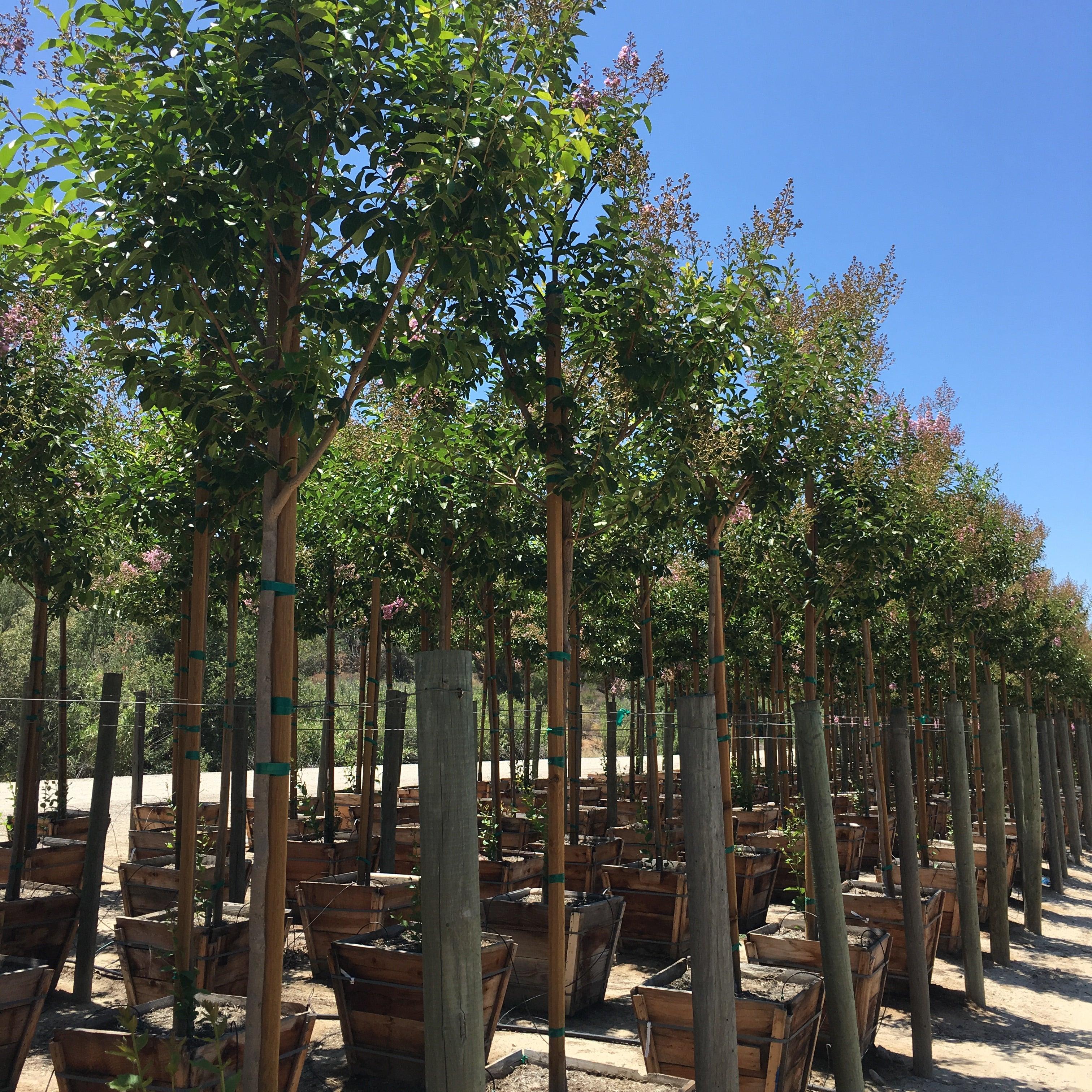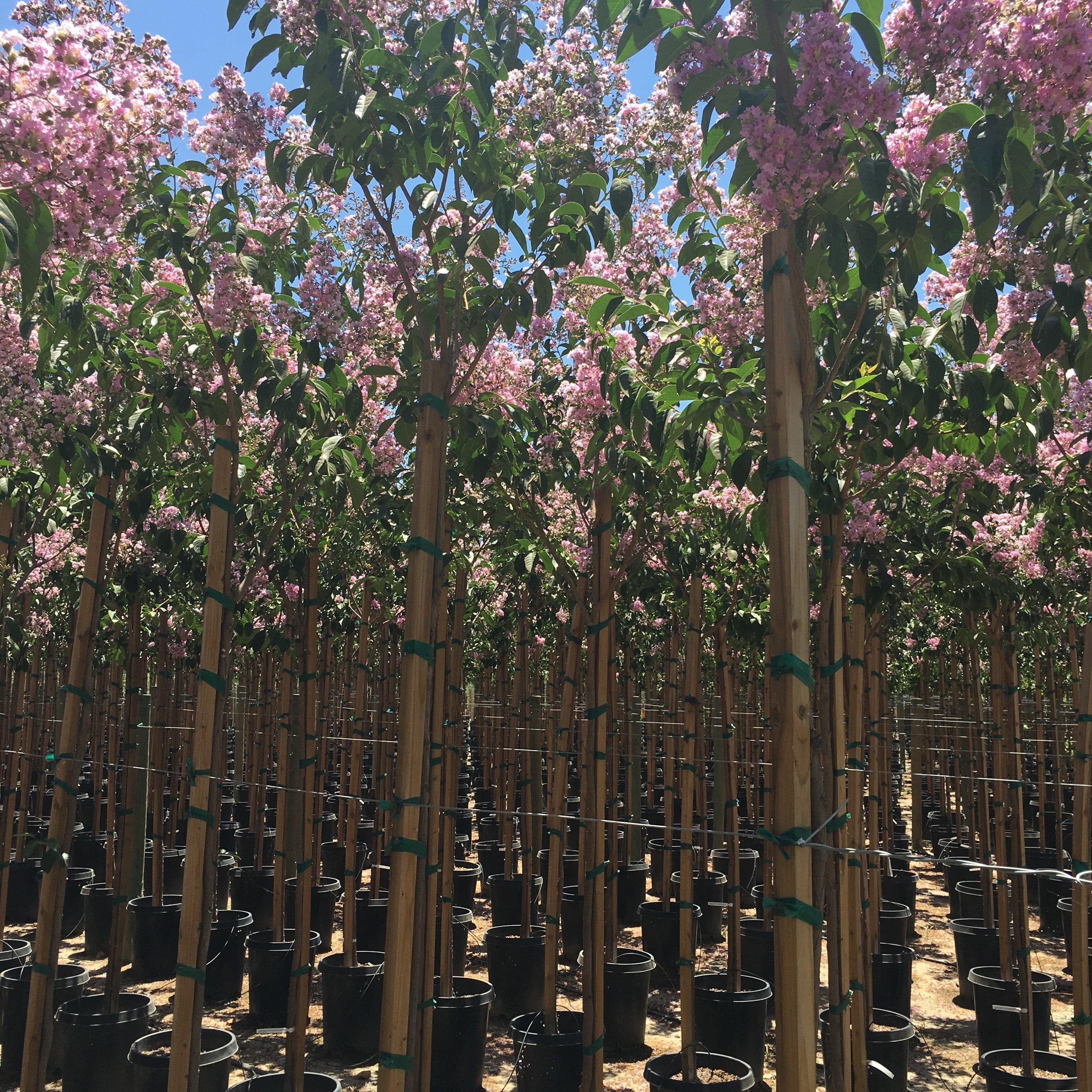
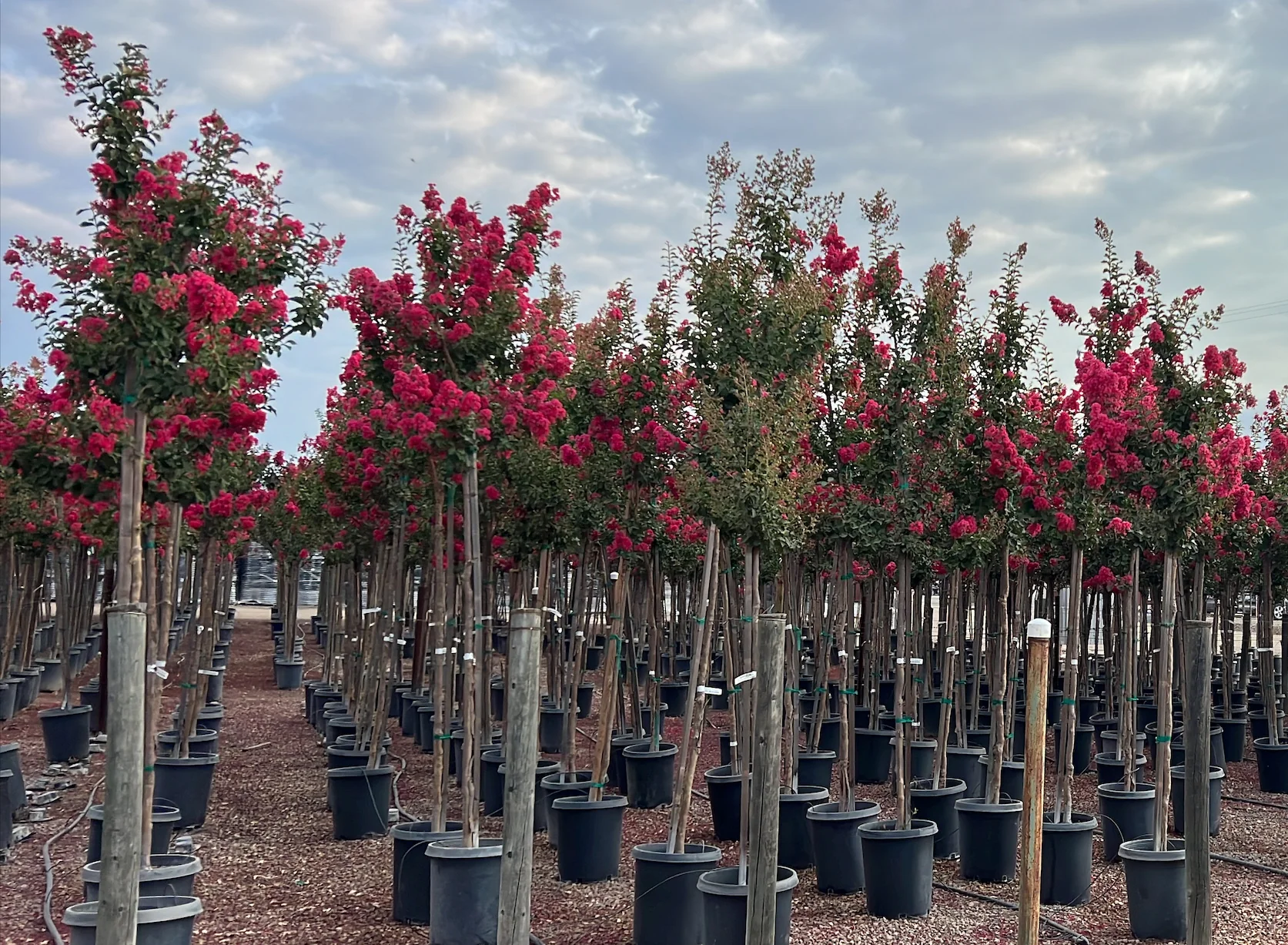
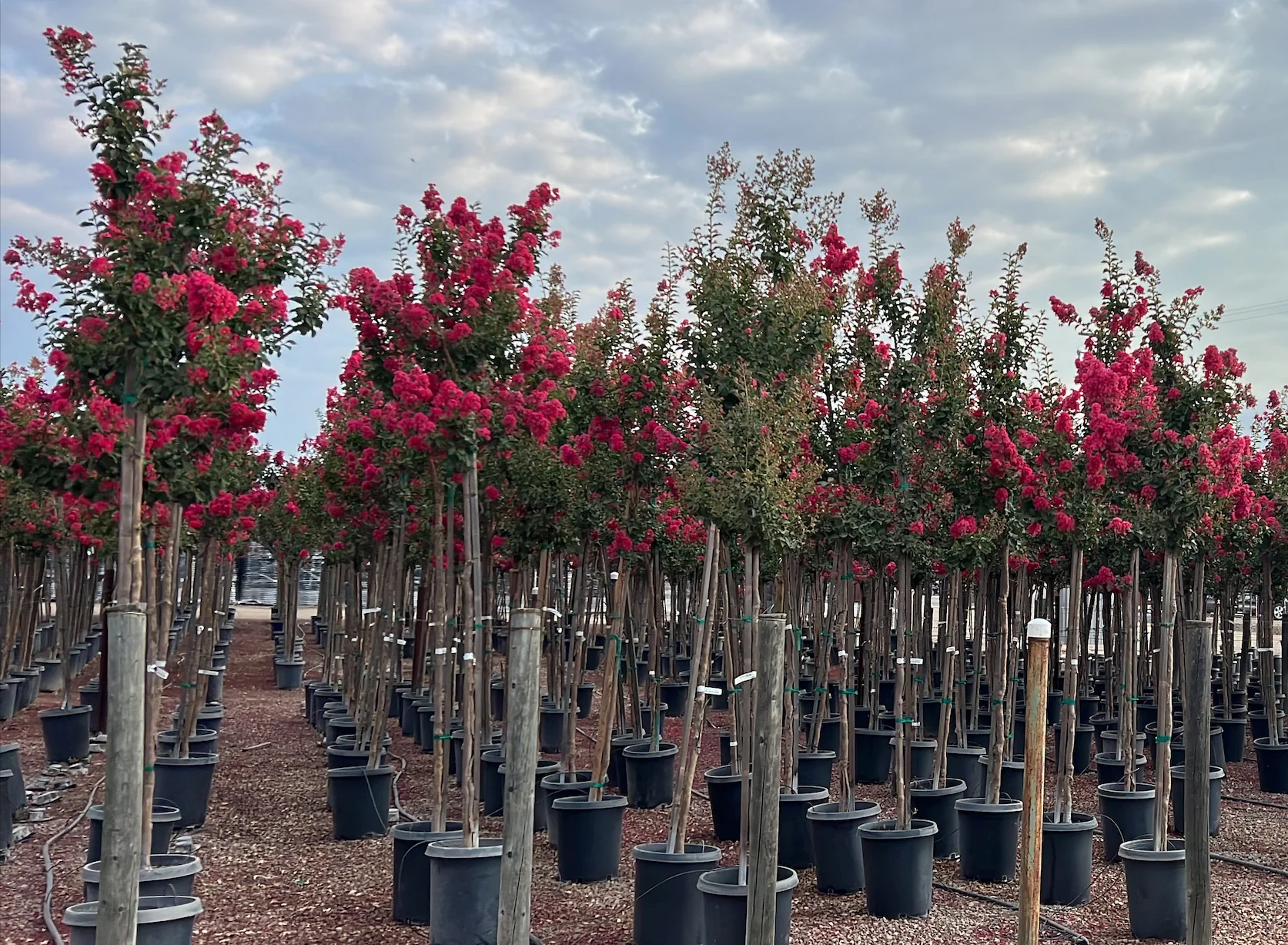
Tuscarora Crape Myrtle - Lagerstroemia indica x fauriei 'Tuscarora'
The Tuscarora Crape Myrtle (Lagerstroemia indica 'Tuscarora') is a standout among flowering trees, prized for its vibrant color and adaptability in a variety of garden and yard settings. At maturity, these trees typically reach 16 to 25 feet tall and 15 to 20 feet wide, making them ideal for mid-sized residential gardens or as focal points in landscape design. Known for their fast growth, Tuscarora Crape Myrtles can grow up to 3 feet per year, eventually reaching up to 25 feet in height and 20 feet in width with proper care.
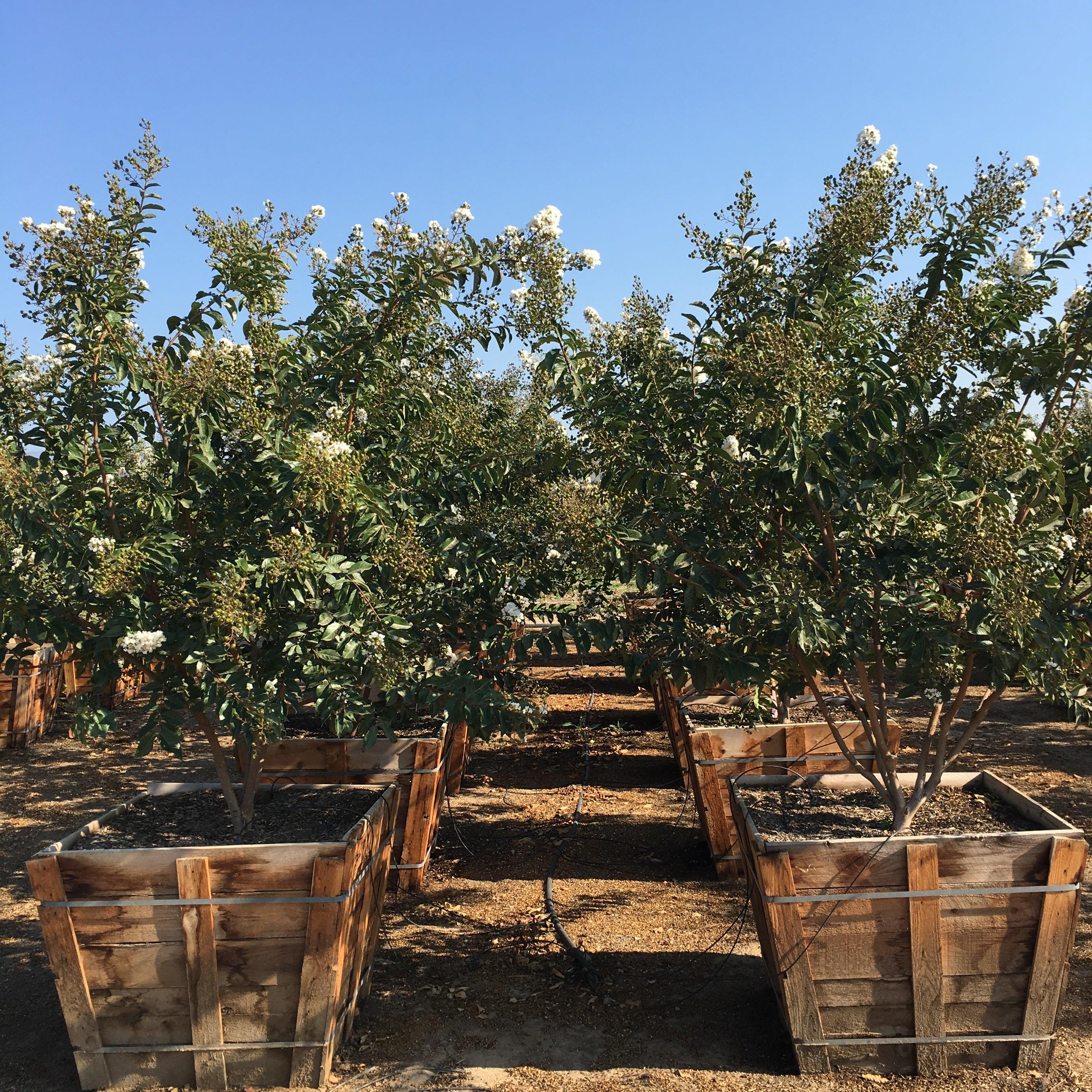
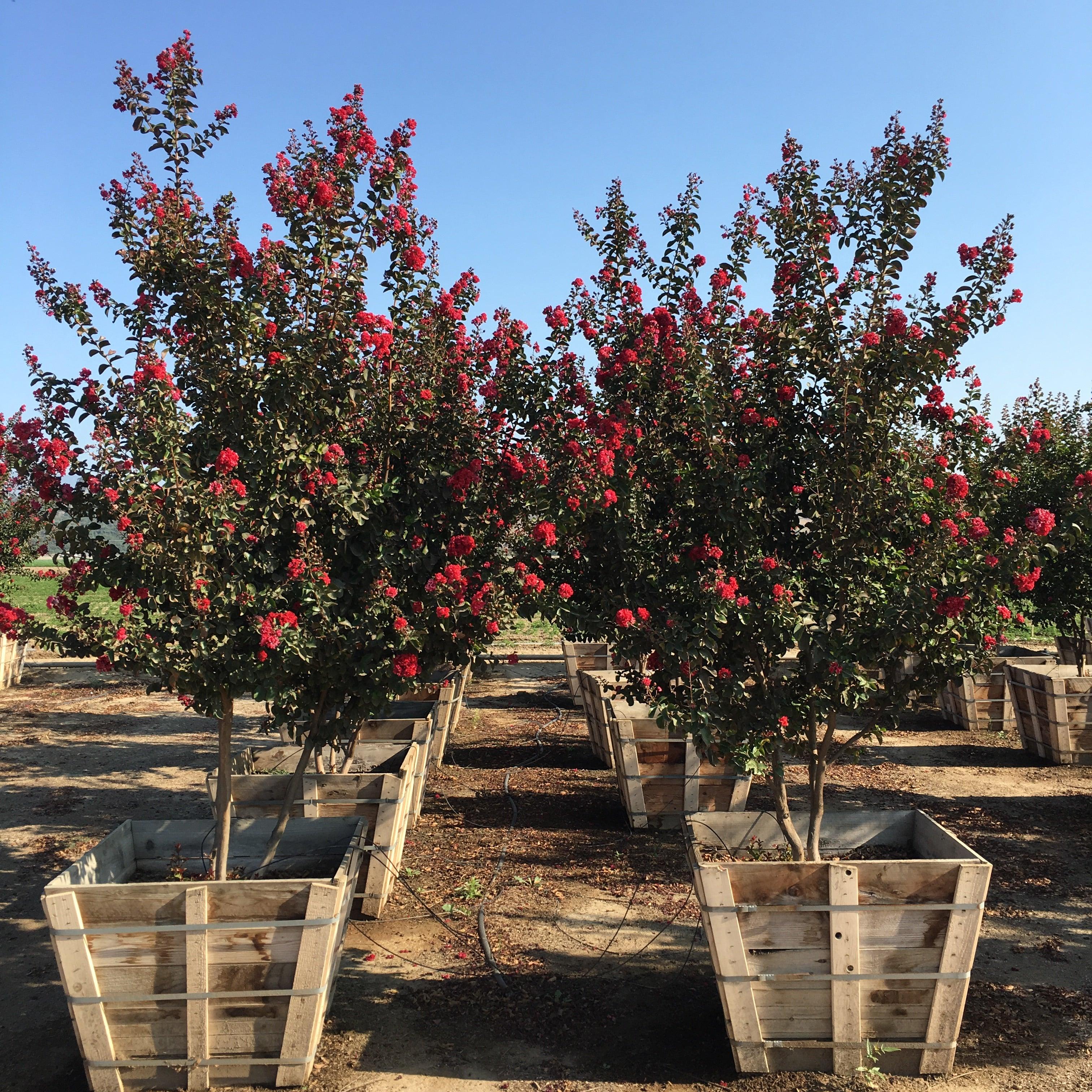
One of the most striking features of the Tuscarora Crape Myrtle is its abundant, watermelon red flowers. These flowers appear in large clusters—often exceeding 1 foot in length—creating a visually stunning display that enhances any garden or yard. The vibrant color of the blooms begins in late spring and continues reliably through fall, providing continuous color and seasonal interest.
Tuscarora Crape Myrtle trees thrive in USDA hardiness zones 7-11 and prefer full sun, though they can tolerate some shade. They are adaptable to a range of climates and will grow well in various well-draining soils, making them a versatile choice for many landscape designs. Whether you’re looking to add a splash of color to your garden, create a focal point in your yard, or enjoy the beauty of large, showy flower clusters, the Tuscarora Crape Myrtle is an excellent option.
Key Features of the Tuscarora Crape Myrtle (Lagerstroemia indica ‘Tuscarora’)
-
Produces vibrant, deep-pink to watermelon-red flower clusters throughout summer, delivering some of the best blooms among crape myrtles for maximum visual impact.
-
Features attractive exfoliating bark and striking orange-red fall foliage for year-round ornamental interest.
-
Fast-growing and highly disease resistant, this hardy tree thrives in USDA Zones 7–9 and is heat and drought tolerant once established.
-
Thrives in moist, well-drained soils with an optimal acidic pH of 5.0 to 6.5, but adapts well to a wide range of soil types—including clay and alkaline soils—as long as the soil is not soggy.
-
Reaches up to 25 feet tall and 20 feet wide, making it ideal as a specimen tree or planted in clusters for a dramatic landscape effect.
Buying and Size Options for Tuscarora Crape
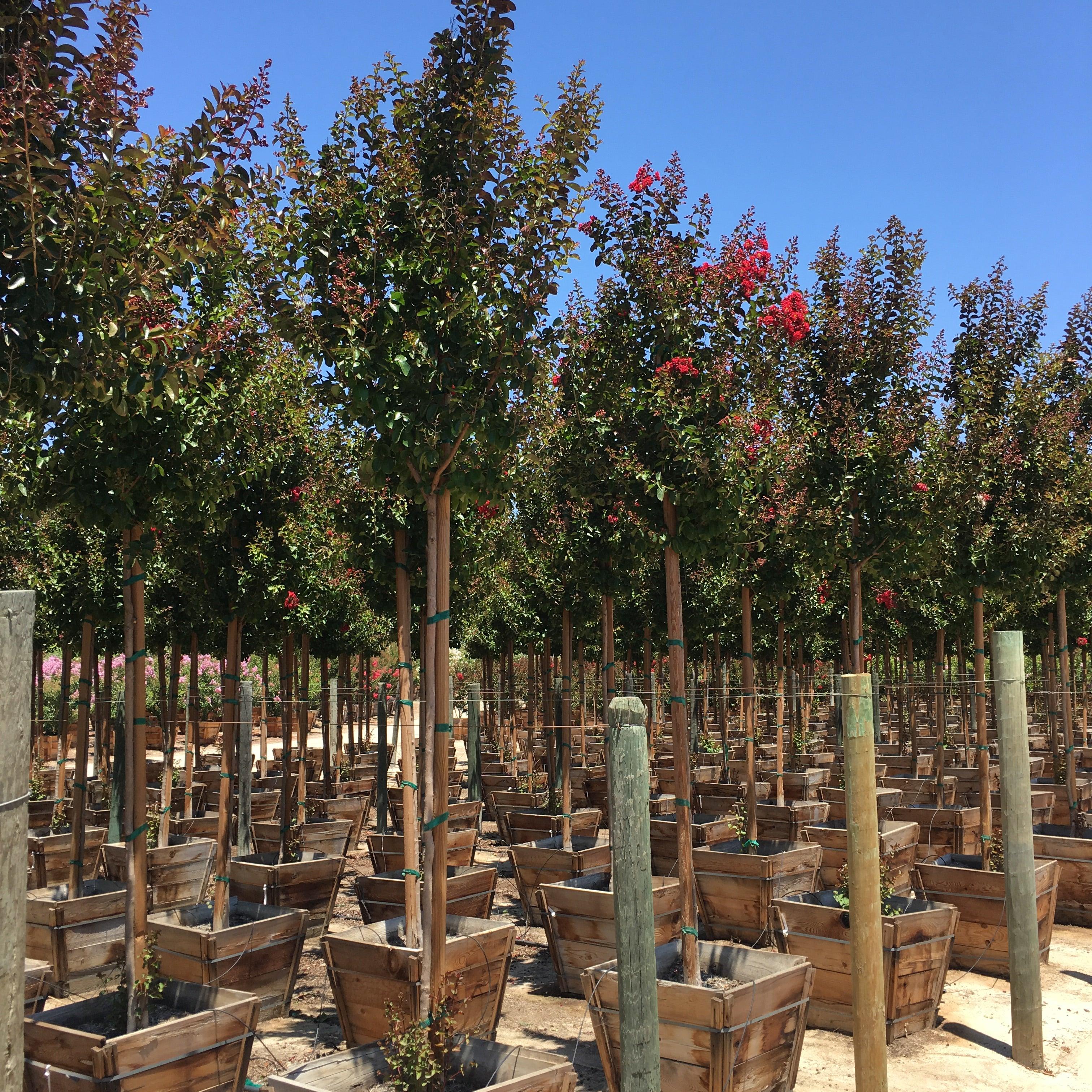
Tuscarora Crape Myrtles are available in a range of container sizes to suit your landscaping needs. Choose from 5-gallon (2-3 ft tall), 15-gallon (4-6 ft tall), and 24-inch box (6-8 ft tall) options, with mature or specimen stock available upon request for instant impact. Pricing is tiered by size, so you can select the best fit for your project and budget.
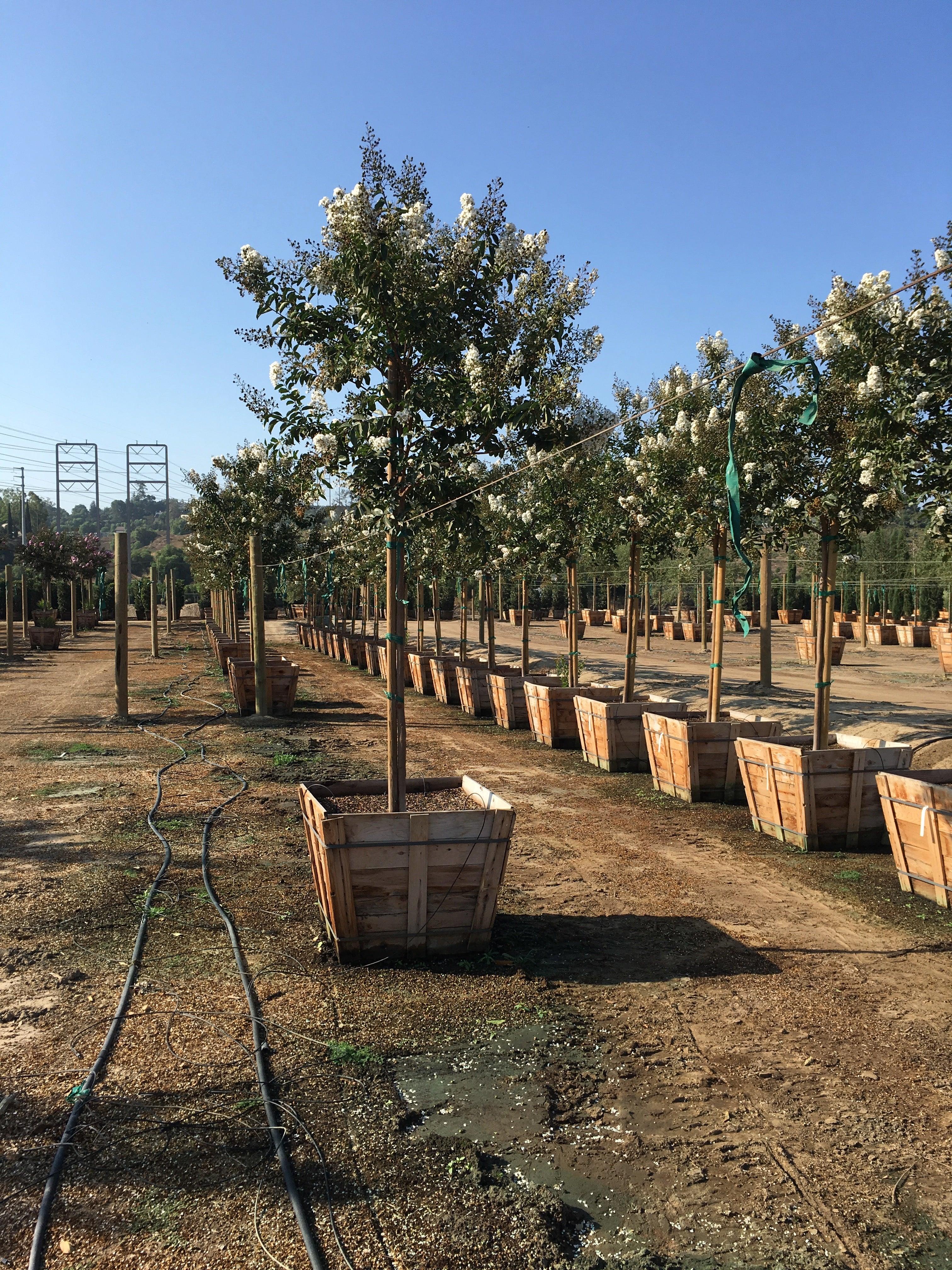
For optimal growth and stability, plant Tuscarora Crape Myrtles directly in the ground. If you’re looking to create a tall, living privacy screen, plant them in rows spaced about 15 feet apart. This spacing allows the trees to fill in and form a dense, attractive barrier.
Tuscarora Crape Myrtles are also highly suited for framing driveways, walkways, or city streets, thanks to its high tolerance for urban pollution, and they pair well with other popular privacy trees and shrubs in layered landscape designs. This makes it an excellent choice for both residential and urban landscapes.
Caring for Lagerstroemia indica Tuscarora
Tuscarora Crape Myrtles thrive when you plant them in a spot that receives full sun, at least 6 hours daily, to ensure the best flowering and vibrant color. Select a location with well-drained soil and a slightly acidic to neutral pH (5.5–7.0) for optimal root health and growth, and consider consulting a local plant nursery and landscaping team if you need help evaluating your site. When planting, make sure the roots are spread out in the planting hole and the plant is set at the same depth as it was in the nursery container. Healthy roots are essential for the tree to become established and flourish.
For watering, water deeply about twice a week for the first three months after planting to help the roots establish. Once the plant is established, water deeply once weekly during dry conditions to maintain healthy growth and abundant blooms. Consistent water is especially important during the first growing season.
Apply a 2–3 inch layer of mulch, such as pine straw or bark, around the base of the plant to retain soil moisture, regulate temperature, and suppress weeds. Be careful not to pile mulch against the trunk, as this can lead to rot or pest issues.
Fertilize in early spring using a balanced, slow release fertilizer formulated for acid-loving plants. This provides steady nutrients for healthy growth, disease resistance, and prolific flowering throughout the spring and summer. Avoid over-fertilizing, as this can encourage excessive leafy growth at the expense of blooms.
Prune in late winter or early spring to shape the tree, remove any crossing branches, and maintain a strong trunk structure. Proper trunk care and pruning help prevent disease and pests, and enhance the tree’s overall appearance.
Pruning, Pests, and Disease Management for Tuscarora Crape
Prune Tuscarora Crape Myrtles during the dormant season, focusing on removing dead, dying, or crowded branches. Proper pruning encourages healthy growth, prevents disease and pest problems, and promotes abundant blooms. Avoid topping or excessive cutting, as this can damage the tree’s natural shape and reduce flowering. Staking is generally unnecessary due to the tree’s strong, upright, multi-branched structure.
Tuscarora Crape Myrtles thrive in full sun for the best flower display, but it can tolerate some shade. In partial shade, the tree will still maintain health and produce vibrant blooms, though flowering may be less profuse than in full sun.
Monitor for pests such as aphids, which are common on crape myrtles. Aphids can be managed with a strong spray of water, insecticidal soap, or horticultural oil for severe infestations. Regularly check for powdery mildew, especially in humid conditions, and treat with appropriate fungicides if needed, particularly if your garden also includes other nursery-grown trees and shrubs that may be susceptible.
Landscaping Uses and Design Ideas with Crape Myrtles
-
As a single specimen, the Tuscarora Crape Myrtle can be used as a stunning focal point in gardens due to its beauty, vibrant pink blooms, and attractive vase-shaped form.
-
For grouping, Tuscarora Crape Myrtles are ideal for creating colorful hedges or framing entrances, as its dense flower clusters provide continuous color from late spring through fall.
-
Pair with drought-tolerant companion plants like lavender, salvia, ornamental grasses, or resilient trees such as African Sumac and other hardy landscape trees for a waterwise landscape that highlights the crape myrtle’s seasonal interest.
-
In the fall, the foliage transforms into stunning shades of red, orange, and yellow, further enhancing its beauty and visual appeal even after the blooming season.
Comparing Lagerstroemia indica Tuscarora to Other Crape Myrtles
|
Variety |
Mature Height |
Bloom Color |
Growth Rate |
Disease Resistance |
|---|---|---|---|---|
|
Tuscarora Crape Myrtle |
20-25 ft |
Watermelon Red |
Fast |
High |
|
Natchez |
20-30 ft |
White |
Fast |
High |
|
Muskogee |
20-25 ft |
Lavender |
Fast |
High |
|
Dynamite |
15-20 ft |
Cherry Red |
Moderate |
Moderate |
Original: $295.00
-65%$295.00
$103.25Product Information
Product Information
Shipping & Returns
Shipping & Returns
Description
The Tuscarora Crape Myrtle (Lagerstroemia indica 'Tuscarora') is a standout among flowering trees, prized for its vibrant color and adaptability in a variety of garden and yard settings. At maturity, these trees typically reach 16 to 25 feet tall and 15 to 20 feet wide, making them ideal for mid-sized residential gardens or as focal points in landscape design. Known for their fast growth, Tuscarora Crape Myrtles can grow up to 3 feet per year, eventually reaching up to 25 feet in height and 20 feet in width with proper care.
One of the most striking features of the Tuscarora Crape Myrtle is its abundant, watermelon red flowers. These flowers appear in large clusters—often exceeding 1 foot in length—creating a visually stunning display that enhances any garden or yard. The vibrant color of the blooms begins in late spring and continues reliably through fall, providing continuous color and seasonal interest.
Tuscarora Crape Myrtle trees thrive in USDA hardiness zones 7-11 and prefer full sun, though they can tolerate some shade. They are adaptable to a range of climates and will grow well in various well-draining soils, making them a versatile choice for many landscape designs. Whether you’re looking to add a splash of color to your garden, create a focal point in your yard, or enjoy the beauty of large, showy flower clusters, the Tuscarora Crape Myrtle is an excellent option.
Key Features of the Tuscarora Crape Myrtle (Lagerstroemia indica ‘Tuscarora’)
-
Produces vibrant, deep-pink to watermelon-red flower clusters throughout summer, delivering some of the best blooms among crape myrtles for maximum visual impact.
-
Features attractive exfoliating bark and striking orange-red fall foliage for year-round ornamental interest.
-
Fast-growing and highly disease resistant, this hardy tree thrives in USDA Zones 7–9 and is heat and drought tolerant once established.
-
Thrives in moist, well-drained soils with an optimal acidic pH of 5.0 to 6.5, but adapts well to a wide range of soil types—including clay and alkaline soils—as long as the soil is not soggy.
-
Reaches up to 25 feet tall and 20 feet wide, making it ideal as a specimen tree or planted in clusters for a dramatic landscape effect.
Buying and Size Options for Tuscarora Crape
Tuscarora Crape Myrtles are available in a range of container sizes to suit your landscaping needs. Choose from 5-gallon (2-3 ft tall), 15-gallon (4-6 ft tall), and 24-inch box (6-8 ft tall) options, with mature or specimen stock available upon request for instant impact. Pricing is tiered by size, so you can select the best fit for your project and budget.
For optimal growth and stability, plant Tuscarora Crape Myrtles directly in the ground. If you’re looking to create a tall, living privacy screen, plant them in rows spaced about 15 feet apart. This spacing allows the trees to fill in and form a dense, attractive barrier.
Tuscarora Crape Myrtles are also highly suited for framing driveways, walkways, or city streets, thanks to its high tolerance for urban pollution, and they pair well with other popular privacy trees and shrubs in layered landscape designs. This makes it an excellent choice for both residential and urban landscapes.
Caring for Lagerstroemia indica Tuscarora
Tuscarora Crape Myrtles thrive when you plant them in a spot that receives full sun, at least 6 hours daily, to ensure the best flowering and vibrant color. Select a location with well-drained soil and a slightly acidic to neutral pH (5.5–7.0) for optimal root health and growth, and consider consulting a local plant nursery and landscaping team if you need help evaluating your site. When planting, make sure the roots are spread out in the planting hole and the plant is set at the same depth as it was in the nursery container. Healthy roots are essential for the tree to become established and flourish.
For watering, water deeply about twice a week for the first three months after planting to help the roots establish. Once the plant is established, water deeply once weekly during dry conditions to maintain healthy growth and abundant blooms. Consistent water is especially important during the first growing season.
Apply a 2–3 inch layer of mulch, such as pine straw or bark, around the base of the plant to retain soil moisture, regulate temperature, and suppress weeds. Be careful not to pile mulch against the trunk, as this can lead to rot or pest issues.
Fertilize in early spring using a balanced, slow release fertilizer formulated for acid-loving plants. This provides steady nutrients for healthy growth, disease resistance, and prolific flowering throughout the spring and summer. Avoid over-fertilizing, as this can encourage excessive leafy growth at the expense of blooms.
Prune in late winter or early spring to shape the tree, remove any crossing branches, and maintain a strong trunk structure. Proper trunk care and pruning help prevent disease and pests, and enhance the tree’s overall appearance.
Pruning, Pests, and Disease Management for Tuscarora Crape
Prune Tuscarora Crape Myrtles during the dormant season, focusing on removing dead, dying, or crowded branches. Proper pruning encourages healthy growth, prevents disease and pest problems, and promotes abundant blooms. Avoid topping or excessive cutting, as this can damage the tree’s natural shape and reduce flowering. Staking is generally unnecessary due to the tree’s strong, upright, multi-branched structure.
Tuscarora Crape Myrtles thrive in full sun for the best flower display, but it can tolerate some shade. In partial shade, the tree will still maintain health and produce vibrant blooms, though flowering may be less profuse than in full sun.
Monitor for pests such as aphids, which are common on crape myrtles. Aphids can be managed with a strong spray of water, insecticidal soap, or horticultural oil for severe infestations. Regularly check for powdery mildew, especially in humid conditions, and treat with appropriate fungicides if needed, particularly if your garden also includes other nursery-grown trees and shrubs that may be susceptible.
Landscaping Uses and Design Ideas with Crape Myrtles
-
As a single specimen, the Tuscarora Crape Myrtle can be used as a stunning focal point in gardens due to its beauty, vibrant pink blooms, and attractive vase-shaped form.
-
For grouping, Tuscarora Crape Myrtles are ideal for creating colorful hedges or framing entrances, as its dense flower clusters provide continuous color from late spring through fall.
-
Pair with drought-tolerant companion plants like lavender, salvia, ornamental grasses, or resilient trees such as African Sumac and other hardy landscape trees for a waterwise landscape that highlights the crape myrtle’s seasonal interest.
-
In the fall, the foliage transforms into stunning shades of red, orange, and yellow, further enhancing its beauty and visual appeal even after the blooming season.
Comparing Lagerstroemia indica Tuscarora to Other Crape Myrtles
|
Variety |
Mature Height |
Bloom Color |
Growth Rate |
Disease Resistance |
|---|---|---|---|---|
|
Tuscarora Crape Myrtle |
20-25 ft |
Watermelon Red |
Fast |
High |
|
Natchez |
20-30 ft |
White |
Fast |
High |
|
Muskogee |
20-25 ft |
Lavender |
Fast |
High |
|
Dynamite |
15-20 ft |
Cherry Red |
Moderate |
Moderate |