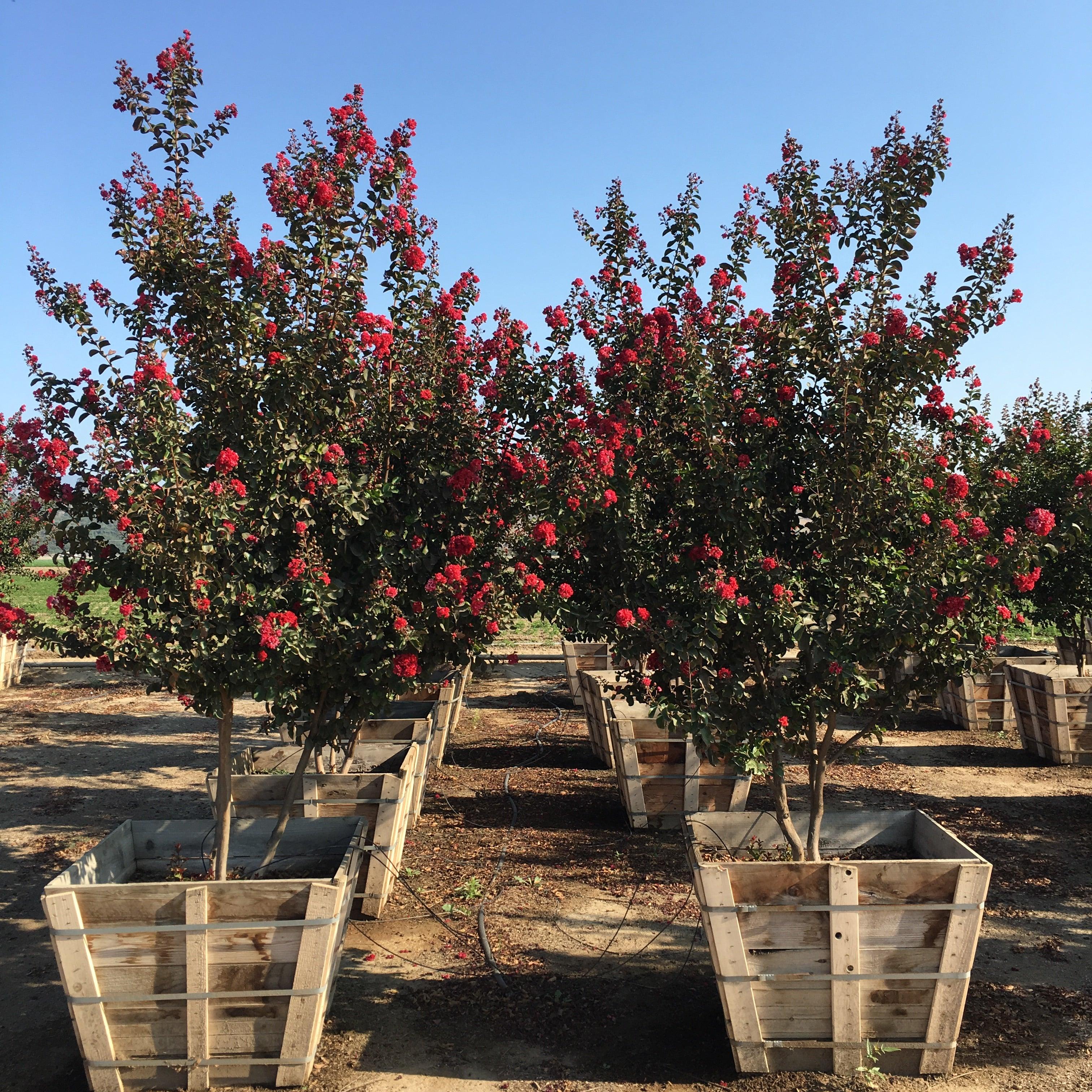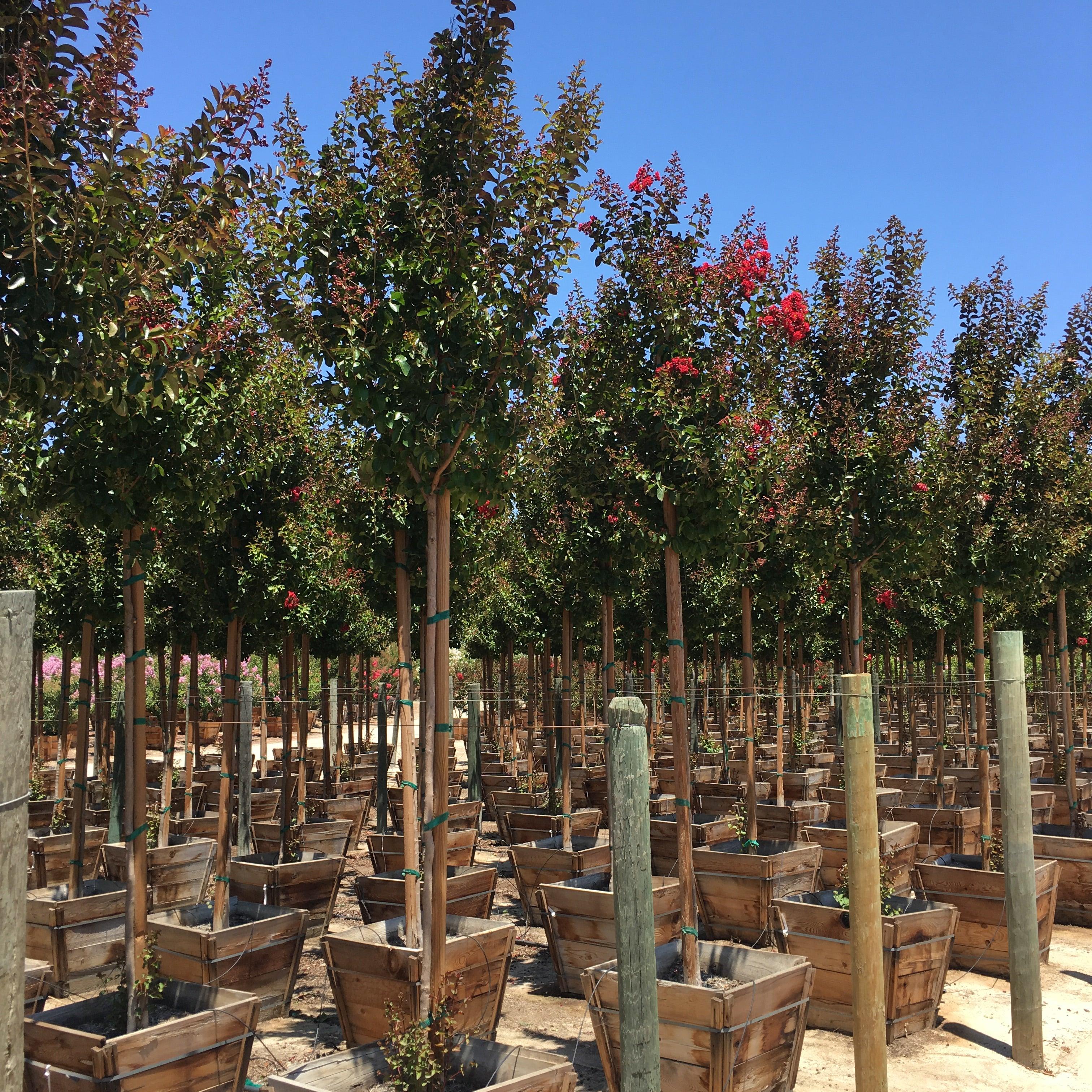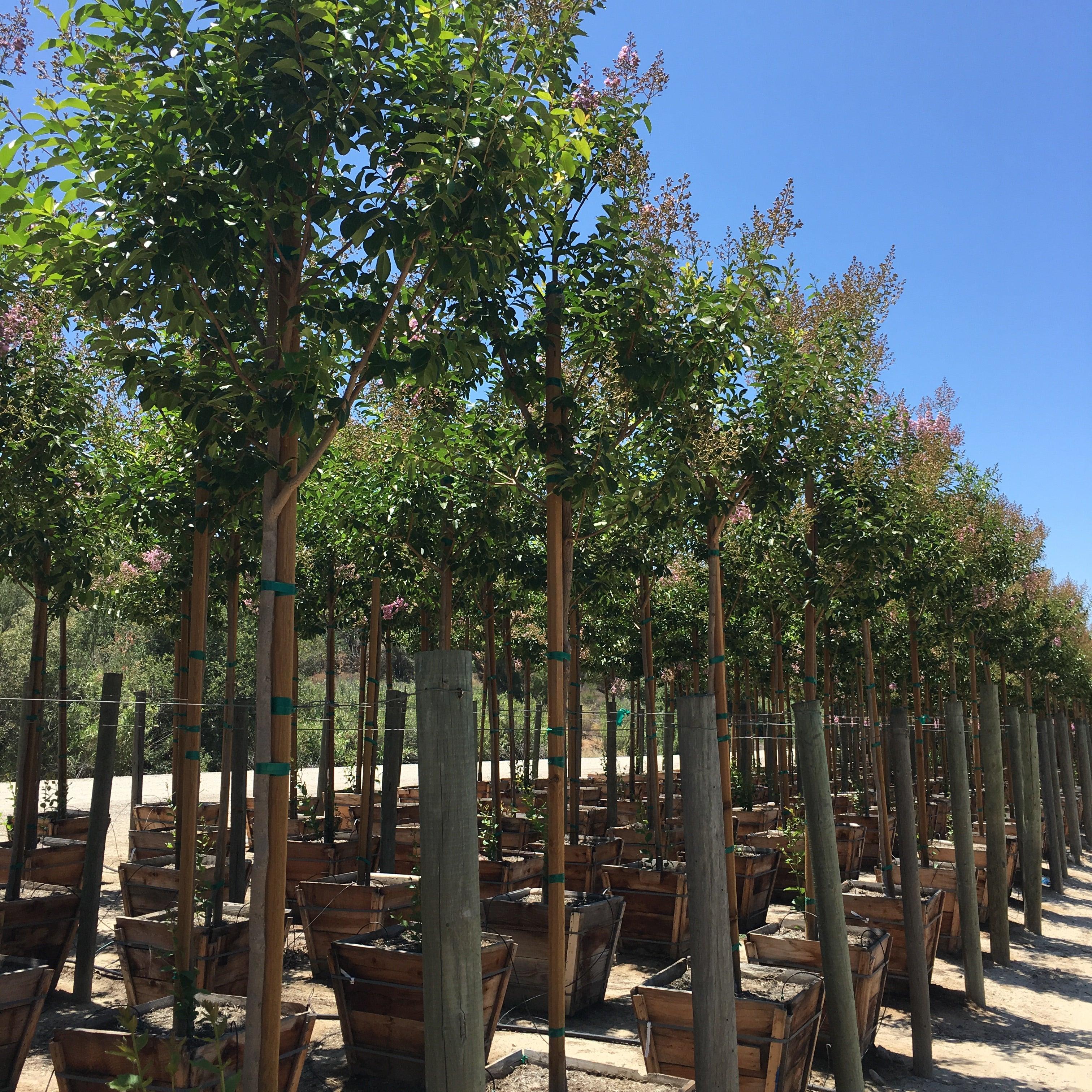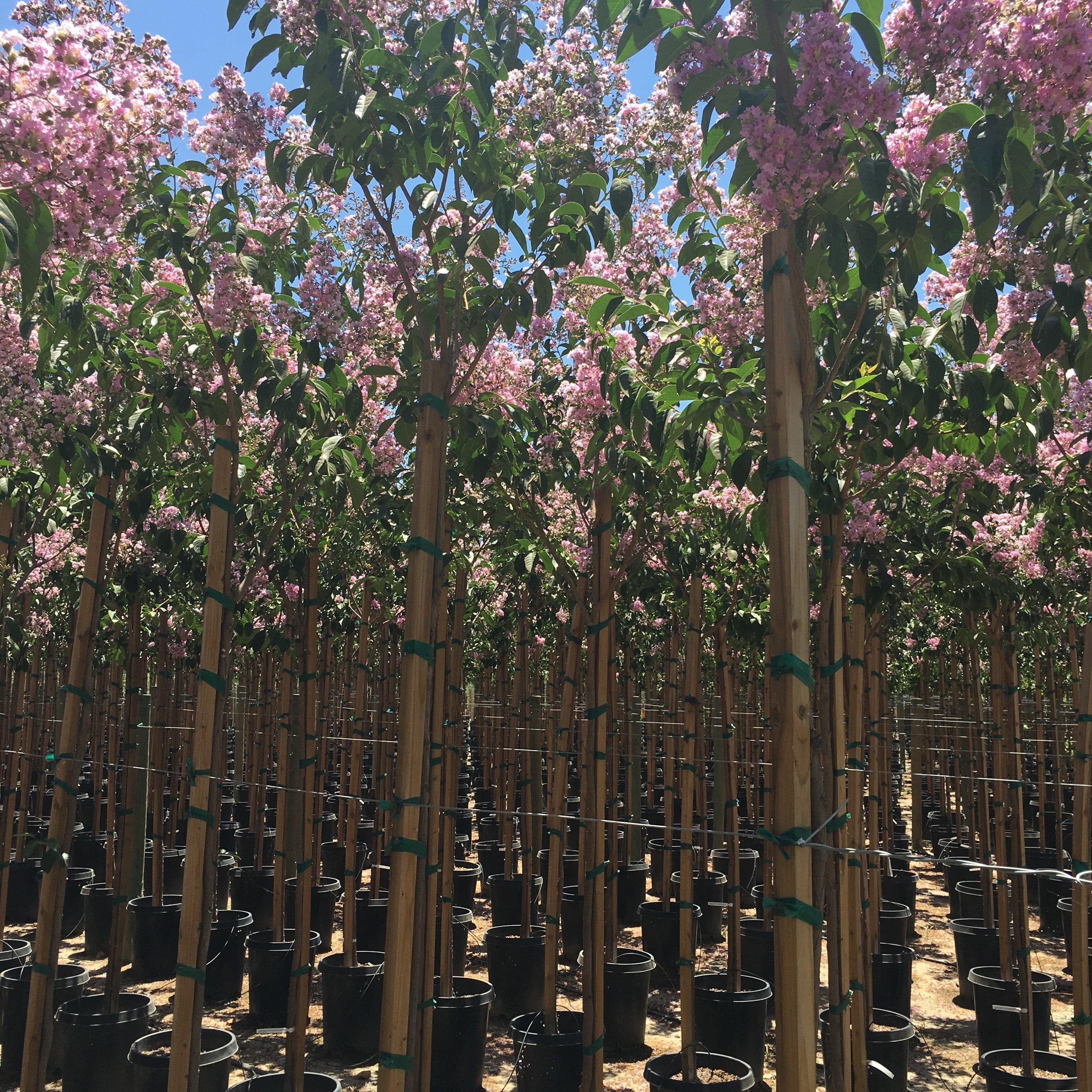
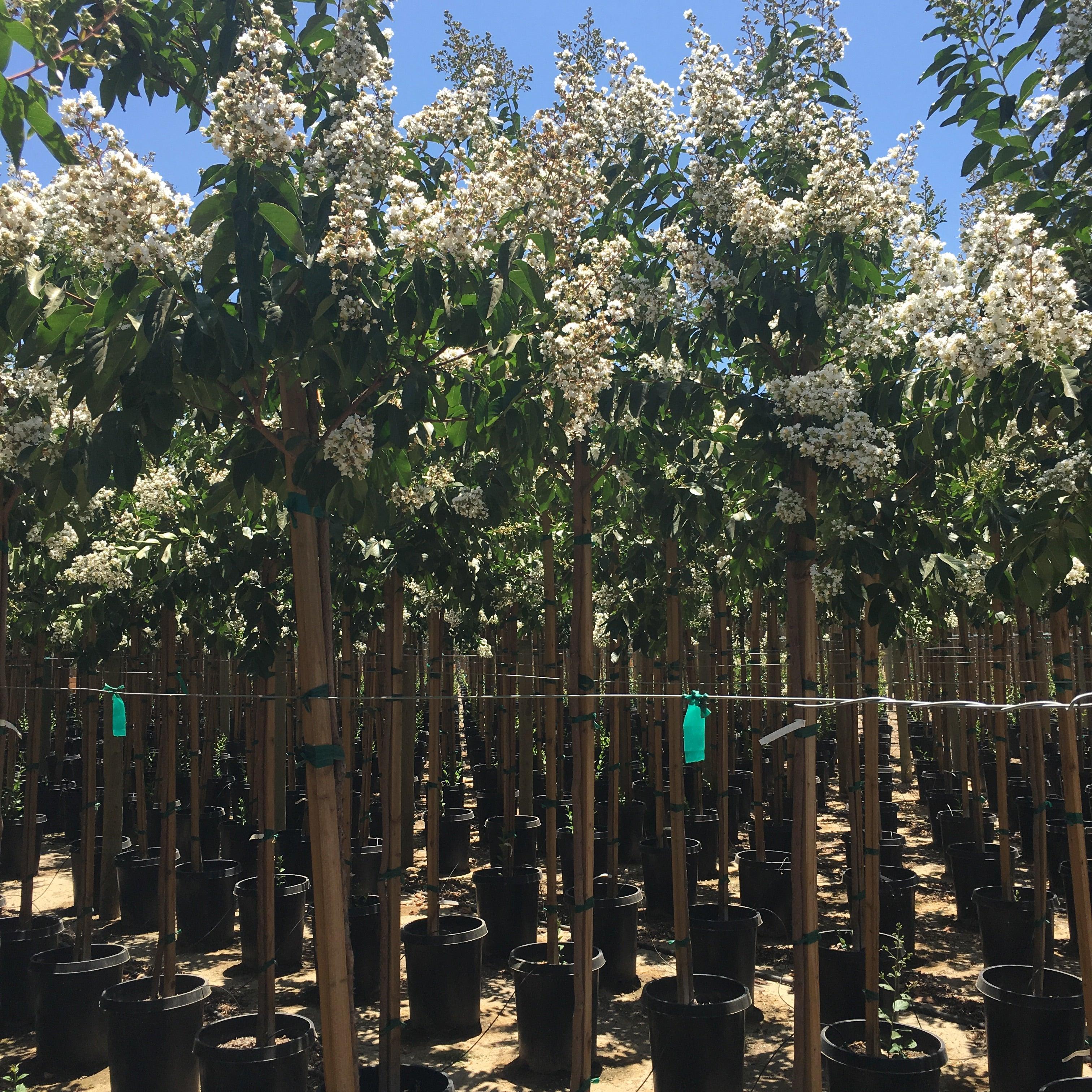
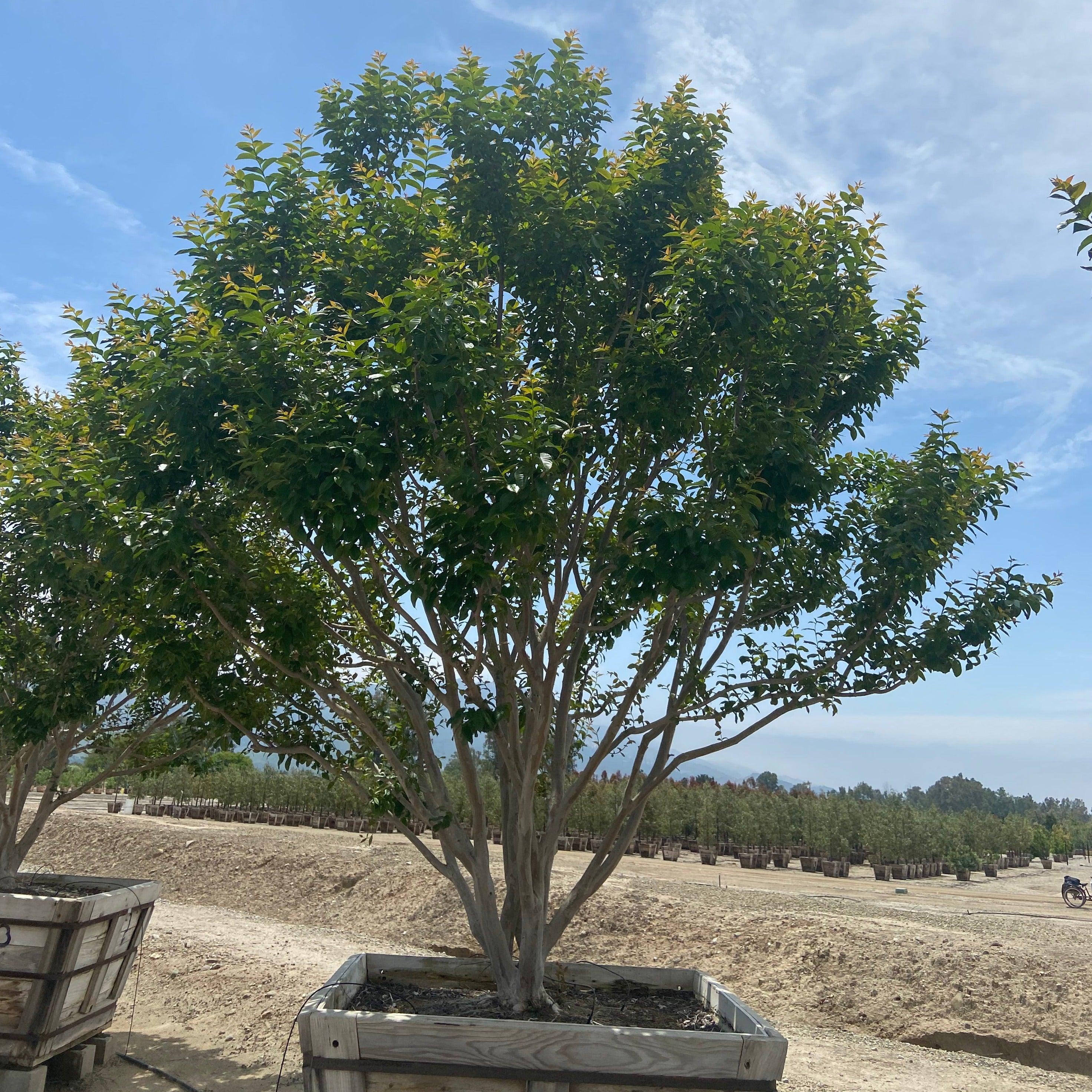
White Crape Myrtle (Lagerstroemia indica x fauriei ‘Natchez’)
Transform Your Landscape with Stunning White Summer Blooms
White crape myrtle brings bright white summer bloom, clean contrast, and year-round landscape structure to sunny California gardens with minimal care once established.
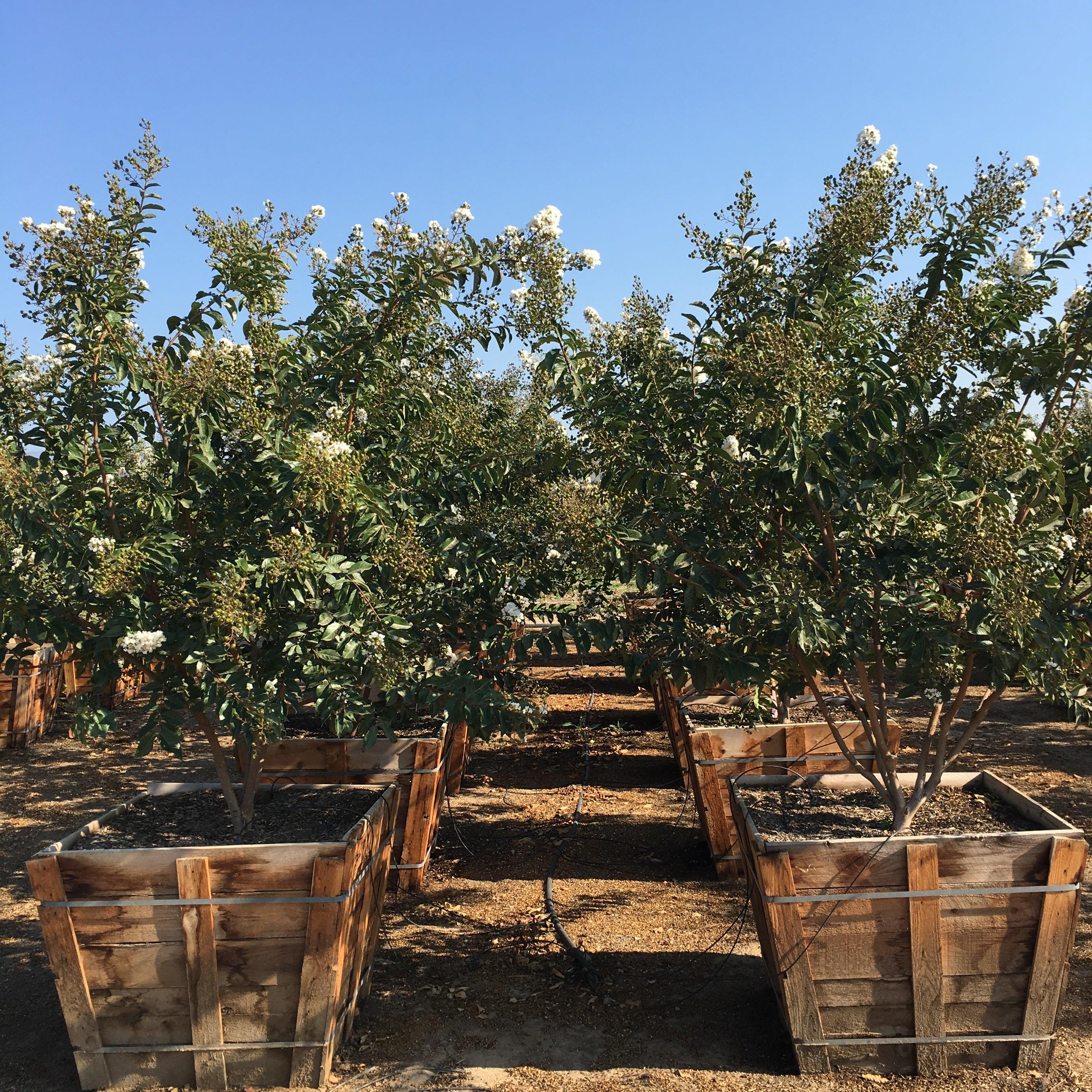
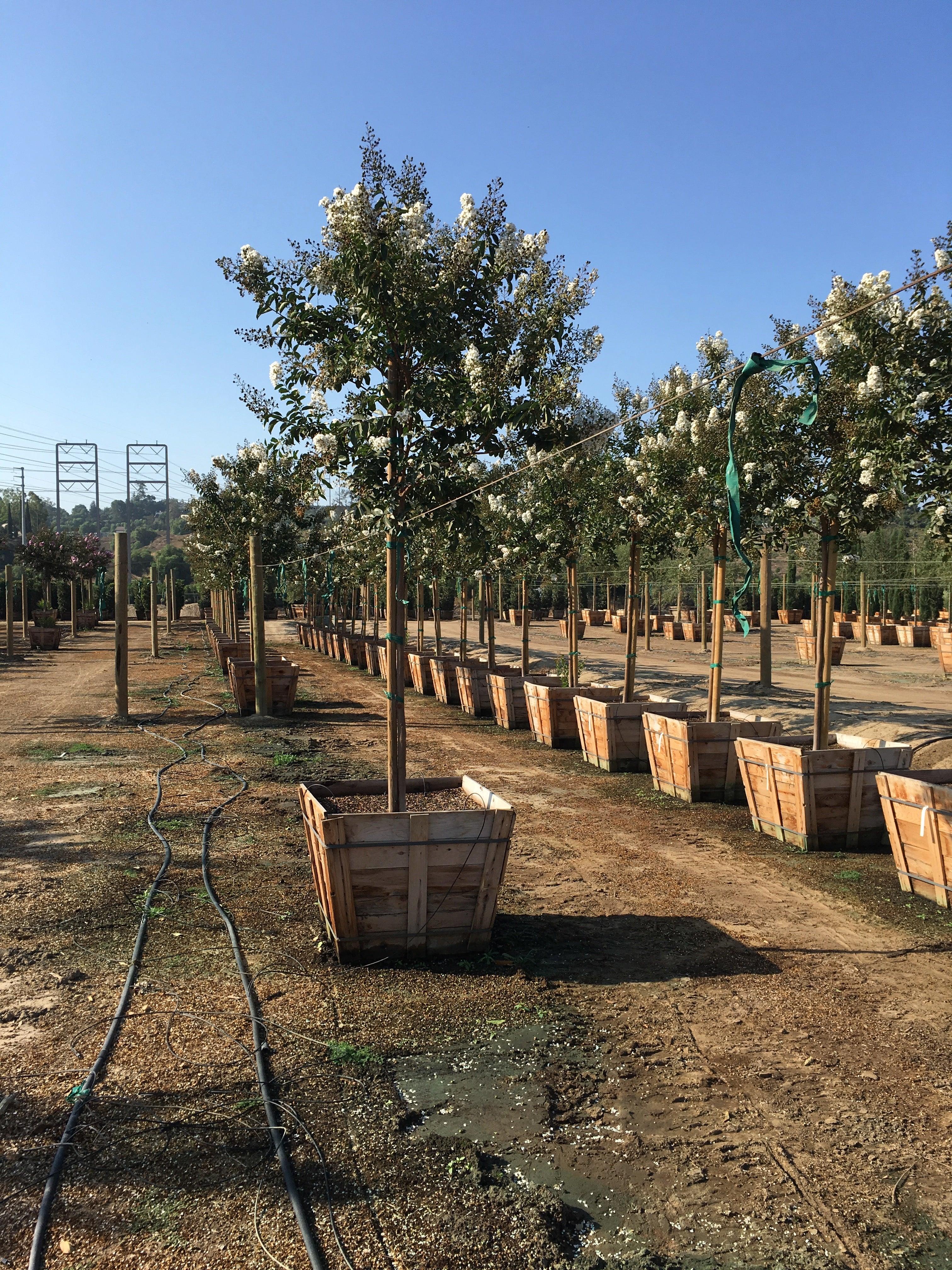
Designed for homeowners who want beautiful white flowers from summer into fall without constant maintenance, this flowering shrub or small tree creates a crisp, elegant focal point in front yards, entries, patios, and mixed garden borders. The Natchez Crape Myrtle is known for its large clusters of pure white flowers that bloom throughout the summer, providing a clean and elegant presence in the landscape.
Why You’ll Love It
-
Long-lasting white flowers – Large, bright clusters bloom through the warm growing season, giving your garden reliable summer color when many spring-flowering plants are finished.
-
Low maintenance once established – Once established, Natchez Crape Myrtle requires minimal maintenance, making it a low-care option for homeowners.
-
Four-season beauty – In the fall, the foliage of the Natchez Crape Myrtle shifts into vibrant orange, red, and yellow tones before leaf drop, contributing to its four-season appeal.
-
Built for California heat – This variety is known for its strong heat tolerance, allowing it to perform well in hot summer conditions without compromising flowering.
-
Elegant design flexibility – The color white pairs easily with green foliage, silver accents, blue, violet, gold, orange, and other colors, creating a bright, balanced look in modern, traditional, cottage, and Mediterranean-inspired landscapes.
The effect is clean but not cold: stark white flower panicles bring the crisp look of snow, white sand, milk, or egg tones against a deep green background, while the tree’s warm bark and fall pigments add natural warmth later in the year.
What Makes It Different
Most flowering trees bloom for a short window in spring, then fade into the background for the rest of the year.
White Crape Myrtle provides:
-
Extended summer flowering – This variety of Crape Myrtle is valued for its ability to maintain blooming during the warm season, making it a reliable choice for homeowners seeking summer color.
-
Pure, bright white blooms – Natchez Crape Myrtle is known for its large clusters of pure white flowers that bloom throughout the summer, providing a bright and elegant presence in the landscape.
-
Winter bark interest – As the Natchez Crape Myrtle matures, it develops attractive smooth exfoliating bark that reveals warm cinnamon, tan, and cream tones, adding visual interest during the winter months.
-
A living design element – Natchez Crape Myrtle develops attractive smooth, exfoliating bark that reveals warm tones, adding visual interest to the landscape even in winter.
-
Better performance with the right placement – White crape myrtles are particularly susceptible to powdery mildew, which can be prevented by ensuring full sun and good airflow around the tree.
In landscape design, white has long carried meaning around brightness, purity, and space; even the English word “white” traces back to Proto-Germanic ideas of shining or brightness. In the garden, that translates into clean lighting, strong contrast, and a room-like outdoor setting that feels open and alive. Think white wedding elegance, cool whites beside blue and silver, or warm white undertones against tan stone, white sand, and North Africa or Middle East courtyard-inspired planting palettes.
How To Have Success In Your Garden
-
Choose the perfect sunny location
Plant your crape myrtle where it receives at least 6 hours of full sun each day. Crape myrtle trees require a minimum of 6 hours of full, direct sunlight daily to thrive, and insufficient sunlight drastically reduces flowering and increases the risk of fungal issues. -
Plant in well drained soil and water deeply
Set the root ball in well drained soil, avoiding standing water or soggy, low-lying locations. They prefer well-draining soil and are highly susceptible to root rot if planted in standing water or soggy, low-lying locations. Water deeply 2 to 3 times per week during the first growing season to help establish white crape myrtle trees. -
Enjoy months of bright white bloom
Once the tree is established, enjoy beautiful white flowers through summer and into fall. Once established, crape myrtles are highly drought-tolerant but produce the best blooms when given deep, infrequent watering during prolonged hot spells.
For best long-term shape, prune in late winter or early spring before new growth begins. Remove dead wood, thin crossing branches, and avoid severe topping so the tree keeps its natural form.
Product Details
-
Product type: White crape myrtle flowering shrub or tree
-
Featured variety: Natchez crape myrtle
-
Flower color: Pure white to bright white; a clean color white that contrasts beautifully with green foliage
-
Bloom season: Summer through fall in warm climates, with strong bloom during the main growing season
-
Mature size: Varies by cultivar; Natchez Crape Myrtle commonly matures as a larger landscape tree, while compact white varieties such as Muskogee Crape Myrtle are better for smaller space, containers, and foundation planting
-
Sun requirement: Full sun; crape myrtle trees require a minimum of 6 hours of full, direct sunlight daily to thrive
-
Soil requirement: Well drained soil; crape myrtles thrive in slightly acidic to neutral soil with a pH level ranging from 5.0 to 6.5
-
Watering: Water deeply 2 to 3 times per week during the first growing season; after establishment, use deep, infrequent watering during prolonged hot spells
-
Hardiness: Suitable for many California landscapes; check cultivar-specific USDA zones before planting
-
Heat tolerance: Natchez Crape Myrtle and related selections like the Red Crape Myrtle Tree thrive in full sun and well-drained soil, making them ideal for sunny residential landscapes
-
Maintenance: Minimal once established; pruning should occur in late winter or early spring before new growth emerges to avoid negatively impacting the tree’s natural shape and health
-
Disease note: White crape myrtles are particularly susceptible to powdery mildew, which can be prevented by ensuring full sun and good airflow around the tree
-
Shipping: Yardwork ships plants with the root ball protected for transit; container size and height vary by availability and cultivar
For best results, apply a balanced slow release fertilizer in early spring if soil fertility is low, then avoid overfeeding. Too much fertilizer can lead to leafy new growth at the expense of bloom.
Who It’s For
Ideal for:
-
California homeowners who want an elegant white flowering tree for a front yard, entry, or patio
-
Landscape designers creating formal, cottage, Mediterranean, or modern garden styles
-
Property owners seeking low-maintenance plants with summer bloom, fall foliage, and winter bark interest, including ornamental options like the Aristocrat Pear tree
-
Gardeners who want the bright look of white flowers without repainting, rebuilding, or redesigning the whole outdoor space
-
Anyone creating a crisp backdrop that pairs well with blue, violet, silver, gold, orange, pale green, and other colors who may also want evergreen structure from Pacific Wax Myrtle
If you want beautiful summer color, strong contrast, and a tree that keeps contributing after the flowers fade, white crape myrtle is a practical and polished choice.
Frequently Asked Questions
How big will my white crape myrtle get?
Size depends on the cultivar. Natchez crape myrtle is typically grown as a larger tree, while compact white crape myrtle varieties stay closer to flowering shrub size. Yardwork can help you choose the right plant for your space through its plant nursery and landscape services.
When will it start blooming after planting?
Many healthy crape myrtles bloom during the first or second growing season after planting, especially when planted in full sun with consistent establishment watering. The Natchez Crape Myrtle is known for its large clusters of pure white flowers that bloom throughout the summer, providing a clean and elegant presence in the landscape.
Does it need special pruning or maintenance?
No complicated pruning is needed. Pruning should occur in late winter or early spring before new growth emerges to avoid negatively impacting the tree’s natural shape and health. Remove dead branches, thin crossing branches, and avoid harsh topping or over-pruned cuts.
Will it survive California’s hot, dry summers?
Yes, when properly established. Once established, crape myrtles are highly drought-tolerant but produce the best blooms when given deep, infrequent watering during prolonged hot spells. This variety is known for its strong heat tolerance, allowing it to perform well in hot summer conditions without compromising flowering.
What soil does white crape myrtle need?
Crape myrtles thrive in slightly acidic to neutral soil with a pH level ranging from 5.0 to 6.5. They prefer well-draining soil and are highly susceptible to root rot if planted in standing water or soggy, low-lying locations.
How do I prevent powdery mildew?
Plant in full sun, allow airflow around the canopy, and avoid crowding the tree against dense plants or walls. White crape myrtles are particularly susceptible to powdery mildew, which can be prevented by ensuring full sun and good airflow around the tree.
What’s your plant guarantee if it doesn’t thrive?
Yardwork provides healthy plants, expert California-focused guidance, and plant guarantee support through its online nursery and plant selection. Specific replacement or guarantee details are confirmed at checkout or during your consultation, and you can also explore options for privacy and evergreen trees to complement your planting.
Ready to Upgrade Your Landscape?
Stop settling for a plain landscape with no summer color.
Choose White Crape Myrtle and experience months of bright, elegant white bloom, warm winter bark, and vibrant fall foliage in one low-maintenance tree.
Product Information
Product Information
Shipping & Returns
Shipping & Returns
Description
Transform Your Landscape with Stunning White Summer Blooms
White crape myrtle brings bright white summer bloom, clean contrast, and year-round landscape structure to sunny California gardens with minimal care once established.
Designed for homeowners who want beautiful white flowers from summer into fall without constant maintenance, this flowering shrub or small tree creates a crisp, elegant focal point in front yards, entries, patios, and mixed garden borders. The Natchez Crape Myrtle is known for its large clusters of pure white flowers that bloom throughout the summer, providing a clean and elegant presence in the landscape.
Why You’ll Love It
-
Long-lasting white flowers – Large, bright clusters bloom through the warm growing season, giving your garden reliable summer color when many spring-flowering plants are finished.
-
Low maintenance once established – Once established, Natchez Crape Myrtle requires minimal maintenance, making it a low-care option for homeowners.
-
Four-season beauty – In the fall, the foliage of the Natchez Crape Myrtle shifts into vibrant orange, red, and yellow tones before leaf drop, contributing to its four-season appeal.
-
Built for California heat – This variety is known for its strong heat tolerance, allowing it to perform well in hot summer conditions without compromising flowering.
-
Elegant design flexibility – The color white pairs easily with green foliage, silver accents, blue, violet, gold, orange, and other colors, creating a bright, balanced look in modern, traditional, cottage, and Mediterranean-inspired landscapes.
The effect is clean but not cold: stark white flower panicles bring the crisp look of snow, white sand, milk, or egg tones against a deep green background, while the tree’s warm bark and fall pigments add natural warmth later in the year.
What Makes It Different
Most flowering trees bloom for a short window in spring, then fade into the background for the rest of the year.
White Crape Myrtle provides:
-
Extended summer flowering – This variety of Crape Myrtle is valued for its ability to maintain blooming during the warm season, making it a reliable choice for homeowners seeking summer color.
-
Pure, bright white blooms – Natchez Crape Myrtle is known for its large clusters of pure white flowers that bloom throughout the summer, providing a bright and elegant presence in the landscape.
-
Winter bark interest – As the Natchez Crape Myrtle matures, it develops attractive smooth exfoliating bark that reveals warm cinnamon, tan, and cream tones, adding visual interest during the winter months.
-
A living design element – Natchez Crape Myrtle develops attractive smooth, exfoliating bark that reveals warm tones, adding visual interest to the landscape even in winter.
-
Better performance with the right placement – White crape myrtles are particularly susceptible to powdery mildew, which can be prevented by ensuring full sun and good airflow around the tree.
In landscape design, white has long carried meaning around brightness, purity, and space; even the English word “white” traces back to Proto-Germanic ideas of shining or brightness. In the garden, that translates into clean lighting, strong contrast, and a room-like outdoor setting that feels open and alive. Think white wedding elegance, cool whites beside blue and silver, or warm white undertones against tan stone, white sand, and North Africa or Middle East courtyard-inspired planting palettes.
How To Have Success In Your Garden
-
Choose the perfect sunny location
Plant your crape myrtle where it receives at least 6 hours of full sun each day. Crape myrtle trees require a minimum of 6 hours of full, direct sunlight daily to thrive, and insufficient sunlight drastically reduces flowering and increases the risk of fungal issues. -
Plant in well drained soil and water deeply
Set the root ball in well drained soil, avoiding standing water or soggy, low-lying locations. They prefer well-draining soil and are highly susceptible to root rot if planted in standing water or soggy, low-lying locations. Water deeply 2 to 3 times per week during the first growing season to help establish white crape myrtle trees. -
Enjoy months of bright white bloom
Once the tree is established, enjoy beautiful white flowers through summer and into fall. Once established, crape myrtles are highly drought-tolerant but produce the best blooms when given deep, infrequent watering during prolonged hot spells.
For best long-term shape, prune in late winter or early spring before new growth begins. Remove dead wood, thin crossing branches, and avoid severe topping so the tree keeps its natural form.
Product Details
-
Product type: White crape myrtle flowering shrub or tree
-
Featured variety: Natchez crape myrtle
-
Flower color: Pure white to bright white; a clean color white that contrasts beautifully with green foliage
-
Bloom season: Summer through fall in warm climates, with strong bloom during the main growing season
-
Mature size: Varies by cultivar; Natchez Crape Myrtle commonly matures as a larger landscape tree, while compact white varieties such as Muskogee Crape Myrtle are better for smaller space, containers, and foundation planting
-
Sun requirement: Full sun; crape myrtle trees require a minimum of 6 hours of full, direct sunlight daily to thrive
-
Soil requirement: Well drained soil; crape myrtles thrive in slightly acidic to neutral soil with a pH level ranging from 5.0 to 6.5
-
Watering: Water deeply 2 to 3 times per week during the first growing season; after establishment, use deep, infrequent watering during prolonged hot spells
-
Hardiness: Suitable for many California landscapes; check cultivar-specific USDA zones before planting
-
Heat tolerance: Natchez Crape Myrtle and related selections like the Red Crape Myrtle Tree thrive in full sun and well-drained soil, making them ideal for sunny residential landscapes
-
Maintenance: Minimal once established; pruning should occur in late winter or early spring before new growth emerges to avoid negatively impacting the tree’s natural shape and health
-
Disease note: White crape myrtles are particularly susceptible to powdery mildew, which can be prevented by ensuring full sun and good airflow around the tree
-
Shipping: Yardwork ships plants with the root ball protected for transit; container size and height vary by availability and cultivar
For best results, apply a balanced slow release fertilizer in early spring if soil fertility is low, then avoid overfeeding. Too much fertilizer can lead to leafy new growth at the expense of bloom.
Who It’s For
Ideal for:
-
California homeowners who want an elegant white flowering tree for a front yard, entry, or patio
-
Landscape designers creating formal, cottage, Mediterranean, or modern garden styles
-
Property owners seeking low-maintenance plants with summer bloom, fall foliage, and winter bark interest, including ornamental options like the Aristocrat Pear tree
-
Gardeners who want the bright look of white flowers without repainting, rebuilding, or redesigning the whole outdoor space
-
Anyone creating a crisp backdrop that pairs well with blue, violet, silver, gold, orange, pale green, and other colors who may also want evergreen structure from Pacific Wax Myrtle
If you want beautiful summer color, strong contrast, and a tree that keeps contributing after the flowers fade, white crape myrtle is a practical and polished choice.
Frequently Asked Questions
How big will my white crape myrtle get?
Size depends on the cultivar. Natchez crape myrtle is typically grown as a larger tree, while compact white crape myrtle varieties stay closer to flowering shrub size. Yardwork can help you choose the right plant for your space through its plant nursery and landscape services.
When will it start blooming after planting?
Many healthy crape myrtles bloom during the first or second growing season after planting, especially when planted in full sun with consistent establishment watering. The Natchez Crape Myrtle is known for its large clusters of pure white flowers that bloom throughout the summer, providing a clean and elegant presence in the landscape.
Does it need special pruning or maintenance?
No complicated pruning is needed. Pruning should occur in late winter or early spring before new growth emerges to avoid negatively impacting the tree’s natural shape and health. Remove dead branches, thin crossing branches, and avoid harsh topping or over-pruned cuts.
Will it survive California’s hot, dry summers?
Yes, when properly established. Once established, crape myrtles are highly drought-tolerant but produce the best blooms when given deep, infrequent watering during prolonged hot spells. This variety is known for its strong heat tolerance, allowing it to perform well in hot summer conditions without compromising flowering.
What soil does white crape myrtle need?
Crape myrtles thrive in slightly acidic to neutral soil with a pH level ranging from 5.0 to 6.5. They prefer well-draining soil and are highly susceptible to root rot if planted in standing water or soggy, low-lying locations.
How do I prevent powdery mildew?
Plant in full sun, allow airflow around the canopy, and avoid crowding the tree against dense plants or walls. White crape myrtles are particularly susceptible to powdery mildew, which can be prevented by ensuring full sun and good airflow around the tree.
What’s your plant guarantee if it doesn’t thrive?
Yardwork provides healthy plants, expert California-focused guidance, and plant guarantee support through its online nursery and plant selection. Specific replacement or guarantee details are confirmed at checkout or during your consultation, and you can also explore options for privacy and evergreen trees to complement your planting.
Ready to Upgrade Your Landscape?
Stop settling for a plain landscape with no summer color.
Choose White Crape Myrtle and experience months of bright, elegant white bloom, warm winter bark, and vibrant fall foliage in one low-maintenance tree.