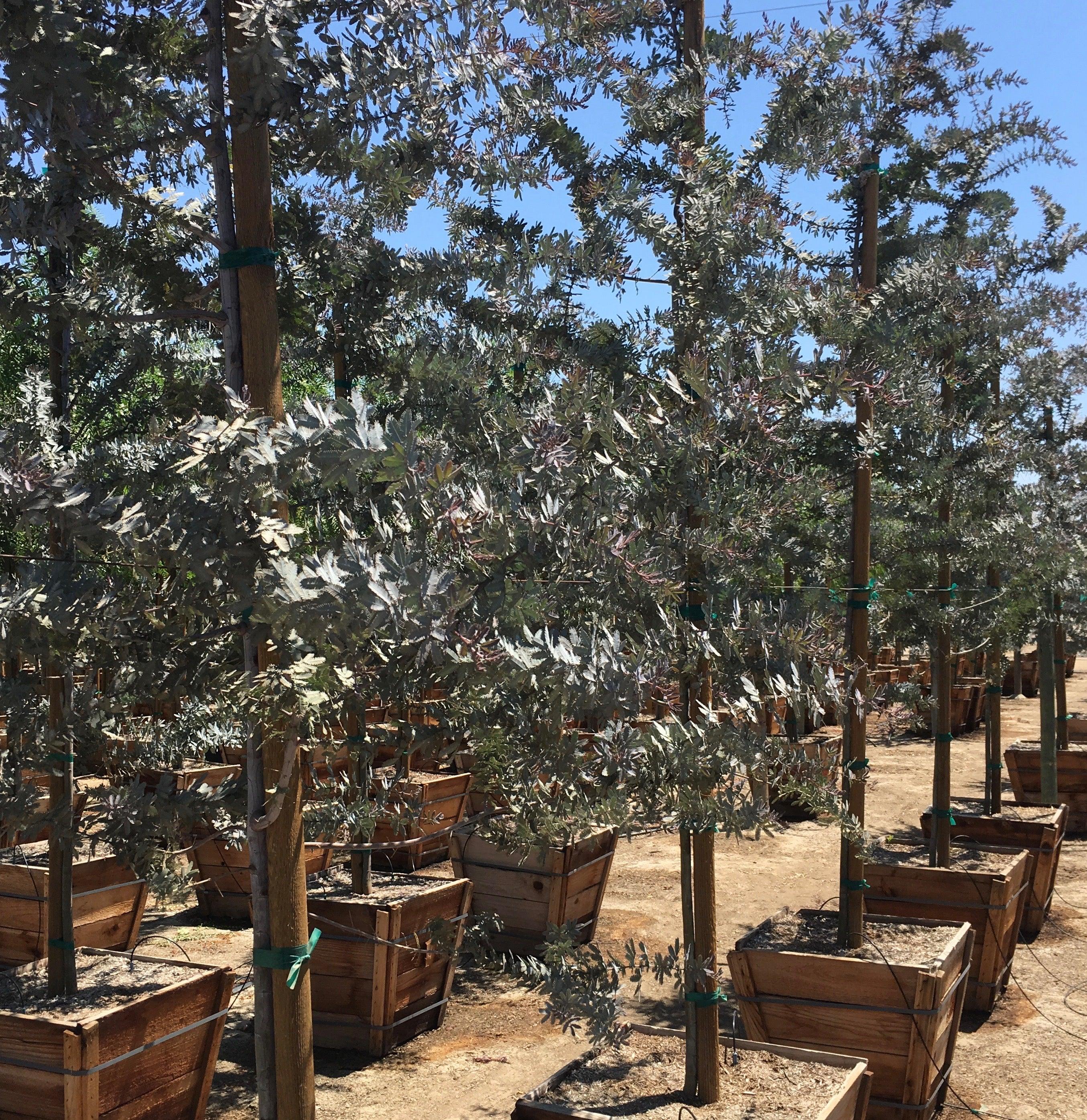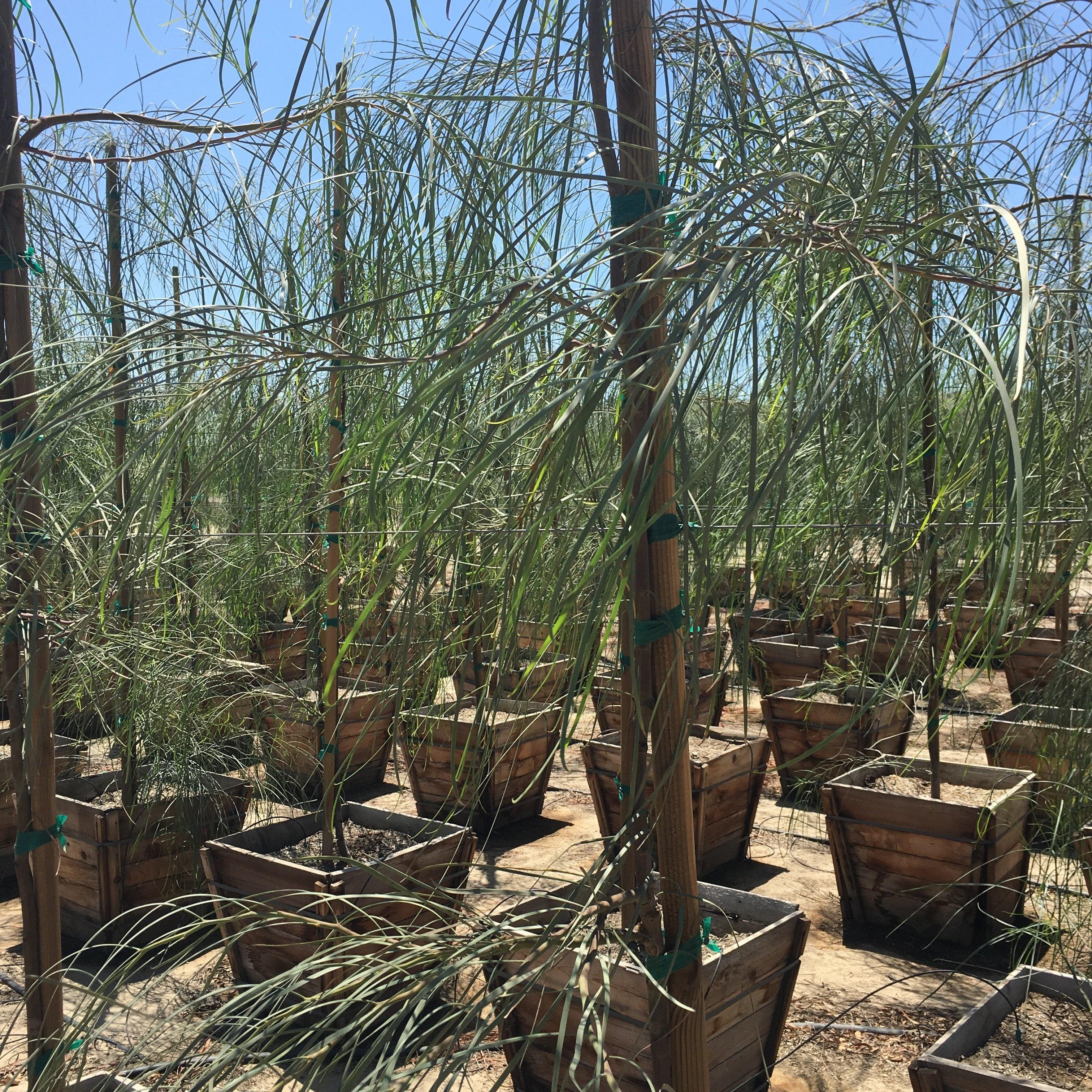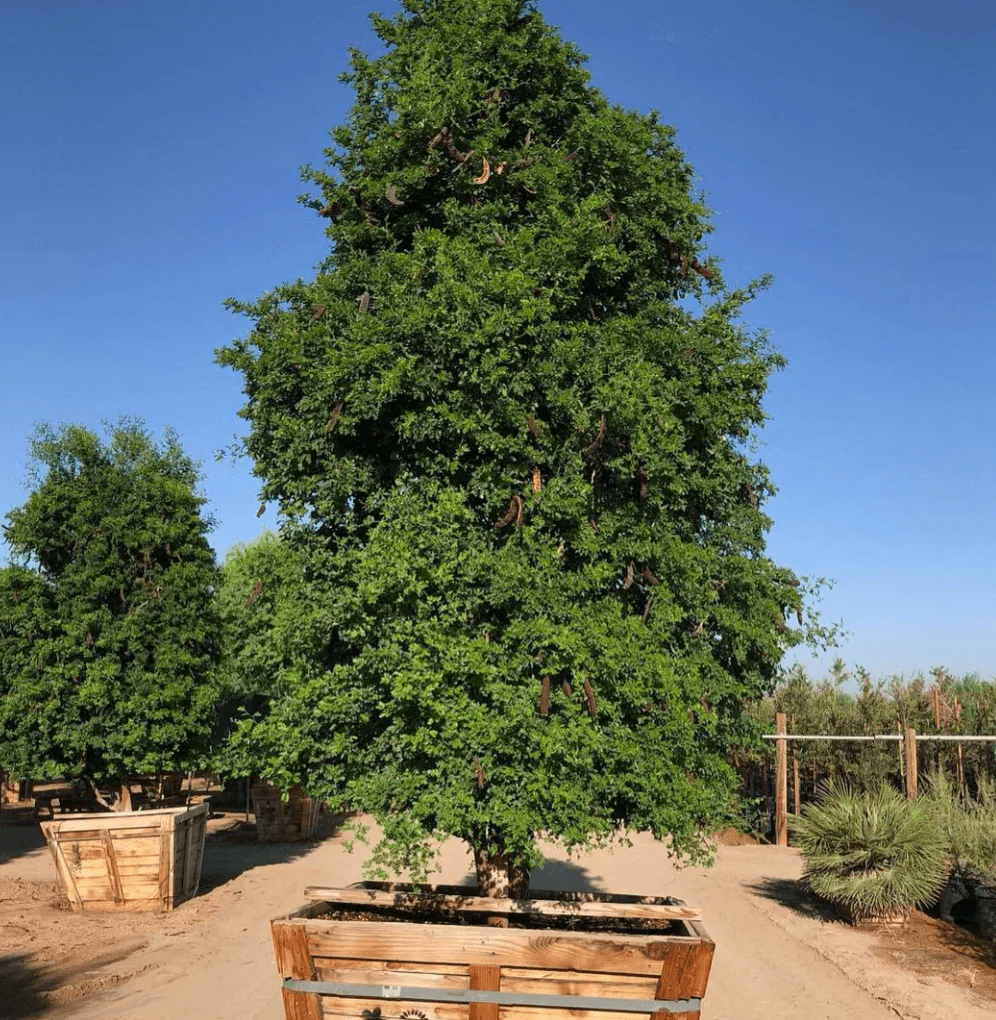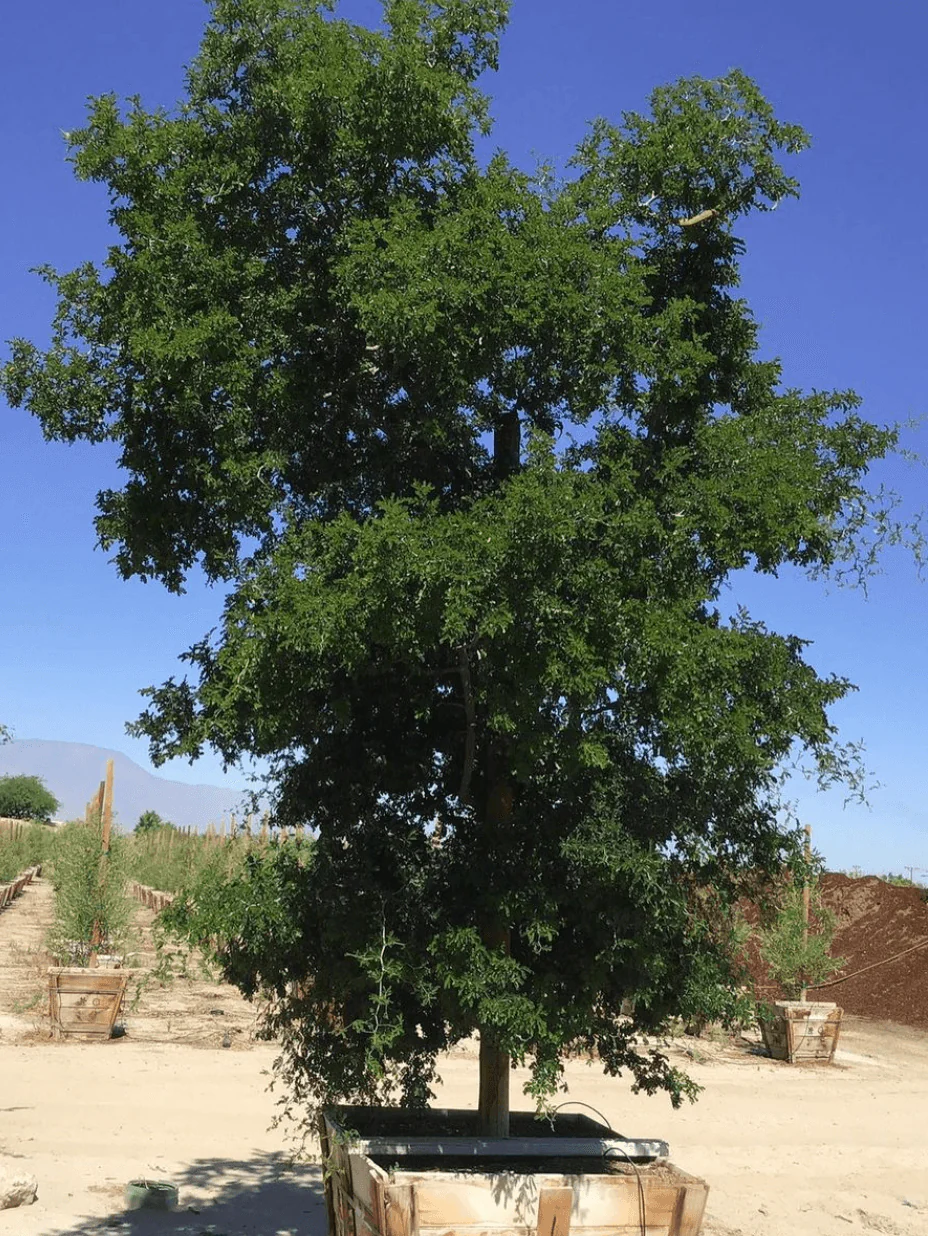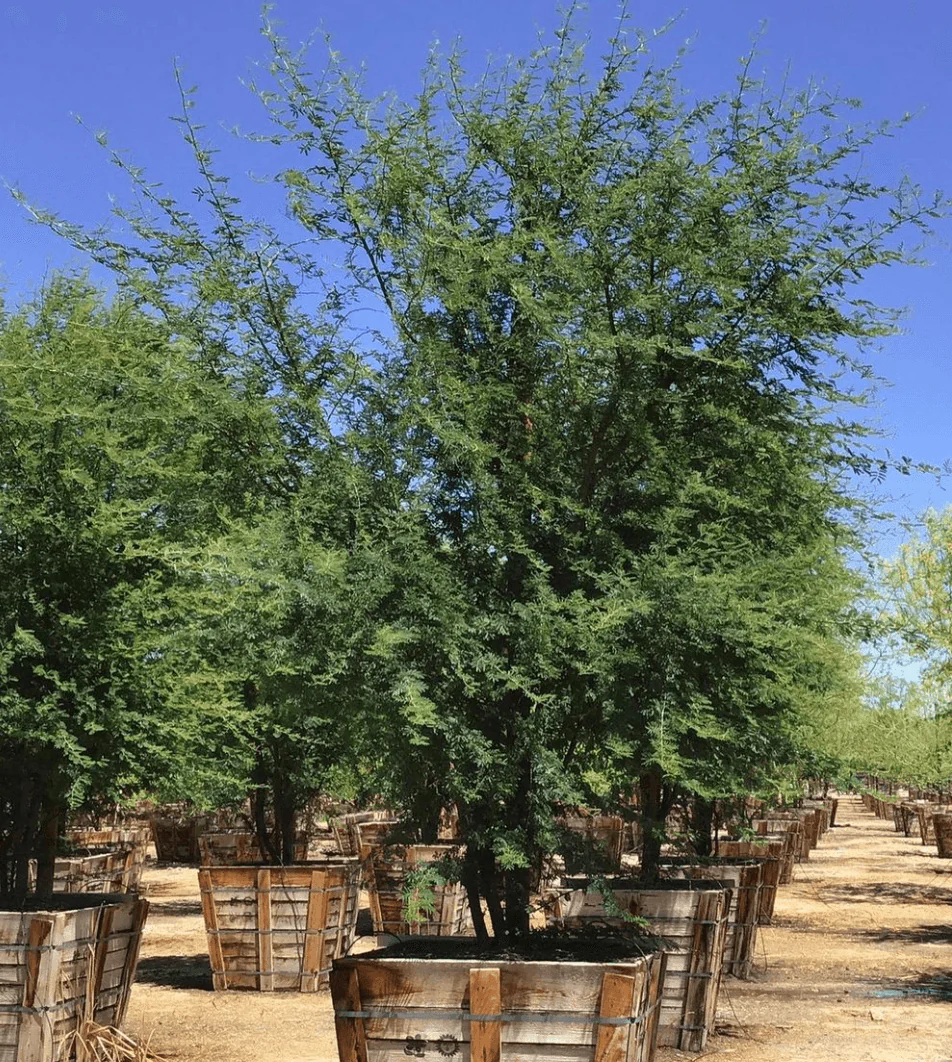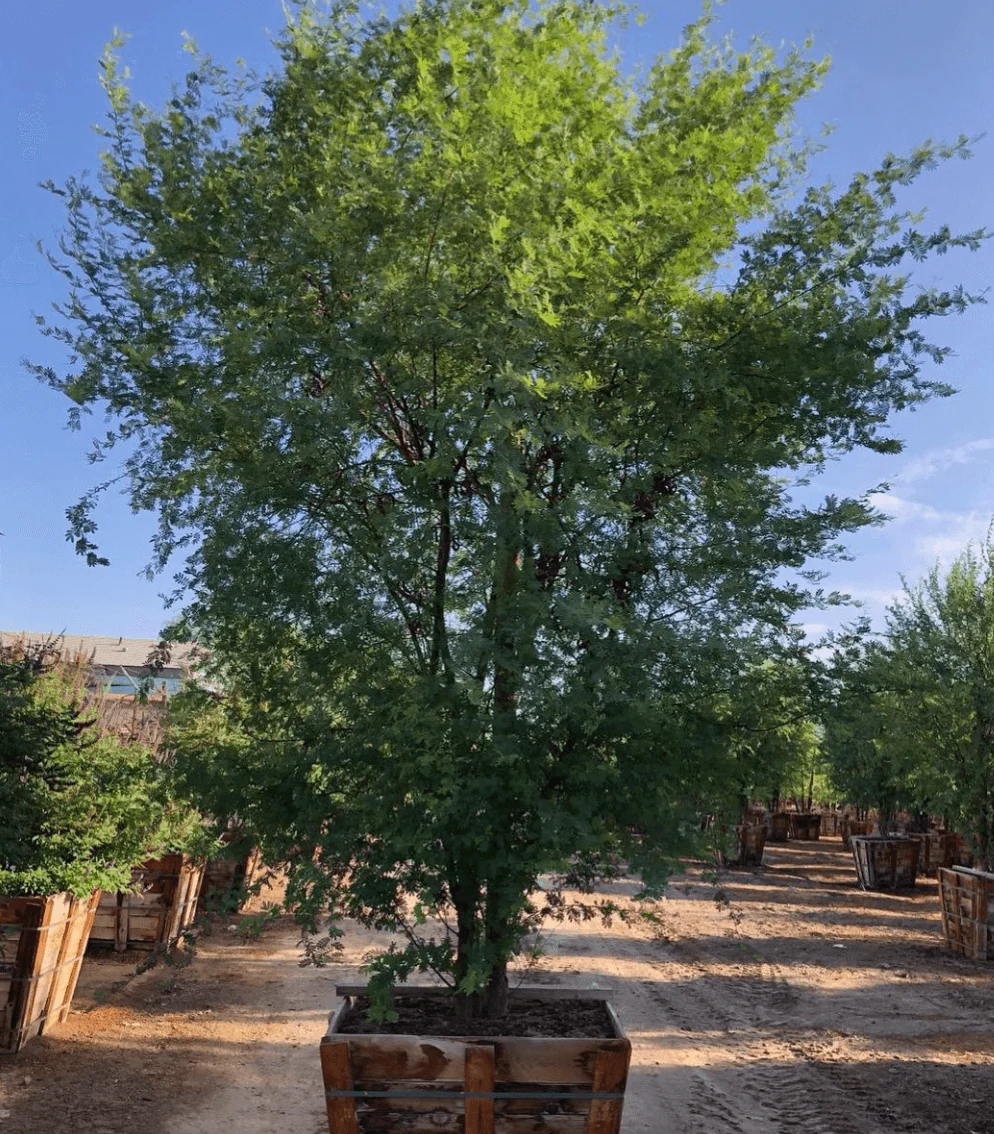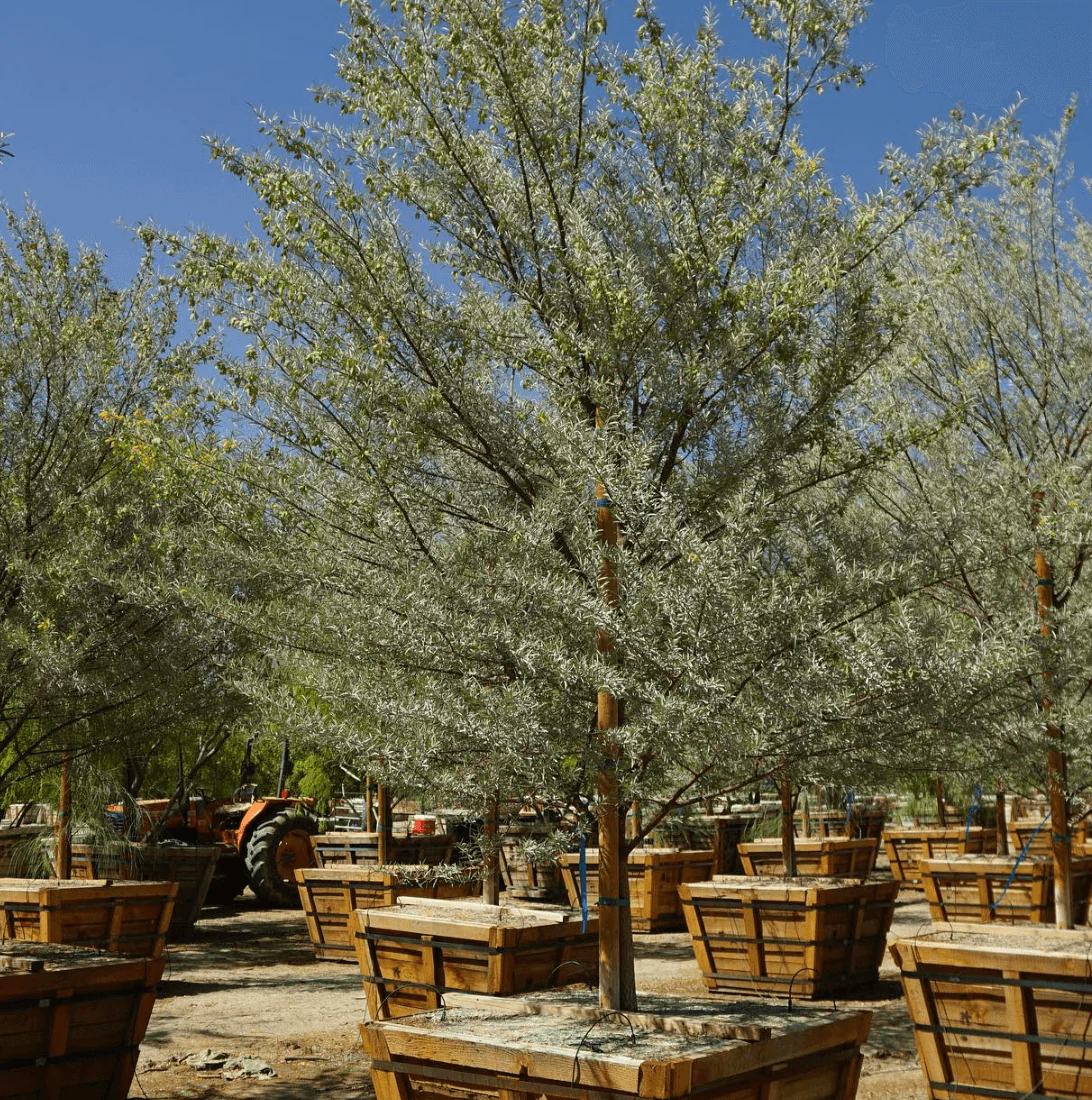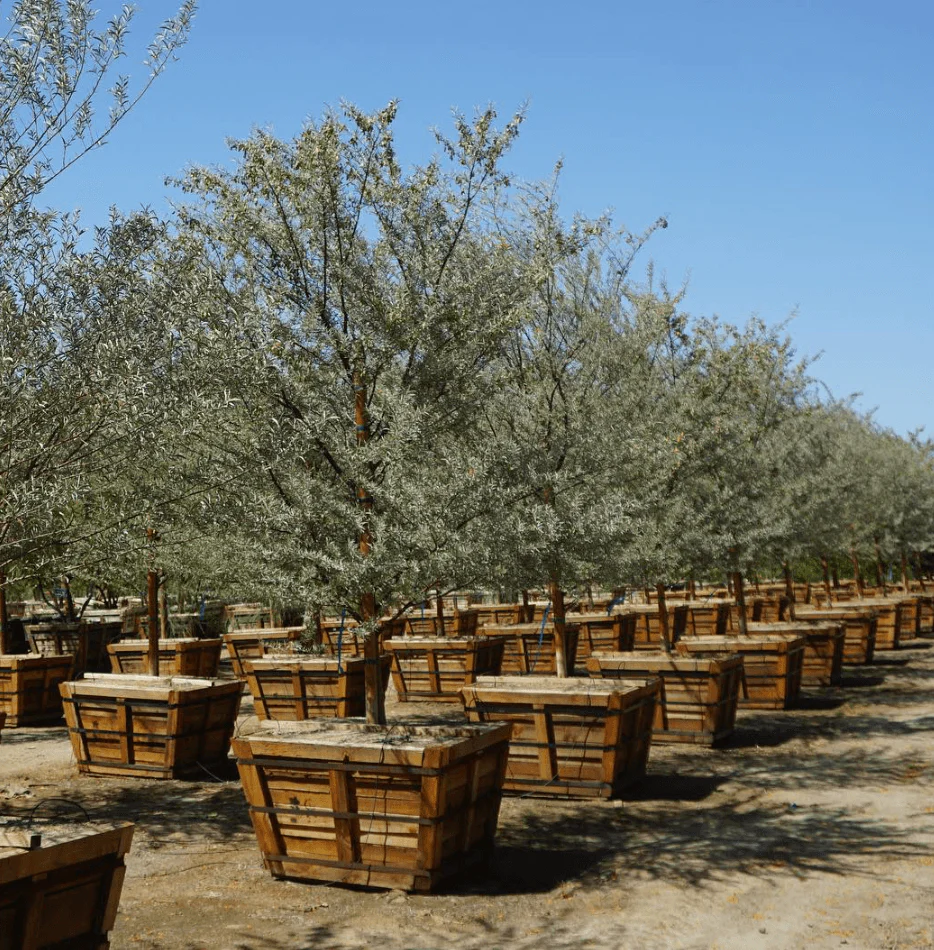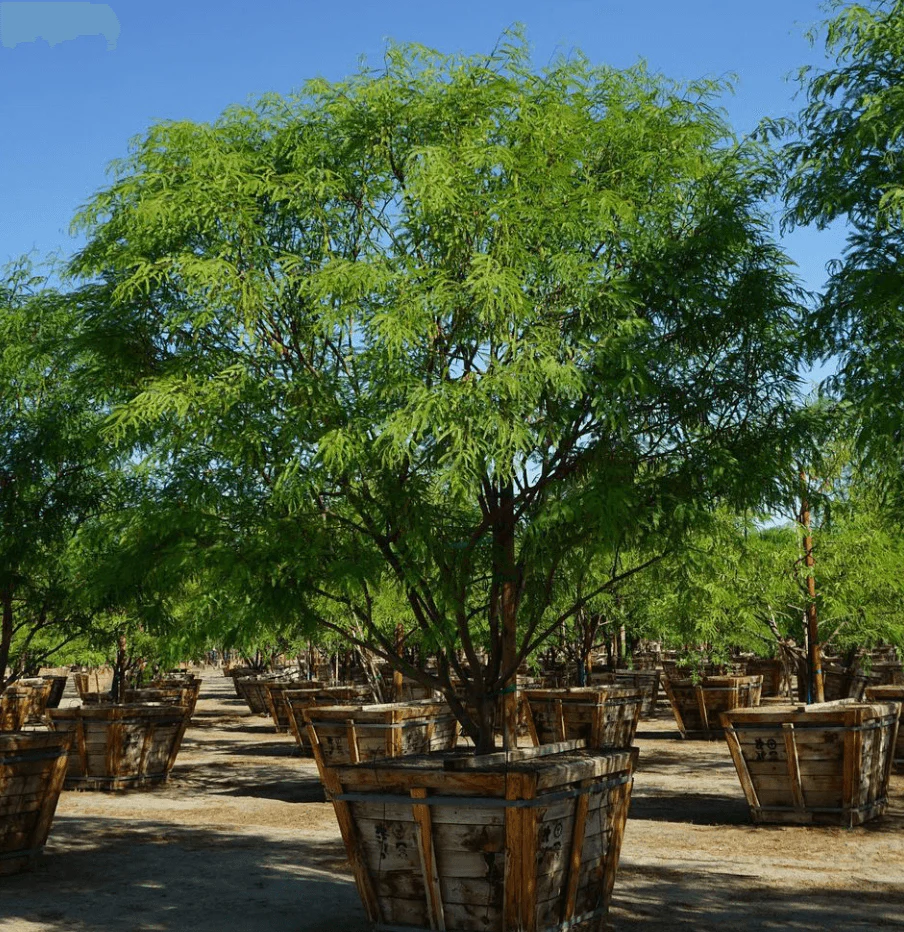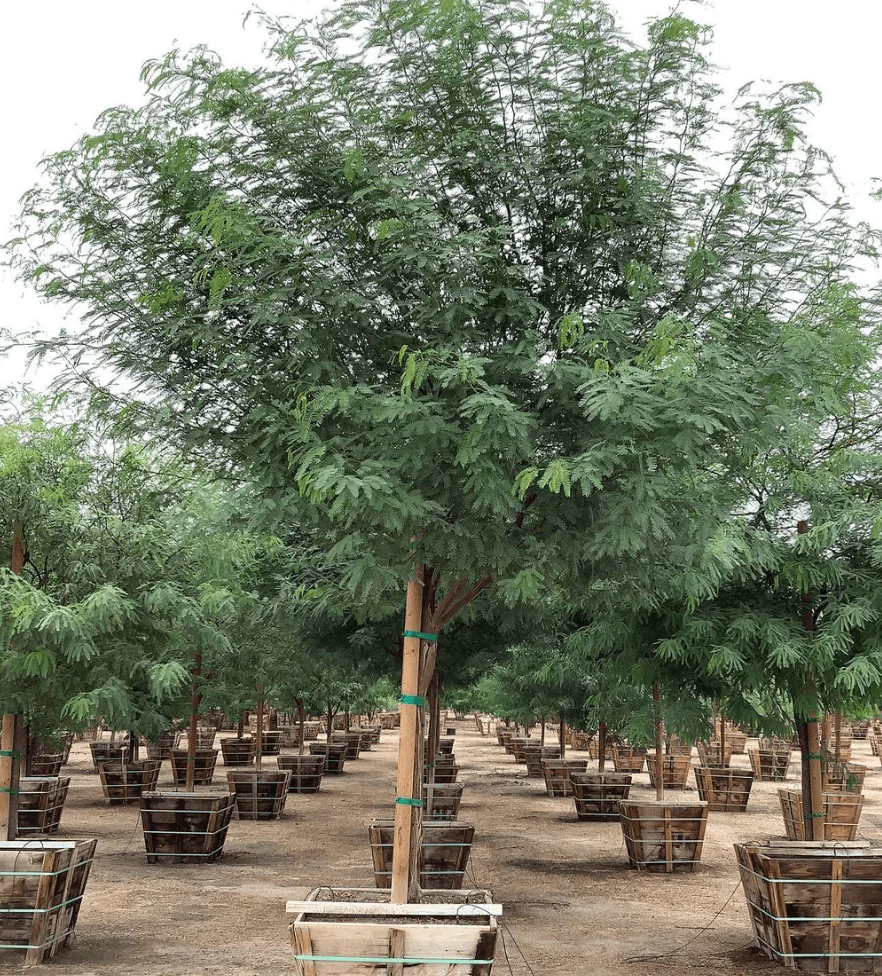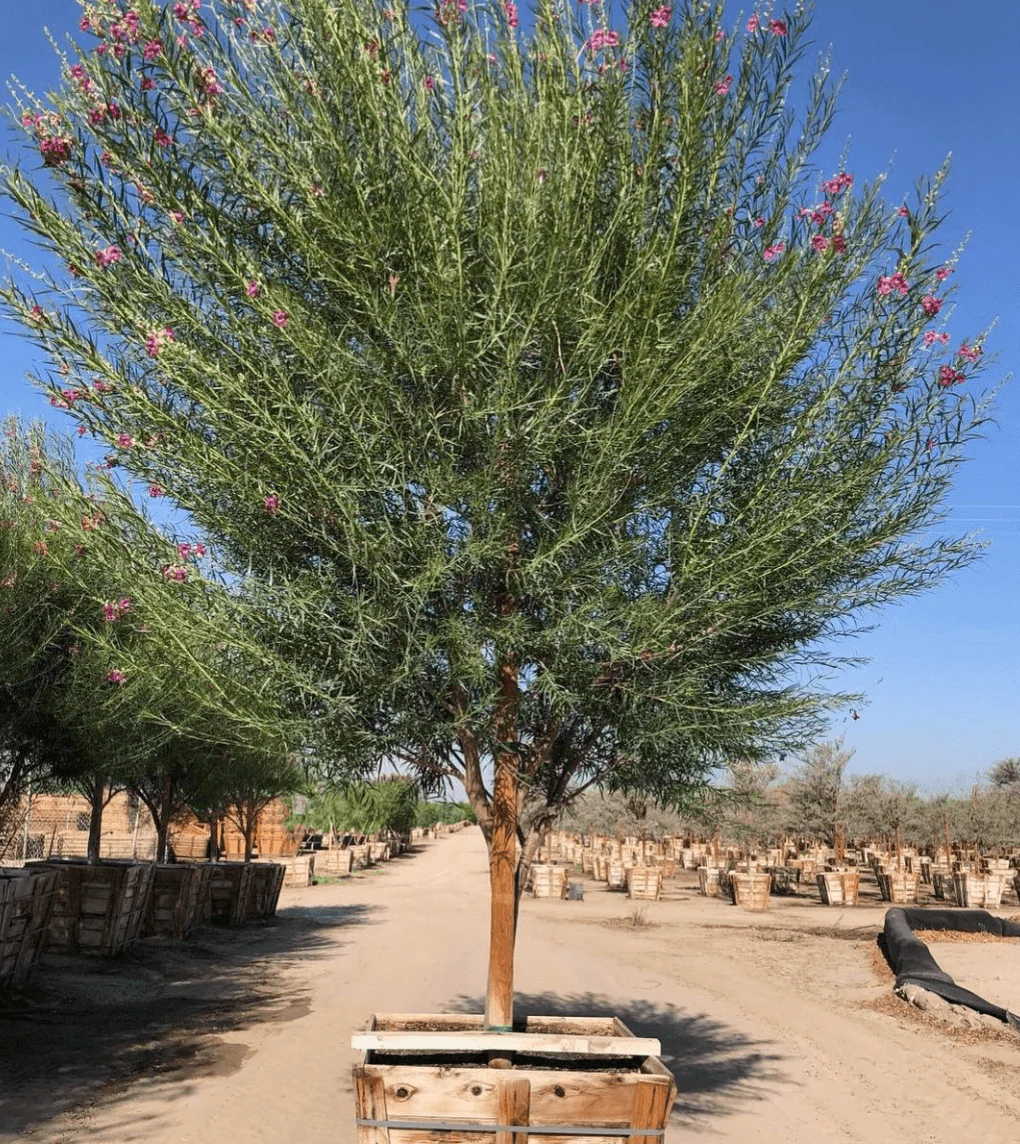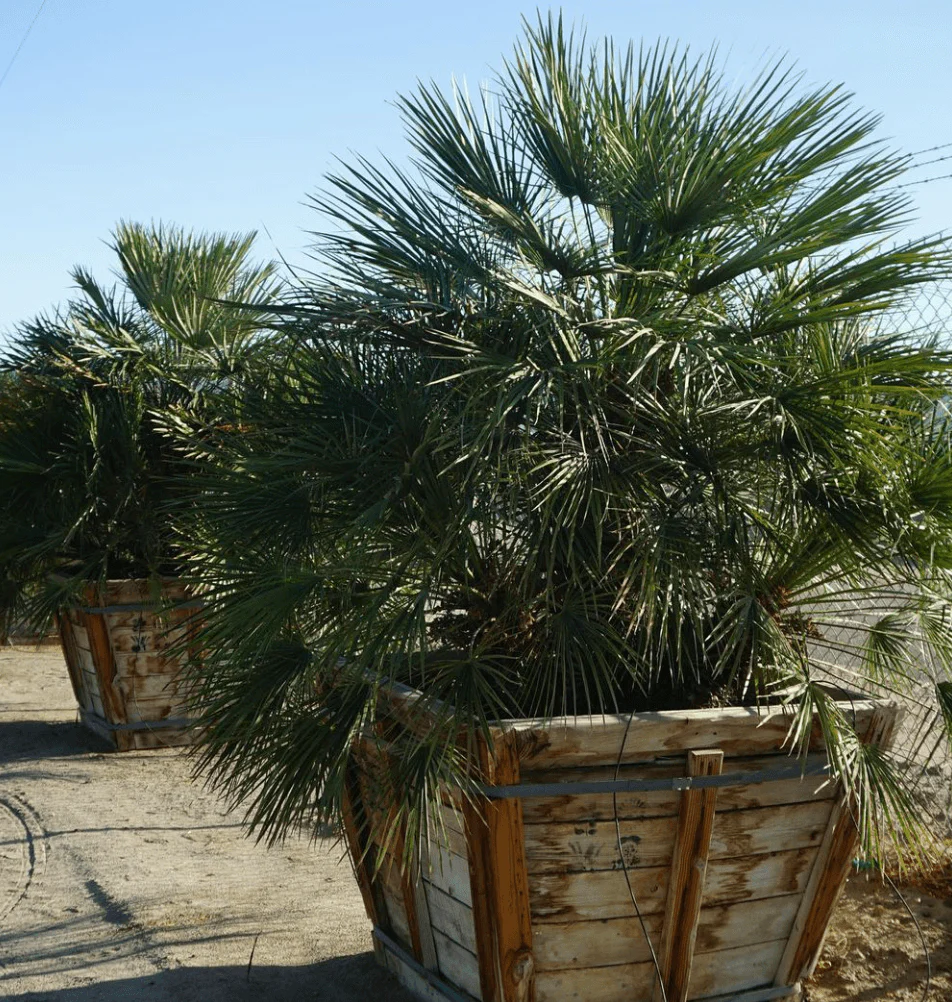
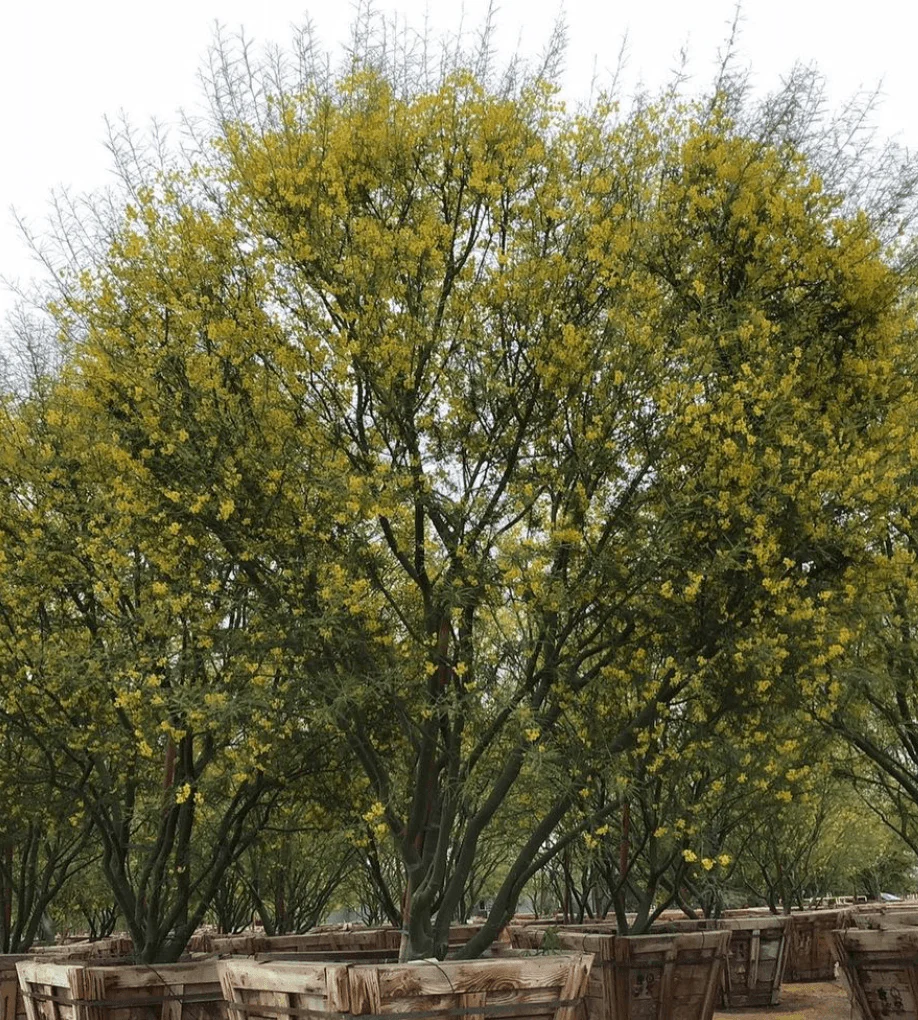
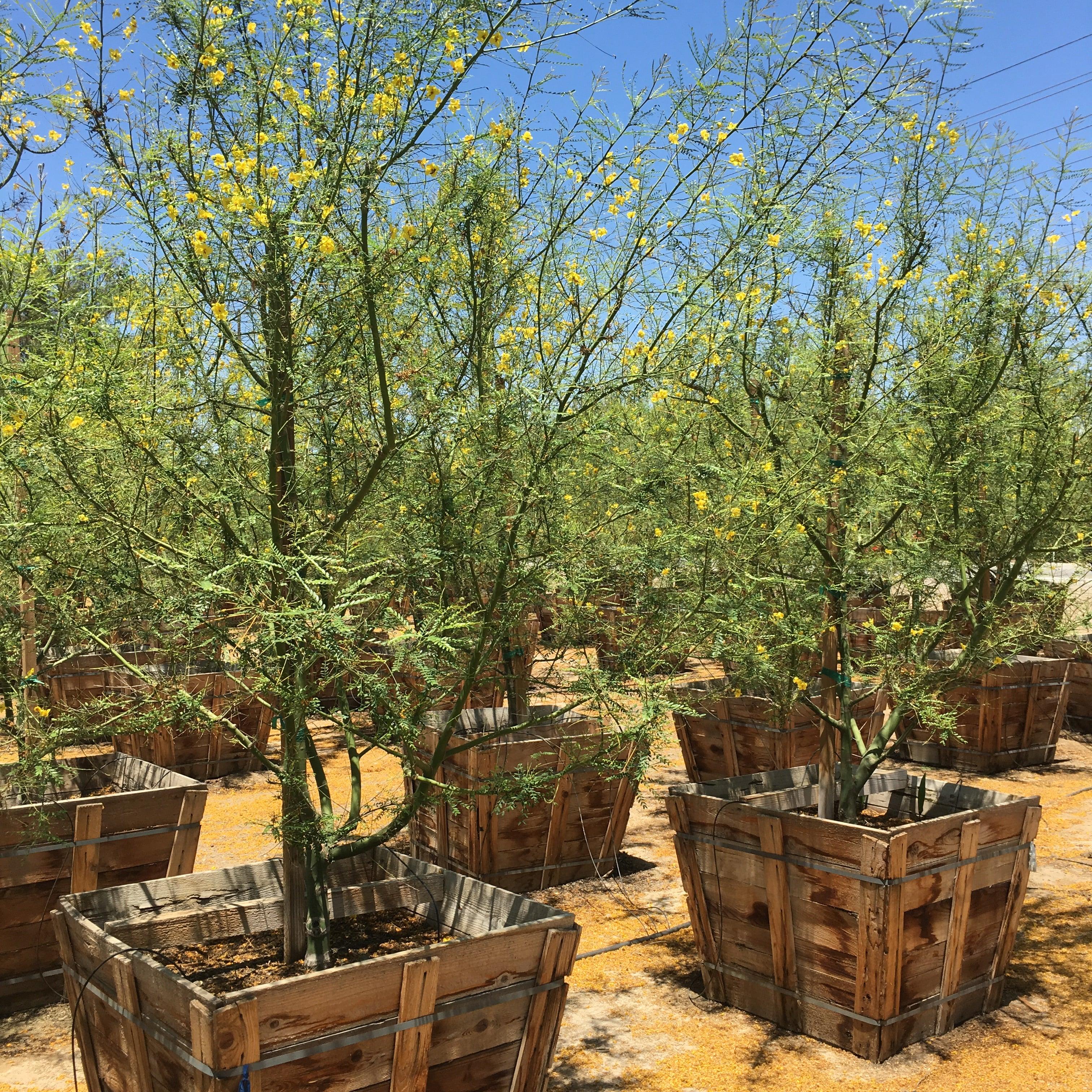
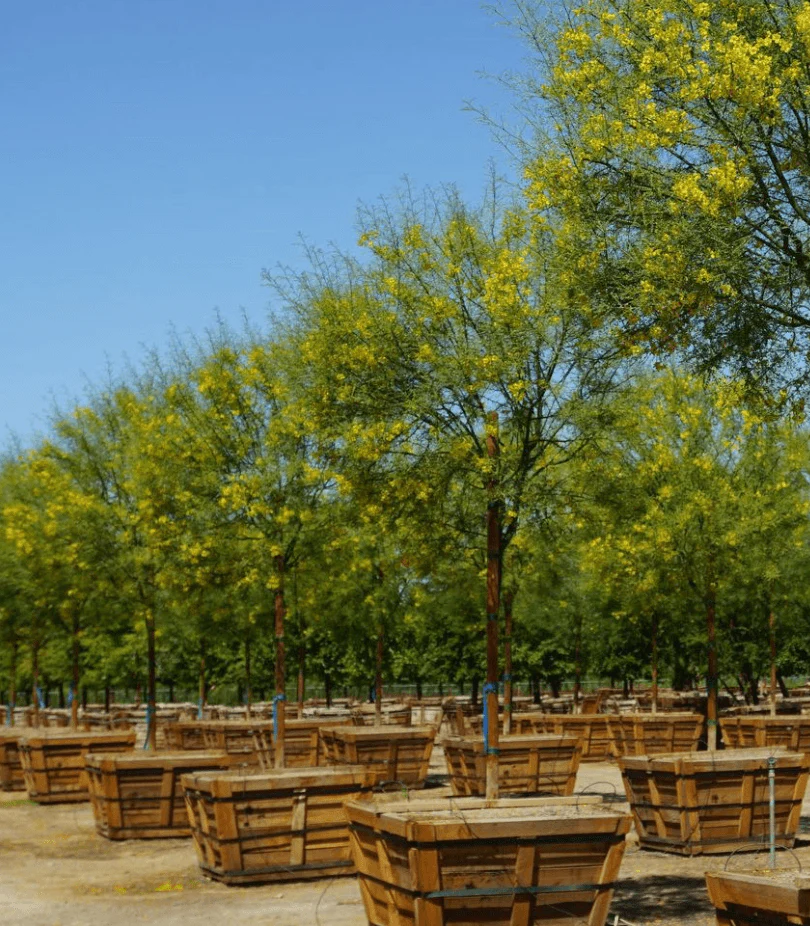
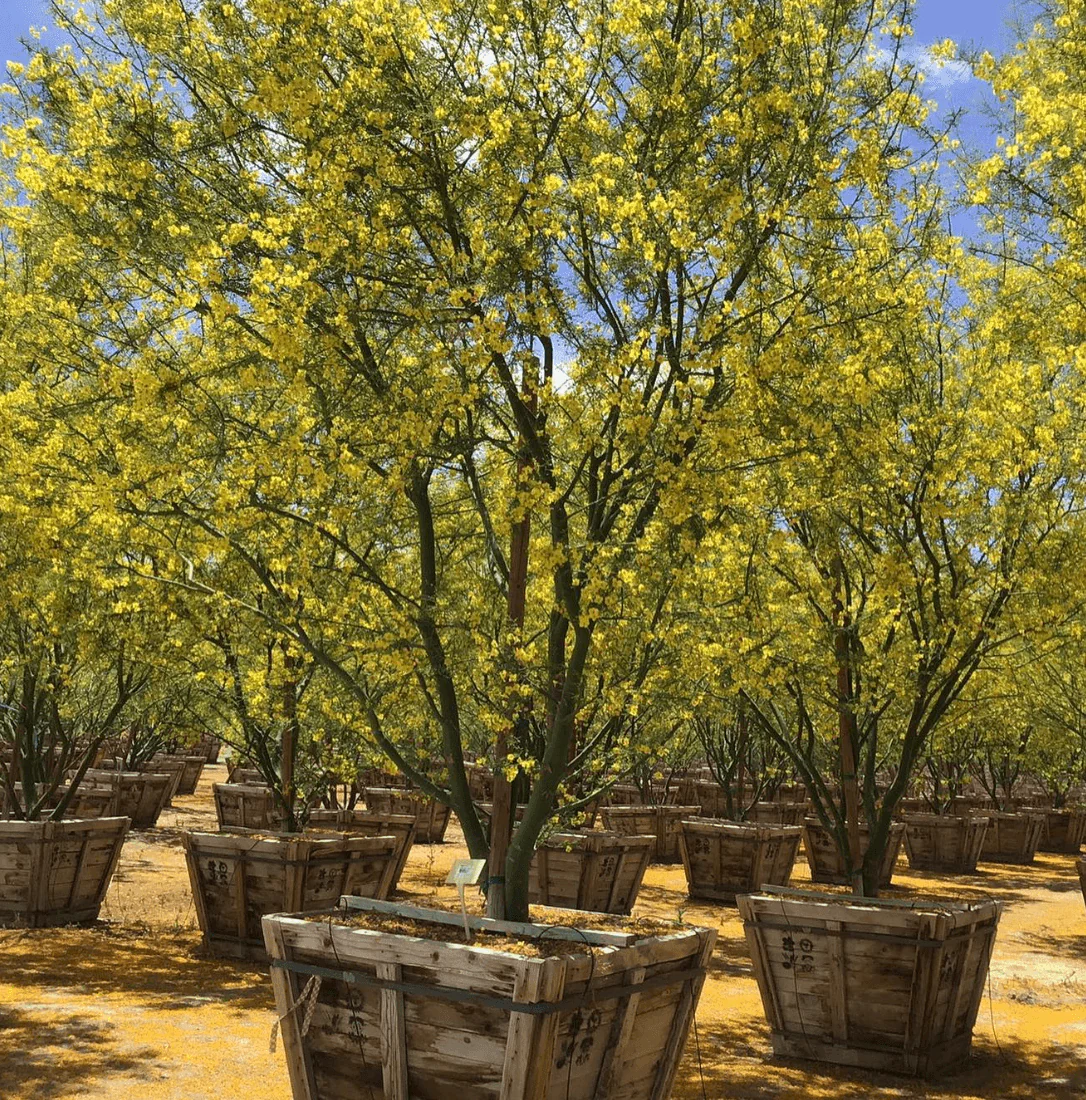
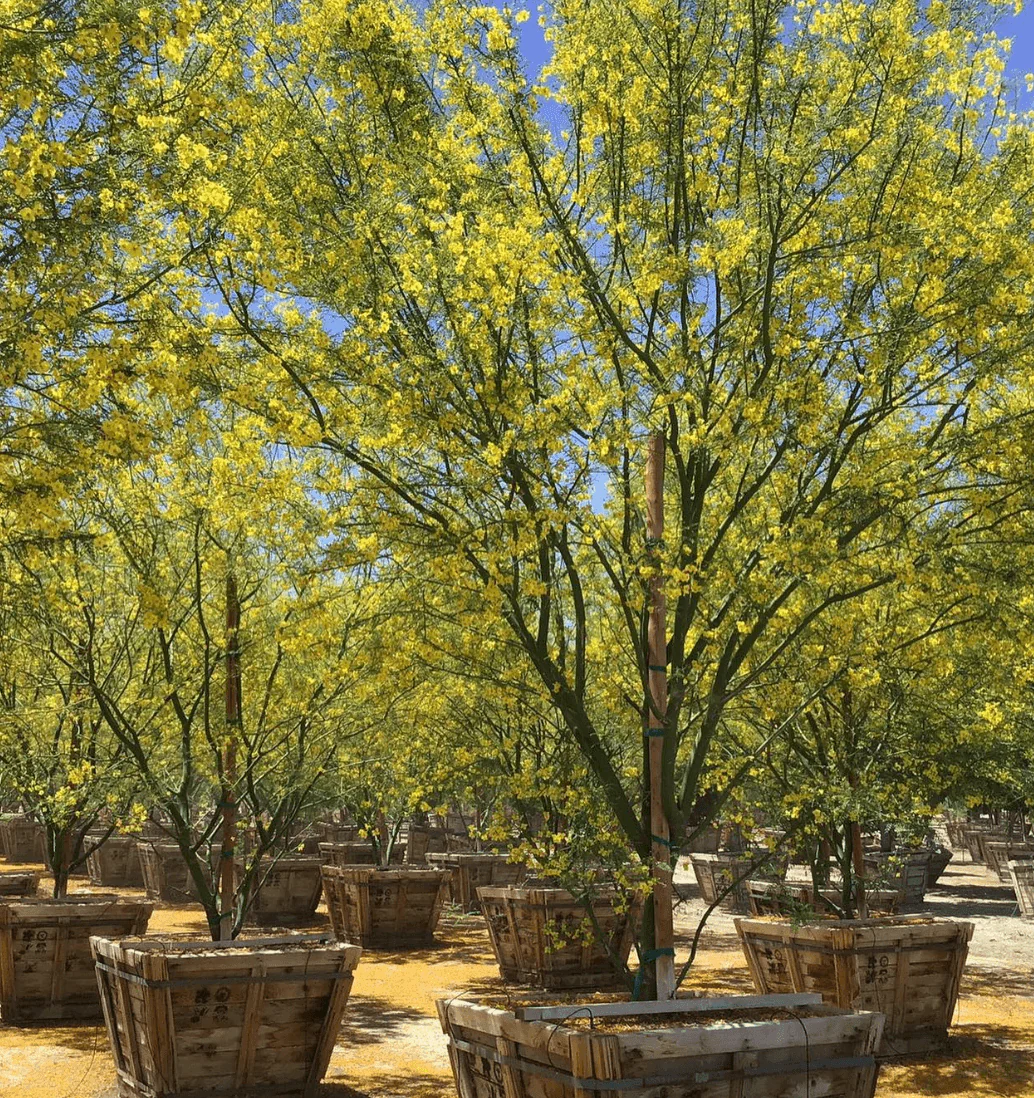
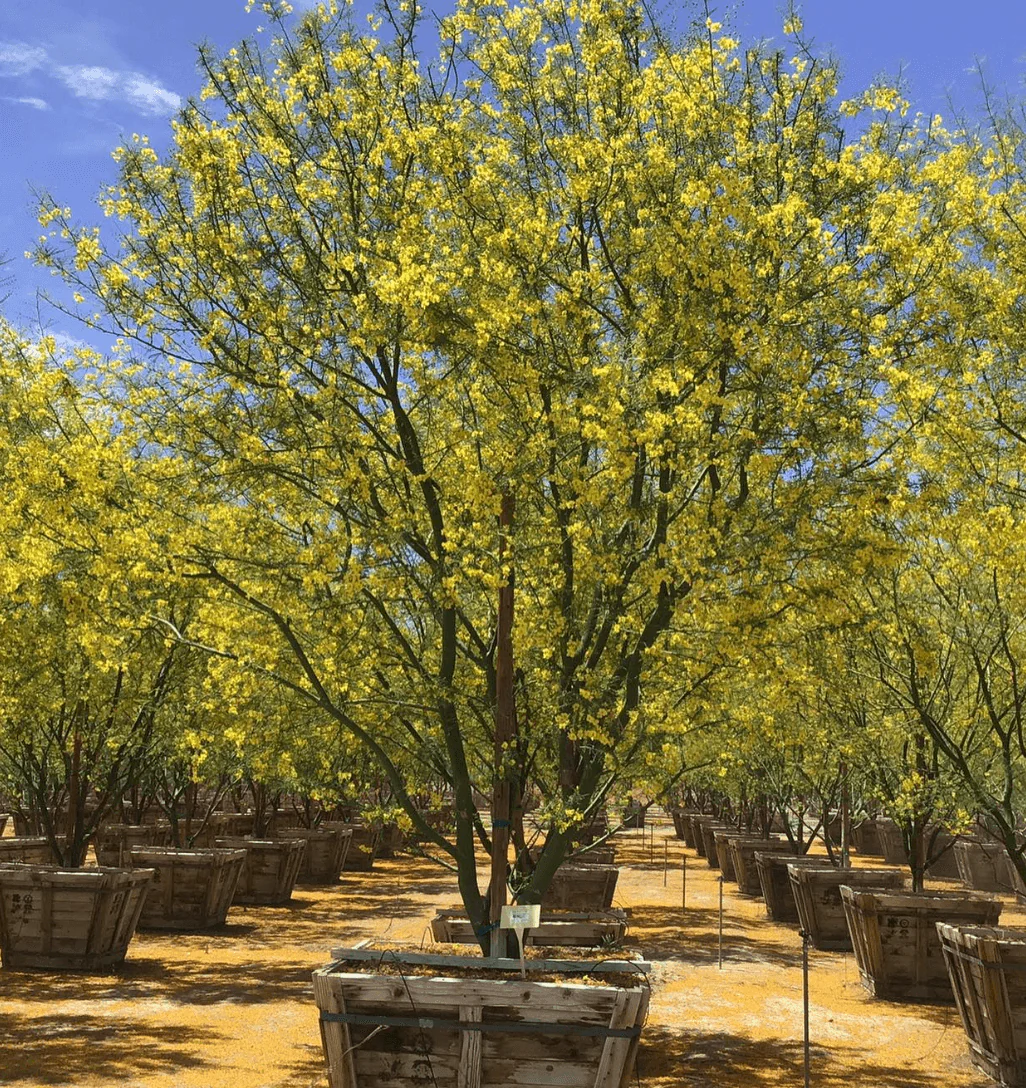
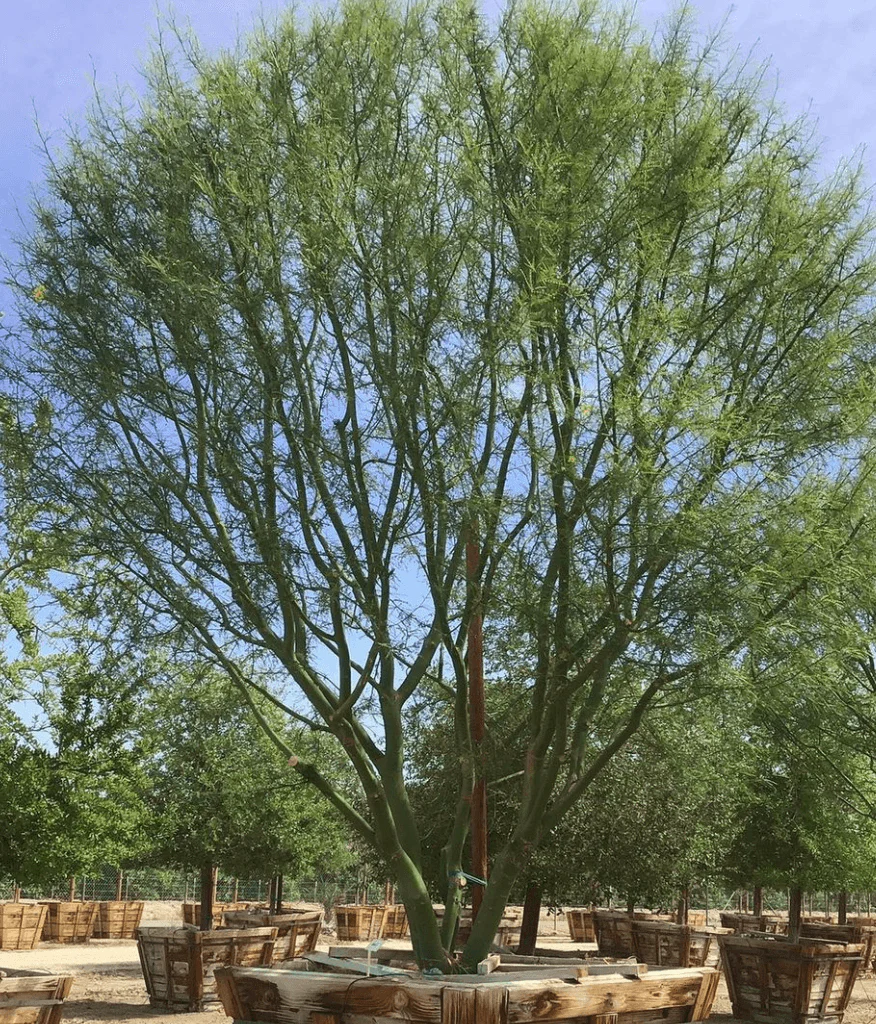
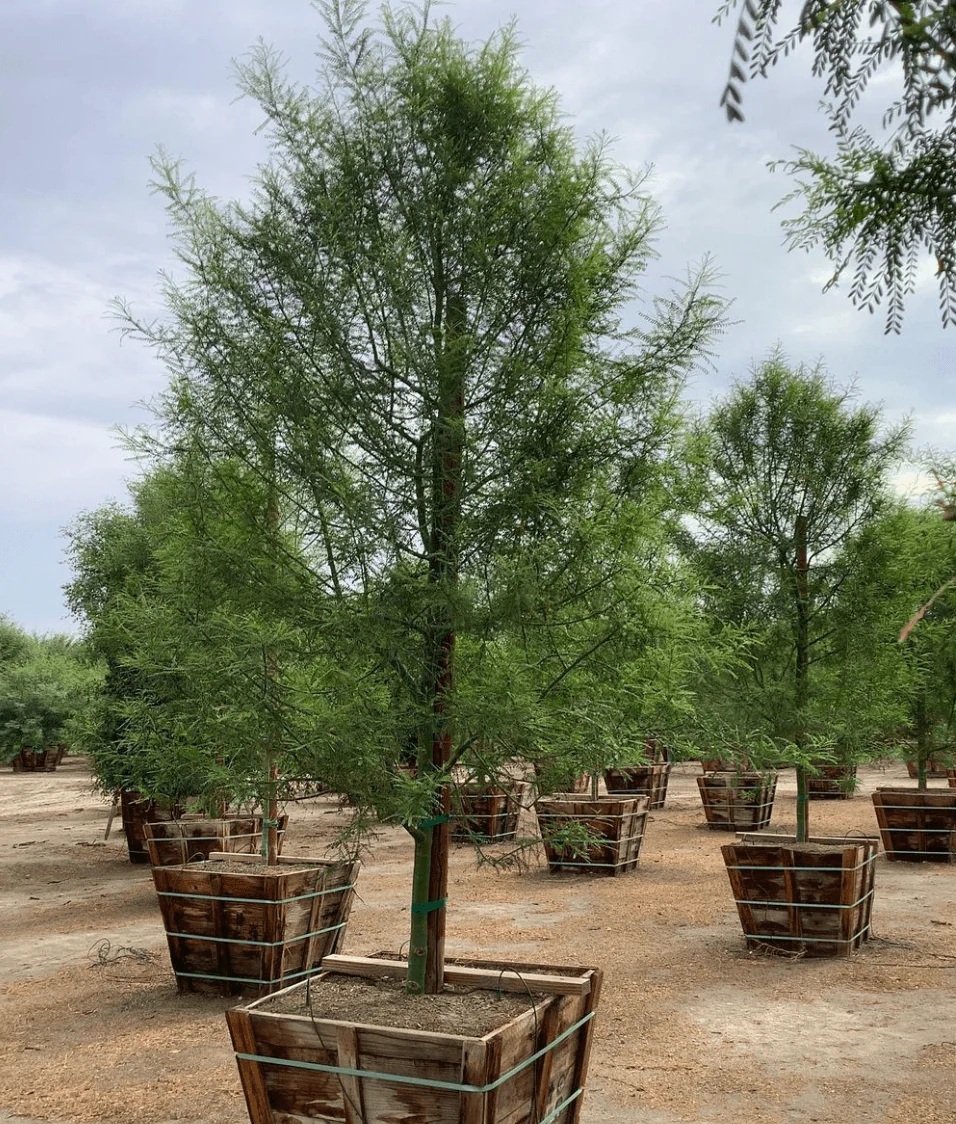
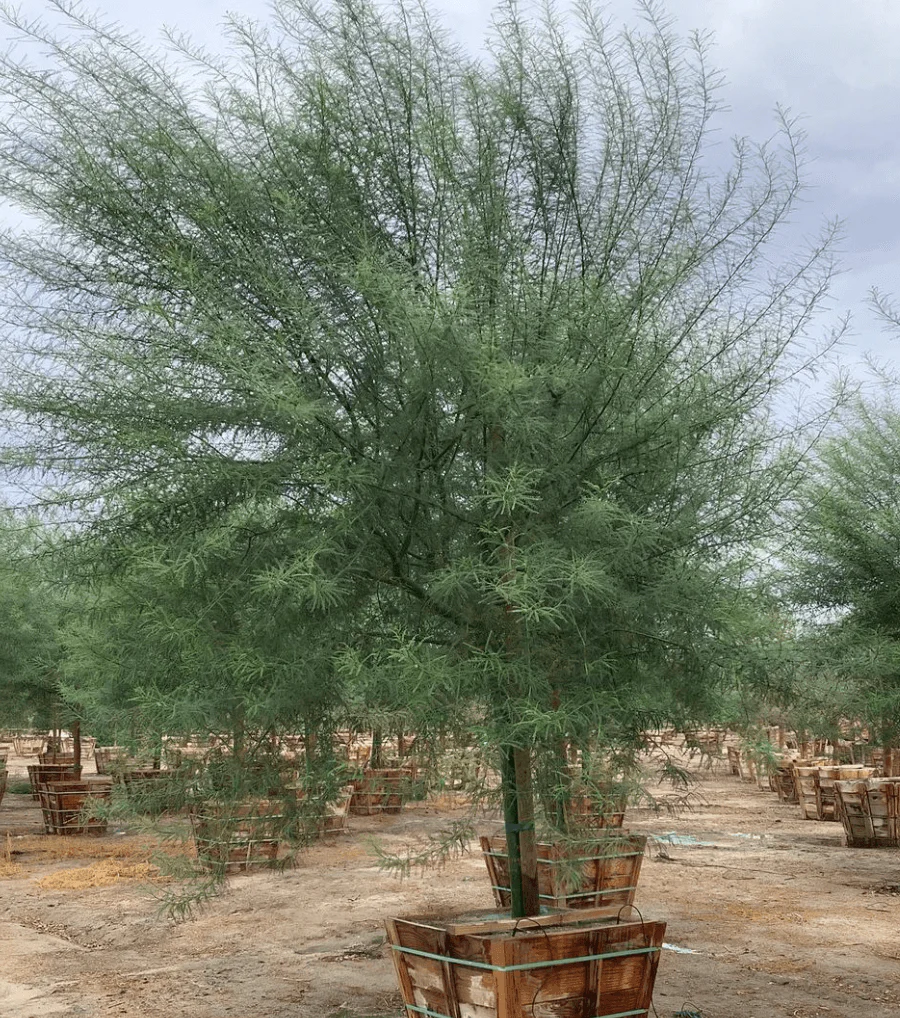
Desert Museum Palo Verde Tree (Cercidium hybrid Parkinsonia ‘Desert Museum’)
Fast-Growing Desert Shade Tree with Stunning Yellow Blooms
The Desert Museum Palo Verde Tree is a fast-growing, thornless hybrid shade tree built for hot, sunny, low-water landscapes. With vivid yellow flowers in spring, smooth green bark, and a sculptural multi-trunk form, this palo verdebrings color, filtered shade, and desert character to California desert and Mediterranean gardens.
This desert museum palo selection was developed from the genetic characteristics of multiple cercidium species, including foothill palo verde, mexican palo verde, and parkinsonia florida. The result is a drought tolerantornamental tree that keeps the best traits of its parents: fast early growth, showy flowering, reduced thorns, and a cleaner form with fewer seedpods than many traditional palo verde species.
The Desert Museum Palo Verde is a hybrid tree known for its striking yellow flowers and green bark, which photosynthesize, reducing the need for leaves. This tree is drought-tolerant and thrives in arid environments, making it suitable for desert landscaping.
Why You’ll Love It
-
Spectacular spring color – Abundant bright yellow flowers are displayed across the canopy in spring, often continuing intermittently toward early summer during the growing season.
-
Low water once established – This drought tolerant tree is ideal for homeowners who want beauty without heavy irrigation, similar to other native desert trees like the Desert Ironwood.
-
Fast shade for new landscapes – Rapid early growth helps create usable shade in less time than many desert-adapted trees available for hot-climate landscaping.
-
Thornless and easy to maintain – The nearly thornless branches make pruning, cleanup, and family-friendly landscape applications safer than older palo verde varieties with sharper thorns.
-
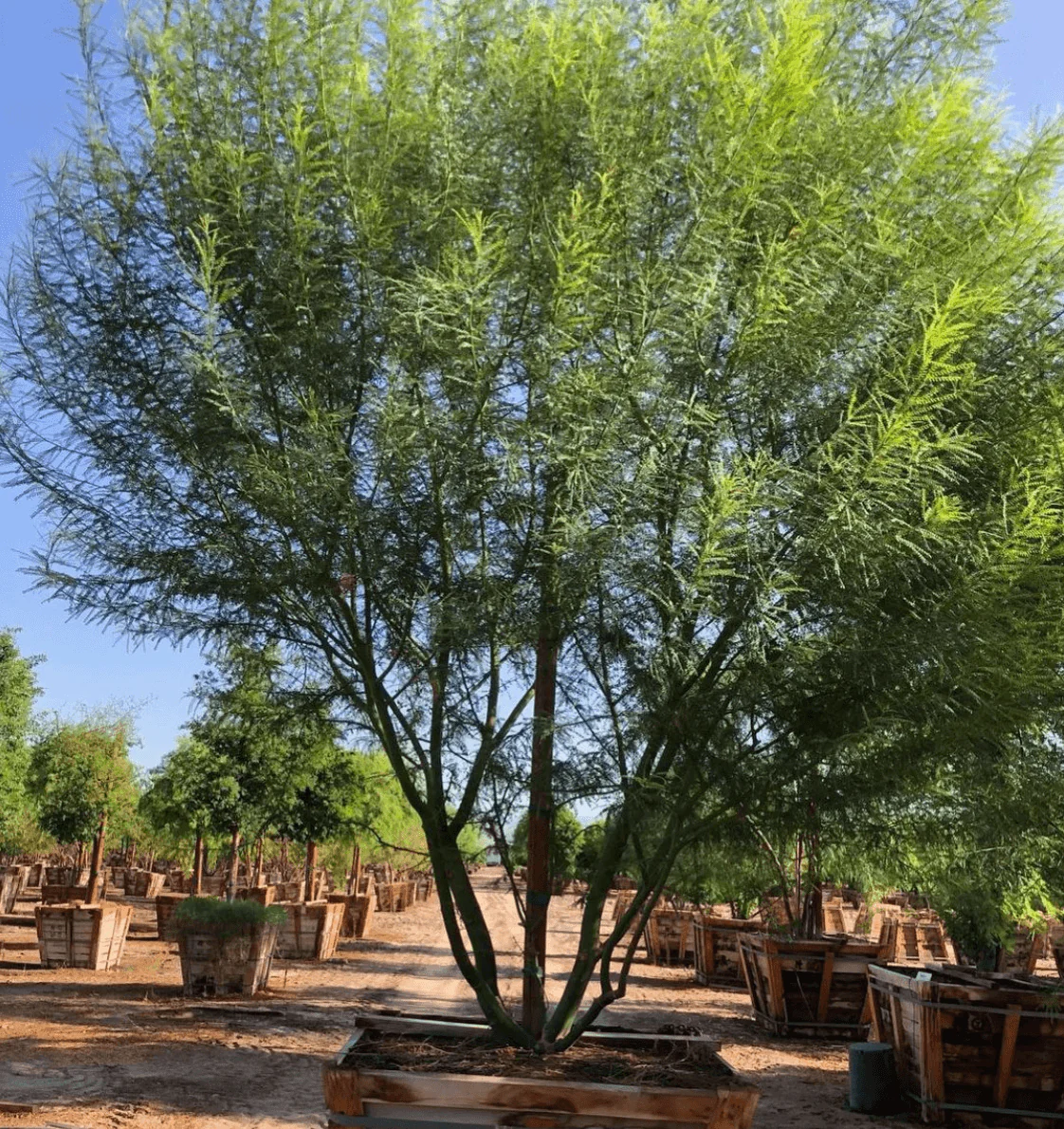
Architectural desert form – A smooth green trunk, airy leaves, and upright multi-trunk structure give the museum palo verde a remarkable sculptural presence, especially when paired with other flowering trees suited to California gardens.
The Desert Museum Palo Verde typically grows to a height of 15 to 25 feet and has a spread of 20 to 30 feet, providing ample shade. In many California landscapes, mature specimens may also be described as reaching about 20–30 feet tall and wide when grown in full sun with proper water, spacing, and root development.
What Makes It Different
Most desert trees either offer dependable toughness with limited flower impact, or they deliver seasonal color while bringing thorns, heavy seed litter, or slower growth. Desert Museum Palo Verde is built differently: it combines the bloom power of blue palo verde, the drought resilience and more upright habit of foothill palo verde, and the fast-growing traits of mexican palo verde into one refined hybrid.
-
Thornless hybrid design – Safer than many traditional native palo verde species and easier to prune around walkways, patios, and high-use garden spaces.
-
Reduced seedpod mess – It produces fewer messy seedpods than its parents, helping keep the area beneath the tree cleaner.
-
Best-trait genetics – Its parentage includes parkinsonia aculeata, foothill palo verde, and parkinsonia florida, giving it a mix of fast hardiness, showy flowering, green bark, and drought performance, and it’s widely offered among Desert Museum Palo Verde trees for sale online.
-
Ecological value – The Palo Verde tree (genus Parkinsonia) is the official state tree of Arizona and a cornerstone species of the Sonoran Desert.
-
Museum-worthy significance – The Palo Verde tree is a crucial part of desert museum exhibits, showcasing its ecological, historical, and horticultural significance.
The tree’s story is closely tied to the arizona sonora desert museum, where the original desert museum selection was made. As a variety selected from hybrid seedlings and grown on its own roots, it offers predictable characteristics for residential and commercial landscapes that benefit from mature trees.
How To Have Success In Your Garden
-
Plant it in full sun Choose a hot, open site with full sun and well-draining soil. Sandy or gravelly desert soils are ideal. Heavy clay can hold too much water around the roots, so mound planting may be needed to protect young trees.
-
Establish deep roots with measured watering During the first year, water deeply but not constantly. Regular establishment watering helps the plant build strong roots and a stable trunk. Once established, reduce frequency so the tree becomes more drought resilient instead of overly fast, weak, or top-heavy.
-
Prune early for strong structure Train the tree in the first few years by removing crossing limbs, narrow branch angles, and excess suckers. Do not over-prune at one time; thoughtful pruning helps protect the canopy from storm breakage and supports a long-term shade structure.
-
Enjoy fast growth and spring blooms Within 2–3 years, many well-planted trees begin showing the quick growth, filtered shade, and bright flowering that make desert museum palo verde such a popular nursery choice for California, Arizona, Tucson, and other hot-region landscapes, especially when sourced from a local plant nursery and landscaping supplier.
The tree anchors the desert food web, attracting native bees with its spring yellow blossoms, feeding desert wildlife with its seed pods, and hosting the Palo Verde beetle. Palo Verde canopies create a microclimate that provides essential shade and shelter for young saguaro cacti. Exhibits highlight the critical ecological role of the Palo Verde as a shelter and protector for young cacti, like the Saguaro, from sun and animals.
Product Details
-
Product name: Desert Museum Palo Verde Tree
-
Scientific name: Parkinsonia x ‘Desert Museum’
-
Also referenced as: museum palo, museum palo verde, and older Cercidium hybrid naming
-
Parentage: Hybrid selection involving mexican palo verde, foothill palo verde, and blue palo verde
-
Mature size: Commonly 20–30 feet tall and wide; also widely described as 15–25 feet tall with a 20–30 foot spread
-
Growth rate: Fast, often around 2–3 feet per year in good conditions
-
Hardiness zones: Best suited to zones 8–11, with protection recommended for young trees in colder locations
-
Sun requirements: Full sun
-
Water needs: Low once established
-
Soil preference: Well-draining soil; avoid poorly drained clay
-
Flowering season: Spring into early summer, with a strong yellow bloom display
-
Foliage and bark: Fine leaves may drop during drought stress, while green bark continues photosynthesis
-
Thorns: Thornless or nearly thornless
-
Seed: Produces fewer seedpods than many parent species
-
Available from Yardwork: Select sizes and container options from our nursery, with plant selection advice for your site and access to evergreen, fast-growing, and privacy trees from our nursery
The Tohono O’odham and Seri tribes traditionally harvested the Palo Verde tree for food, using its green pods and mature seeds. The Palo Verde has been used by indigenous communities for food and other utilitarian purposes, historically providing a source for constructing tools and firewood. The tree’s unique biology and ecological importance can be explored through exhibits at places like the Desert Botanical Garden, or echoed in landscapes that feature ornamental shade trees with strong seasonal color. In museum exhibits, the Palo Verde is primarily showcased as a vital “nurse plant.”
Who It’s For
Ideal for:
-
California homeowners in desert and Mediterranean climate zones who want fast shade without high water use.
-
Landscapers designing xeriscaped, drought-tolerant gardens with strong seasonal color.
-
Property owners seeking a low-water shade tree for hot patios, driveways, courtyards, and open sunny areas, possibly combining it with companion shrubs and trees like Toyon and other landscape staples.
-
Gardeners who want a flowering desert tree with fewer thorns, fewer seedpods, and easier maintenance.
-
Wildlife-minded plant lovers who want a tree that supports bees, birds, and desert habitat value.
If you want a fast, drought tolerant, flowering shade tree that can thrive in intense sun, the Desert Museum Palo Verde is a strong fit. It is especially suitable where you want remarkable spring color, a clean thornless form, and a tree that feels at home in Sonoran, Arizona, and California desert-inspired landscapes.
Frequently Asked Questions
How fast does it grow?
Desert Museum Palo Verde is a fast-growing tree, often adding about 2–3 feet per year during early establishment when planted in full sun with appropriate water. Under ideal heat and care, growth can feel especially quick in the first few years, then moderates as the tree becomes established.
Does it have thorns?
It is considered thornless or nearly thornless. Very young branches may occasionally show small, weak spines, but the mature tree is much easier to maintain than many traditional palo verde species with sharp thorns.
When does it bloom?
It blooms heavily in spring, producing masses of bright yellow flowers that may continue for several weeks and sometimes extend toward early summer. The flowers are one of the main reasons this hybrid is so widely planted in desert landscape applications.
How much water does it need?
Water regularly during establishment, especially through the first growing season, so the roots develop deeply. Once established, the tree needs minimal supplemental irrigation and performs well in drought conditions.
Will it work in my climate zone?
Desert Museum Palo Verde is best for zones 8–11 and hot, sunny regions with well-draining soil. It performs well in many parts of California, Arizona, and other desert or Mediterranean climates. In colder zone 8 areas, protect young trees from hard frost.
Why do some online plant pages show security checks?
Some nursery or plant-reference pages may use a security service that verifies visitors before the website loads. If you ever see an org performing security verification, a security verification screen, a waiting page, or a respond ray idmessage, it is usually a bot-protection step designed to block malicious bots. Once the verification successful message appears, the page should continue loading.
Ready to Transform Your Landscape?
Stop struggling with high-maintenance trees that demand too much water, offer too little shade, or create problems with thorns and messy seed drop. Choose the Desert Museum Palo Verde Tree for a beautiful, low-water landscape solution with fast growth, brilliant yellow flowers, and year-round desert structure.
Yardwork can help you select the right size, confirm your planting conditions, and choose a specimen suited to your space through our broader online selection of trees, shrubs, and garden plants.
Original: $1,150.00
-65%$1,150.00
$402.50Product Information
Product Information
Shipping & Returns
Shipping & Returns
Description
Fast-Growing Desert Shade Tree with Stunning Yellow Blooms
The Desert Museum Palo Verde Tree is a fast-growing, thornless hybrid shade tree built for hot, sunny, low-water landscapes. With vivid yellow flowers in spring, smooth green bark, and a sculptural multi-trunk form, this palo verdebrings color, filtered shade, and desert character to California desert and Mediterranean gardens.
This desert museum palo selection was developed from the genetic characteristics of multiple cercidium species, including foothill palo verde, mexican palo verde, and parkinsonia florida. The result is a drought tolerantornamental tree that keeps the best traits of its parents: fast early growth, showy flowering, reduced thorns, and a cleaner form with fewer seedpods than many traditional palo verde species.
The Desert Museum Palo Verde is a hybrid tree known for its striking yellow flowers and green bark, which photosynthesize, reducing the need for leaves. This tree is drought-tolerant and thrives in arid environments, making it suitable for desert landscaping.
Why You’ll Love It
-
Spectacular spring color – Abundant bright yellow flowers are displayed across the canopy in spring, often continuing intermittently toward early summer during the growing season.
-
Low water once established – This drought tolerant tree is ideal for homeowners who want beauty without heavy irrigation, similar to other native desert trees like the Desert Ironwood.
-
Fast shade for new landscapes – Rapid early growth helps create usable shade in less time than many desert-adapted trees available for hot-climate landscaping.
-
Thornless and easy to maintain – The nearly thornless branches make pruning, cleanup, and family-friendly landscape applications safer than older palo verde varieties with sharper thorns.
-
Architectural desert form – A smooth green trunk, airy leaves, and upright multi-trunk structure give the museum palo verde a remarkable sculptural presence, especially when paired with other flowering trees suited to California gardens.
The Desert Museum Palo Verde typically grows to a height of 15 to 25 feet and has a spread of 20 to 30 feet, providing ample shade. In many California landscapes, mature specimens may also be described as reaching about 20–30 feet tall and wide when grown in full sun with proper water, spacing, and root development.
What Makes It Different
Most desert trees either offer dependable toughness with limited flower impact, or they deliver seasonal color while bringing thorns, heavy seed litter, or slower growth. Desert Museum Palo Verde is built differently: it combines the bloom power of blue palo verde, the drought resilience and more upright habit of foothill palo verde, and the fast-growing traits of mexican palo verde into one refined hybrid.
-
Thornless hybrid design – Safer than many traditional native palo verde species and easier to prune around walkways, patios, and high-use garden spaces.
-
Reduced seedpod mess – It produces fewer messy seedpods than its parents, helping keep the area beneath the tree cleaner.
-
Best-trait genetics – Its parentage includes parkinsonia aculeata, foothill palo verde, and parkinsonia florida, giving it a mix of fast hardiness, showy flowering, green bark, and drought performance, and it’s widely offered among Desert Museum Palo Verde trees for sale online.
-
Ecological value – The Palo Verde tree (genus Parkinsonia) is the official state tree of Arizona and a cornerstone species of the Sonoran Desert.
-
Museum-worthy significance – The Palo Verde tree is a crucial part of desert museum exhibits, showcasing its ecological, historical, and horticultural significance.
The tree’s story is closely tied to the arizona sonora desert museum, where the original desert museum selection was made. As a variety selected from hybrid seedlings and grown on its own roots, it offers predictable characteristics for residential and commercial landscapes that benefit from mature trees.
How To Have Success In Your Garden
-
Plant it in full sun Choose a hot, open site with full sun and well-draining soil. Sandy or gravelly desert soils are ideal. Heavy clay can hold too much water around the roots, so mound planting may be needed to protect young trees.
-
Establish deep roots with measured watering During the first year, water deeply but not constantly. Regular establishment watering helps the plant build strong roots and a stable trunk. Once established, reduce frequency so the tree becomes more drought resilient instead of overly fast, weak, or top-heavy.
-
Prune early for strong structure Train the tree in the first few years by removing crossing limbs, narrow branch angles, and excess suckers. Do not over-prune at one time; thoughtful pruning helps protect the canopy from storm breakage and supports a long-term shade structure.
-
Enjoy fast growth and spring blooms Within 2–3 years, many well-planted trees begin showing the quick growth, filtered shade, and bright flowering that make desert museum palo verde such a popular nursery choice for California, Arizona, Tucson, and other hot-region landscapes, especially when sourced from a local plant nursery and landscaping supplier.
The tree anchors the desert food web, attracting native bees with its spring yellow blossoms, feeding desert wildlife with its seed pods, and hosting the Palo Verde beetle. Palo Verde canopies create a microclimate that provides essential shade and shelter for young saguaro cacti. Exhibits highlight the critical ecological role of the Palo Verde as a shelter and protector for young cacti, like the Saguaro, from sun and animals.
Product Details
-
Product name: Desert Museum Palo Verde Tree
-
Scientific name: Parkinsonia x ‘Desert Museum’
-
Also referenced as: museum palo, museum palo verde, and older Cercidium hybrid naming
-
Parentage: Hybrid selection involving mexican palo verde, foothill palo verde, and blue palo verde
-
Mature size: Commonly 20–30 feet tall and wide; also widely described as 15–25 feet tall with a 20–30 foot spread
-
Growth rate: Fast, often around 2–3 feet per year in good conditions
-
Hardiness zones: Best suited to zones 8–11, with protection recommended for young trees in colder locations
-
Sun requirements: Full sun
-
Water needs: Low once established
-
Soil preference: Well-draining soil; avoid poorly drained clay
-
Flowering season: Spring into early summer, with a strong yellow bloom display
-
Foliage and bark: Fine leaves may drop during drought stress, while green bark continues photosynthesis
-
Thorns: Thornless or nearly thornless
-
Seed: Produces fewer seedpods than many parent species
-
Available from Yardwork: Select sizes and container options from our nursery, with plant selection advice for your site and access to evergreen, fast-growing, and privacy trees from our nursery
The Tohono O’odham and Seri tribes traditionally harvested the Palo Verde tree for food, using its green pods and mature seeds. The Palo Verde has been used by indigenous communities for food and other utilitarian purposes, historically providing a source for constructing tools and firewood. The tree’s unique biology and ecological importance can be explored through exhibits at places like the Desert Botanical Garden, or echoed in landscapes that feature ornamental shade trees with strong seasonal color. In museum exhibits, the Palo Verde is primarily showcased as a vital “nurse plant.”
Who It’s For
Ideal for:
-
California homeowners in desert and Mediterranean climate zones who want fast shade without high water use.
-
Landscapers designing xeriscaped, drought-tolerant gardens with strong seasonal color.
-
Property owners seeking a low-water shade tree for hot patios, driveways, courtyards, and open sunny areas, possibly combining it with companion shrubs and trees like Toyon and other landscape staples.
-
Gardeners who want a flowering desert tree with fewer thorns, fewer seedpods, and easier maintenance.
-
Wildlife-minded plant lovers who want a tree that supports bees, birds, and desert habitat value.
If you want a fast, drought tolerant, flowering shade tree that can thrive in intense sun, the Desert Museum Palo Verde is a strong fit. It is especially suitable where you want remarkable spring color, a clean thornless form, and a tree that feels at home in Sonoran, Arizona, and California desert-inspired landscapes.
Frequently Asked Questions
How fast does it grow?
Desert Museum Palo Verde is a fast-growing tree, often adding about 2–3 feet per year during early establishment when planted in full sun with appropriate water. Under ideal heat and care, growth can feel especially quick in the first few years, then moderates as the tree becomes established.
Does it have thorns?
It is considered thornless or nearly thornless. Very young branches may occasionally show small, weak spines, but the mature tree is much easier to maintain than many traditional palo verde species with sharp thorns.
When does it bloom?
It blooms heavily in spring, producing masses of bright yellow flowers that may continue for several weeks and sometimes extend toward early summer. The flowers are one of the main reasons this hybrid is so widely planted in desert landscape applications.
How much water does it need?
Water regularly during establishment, especially through the first growing season, so the roots develop deeply. Once established, the tree needs minimal supplemental irrigation and performs well in drought conditions.
Will it work in my climate zone?
Desert Museum Palo Verde is best for zones 8–11 and hot, sunny regions with well-draining soil. It performs well in many parts of California, Arizona, and other desert or Mediterranean climates. In colder zone 8 areas, protect young trees from hard frost.
Why do some online plant pages show security checks?
Some nursery or plant-reference pages may use a security service that verifies visitors before the website loads. If you ever see an org performing security verification, a security verification screen, a waiting page, or a respond ray idmessage, it is usually a bot-protection step designed to block malicious bots. Once the verification successful message appears, the page should continue loading.
Ready to Transform Your Landscape?
Stop struggling with high-maintenance trees that demand too much water, offer too little shade, or create problems with thorns and messy seed drop. Choose the Desert Museum Palo Verde Tree for a beautiful, low-water landscape solution with fast growth, brilliant yellow flowers, and year-round desert structure.
Yardwork can help you select the right size, confirm your planting conditions, and choose a specimen suited to your space through our broader online selection of trees, shrubs, and garden plants.