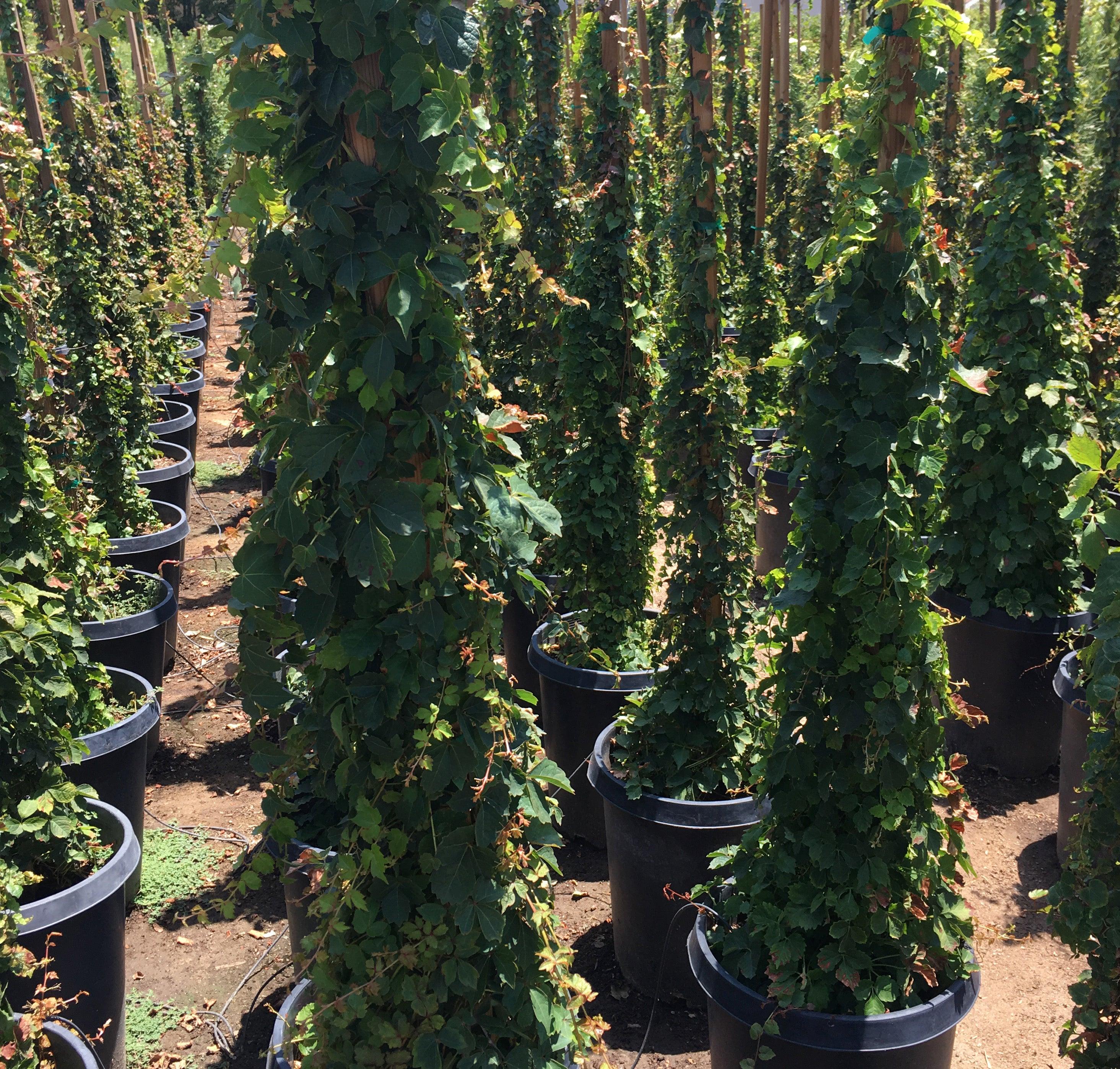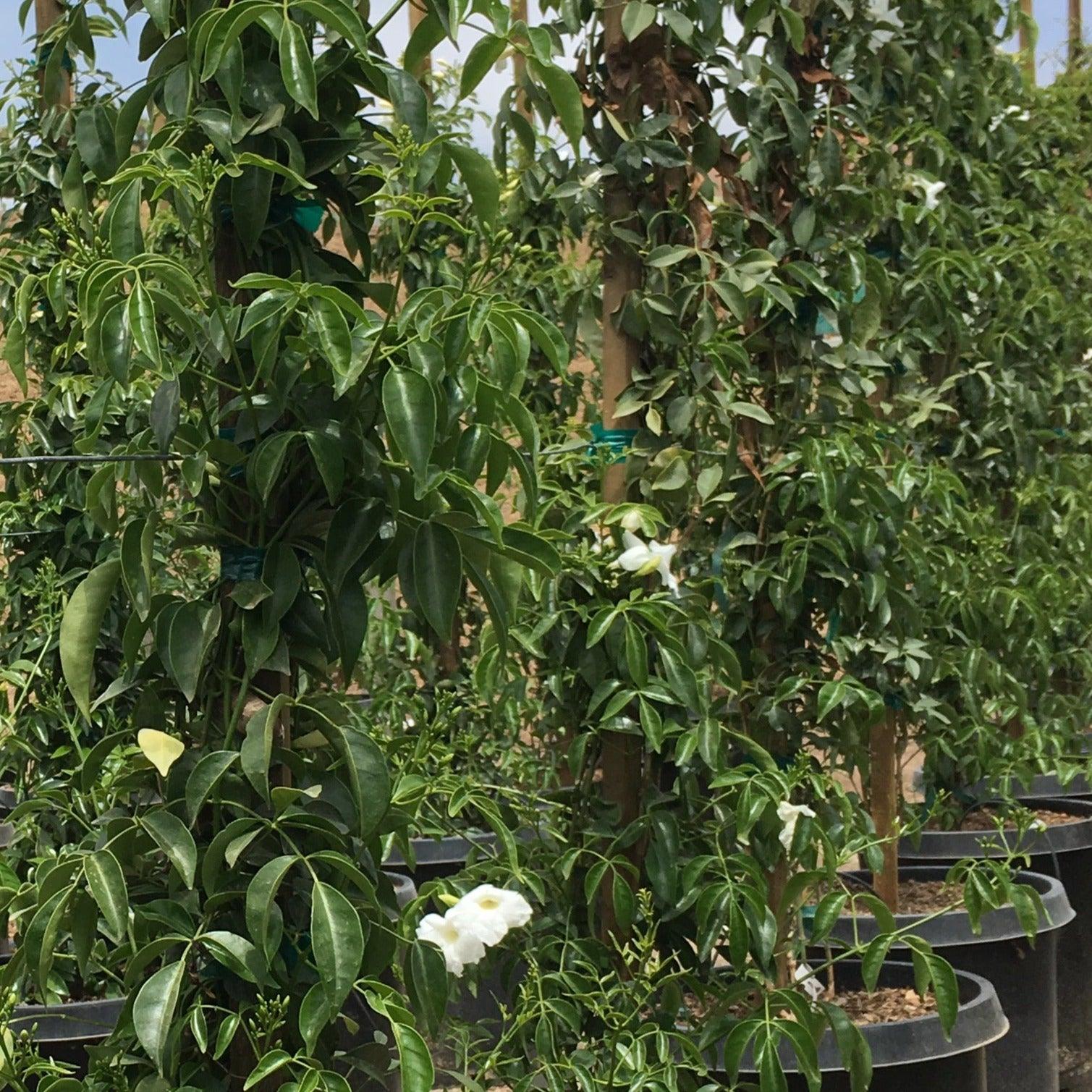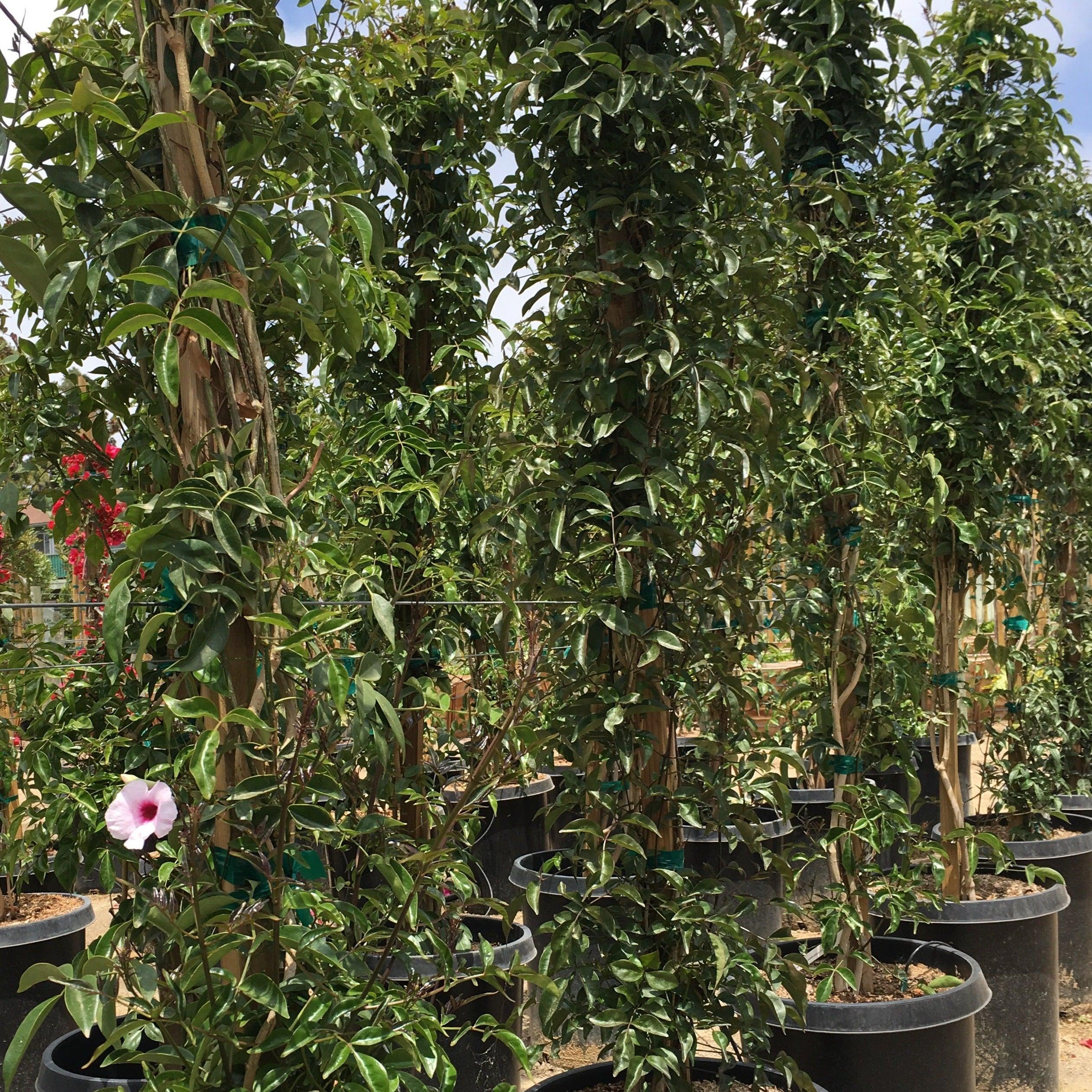

Purple Brasiliensis Bougainvillea - Bougainvillea brasiliensis Espalier (Purple)
Purple bougainvillea is native to South America and is renowned for its vibrant color and striking bracts, which can range from deep magenta to rich violet hues. This fast-growing, drought-tolerant tropical vine brings dramatic color to fences, walls, trellises, and patio containers, making it a standout in California gardens and landscapes.
As a versatile choice for outdoor spaces, purple bougainvillea can be used as a climbing vine, groundcover, or shaped into hedges and topiary. Whether you are designing a Mediterranean-style landscape, adding privacy screening, or creating a colorful patio focal point, purple bougainvillea enhances any outdoor space with long-lasting blooms and surprisingly low maintenance once established.
A fast-growing drought-tolerant flowering vine with vivid purple color, ideal for trellises, privacy screens, walls, and large containers.
USDA Hardiness Zones
-
USDA Zones 9–11
-
Best performance in frost-free or low-frost climates
California Suitability
Purple bougainvillea performs exceptionally well throughout much of California, especially in:
-
Southern California
-
Coastal California
-
Inland Mediterranean climates
-
Warm urban gardens
It thrives in sunny low-water landscapes and is widely used in residential and commercial designs.
Purple Queen Bougainvillea
What Is Purple Queen Bougainvillea?
Purple Queen bougainvillea is a popular cultivar known for its rich purple-magenta bracts, vigorous growth, and excellent flowering performance in warm climates.
Although often grown as a climbing vine, it can also be trained into:
-
Shrub forms
-
Cascading container specimens
-
Privacy hedges
-
Espalier features
-
Groundcover
Bougainvillea Glabra is available in packs of two, shipped bare root and eco-friendly, making it suitable for container gardening and as groundcover.
Growth Habit and Mature Size
Purple Queen bougainvillea typically develops:
|
Growth Type |
Mature Size |
|---|---|
|
Trellised Vine |
15–30 feet |
|
Shrub Form |
4–8 feet |
|
Container Plant |
3–6 feet |
Growth rate depends on sun exposure, irrigation, and pruning frequency.
Best Uses
Purple Queen bougainvillea works beautifully for:
-
Trellises and pergolas
-
Privacy screening
-
Wall coverage
-
Hanging baskets
-
Patio containers
-
Poolside landscapes
Its vivid color creates strong contrast against stucco walls, stonework, and drought-tolerant plantings.
Planting and Establishing a Healthy Plant
Best Planting Seasons in California
The best planting windows include:
-
Spring
-
Early summer
-
Early fall in mild climates
Avoid planting during cold winter periods or extreme summer heat waves.
Soil and Drainage Requirements
Bougainvillea thrives in:
-
Well-drained or fast draining soil, which is crucial for preventing root rot and ensuring proper drainage, especially in regions with heavy rainfall or poor soil quality
-
Sandy or loamy conditions
-
Slightly acidic to neutral pH
Purple bougainvillea thrives in full sun and requires well-drained soil for optimal growth and health.
Poor drainage is one of the most common causes of decline.
Heavy clay soils should be amended or planted on raised mounds.
Spacing and Support Installation
Recommended Spacing
|
Application |
Spacing |
|---|---|
|
Privacy Hedge |
4–6 feet apart |
|
Trellis Coverage |
6–10 feet apart |
|
Container Feature |
Single specimen |
Install supports at planting time to avoid disturbing roots later.
Popular support options include:
-
Trellises
-
Wire systems
-
Arbors
-
Fence panels
First-Month Establishment Care
During the first month:
-
Water deeply after planting, and during the first growing season, water regularly and deeply to help establish an extensive root system.
-
Allow partial drying between irrigations—bougainvilleas bloom best when stressed, so water deeply and then let the soil dry out almost completely before watering again.
-
Tie new growth gently to supports
-
Avoid heavy fertilization initially
-
Monitor for transplant stress
Bougainvillea roots dislike excessive disturbance, so careful planting is important—avoid damaging roots during planting to ensure healthy establishment and growth.
Drought-Tolerant Watering and Soil Strategy
Establishment Watering Schedule
Newly planted bougainvillea requires more frequent watering while roots establish. For container plants, it is important to water container plants regularly, especially during the initial growth period, to maintain soil moisture and support healthy root development. Water container plants deeply during the first growing season, ensuring the topsoil stays moist but not soggy, to promote strong root establishment.
Newly Planted
-
Water deeply 2–3 times weekly
-
Adjust for temperature and soil drainage
Avoid constantly saturated soil.
Mature Plant Irrigation
Once established, purple bougainvillea becomes highly drought tolerant and low maintenance, making it ideal for busy gardeners or low-water landscapes. At this stage, reduce frequency of watering to encourage deep root growth and prevent overwatering.
Established Plants
-
Deep water every 10–14 days during dry periods
-
Reduce irrigation during cooler months
Too much water often reduces flowering.
Recommended Mulch Types
Mulching helps moderate soil temperature and conserve moisture.
Good mulch choices include:
-
Shredded bark
-
Wood chips
-
Compost bark blends
Mulch Depth
-
Apply 2–3 inches deep
-
Keep mulch several inches away from stems
Soil Amendments for Drainage
To improve drainage, incorporate:
-
Coarse sand
-
Small gravel
-
Lightweight planting mix
-
Organic matter in moderation
Avoid overly rich moisture-retentive soil blends.
Low Maintenance Pruning, Feeding, and Care
Simple Pruning Schedule
Bougainvillea blooms on new growth, so periodic trimming encourages repeat flowering.
Recommended Timing
-
Light pruning after major bloom cycles
-
Structural shaping in late winter or early spring
Avoid constant heavy trimming.
Fertilization Schedule
Bougainvillea generally performs best with modest feeding.
Recommended Feeding
-
Apply low-nitrogen fertilizer in spring
-
Optional light feeding in midsummer
Too much nitrogen produces leaves instead of flowers.
Winter Protection for Containers
Container-grown bougainvillea may need mild winter protection during cold snaps. In colder regions, these plants can be brought indoors to protect them from frost, allowing you to maintain their vibrant color and enjoy their display year-round.
Helpful steps include:
-
Moving containers near warm walls
-
Covering during frost events
-
Reducing winter watering
Routine Pest and Disease Monitoring
Check periodically for:
-
Aphids
-
Caterpillars
-
Whiteflies
-
Scale insects
Most issues remain minor with proper airflow and watering practices.
Styling, Placement, and Landscaping Uses
Companion Plants for Purple Bougainvillea
Purple bougainvillea pairs beautifully with:
-
Lavender
-
Agave
-
Olive trees
-
Mexican sage
-
White gaura
-
Kangaroo paw
-
Ornamental grasses
These combinations complement Mediterranean and drought-tolerant garden styles.
Privacy Screen Ideas
For privacy screening:
-
Train along horizontal wire systems
-
Layer with evergreen shrubs
-
Use staggered spacing for fuller coverage
Bougainvillea provides colorful seasonal screening without heavy dense foliage.
Patio and Balcony Containers
Bougainvillea performs especially well in:
-
Large terracotta pots
-
Contemporary concrete planters
-
Raised decorative containers
Container growing naturally limits size while increasing flowering potential.
Sourcing, Shipping, and Yardwork Services
Shop Plants
Browse Yardwork’s selection of:
-
Purple bougainvillea
-
Trellised bougainvillea
-
Patio-ready container specimens
-
Privacy-screen vines
-
Drought-tolerant flowering plants
Shipping and Delivery Notes
California customers may qualify for delivery or shipping options depending on:
-
Order size
-
Plant dimensions
-
Seasonal weather conditions
Large specimen plants may require freight coordination.
Yard Design Consultation Service
Need help designing a bougainvillea privacy wall or drought-tolerant landscape?
Yardwork consultations can assist with:
-
Plant spacing
-
Irrigation planning
-
Trellis layout design
-
Container selection
-
Privacy screening concepts
Soil Testing Services
Request a professional soil test before large installations to evaluate:
-
Drainage
-
Soil texture
-
pH balance
-
Amendment needs
Proper soil preparation dramatically improves long-term success.
Troubleshooting and FAQs
Why Isn’t My Bougainvillea Blooming?
Common bloom-loss causes include:
-
Too much water
-
Excess fertilizer
-
Insufficient sunlight
-
Over-pruning
Bougainvillea typically flowers best under slightly lean, sunny conditions.
Transplant Shock Symptoms
Signs of transplant stress may include:
-
Temporary leaf drop
-
Wilting
-
Reduced flowering
-
Slowed growth
Remedies
-
Avoid overwatering
-
Protect from extreme heat initially
-
Minimize root disturbance
-
Allow recovery time before fertilizing heavily
Why Are the Leaves Turning Yellow?
Yellowing leaves may result from:
-
Poor drainage
-
Overwatering
-
Nutrient imbalance
-
Cold stress
Quick Fixes
-
Improve soil drainage
-
Reduce watering frequency
-
Apply balanced micronutrient fertilizer if needed
-
Ensure full sun exposure
With proper placement and low-maintenance care, purple bougainvillea rewards gardeners with months of vivid color and dramatic drought-tolerant beauty.
Original: $165.00
-65%$165.00
$57.75Product Information
Product Information
Shipping & Returns
Shipping & Returns
Description
Purple bougainvillea is native to South America and is renowned for its vibrant color and striking bracts, which can range from deep magenta to rich violet hues. This fast-growing, drought-tolerant tropical vine brings dramatic color to fences, walls, trellises, and patio containers, making it a standout in California gardens and landscapes.
As a versatile choice for outdoor spaces, purple bougainvillea can be used as a climbing vine, groundcover, or shaped into hedges and topiary. Whether you are designing a Mediterranean-style landscape, adding privacy screening, or creating a colorful patio focal point, purple bougainvillea enhances any outdoor space with long-lasting blooms and surprisingly low maintenance once established.
A fast-growing drought-tolerant flowering vine with vivid purple color, ideal for trellises, privacy screens, walls, and large containers.
USDA Hardiness Zones
-
USDA Zones 9–11
-
Best performance in frost-free or low-frost climates
California Suitability
Purple bougainvillea performs exceptionally well throughout much of California, especially in:
-
Southern California
-
Coastal California
-
Inland Mediterranean climates
-
Warm urban gardens
It thrives in sunny low-water landscapes and is widely used in residential and commercial designs.
Purple Queen Bougainvillea
What Is Purple Queen Bougainvillea?
Purple Queen bougainvillea is a popular cultivar known for its rich purple-magenta bracts, vigorous growth, and excellent flowering performance in warm climates.
Although often grown as a climbing vine, it can also be trained into:
-
Shrub forms
-
Cascading container specimens
-
Privacy hedges
-
Espalier features
-
Groundcover
Bougainvillea Glabra is available in packs of two, shipped bare root and eco-friendly, making it suitable for container gardening and as groundcover.
Growth Habit and Mature Size
Purple Queen bougainvillea typically develops:
|
Growth Type |
Mature Size |
|---|---|
|
Trellised Vine |
15–30 feet |
|
Shrub Form |
4–8 feet |
|
Container Plant |
3–6 feet |
Growth rate depends on sun exposure, irrigation, and pruning frequency.
Best Uses
Purple Queen bougainvillea works beautifully for:
-
Trellises and pergolas
-
Privacy screening
-
Wall coverage
-
Hanging baskets
-
Patio containers
-
Poolside landscapes
Its vivid color creates strong contrast against stucco walls, stonework, and drought-tolerant plantings.
Planting and Establishing a Healthy Plant
Best Planting Seasons in California
The best planting windows include:
-
Spring
-
Early summer
-
Early fall in mild climates
Avoid planting during cold winter periods or extreme summer heat waves.
Soil and Drainage Requirements
Bougainvillea thrives in:
-
Well-drained or fast draining soil, which is crucial for preventing root rot and ensuring proper drainage, especially in regions with heavy rainfall or poor soil quality
-
Sandy or loamy conditions
-
Slightly acidic to neutral pH
Purple bougainvillea thrives in full sun and requires well-drained soil for optimal growth and health.
Poor drainage is one of the most common causes of decline.
Heavy clay soils should be amended or planted on raised mounds.
Spacing and Support Installation
Recommended Spacing
|
Application |
Spacing |
|---|---|
|
Privacy Hedge |
4–6 feet apart |
|
Trellis Coverage |
6–10 feet apart |
|
Container Feature |
Single specimen |
Install supports at planting time to avoid disturbing roots later.
Popular support options include:
-
Trellises
-
Wire systems
-
Arbors
-
Fence panels
First-Month Establishment Care
During the first month:
-
Water deeply after planting, and during the first growing season, water regularly and deeply to help establish an extensive root system.
-
Allow partial drying between irrigations—bougainvilleas bloom best when stressed, so water deeply and then let the soil dry out almost completely before watering again.
-
Tie new growth gently to supports
-
Avoid heavy fertilization initially
-
Monitor for transplant stress
Bougainvillea roots dislike excessive disturbance, so careful planting is important—avoid damaging roots during planting to ensure healthy establishment and growth.
Drought-Tolerant Watering and Soil Strategy
Establishment Watering Schedule
Newly planted bougainvillea requires more frequent watering while roots establish. For container plants, it is important to water container plants regularly, especially during the initial growth period, to maintain soil moisture and support healthy root development. Water container plants deeply during the first growing season, ensuring the topsoil stays moist but not soggy, to promote strong root establishment.
Newly Planted
-
Water deeply 2–3 times weekly
-
Adjust for temperature and soil drainage
Avoid constantly saturated soil.
Mature Plant Irrigation
Once established, purple bougainvillea becomes highly drought tolerant and low maintenance, making it ideal for busy gardeners or low-water landscapes. At this stage, reduce frequency of watering to encourage deep root growth and prevent overwatering.
Established Plants
-
Deep water every 10–14 days during dry periods
-
Reduce irrigation during cooler months
Too much water often reduces flowering.
Recommended Mulch Types
Mulching helps moderate soil temperature and conserve moisture.
Good mulch choices include:
-
Shredded bark
-
Wood chips
-
Compost bark blends
Mulch Depth
-
Apply 2–3 inches deep
-
Keep mulch several inches away from stems
Soil Amendments for Drainage
To improve drainage, incorporate:
-
Coarse sand
-
Small gravel
-
Lightweight planting mix
-
Organic matter in moderation
Avoid overly rich moisture-retentive soil blends.
Low Maintenance Pruning, Feeding, and Care
Simple Pruning Schedule
Bougainvillea blooms on new growth, so periodic trimming encourages repeat flowering.
Recommended Timing
-
Light pruning after major bloom cycles
-
Structural shaping in late winter or early spring
Avoid constant heavy trimming.
Fertilization Schedule
Bougainvillea generally performs best with modest feeding.
Recommended Feeding
-
Apply low-nitrogen fertilizer in spring
-
Optional light feeding in midsummer
Too much nitrogen produces leaves instead of flowers.
Winter Protection for Containers
Container-grown bougainvillea may need mild winter protection during cold snaps. In colder regions, these plants can be brought indoors to protect them from frost, allowing you to maintain their vibrant color and enjoy their display year-round.
Helpful steps include:
-
Moving containers near warm walls
-
Covering during frost events
-
Reducing winter watering
Routine Pest and Disease Monitoring
Check periodically for:
-
Aphids
-
Caterpillars
-
Whiteflies
-
Scale insects
Most issues remain minor with proper airflow and watering practices.
Styling, Placement, and Landscaping Uses
Companion Plants for Purple Bougainvillea
Purple bougainvillea pairs beautifully with:
-
Lavender
-
Agave
-
Olive trees
-
Mexican sage
-
White gaura
-
Kangaroo paw
-
Ornamental grasses
These combinations complement Mediterranean and drought-tolerant garden styles.
Privacy Screen Ideas
For privacy screening:
-
Train along horizontal wire systems
-
Layer with evergreen shrubs
-
Use staggered spacing for fuller coverage
Bougainvillea provides colorful seasonal screening without heavy dense foliage.
Patio and Balcony Containers
Bougainvillea performs especially well in:
-
Large terracotta pots
-
Contemporary concrete planters
-
Raised decorative containers
Container growing naturally limits size while increasing flowering potential.
Sourcing, Shipping, and Yardwork Services
Shop Plants
Browse Yardwork’s selection of:
-
Purple bougainvillea
-
Trellised bougainvillea
-
Patio-ready container specimens
-
Privacy-screen vines
-
Drought-tolerant flowering plants
Shipping and Delivery Notes
California customers may qualify for delivery or shipping options depending on:
-
Order size
-
Plant dimensions
-
Seasonal weather conditions
Large specimen plants may require freight coordination.
Yard Design Consultation Service
Need help designing a bougainvillea privacy wall or drought-tolerant landscape?
Yardwork consultations can assist with:
-
Plant spacing
-
Irrigation planning
-
Trellis layout design
-
Container selection
-
Privacy screening concepts
Soil Testing Services
Request a professional soil test before large installations to evaluate:
-
Drainage
-
Soil texture
-
pH balance
-
Amendment needs
Proper soil preparation dramatically improves long-term success.
Troubleshooting and FAQs
Why Isn’t My Bougainvillea Blooming?
Common bloom-loss causes include:
-
Too much water
-
Excess fertilizer
-
Insufficient sunlight
-
Over-pruning
Bougainvillea typically flowers best under slightly lean, sunny conditions.
Transplant Shock Symptoms
Signs of transplant stress may include:
-
Temporary leaf drop
-
Wilting
-
Reduced flowering
-
Slowed growth
Remedies
-
Avoid overwatering
-
Protect from extreme heat initially
-
Minimize root disturbance
-
Allow recovery time before fertilizing heavily
Why Are the Leaves Turning Yellow?
Yellowing leaves may result from:
-
Poor drainage
-
Overwatering
-
Nutrient imbalance
-
Cold stress
Quick Fixes
-
Improve soil drainage
-
Reduce watering frequency
-
Apply balanced micronutrient fertilizer if needed
-
Ensure full sun exposure
With proper placement and low-maintenance care, purple bougainvillea rewards gardeners with months of vivid color and dramatic drought-tolerant beauty.