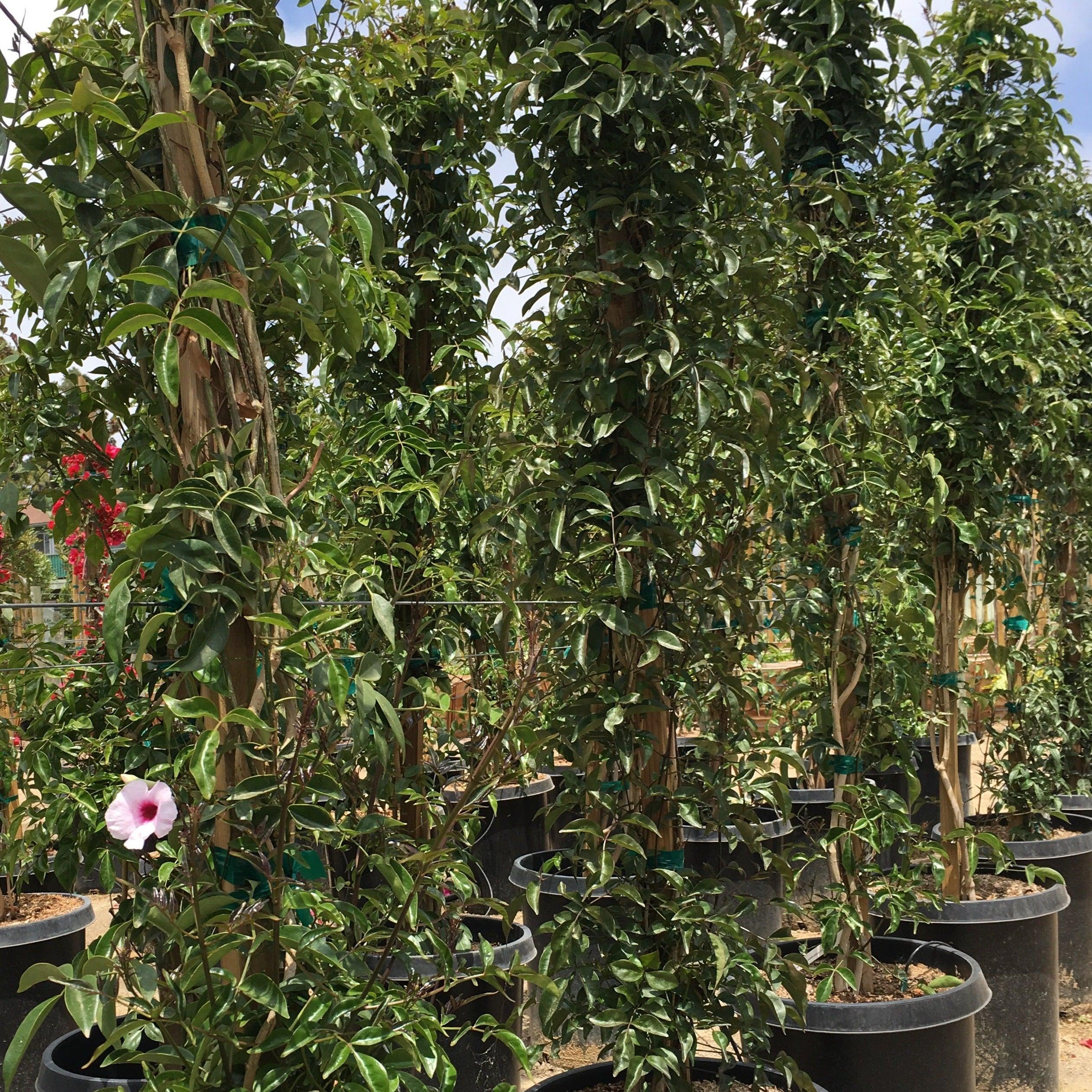


Pink Bougainvillea (Bougainvillea ‘Imperial Thai Delight’)
Stunning Pink Blooms That Transform Your Garden Into a Tropical Paradise
Pink Bougainvillea gives California gardens bold tropical color with far less water and maintenance than many traditional flowering plants. Its vibrant bracts create an enchanting display across fences, patios, trellises, containers, and sunny bare spaces.
This drought tolerant climbing vine thrives in full sun, hot weather, and well drained soil. In warm climates, pink bougainvillea can deliver colorful displays through much of the year, especially during the main blooming season from spring through summer and into fall.
What looks like flowers are actually bracts - modified leaves that surround the true flowers, which are typically small and white. That is why bougainvillea often holds its pink color longer than delicate petals, giving your garden dramatic impact without constant care.
Why You’ll Love Pink Bougainvillea
-
Year-Round Blooming – In warm climates and frost-free areas, pink bougainvillea can bloom from spring through winter, with the strongest display during the growing season.
-
Drought Tolerance – Once established, this plant needs minimal water and performs beautifully with a “soak and dry” approach: water deeply, then let the soil dry almost completely before watering again.
-
Fast Growth – These plants are fast-growing and drought-tolerant, ideal for adding vibrant color to landscapes, covering fences, softening walls, or filling bare garden spaces.
-
Versatile Design Options – Bougainvilleas can be used as climbing vines on trellises or fences, or pruned to form shrubs, providing versatility in landscaping designs.
-
Low Maintenance – With full sun, good drainage, occasional pruning, and careful fertilizer use, bougainvillea produces healthy growth and more blooms with little fuss.
Bougainvilleas are popular for their vibrant bracts in shades of magenta, orange, red, and pink, making them ideal for adding bold, tropical color to gardens and landscapes, and varieties like purple bougainvillea offer similarly striking options in different color palettes.
What Makes Pink Bougainvillea Different
Most flowering plants need steady watering, rich soil, and frequent feeding to keep blooming. Pink bougainvillea is built for a different kind of garden: hot, bright, dry, and low maintenance.
Pink Bougainvillea is:
-
Heat and Sun Loving – Bougainvilleas thrive in full sun, requiring at least six hours of direct sunlight each day to produce vibrant blooms.
-
True Evergreen Color – Bougainvilleas are known for their colorful bracts, which are modified leaves that surround the true flowers, typically small and white, and can come in shades of pink, red, magenta, orange, yellow, and even white.
-
Thorny Natural Security – Mature stems develop thorns, making dense bougainvillea useful as a privacy screen, natural barrier, or fence-line planting, especially when combined with evergreen hedges like a Fern Pine hedge.
-
Dry-Climate Performance – These plants thrive in full sun and well-draining soil, making them suitable for hot, dry areas where other plants may struggle, thus enhancing the aesthetic appeal of such landscapes, especially when paired with native drought-tolerant shrubs like California lilac (Ceanothus).
Bougainvillea glabra and Bougainvillea spectabilis are the two most common species grown ornamentally in the U.S., with the former being a popular choice for its vibrant bracts and compact growth habit, and selections such as Jamaica White Bougainvillea extend the color range beyond pink into elegant white and blush tones. Compared with many flowering vines that fade in California’s dry summers, bougainvillea often performs better when it receives direct sun, lean soil, and controlled watering.
How to Grow Pink Bougainvillea Successfully
-
Site Selection
Choose a full sun location with at least six hours of direct sunlight daily. Bougainvillea needs bright sun to produce vibrant bracts, and too much shade often results in fewer blooms and more green foliage. -
Planting
Bougainvilleas should be planted in the spring after the last frost to ensure they establish well before the heat of summer. When planting bougainvilleas, it is recommended to space them 6 to 9 feet apart to allow for their growth and to prevent overcrowding. -
Establishment Care
During the first season, water deeply to help roots settle into the ground. These plants prefer well-draining soil and can tolerate various soil types, but overly wet conditions can lead to root rot, which is detrimental to their health. -
Ongoing Maintenance
Once established, use a soak and dry watering routine. Too much water indicated by abundant green leaves with little pink color suggests overwatering issues. In containers, check the pot more often because roots dry faster than they do in the ground. -
Pruning and Feeding
Bougainvilleas bloom exclusively on new wood, making pruning after a bloom cycle essential for future flowering. To prune bougainvillea, remove dead stems, lightly shape the plant, and trim to encourage more branching. Use a low-nitrogen or slow release fertilizer sparingly; excess nitrogen fertilizer can reduce bract production, leading to increased green foliage instead of blooms.
Plant Specifications
-
Mature Size: Varies depending on variety. Dwarf varieties stay compact, while larger vine types can grow quickly with support.
-
Growth Habit: Climbing vine, shrub, ground cover, container plant, or trained form on trellises and fences.
-
USDA Hardiness Zones: They thrive in USDA Hardiness Zones 9 to 12 and cannot tolerate freezing temperatures.
-
California Suitability: Best for warm climates, coastal and Southern California gardens, protected Zone 9 locations, patios, and sunny microclimates.
-
Light Needs: Full sun; at least six hours of direct sunlight daily for best bloom production.
-
Soil Needs: Well drained soil; slightly acidic to neutral soil is preferred, with good drainage essential.
-
Water Needs: Drought tolerant once established; water deeply, then allow soil to dry before watering again.
-
Bloom Time: Spring, summer, fall, and year round in frost-free warm climates.
-
Fertilizer: Use low-nitrogen fertilizer or slow release fertilizer in early spring and early summer. Avoid over fertilizing, especially with nitrogen.
-
Container Use: Suitable for containers, patios, balconies, nursery pot growing, and select hanging baskets when using compact varieties.
-
Pests: Watch for aphids, scale, or mites; neem oil or insecticidal soap can help manage pests when needed.
-
Cold Protection: Protect from frost. In colder areas, container plants may need to be moved indoors during freezing weather.
-
Available Varieties: ‘Helen Johnson’, ‘Pink Pixie’, ‘Rosenka’.
The Dwarf Pink Bougainvillea, also known as Helen Johnson Bougainvillea, is a compact variety that thrives in USDA zones 9-11 and is ideal for small gardens, patios, and balconies due to its low-maintenance nature and vibrant blooms.
Perfect For These Garden Situations
Ideal for:
-
Homeowners wanting privacy screens along sunny fence lines, perhaps combining bougainvillea with Silver Sheen pittosporum hedges for year-round structure
-
Patio and container gardeners seeking tropical color in pots
-
Landscape designers creating Mediterranean, tropical, or water-wise garden themes that might also feature drought-tolerant trees like the California pepper tree
-
Property owners needing fast-growing coverage for walls, slopes, or unsightly areas
-
Gardeners in hot, dry microclimates where other plants struggle and who may also want small, drought-tolerant flowering trees for added structure
-
Small gardens that need compact color from dwarf varieties like Helen Johnson or Pink Pixie
If you want a healthy plant that brings bold pink color, strong growth, and low water needs to your garden, pink bougainvillea fits beautifully. It can climb, mound, trail, or be pruned into good shape depending on your space, and it pairs well with evergreen privacy trees and shrubs to complete a layered landscape.
Frequently Asked Questions
How fast does pink bougainvillea grow?
Growth rate can vary depending on the variety, sun, soil, water, and pruning. Larger bougainvillea vine types grow quickly with support, while dwarf varieties such as Helen Johnson and Pink Pixie stay more compact for patios, balconies, and small gardens.
Will it survive California winters?
Pink bougainvillea does best in warm climates and USDA zones where freezing temperatures are rare. It cannot tolerate freezing temperatures well, and frost can damage foliage, stems, bracts, and roots. In colder pockets, grow bougainvillea in containers so it can be protected or moved indoors.
How often should I water it?
Use a soak and dry method. Water deeply, then let the soil dry almost completely before the next watering. Established plants are drought tolerant, but overwatering can cause root rot and may create abundant green leaves with fewer blooms.
Can I grow it in a container?
Yes. Pink bougainvillea grows well in containers, nursery pot arrangements, patio pots, and some hanging baskets when compact varieties are selected. Use a pot with drainage holes, well drained soil, and plenty of sunlight.
When should I prune it?
Prune bougainvillea after a bloom cycle because bougainvilleas bloom exclusively on new wood. Light pruning encourages new growth, more branching, and future flowering. Remove dead stems and avoid repeated heavy pruning that can delay the next bloom.
Does it attract bees or butterflies?
Yes. The colorful bracts help draw attention to the true flowers, which are small and usually white. Pollinators may visit the flowers during the blooming season, especially when the plant is growing in full sun and producing healthy bracts.
Ready to Add Tropical Color to Your Garden?
Stop settling for thirsty flowering plants that fade in hot weather. Choose Pink Bougainvillea for vibrant bracts, drought tolerant performance, and bold tropical color that works beautifully in California gardens.
Yardwork offers quality plants selected for real garden performance, with California delivery available, giving you an easy way to buy plants and design your yard online. If you need help choosing between a climbing vine, compact shrub, ground cover form, or container-friendly dwarf variety, our consultation services can help with placement, sunlight, soil, drainage, and design.
Browse our pink bougainvillea varieties and find the right plant for your space.
Product Information
Product Information
Shipping & Returns
Shipping & Returns
Description
Stunning Pink Blooms That Transform Your Garden Into a Tropical Paradise
Pink Bougainvillea gives California gardens bold tropical color with far less water and maintenance than many traditional flowering plants. Its vibrant bracts create an enchanting display across fences, patios, trellises, containers, and sunny bare spaces.
This drought tolerant climbing vine thrives in full sun, hot weather, and well drained soil. In warm climates, pink bougainvillea can deliver colorful displays through much of the year, especially during the main blooming season from spring through summer and into fall.
What looks like flowers are actually bracts - modified leaves that surround the true flowers, which are typically small and white. That is why bougainvillea often holds its pink color longer than delicate petals, giving your garden dramatic impact without constant care.
Why You’ll Love Pink Bougainvillea
-
Year-Round Blooming – In warm climates and frost-free areas, pink bougainvillea can bloom from spring through winter, with the strongest display during the growing season.
-
Drought Tolerance – Once established, this plant needs minimal water and performs beautifully with a “soak and dry” approach: water deeply, then let the soil dry almost completely before watering again.
-
Fast Growth – These plants are fast-growing and drought-tolerant, ideal for adding vibrant color to landscapes, covering fences, softening walls, or filling bare garden spaces.
-
Versatile Design Options – Bougainvilleas can be used as climbing vines on trellises or fences, or pruned to form shrubs, providing versatility in landscaping designs.
-
Low Maintenance – With full sun, good drainage, occasional pruning, and careful fertilizer use, bougainvillea produces healthy growth and more blooms with little fuss.
Bougainvilleas are popular for their vibrant bracts in shades of magenta, orange, red, and pink, making them ideal for adding bold, tropical color to gardens and landscapes, and varieties like purple bougainvillea offer similarly striking options in different color palettes.
What Makes Pink Bougainvillea Different
Most flowering plants need steady watering, rich soil, and frequent feeding to keep blooming. Pink bougainvillea is built for a different kind of garden: hot, bright, dry, and low maintenance.
Pink Bougainvillea is:
-
Heat and Sun Loving – Bougainvilleas thrive in full sun, requiring at least six hours of direct sunlight each day to produce vibrant blooms.
-
True Evergreen Color – Bougainvilleas are known for their colorful bracts, which are modified leaves that surround the true flowers, typically small and white, and can come in shades of pink, red, magenta, orange, yellow, and even white.
-
Thorny Natural Security – Mature stems develop thorns, making dense bougainvillea useful as a privacy screen, natural barrier, or fence-line planting, especially when combined with evergreen hedges like a Fern Pine hedge.
-
Dry-Climate Performance – These plants thrive in full sun and well-draining soil, making them suitable for hot, dry areas where other plants may struggle, thus enhancing the aesthetic appeal of such landscapes, especially when paired with native drought-tolerant shrubs like California lilac (Ceanothus).
Bougainvillea glabra and Bougainvillea spectabilis are the two most common species grown ornamentally in the U.S., with the former being a popular choice for its vibrant bracts and compact growth habit, and selections such as Jamaica White Bougainvillea extend the color range beyond pink into elegant white and blush tones. Compared with many flowering vines that fade in California’s dry summers, bougainvillea often performs better when it receives direct sun, lean soil, and controlled watering.
How to Grow Pink Bougainvillea Successfully
-
Site Selection
Choose a full sun location with at least six hours of direct sunlight daily. Bougainvillea needs bright sun to produce vibrant bracts, and too much shade often results in fewer blooms and more green foliage. -
Planting
Bougainvilleas should be planted in the spring after the last frost to ensure they establish well before the heat of summer. When planting bougainvilleas, it is recommended to space them 6 to 9 feet apart to allow for their growth and to prevent overcrowding. -
Establishment Care
During the first season, water deeply to help roots settle into the ground. These plants prefer well-draining soil and can tolerate various soil types, but overly wet conditions can lead to root rot, which is detrimental to their health. -
Ongoing Maintenance
Once established, use a soak and dry watering routine. Too much water indicated by abundant green leaves with little pink color suggests overwatering issues. In containers, check the pot more often because roots dry faster than they do in the ground. -
Pruning and Feeding
Bougainvilleas bloom exclusively on new wood, making pruning after a bloom cycle essential for future flowering. To prune bougainvillea, remove dead stems, lightly shape the plant, and trim to encourage more branching. Use a low-nitrogen or slow release fertilizer sparingly; excess nitrogen fertilizer can reduce bract production, leading to increased green foliage instead of blooms.
Plant Specifications
-
Mature Size: Varies depending on variety. Dwarf varieties stay compact, while larger vine types can grow quickly with support.
-
Growth Habit: Climbing vine, shrub, ground cover, container plant, or trained form on trellises and fences.
-
USDA Hardiness Zones: They thrive in USDA Hardiness Zones 9 to 12 and cannot tolerate freezing temperatures.
-
California Suitability: Best for warm climates, coastal and Southern California gardens, protected Zone 9 locations, patios, and sunny microclimates.
-
Light Needs: Full sun; at least six hours of direct sunlight daily for best bloom production.
-
Soil Needs: Well drained soil; slightly acidic to neutral soil is preferred, with good drainage essential.
-
Water Needs: Drought tolerant once established; water deeply, then allow soil to dry before watering again.
-
Bloom Time: Spring, summer, fall, and year round in frost-free warm climates.
-
Fertilizer: Use low-nitrogen fertilizer or slow release fertilizer in early spring and early summer. Avoid over fertilizing, especially with nitrogen.
-
Container Use: Suitable for containers, patios, balconies, nursery pot growing, and select hanging baskets when using compact varieties.
-
Pests: Watch for aphids, scale, or mites; neem oil or insecticidal soap can help manage pests when needed.
-
Cold Protection: Protect from frost. In colder areas, container plants may need to be moved indoors during freezing weather.
-
Available Varieties: ‘Helen Johnson’, ‘Pink Pixie’, ‘Rosenka’.
The Dwarf Pink Bougainvillea, also known as Helen Johnson Bougainvillea, is a compact variety that thrives in USDA zones 9-11 and is ideal for small gardens, patios, and balconies due to its low-maintenance nature and vibrant blooms.
Perfect For These Garden Situations
Ideal for:
-
Homeowners wanting privacy screens along sunny fence lines, perhaps combining bougainvillea with Silver Sheen pittosporum hedges for year-round structure
-
Patio and container gardeners seeking tropical color in pots
-
Landscape designers creating Mediterranean, tropical, or water-wise garden themes that might also feature drought-tolerant trees like the California pepper tree
-
Property owners needing fast-growing coverage for walls, slopes, or unsightly areas
-
Gardeners in hot, dry microclimates where other plants struggle and who may also want small, drought-tolerant flowering trees for added structure
-
Small gardens that need compact color from dwarf varieties like Helen Johnson or Pink Pixie
If you want a healthy plant that brings bold pink color, strong growth, and low water needs to your garden, pink bougainvillea fits beautifully. It can climb, mound, trail, or be pruned into good shape depending on your space, and it pairs well with evergreen privacy trees and shrubs to complete a layered landscape.
Frequently Asked Questions
How fast does pink bougainvillea grow?
Growth rate can vary depending on the variety, sun, soil, water, and pruning. Larger bougainvillea vine types grow quickly with support, while dwarf varieties such as Helen Johnson and Pink Pixie stay more compact for patios, balconies, and small gardens.
Will it survive California winters?
Pink bougainvillea does best in warm climates and USDA zones where freezing temperatures are rare. It cannot tolerate freezing temperatures well, and frost can damage foliage, stems, bracts, and roots. In colder pockets, grow bougainvillea in containers so it can be protected or moved indoors.
How often should I water it?
Use a soak and dry method. Water deeply, then let the soil dry almost completely before the next watering. Established plants are drought tolerant, but overwatering can cause root rot and may create abundant green leaves with fewer blooms.
Can I grow it in a container?
Yes. Pink bougainvillea grows well in containers, nursery pot arrangements, patio pots, and some hanging baskets when compact varieties are selected. Use a pot with drainage holes, well drained soil, and plenty of sunlight.
When should I prune it?
Prune bougainvillea after a bloom cycle because bougainvilleas bloom exclusively on new wood. Light pruning encourages new growth, more branching, and future flowering. Remove dead stems and avoid repeated heavy pruning that can delay the next bloom.
Does it attract bees or butterflies?
Yes. The colorful bracts help draw attention to the true flowers, which are small and usually white. Pollinators may visit the flowers during the blooming season, especially when the plant is growing in full sun and producing healthy bracts.
Ready to Add Tropical Color to Your Garden?
Stop settling for thirsty flowering plants that fade in hot weather. Choose Pink Bougainvillea for vibrant bracts, drought tolerant performance, and bold tropical color that works beautifully in California gardens.
Yardwork offers quality plants selected for real garden performance, with California delivery available, giving you an easy way to buy plants and design your yard online. If you need help choosing between a climbing vine, compact shrub, ground cover form, or container-friendly dwarf variety, our consultation services can help with placement, sunlight, soil, drainage, and design.
Browse our pink bougainvillea varieties and find the right plant for your space.