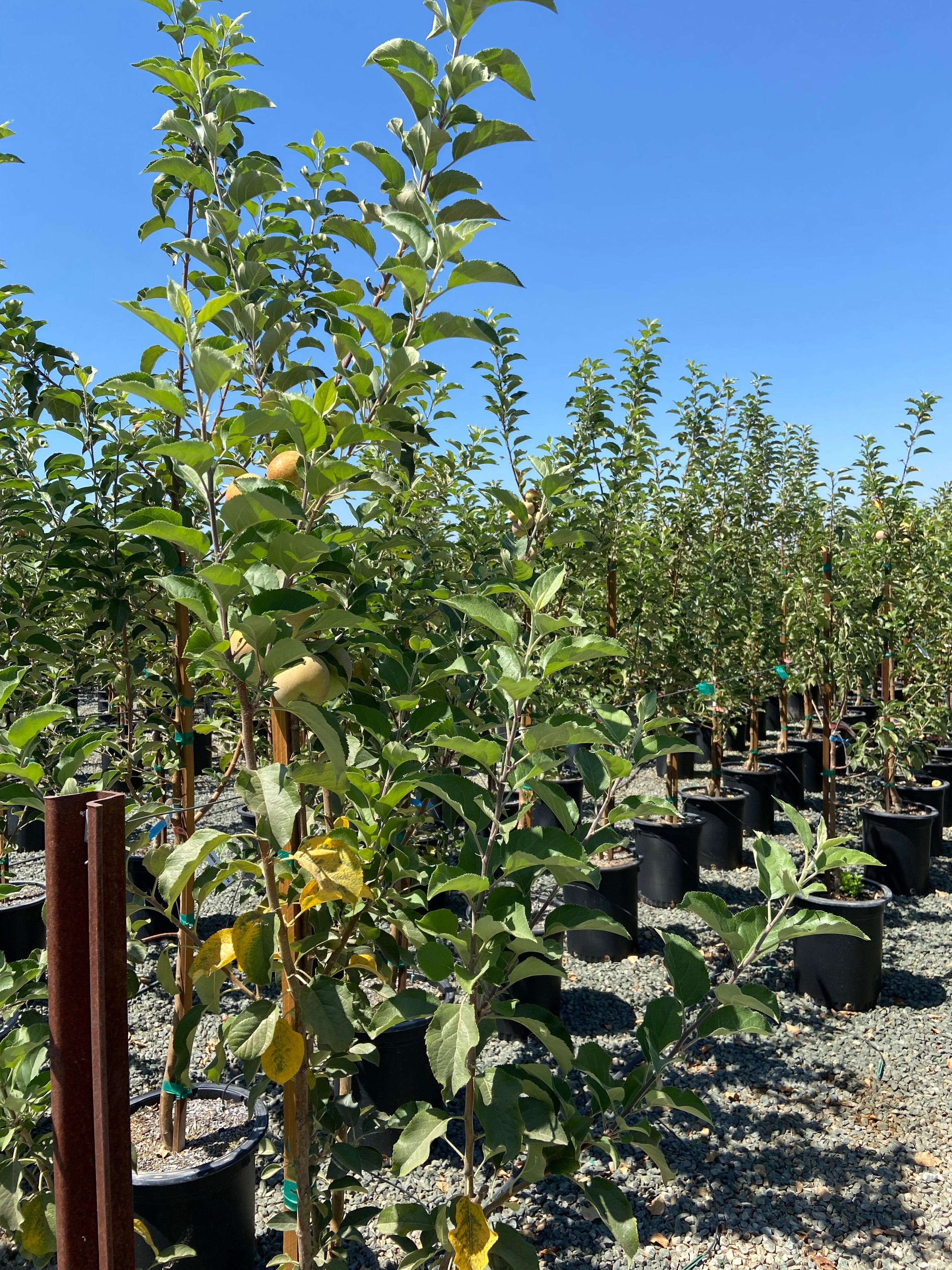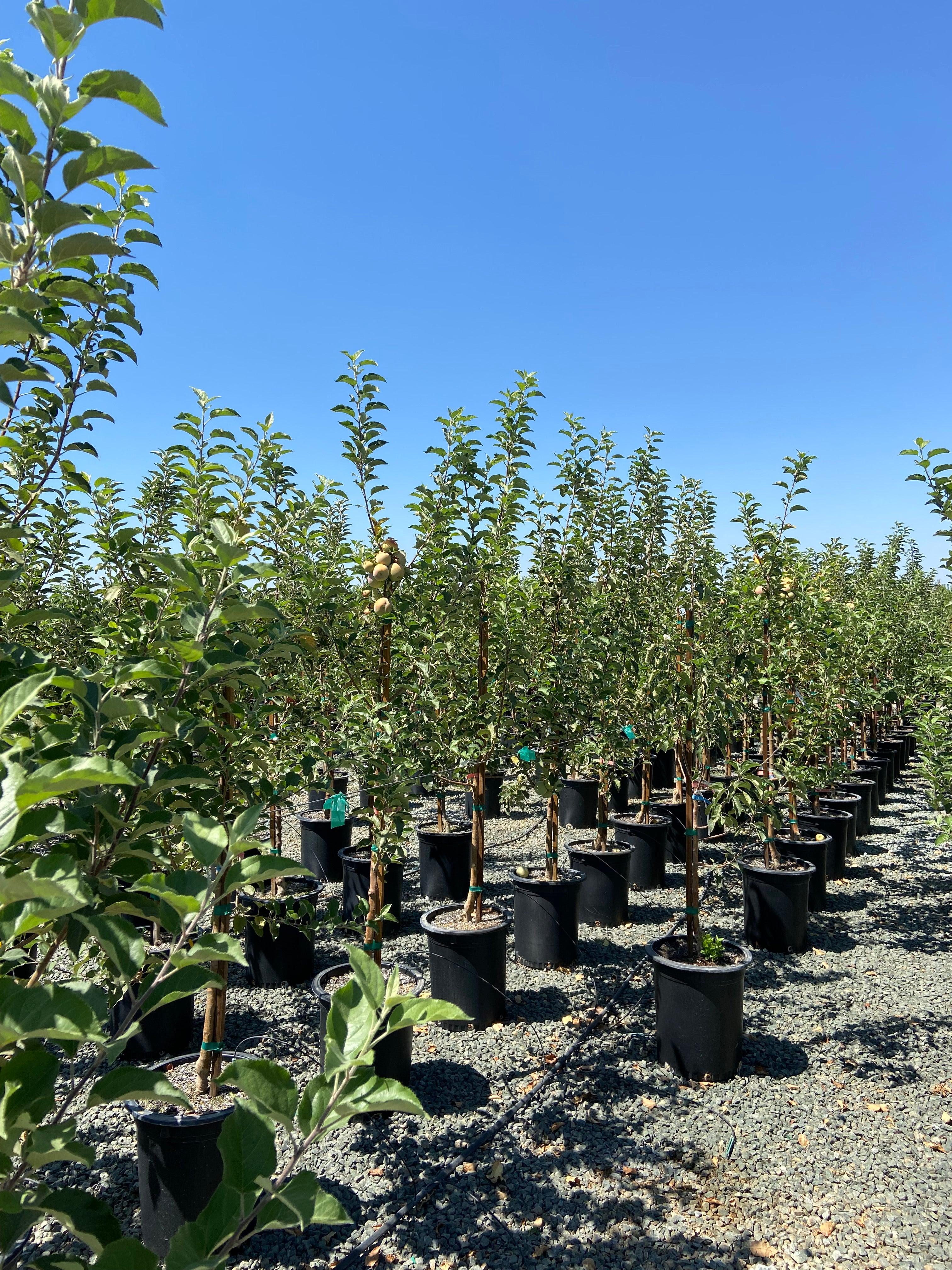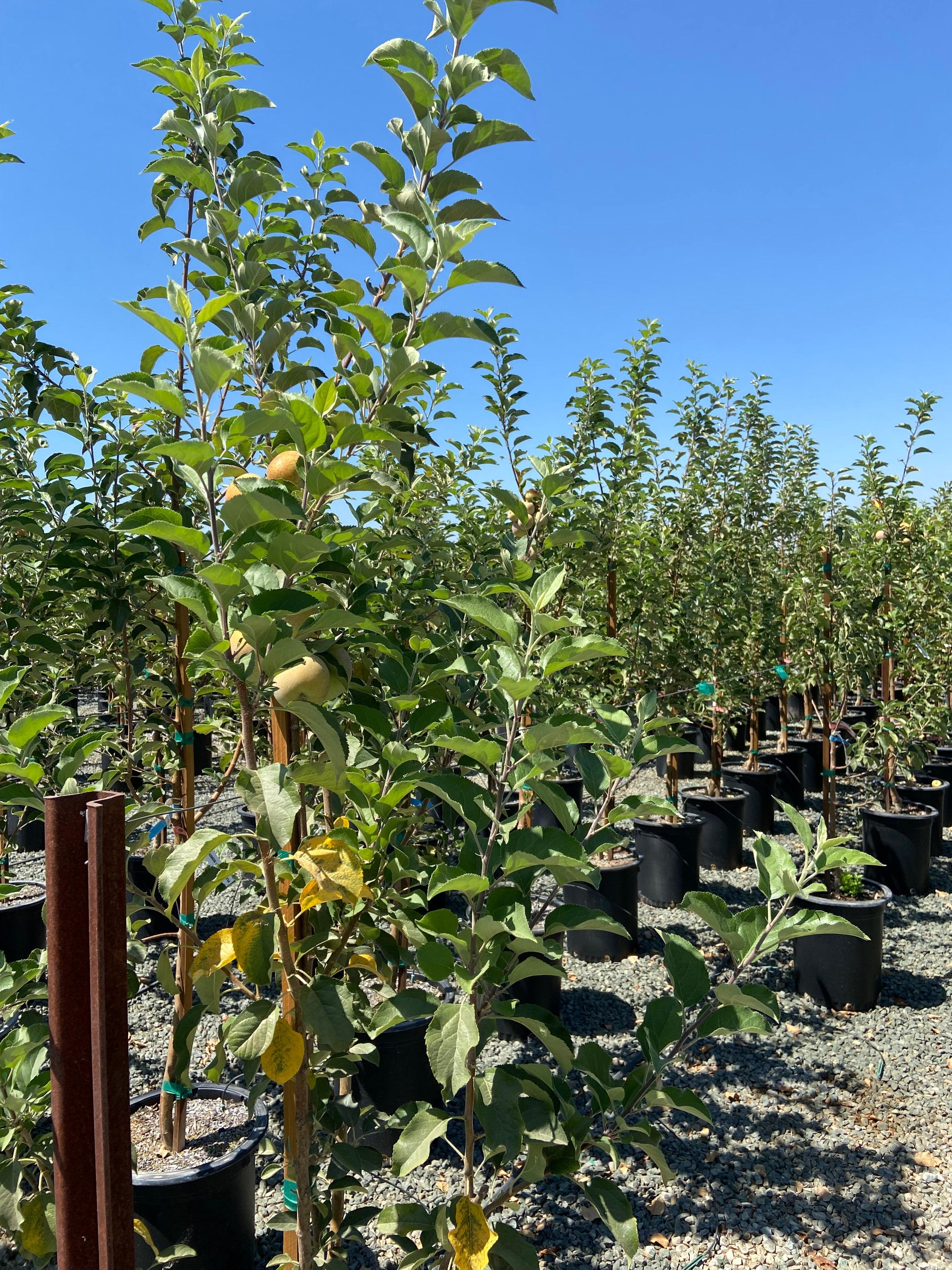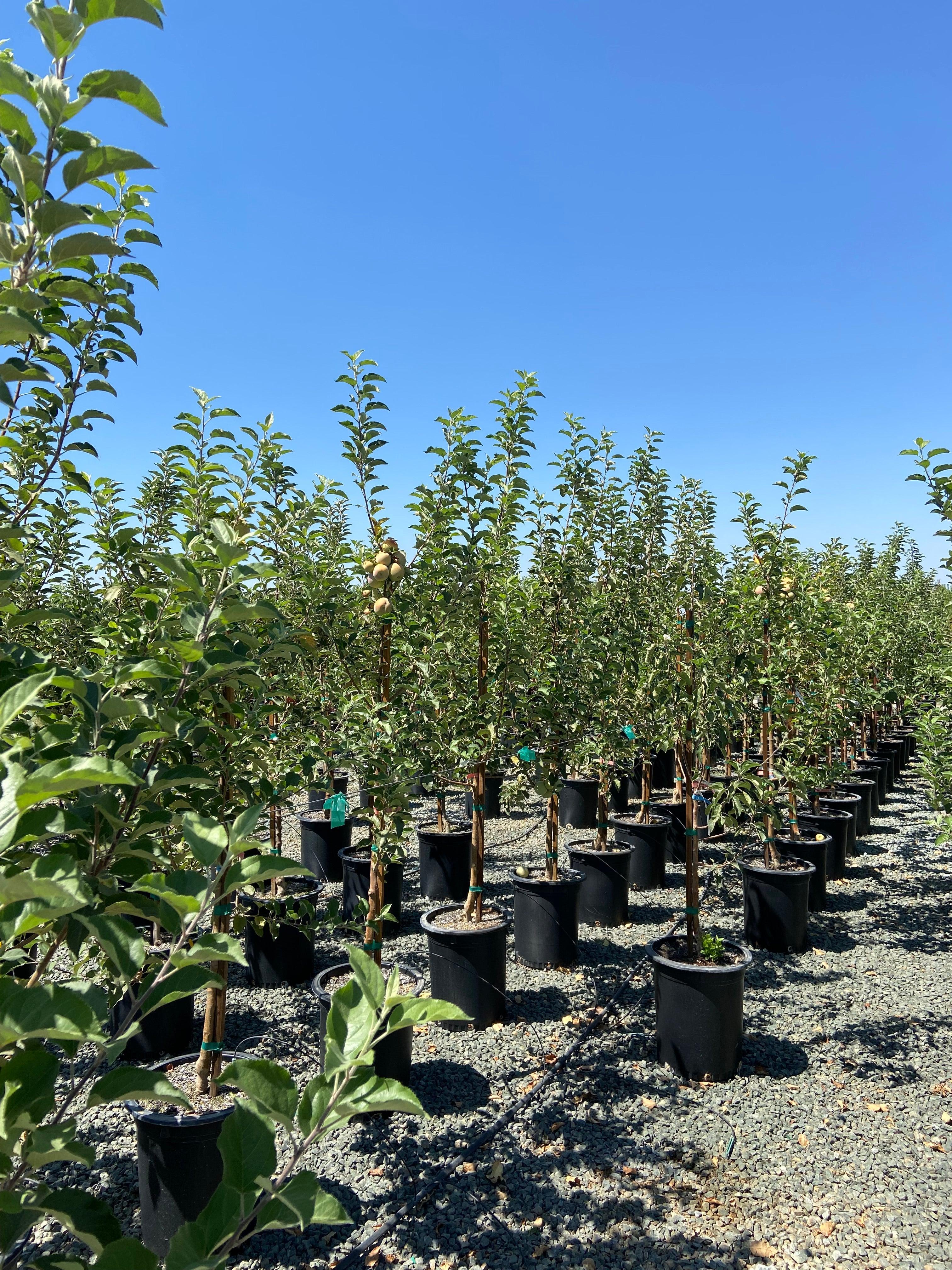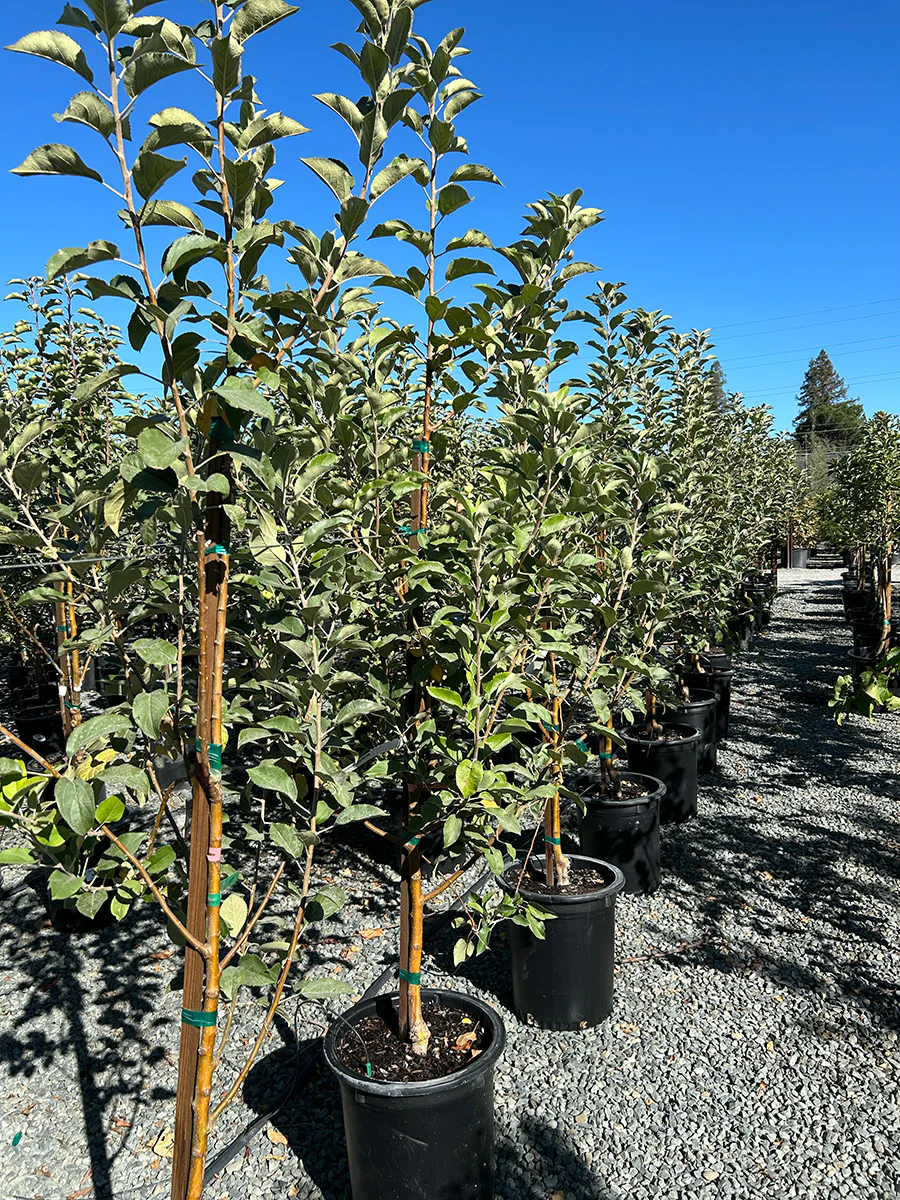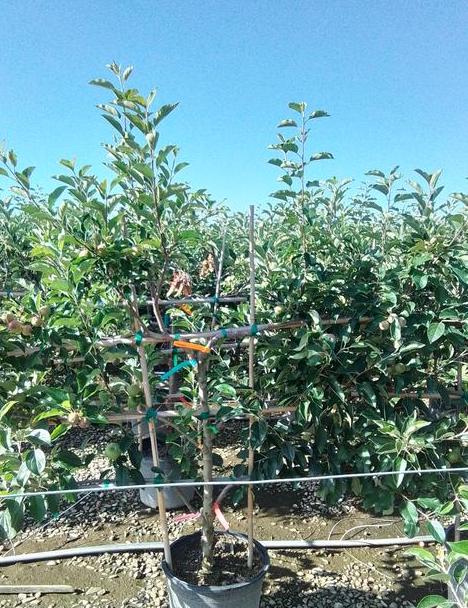
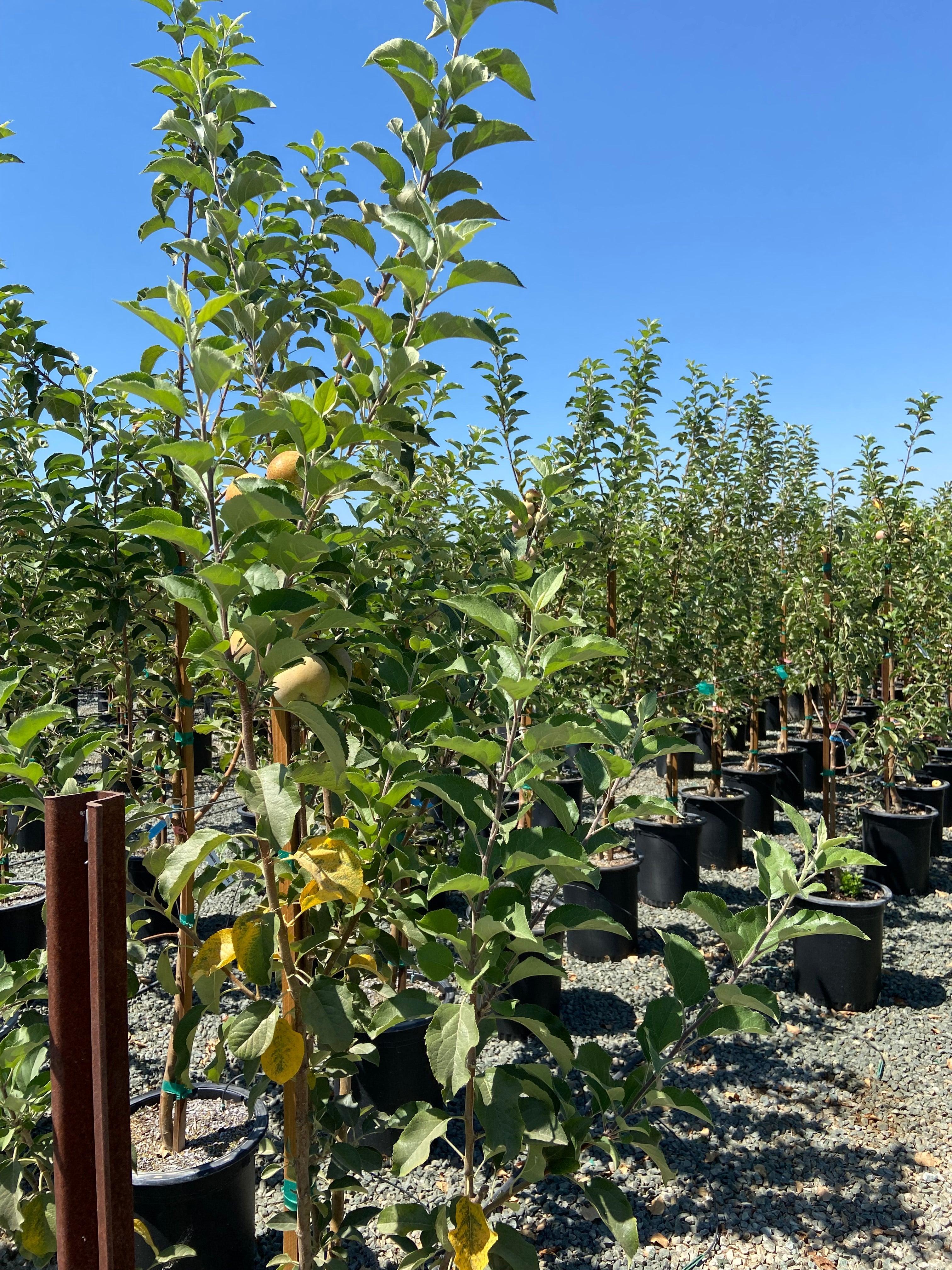
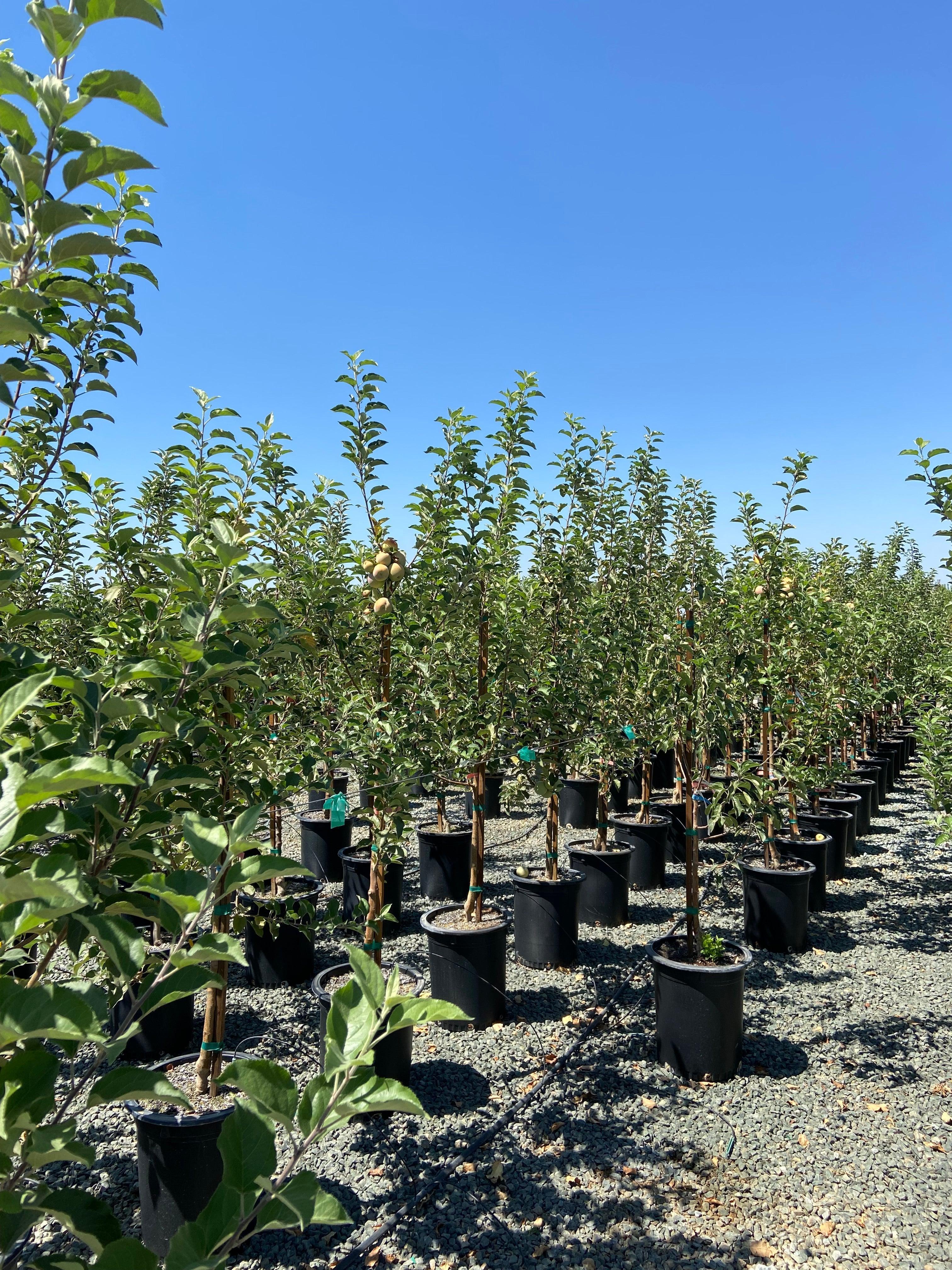
Honeycrisp Apple Tree
Sweet, Crisp Perfection for Your Home Orchard
Grow a premium apple variety known for explosive crunch, juicy texture, and a balanced sweet tart flavor right in your backyard. Honeycrisp apples are celebrated for their explosive crunch and balanced sweet-tart taste, making them one of the most beloved choices for fresh eating, baking, and sharing straight from the tree.
Originally developed by the University of Minnesota, Honeycrisp is a cold hardy fruit tree that performs best where it gets winter chill, sunny days, and cooler nights. For California homeowners, it is an excellent fit in the right microclimates-especially cooler foothill, mountain, and inland areas where apple growing conditions support crisp texture, color, and flavor.
Why You’ll Love It
-
Exceptional Flavor – Honeycrisp delivers the kind of sweet-tart balance that made it the Minnesota state fruitand a favorite apple for anyone who wants a great tasting apple without the sharp bite of many tart apples or the flat sweetness of some sweet apples.
-
Signature Crunch – The cells in a Honeycrisp apple are larger than those in traditional apples, contributing to its characteristic crispness. That larger cell structure gives Honeycrisp its famous snap, making these some of the most satisfying crisp apples to bite into.
-
Premium Value – Honeycrisp often carries a premium price at grocery stores, on supermarket shelves, and at a local farmer’s market because customers consistently choose it for superior eating quality. For home growers, that means harvesting a high-value fruit from your own trees instead of paying a hefty price tag at the local grocery store.
-
Cold Hardy – Bred for harsh Minnesota winters, Honeycrisp thrives in USDA zones 3–7 and is one of the most popular apple varieties for growers who need reliable cold tolerance without sacrificing flavor.
-
Long Storage – Honeycrisp is considered a good storage apple when handled correctly. Honeycrisp apples can spend up to seven months in common storage at 37ºF (2.7ºC) or over ten months in controlled atmosphere storage at near-freezing conditions, which slows down respiration and prevents further ripening.
Honeycrisp is also a smart choice nutritionally. A single medium-sized Honeycrisp apple contains approximately 95 calories, 3 to 4 grams of fiber, and 10 grams of natural sugars. Honeycrisp apples are rich in dietary fiber, vitamin C, and phenolic antioxidants compared to other varieties, and Honeycrisp apples deliver minor doses of potassium, calcium, and vitamin A to assist muscle and immune performance.
What Makes It Different
Most apple varieties were historically selected for appearance, shipping durability, or how well they stacked in bins. The introduction of Honeycrisp changed that. The introduction of the Honeycrisp apple marked a significant shift in consumer preferences, as it was bred specifically for taste rather than for durability or storage, contrasting with the popular Red Delicious apple of the time.
Honeycrisp Apple is different:
-
Bred for Taste – The Honeycrisp apple was developed in 1983 by David Bedford and Dr. Jim Luby at the University of Minnesota, resulting from a cross between the Keepsake apple and another experimental variety labeled MN1627. It came from Minnesota’s apple breeding program and the university’s apple breeding program at the Horticultural Research Center, where flavor, hardiness, and texture mattered.
-
Revolutionary Texture – Honeycrisp’s larger cells burst cleanly when bitten, giving these honey crisp applestheir standout crunchy texture and juicy texture. If you love Honeycrisp apples because other apples feel terribly mushy, this is the reason Honeycrisp tastes so different from every other apple.
-
Balanced Acidity – Honeycrisp avoids the extremes. It is not as sharp as Granny Smith, not as mild as many Red Delicious apples, and not simply sweet like some dessert apples. Its bright, tangy flavor makes it a perfect apple for people with a sweet tooth who still want refreshing acidity.
The Honeycrisp apple was officially released to the public in 1991 after extensive evaluation and improvement of its hardiness, texture, and flavor by the breeding team at the University of Minnesota. Since then, Honeycrisp has influenced modern breeding, helping create Honeycrisp offspring such as Cosmic Crisp, while also standing apart from varieties like Pink Lady, Jazz apples, Pacific Rose, and Golden Delicious.
How To Succeed With A Honeycrisp Apple
-
Plant Your Tree
Plant your Honeycrisp in spring or during the appropriate dormant-season window for bare root trees. Choose a sunny, well-drained location with room for mature growth, and pair it with a compatible pollinator such as Golden Delicious or another apple that blooms at the same time for proper cross pollination. -
Watch It Grow
With annual pruning, consistent watering, and good spacing from other trees, Honeycrisp develops into a productive backyard fruit tree that pairs beautifully with flowering trees suited to California gardens. Standard Honeycrisp apple trees can reach 20–25 feet tall and wide, with a strong shape that benefits from a central-leader pruning system. -
Harvest Premium Apples
Expect the first meaningful harvest about 3–4 years after planting. When the fruit colors well and the flavor develops, pick carefully-harvesting Honeycrisp apples is labor-intensive due to the need to clip the stems short to prevent damage to neighboring apples, which can slow down the picking process and increase costs for growers.
For best eating quality, enjoy several Honeycrisp apples fresh from the tree, skin on. Honeycrisp apples shine when eaten raw and are considered the ultimate snacking apple. If you love fresh fruit, you can also explore citrus fruit trees for your California yard. For maximum nutritional benefit, it is recommended to eat any apple variety unpeeled, as the skin contains the highest concentration of dietary fiber and beneficial antioxidants. Eating any fresh apple with its skin intact delivers profound dietary benefits.
Honeycrisp also performs well in the kitchen. Honeycrisp apples hold their shape in short-bake desserts and retain sweetness without turning mushy, making them useful for quick crisps, galettes, and simple baked apples alongside citrus like Cara Cara navel oranges for bright, balanced flavor.
Tree Details
-
Scientific name: Malus domestica ‘Honeycrisp’
-
Common names: Honeycrisp, Honey Crisp, Honey Crisp apple
-
Mature size: 20–25 feet tall with an approximately 25-foot spread on standard rootstock
-
Hardiness zones: USDA zones 3–7, making it easy to pair with evergreen privacy trees and fast-growing hedges
-
Best use: Fresh eating, snacking, short-bake desserts, home orchards, and small apple farms, especially for homeowners working with a full-service plant nursery and landscape partner
-
Flavor: Sweet tart, juicy, crisp, lightly tangy
-
Texture: Exceptionally crisp texture with thin skin and large cells
-
Pollination requirements: Requires cross pollination from a compatible apple variety; Golden Delicious is often used, and crabapples or compatible apple varieties can work when bloom times overlap
-
Time to fruit: Typically 3–4 years after planting before meaningful harvest
-
Available sizes: bare root, 1-gallon, and 5-gallon containers, similar to how many Valencia orange trees and other fruit trees are offered for home orchards
Honeycrisp is a premium backyard tree, but it is not the easiest apple to grow everywhere. Honeycrisp apples are particularly challenging to grow in climates that are warmer than their native Minnesota, leading to issues such as poor fruit quality and increased susceptibility to disorders like bitter pit and soft scald. The Honeycrisp apple’s thin skin makes it prone to sunburn and tissue collapse, which can affect the fruit’s appearance and quality, complicating the growing process. In hotter, drier regions, you may instead lean on tough ornamentals like the California pepper tree for warm landscapes.
Storage also requires care. Honeycrisp can perform well in refrigerated storage, but the longer Honeycrisp apples are stored, the higher the probability of developing disorders, which can lead to poor taste and texture for consumers. Despite being considered a good storage apple, Honeycrisp apples can become soft and mealy in as little as six months, indicating that storage quality can vary significantly. Proper harvest timing, careful handling, and cool storage help protect flavor, shelf life, and texture.
Nutritionally, Honeycrisp is more than a great apple to eat. Honeycrisp apples contain high amounts of phenolic compounds that lower cardiovascular disease risk. Phloridzin, a specific antioxidant found in Honeycrisp apples, helps block glucose absorption in the gut, aiding in blood sugar level stabilization. Honeycrisp apples are an excellent source of dietary fiber, vitamin C, and specific phenolic antioxidants that support heart health and blood sugar regulation.
Who It’s For
Ideal for:
-
California homeowners who want premium, homegrown apples with better flavor than many apples from grocery stores, and who may also be shopping for versatile landscape trees like the California Pepper Tree for sale
-
Orchard enthusiasts looking for a cold hardy, high-value variety with proven demand from the US Apple Association, regional apple association groups, and apple growers nationwide
-
Families who want fresh, crisp apples for snacks, lunches, baking, and simple desserts
-
Anyone in zones 3–7 who wants to add a beloved apple variety to a fruit tree collection, complementing native shrubs such as Toyon (Heteromeles arbutifolia)
-
Backyard growers in cooler California microclimates, including foothill and mountain areas where nights help improve color and sugar development, often alongside evergreen structure plants like Cheesewood (Pittosporum) for year-round form
Honeycrisp is especially rewarding if you want the best apple for fresh eating and are willing to give your tree the attention it deserves. It is a strong choice for growers who compare all the apples at a local orchard and keep coming back to Honeycrisp for that unmistakable bite.
It may not be ideal for very warm climates, low-chill regions, or sites where summer nights stay hot. In those conditions, other varieties may perform better. But in the right location, Honeycrisp can produce grown apples with the crisp texture and tangy flavor that made this variety famous from Minnesota to Washington State, British Columbia, Nova Scotia, West Virginia, and even those Hudson Valley apple growers who value premium fresh-market fruit.
Frequently Asked Questions
How long until my tree produces apples?
Honeycrisp usually begins producing a meaningful crop 3–4 years after planting. Younger trees may flower earlier, but stronger harvests come once the tree has developed enough structure to support quality fruit.
Do I need multiple trees for pollination?
Yes. Honeycrisp needs cross pollination from a compatible apple variety with overlapping bloom time. Golden Delicious is a reliable partner, and many crabapples or other apple varieties can also work if they bloom at the same time.
Will it grow well in California?
Yes, in the right California locations. Honeycrisp performs best where it receives enough winter chill and cooler nights, such as foothill, mountain, or cooler inland areas. In warmer climates, fruit quality may suffer, and the tree may be more prone to bitter pit, soft scald, sunburn, and uneven performance.
What’s the difference between container sizes?
Bare root Honeycrisp trees are dormant, lightweight, and ideal for seasonal planting. A 1-gallon tree is easy to handle and establishes quickly with attentive watering. A 5-gallon tree is larger at planting and gives you a more developed starter tree for your home orchard.
Why are Honeycrisp apples more expensive than other apples?
Honeycrisp often sells at a premium price because it is harder to grow, harvest, and store than many other apples. The thin skin bruises easily, stems often need clipping, and storage disorders can reduce marketable fruit. That extra care is one reason Honeycrisp can cost more at a farmers market, local farm stand, or grocery store.
Are Honeycrisp apples healthy?
Yes. Honeycrisp apples provide fiber, vitamin C, phenolic antioxidants, and small amounts of potassium, calcium, and vitamin A. Eat apples with the skin intact whenever possible to get the highest concentration of dietary fiber and beneficial antioxidants.
Ready to Plant?
Stop settling for ordinary apples when you can grow a premium Honeycrisp tree at home. Choose Honeycrisp Applefor crisp texture, juicy sweetness, balanced acidity, and the proven performance that made it one of the most popular apple varieties in America.
Yardwork helps California customers choose fruit trees suited to real local conditions-not just a catalog zone number. Our team can help you evaluate chill, sun exposure, soil, spacing, pollination partners, and whether Honeycrisp is the right fit for your yard or if another apple variety would be a better match.
Ask about Yardwork consultation services and soil testing to give your Honeycrisp the strongest start. California delivery options and plant guarantee details are available at checkout. Secure checkout. California delivery. Yardwork support from planting through harvest.
Product Information
Product Information
Shipping & Returns
Shipping & Returns
Description
Sweet, Crisp Perfection for Your Home Orchard
Grow a premium apple variety known for explosive crunch, juicy texture, and a balanced sweet tart flavor right in your backyard. Honeycrisp apples are celebrated for their explosive crunch and balanced sweet-tart taste, making them one of the most beloved choices for fresh eating, baking, and sharing straight from the tree.
Originally developed by the University of Minnesota, Honeycrisp is a cold hardy fruit tree that performs best where it gets winter chill, sunny days, and cooler nights. For California homeowners, it is an excellent fit in the right microclimates-especially cooler foothill, mountain, and inland areas where apple growing conditions support crisp texture, color, and flavor.
Why You’ll Love It
-
Exceptional Flavor – Honeycrisp delivers the kind of sweet-tart balance that made it the Minnesota state fruitand a favorite apple for anyone who wants a great tasting apple without the sharp bite of many tart apples or the flat sweetness of some sweet apples.
-
Signature Crunch – The cells in a Honeycrisp apple are larger than those in traditional apples, contributing to its characteristic crispness. That larger cell structure gives Honeycrisp its famous snap, making these some of the most satisfying crisp apples to bite into.
-
Premium Value – Honeycrisp often carries a premium price at grocery stores, on supermarket shelves, and at a local farmer’s market because customers consistently choose it for superior eating quality. For home growers, that means harvesting a high-value fruit from your own trees instead of paying a hefty price tag at the local grocery store.
-
Cold Hardy – Bred for harsh Minnesota winters, Honeycrisp thrives in USDA zones 3–7 and is one of the most popular apple varieties for growers who need reliable cold tolerance without sacrificing flavor.
-
Long Storage – Honeycrisp is considered a good storage apple when handled correctly. Honeycrisp apples can spend up to seven months in common storage at 37ºF (2.7ºC) or over ten months in controlled atmosphere storage at near-freezing conditions, which slows down respiration and prevents further ripening.
Honeycrisp is also a smart choice nutritionally. A single medium-sized Honeycrisp apple contains approximately 95 calories, 3 to 4 grams of fiber, and 10 grams of natural sugars. Honeycrisp apples are rich in dietary fiber, vitamin C, and phenolic antioxidants compared to other varieties, and Honeycrisp apples deliver minor doses of potassium, calcium, and vitamin A to assist muscle and immune performance.
What Makes It Different
Most apple varieties were historically selected for appearance, shipping durability, or how well they stacked in bins. The introduction of Honeycrisp changed that. The introduction of the Honeycrisp apple marked a significant shift in consumer preferences, as it was bred specifically for taste rather than for durability or storage, contrasting with the popular Red Delicious apple of the time.
Honeycrisp Apple is different:
-
Bred for Taste – The Honeycrisp apple was developed in 1983 by David Bedford and Dr. Jim Luby at the University of Minnesota, resulting from a cross between the Keepsake apple and another experimental variety labeled MN1627. It came from Minnesota’s apple breeding program and the university’s apple breeding program at the Horticultural Research Center, where flavor, hardiness, and texture mattered.
-
Revolutionary Texture – Honeycrisp’s larger cells burst cleanly when bitten, giving these honey crisp applestheir standout crunchy texture and juicy texture. If you love Honeycrisp apples because other apples feel terribly mushy, this is the reason Honeycrisp tastes so different from every other apple.
-
Balanced Acidity – Honeycrisp avoids the extremes. It is not as sharp as Granny Smith, not as mild as many Red Delicious apples, and not simply sweet like some dessert apples. Its bright, tangy flavor makes it a perfect apple for people with a sweet tooth who still want refreshing acidity.
The Honeycrisp apple was officially released to the public in 1991 after extensive evaluation and improvement of its hardiness, texture, and flavor by the breeding team at the University of Minnesota. Since then, Honeycrisp has influenced modern breeding, helping create Honeycrisp offspring such as Cosmic Crisp, while also standing apart from varieties like Pink Lady, Jazz apples, Pacific Rose, and Golden Delicious.
How To Succeed With A Honeycrisp Apple
-
Plant Your Tree
Plant your Honeycrisp in spring or during the appropriate dormant-season window for bare root trees. Choose a sunny, well-drained location with room for mature growth, and pair it with a compatible pollinator such as Golden Delicious or another apple that blooms at the same time for proper cross pollination. -
Watch It Grow
With annual pruning, consistent watering, and good spacing from other trees, Honeycrisp develops into a productive backyard fruit tree that pairs beautifully with flowering trees suited to California gardens. Standard Honeycrisp apple trees can reach 20–25 feet tall and wide, with a strong shape that benefits from a central-leader pruning system. -
Harvest Premium Apples
Expect the first meaningful harvest about 3–4 years after planting. When the fruit colors well and the flavor develops, pick carefully-harvesting Honeycrisp apples is labor-intensive due to the need to clip the stems short to prevent damage to neighboring apples, which can slow down the picking process and increase costs for growers.
For best eating quality, enjoy several Honeycrisp apples fresh from the tree, skin on. Honeycrisp apples shine when eaten raw and are considered the ultimate snacking apple. If you love fresh fruit, you can also explore citrus fruit trees for your California yard. For maximum nutritional benefit, it is recommended to eat any apple variety unpeeled, as the skin contains the highest concentration of dietary fiber and beneficial antioxidants. Eating any fresh apple with its skin intact delivers profound dietary benefits.
Honeycrisp also performs well in the kitchen. Honeycrisp apples hold their shape in short-bake desserts and retain sweetness without turning mushy, making them useful for quick crisps, galettes, and simple baked apples alongside citrus like Cara Cara navel oranges for bright, balanced flavor.
Tree Details
-
Scientific name: Malus domestica ‘Honeycrisp’
-
Common names: Honeycrisp, Honey Crisp, Honey Crisp apple
-
Mature size: 20–25 feet tall with an approximately 25-foot spread on standard rootstock
-
Hardiness zones: USDA zones 3–7, making it easy to pair with evergreen privacy trees and fast-growing hedges
-
Best use: Fresh eating, snacking, short-bake desserts, home orchards, and small apple farms, especially for homeowners working with a full-service plant nursery and landscape partner
-
Flavor: Sweet tart, juicy, crisp, lightly tangy
-
Texture: Exceptionally crisp texture with thin skin and large cells
-
Pollination requirements: Requires cross pollination from a compatible apple variety; Golden Delicious is often used, and crabapples or compatible apple varieties can work when bloom times overlap
-
Time to fruit: Typically 3–4 years after planting before meaningful harvest
-
Available sizes: bare root, 1-gallon, and 5-gallon containers, similar to how many Valencia orange trees and other fruit trees are offered for home orchards
Honeycrisp is a premium backyard tree, but it is not the easiest apple to grow everywhere. Honeycrisp apples are particularly challenging to grow in climates that are warmer than their native Minnesota, leading to issues such as poor fruit quality and increased susceptibility to disorders like bitter pit and soft scald. The Honeycrisp apple’s thin skin makes it prone to sunburn and tissue collapse, which can affect the fruit’s appearance and quality, complicating the growing process. In hotter, drier regions, you may instead lean on tough ornamentals like the California pepper tree for warm landscapes.
Storage also requires care. Honeycrisp can perform well in refrigerated storage, but the longer Honeycrisp apples are stored, the higher the probability of developing disorders, which can lead to poor taste and texture for consumers. Despite being considered a good storage apple, Honeycrisp apples can become soft and mealy in as little as six months, indicating that storage quality can vary significantly. Proper harvest timing, careful handling, and cool storage help protect flavor, shelf life, and texture.
Nutritionally, Honeycrisp is more than a great apple to eat. Honeycrisp apples contain high amounts of phenolic compounds that lower cardiovascular disease risk. Phloridzin, a specific antioxidant found in Honeycrisp apples, helps block glucose absorption in the gut, aiding in blood sugar level stabilization. Honeycrisp apples are an excellent source of dietary fiber, vitamin C, and specific phenolic antioxidants that support heart health and blood sugar regulation.
Who It’s For
Ideal for:
-
California homeowners who want premium, homegrown apples with better flavor than many apples from grocery stores, and who may also be shopping for versatile landscape trees like the California Pepper Tree for sale
-
Orchard enthusiasts looking for a cold hardy, high-value variety with proven demand from the US Apple Association, regional apple association groups, and apple growers nationwide
-
Families who want fresh, crisp apples for snacks, lunches, baking, and simple desserts
-
Anyone in zones 3–7 who wants to add a beloved apple variety to a fruit tree collection, complementing native shrubs such as Toyon (Heteromeles arbutifolia)
-
Backyard growers in cooler California microclimates, including foothill and mountain areas where nights help improve color and sugar development, often alongside evergreen structure plants like Cheesewood (Pittosporum) for year-round form
Honeycrisp is especially rewarding if you want the best apple for fresh eating and are willing to give your tree the attention it deserves. It is a strong choice for growers who compare all the apples at a local orchard and keep coming back to Honeycrisp for that unmistakable bite.
It may not be ideal for very warm climates, low-chill regions, or sites where summer nights stay hot. In those conditions, other varieties may perform better. But in the right location, Honeycrisp can produce grown apples with the crisp texture and tangy flavor that made this variety famous from Minnesota to Washington State, British Columbia, Nova Scotia, West Virginia, and even those Hudson Valley apple growers who value premium fresh-market fruit.
Frequently Asked Questions
How long until my tree produces apples?
Honeycrisp usually begins producing a meaningful crop 3–4 years after planting. Younger trees may flower earlier, but stronger harvests come once the tree has developed enough structure to support quality fruit.
Do I need multiple trees for pollination?
Yes. Honeycrisp needs cross pollination from a compatible apple variety with overlapping bloom time. Golden Delicious is a reliable partner, and many crabapples or other apple varieties can also work if they bloom at the same time.
Will it grow well in California?
Yes, in the right California locations. Honeycrisp performs best where it receives enough winter chill and cooler nights, such as foothill, mountain, or cooler inland areas. In warmer climates, fruit quality may suffer, and the tree may be more prone to bitter pit, soft scald, sunburn, and uneven performance.
What’s the difference between container sizes?
Bare root Honeycrisp trees are dormant, lightweight, and ideal for seasonal planting. A 1-gallon tree is easy to handle and establishes quickly with attentive watering. A 5-gallon tree is larger at planting and gives you a more developed starter tree for your home orchard.
Why are Honeycrisp apples more expensive than other apples?
Honeycrisp often sells at a premium price because it is harder to grow, harvest, and store than many other apples. The thin skin bruises easily, stems often need clipping, and storage disorders can reduce marketable fruit. That extra care is one reason Honeycrisp can cost more at a farmers market, local farm stand, or grocery store.
Are Honeycrisp apples healthy?
Yes. Honeycrisp apples provide fiber, vitamin C, phenolic antioxidants, and small amounts of potassium, calcium, and vitamin A. Eat apples with the skin intact whenever possible to get the highest concentration of dietary fiber and beneficial antioxidants.
Ready to Plant?
Stop settling for ordinary apples when you can grow a premium Honeycrisp tree at home. Choose Honeycrisp Applefor crisp texture, juicy sweetness, balanced acidity, and the proven performance that made it one of the most popular apple varieties in America.
Yardwork helps California customers choose fruit trees suited to real local conditions-not just a catalog zone number. Our team can help you evaluate chill, sun exposure, soil, spacing, pollination partners, and whether Honeycrisp is the right fit for your yard or if another apple variety would be a better match.
Ask about Yardwork consultation services and soil testing to give your Honeycrisp the strongest start. California delivery options and plant guarantee details are available at checkout. Secure checkout. California delivery. Yardwork support from planting through harvest.