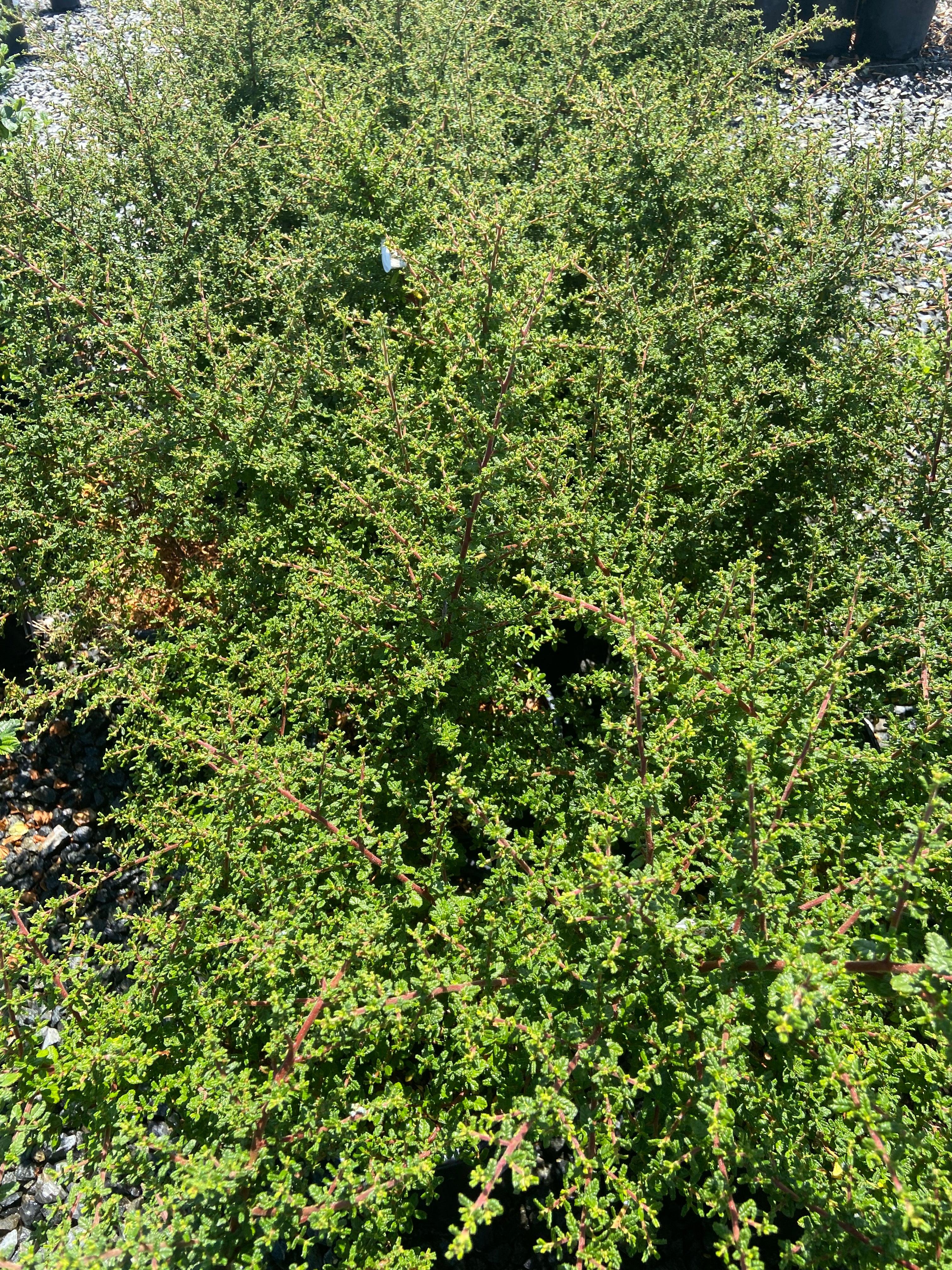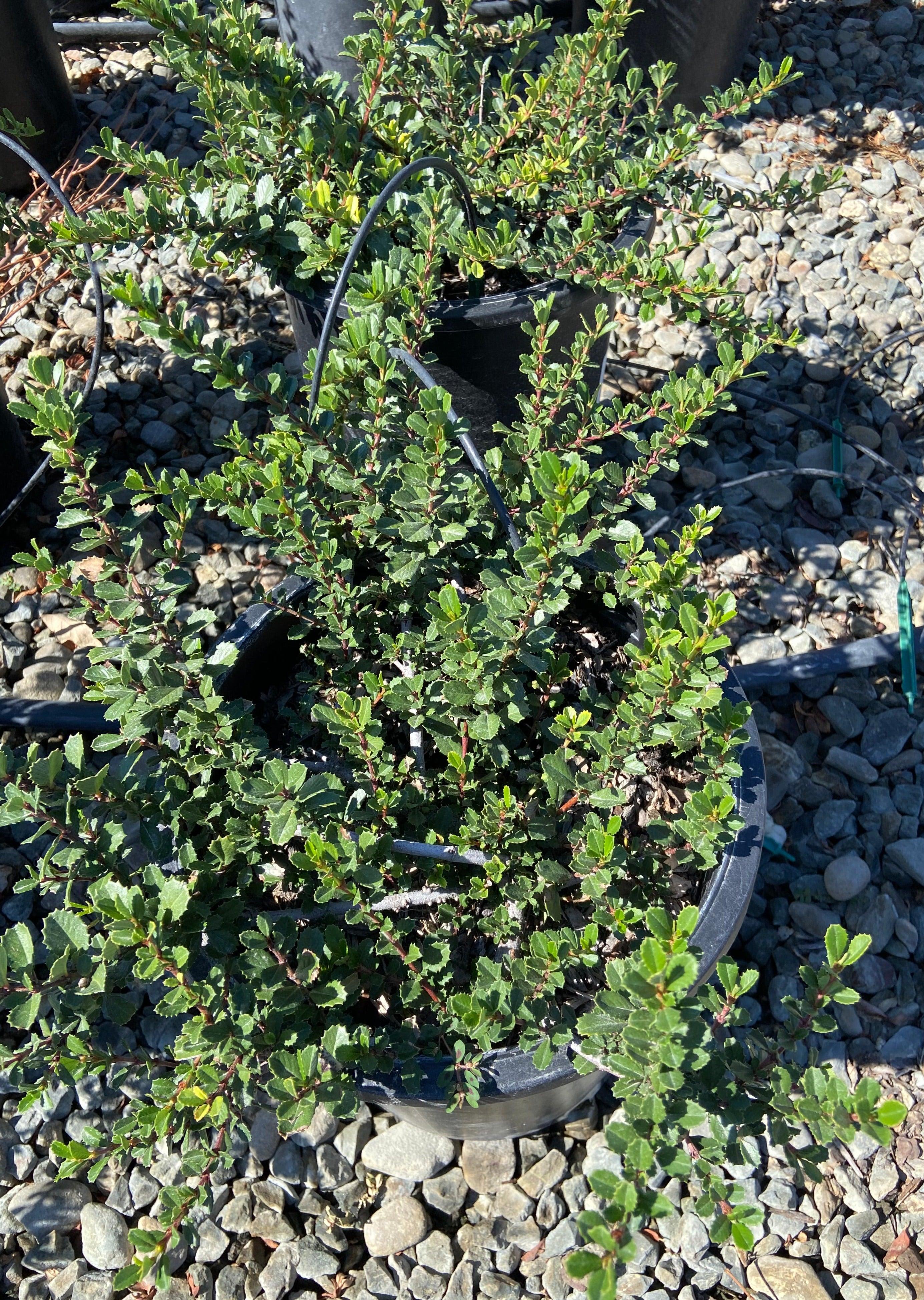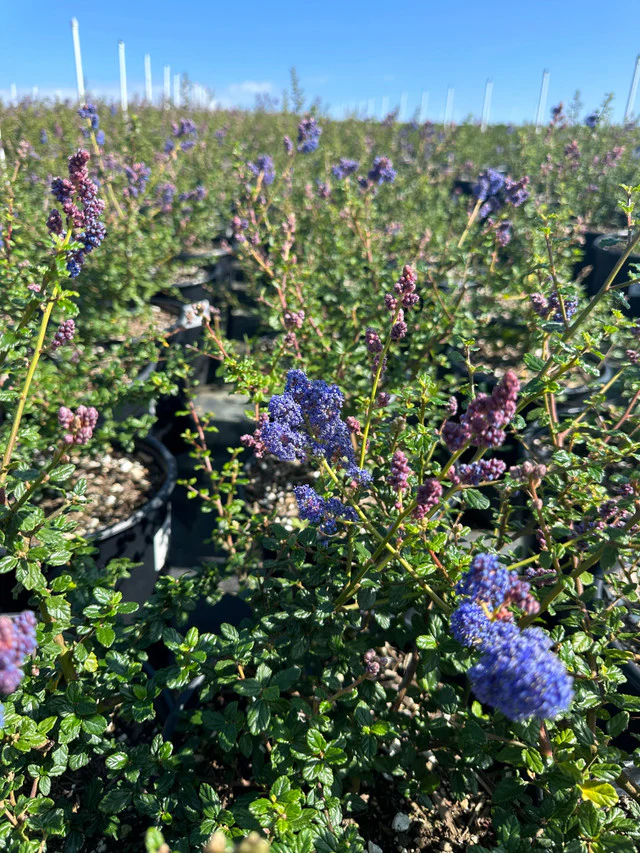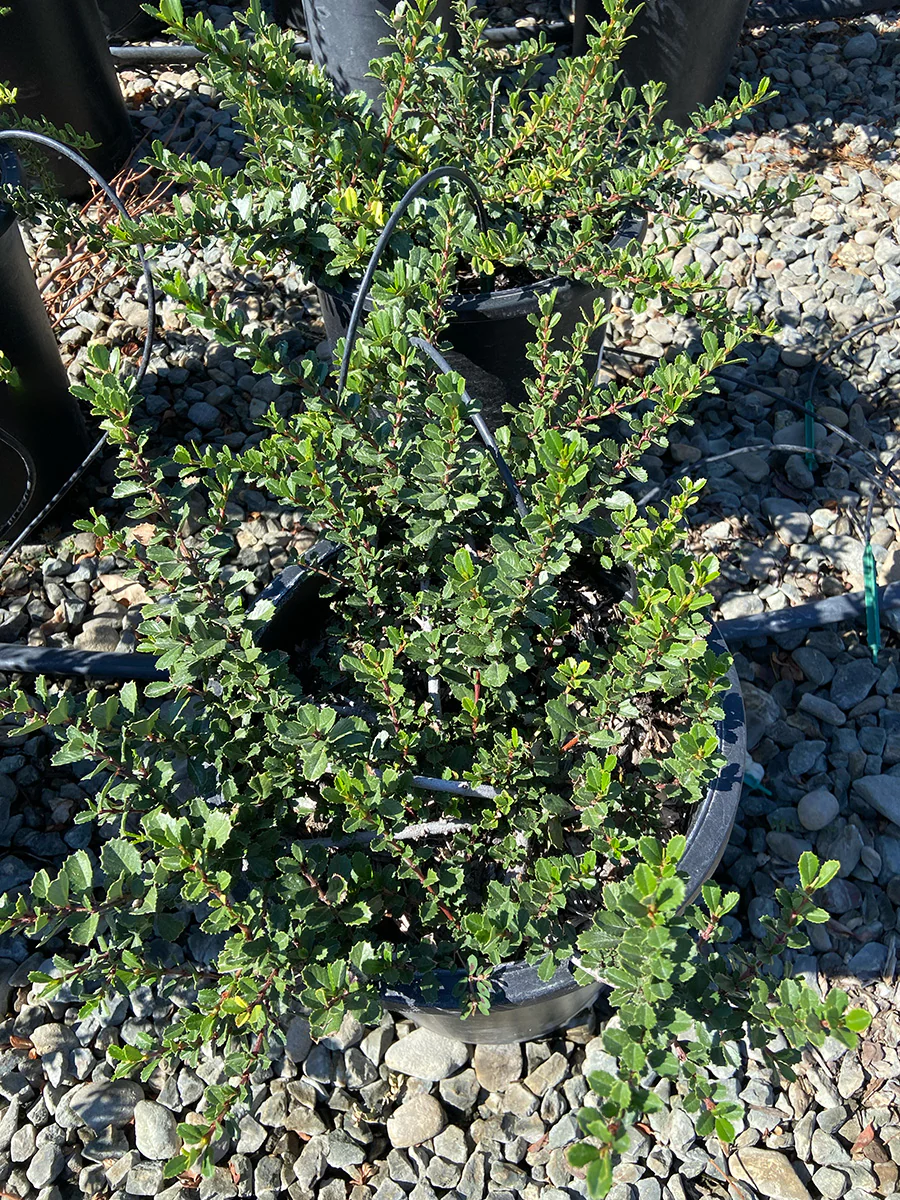
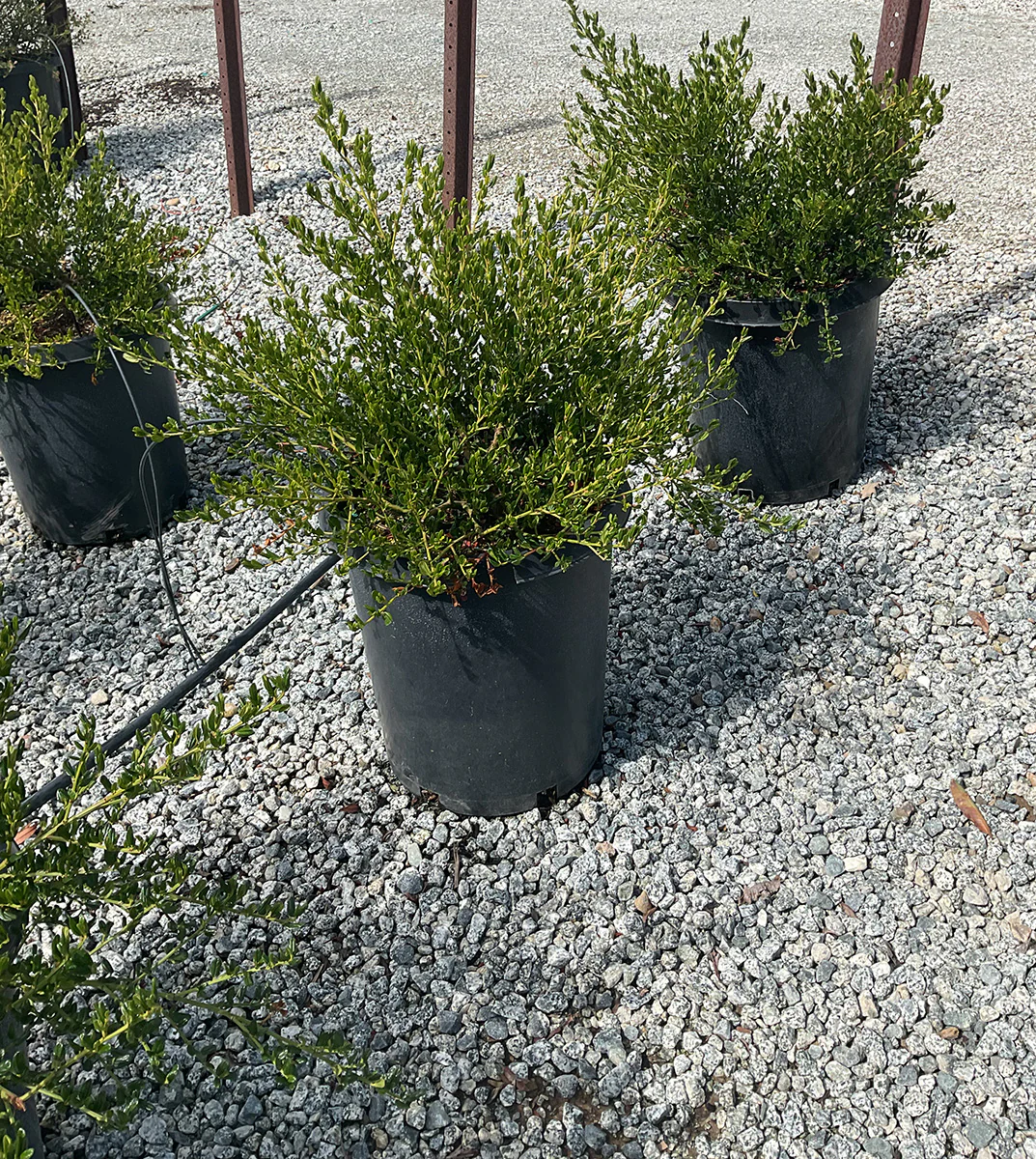
Ceanothus Skylark
Transform Your Garden with Vibrant Blue Blooms and Year-Round Beauty
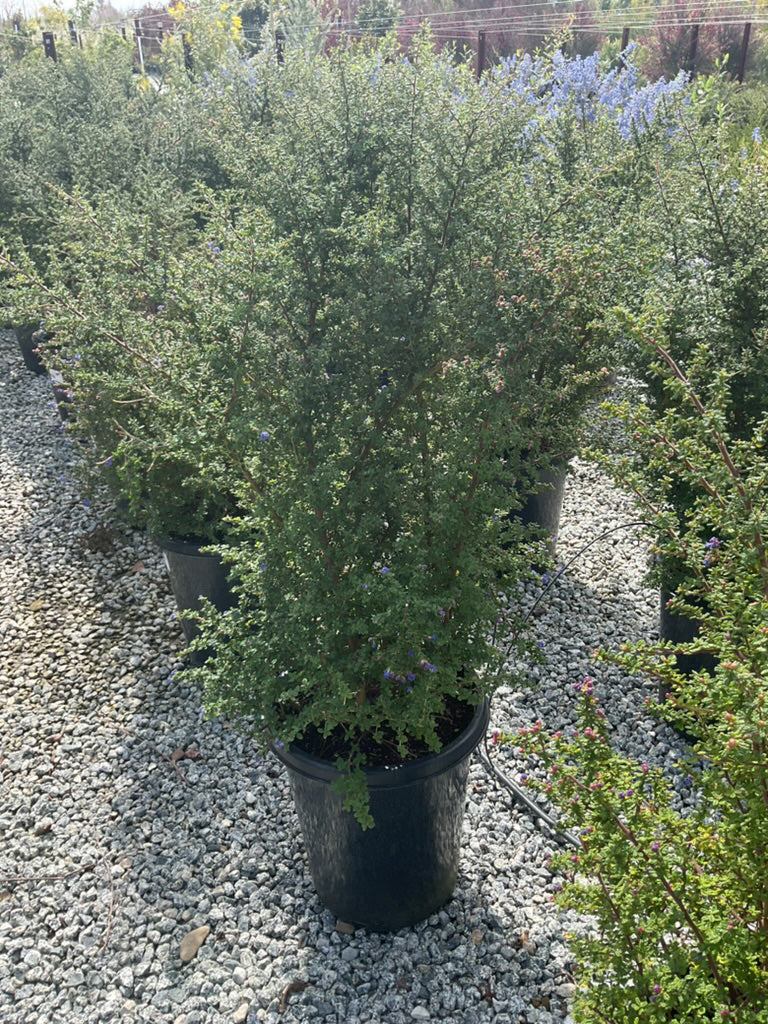
Ceanothus Skylark gives you a showy, water-wise evergreen shrub with fragrant blue flowers in late spring and glossy foliage that holds its shape through the year.
Also known as ceanothus thyrsiflorus skylark, California lilac, or blue mountain lilac, this plant is designed for gardens that need beauty without constant summer irrigation. Once established, it can thrive with little or no water in many California climates, creating a compact, dome-shaped mound that brings spring drama, year-round structure, and real wildlife value to your landscape.
Why You’ll Love Ceanothus Skylark
-
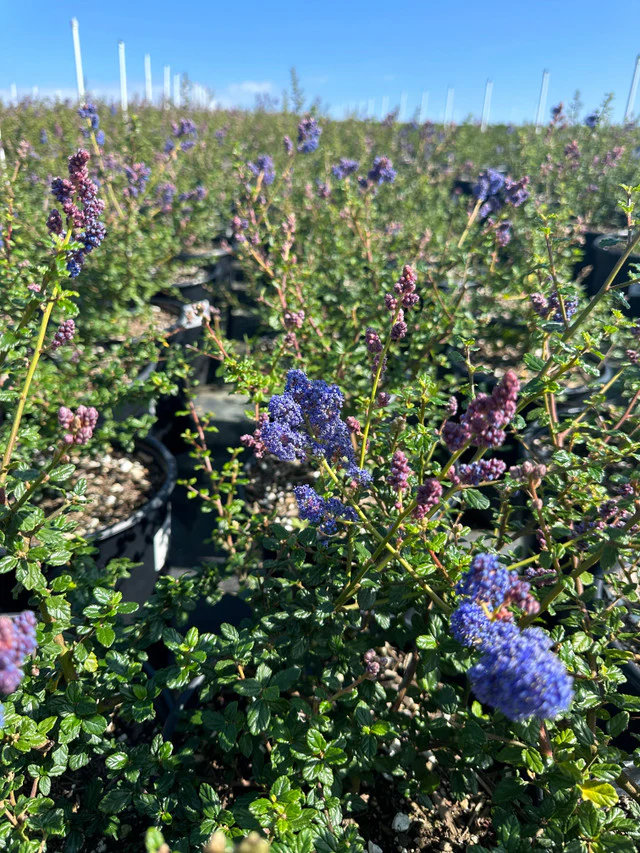
Rich blue spring blooms – Ceanothus ‘Skylark’ produces dense clusters of small, blue flowers that attract a variety of pollinators, including bees and butterflies, which are essential for maintaining healthy ecosystems.
-
Drought tolerant once established – Ceanothus ‘Skylark’ is drought tolerant once established, making it a sustainable choice for gardens in arid regions, helping to conserve water resources.
-
Compact, useful size – Its compact growth habit works beautifully in small spaces, borders, informal hedge plantings, and low-maintenance landscape designs, and pairs well with other dense evergreens like Brush Cherry hedges for privacy and structure.
-
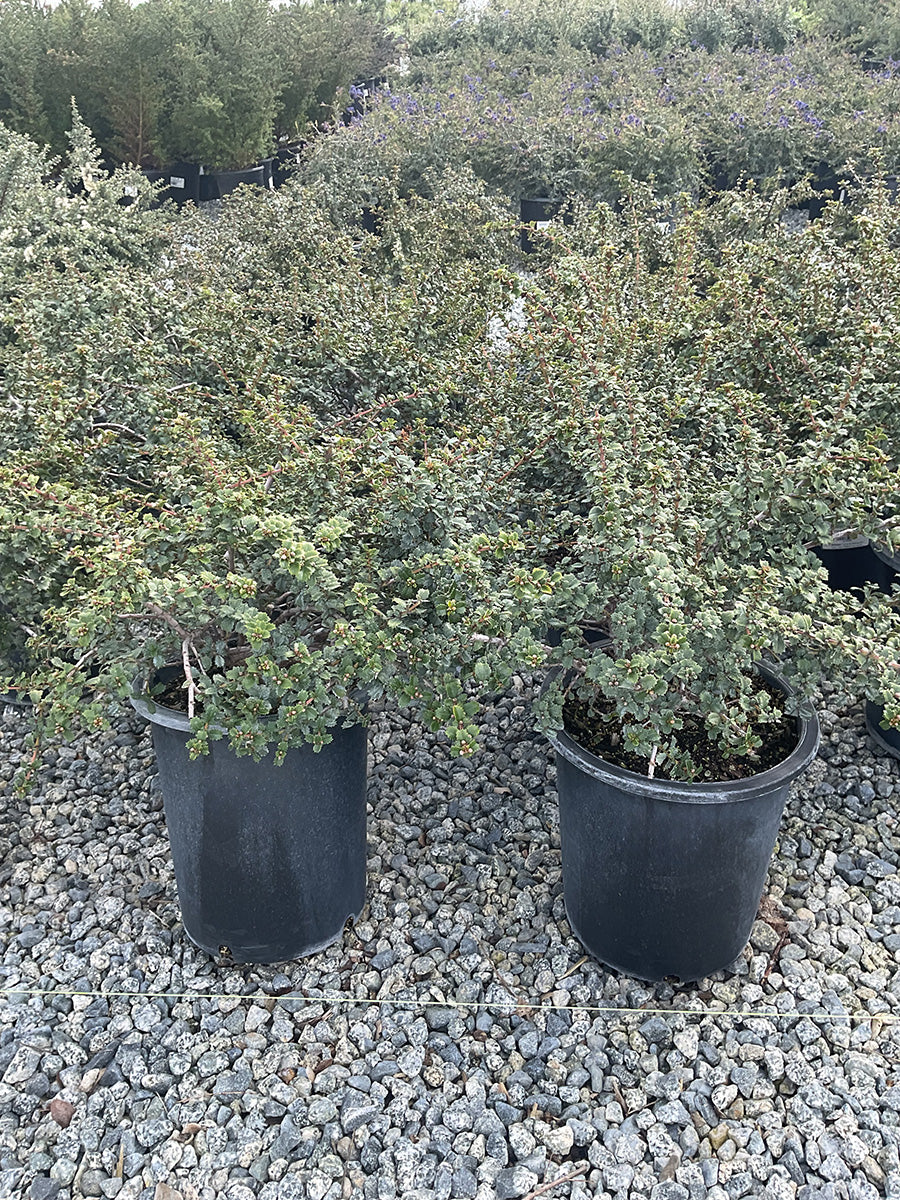
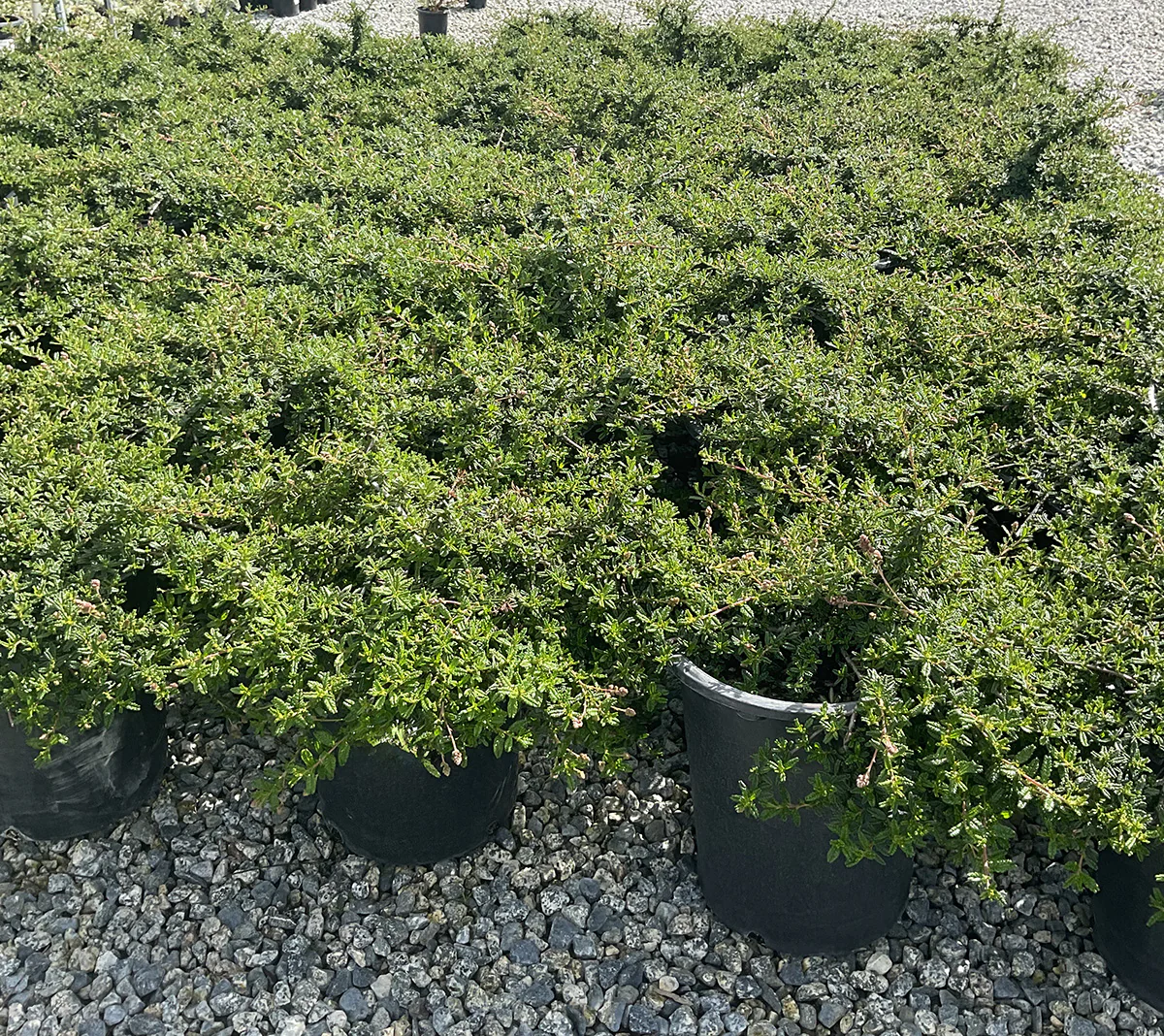
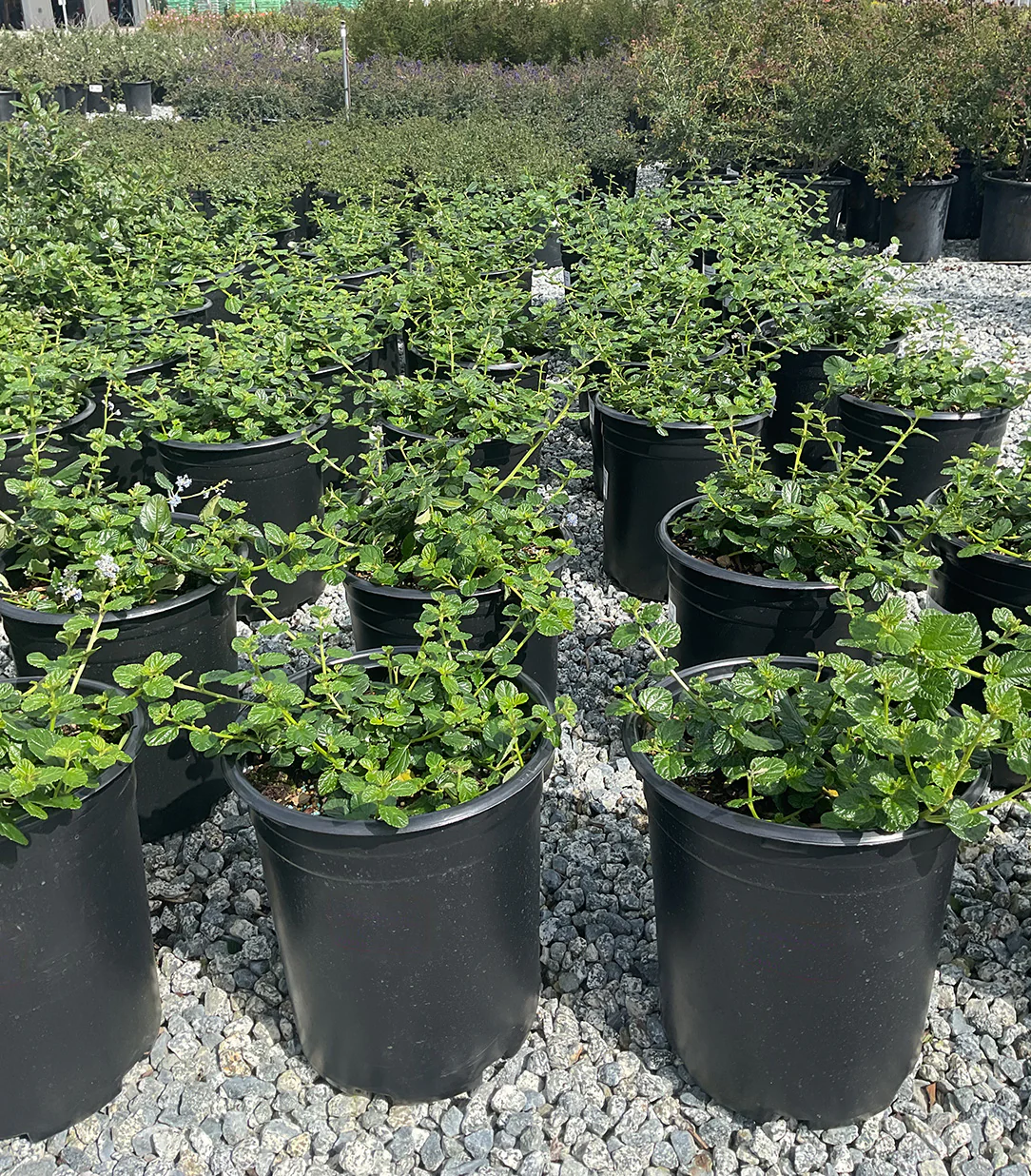
Evergreen structure all year – The plant reaches 3–6 feet tall and 5–7 feet wide at maturity and features finely serrated, glossy, dark green leaves that remain year-round.
-
Native wildlife support – Wildlife value includes attracting hummingbirds, native bees, and butterflies, while providing seeds and cover for local birds.
Ceanothus Skylark is especially valuable for California homeowners who want blue flowers, low water use, and a shrub that performs in real garden conditions. It thrives in USDA Hardiness Zones 7–10 and is highly attractive to bees, butterflies, and beneficial pollinators.
What Makes Ceanothus Skylark Different
Most flowering shrubs ask for frequent water, fertilizer, pest care, or pruning just to produce a short bloom show.
Ceanothus Skylark has:
-
Later, deeper flower display – The shrub is prolific, producing fragrant, deep blue-violet flower spikes later in spring than other cultivars, often reblooming in autumn.
-
Better climate flexibility – Ceanothus thyrsiflorus ‘Skylark’ is highly tolerant of coastal conditions, including salt spray, and can thrive in Mediterranean-style landscapes.
-
Stronger soil tolerance – Ceanothus thyrsiflorus ‘Skylark’ requires well-drained sandy or loamy soils but tolerates compacted clay soils better than other Ceanothus varieties.
-
Excellent slope performance – The dense, fibrous root system of ‘Skylark’ helps stabilize slopes and prevents soil erosion while suppressing weed growth.
-
Natural fertility support – The species exhibits a natural nitrogen fixation ability, converting atmospheric nitrogen into usable nutrients, which eliminates the need for chemical fertilizers.
Compared with many roses, hydrangeas, and thirsty ornamental shrubs, Skylark offers longer seasonal value with less input. Compared with other ceanothus species and thyrsiflorus var selections, it offers a great balance of compact size, heat tolerance, coastal resilience, and strong blue blooms.
It also creates habitat. The plant serves as a larval food source for several butterfly species, including the spring azure and California tortoiseshell, thus supporting local wildlife populations.
How to Succeed with Ceanothus Skylark
-
Choose the right location Plant Ceanothus Skylark in full sun to part shade, with best flowering occurring in full sun. It will tolerate some shade, especially inland where afternoon sun can be intense, but too much shade can reduce blooms and create looser growth.
-
Plant for drainage first Use well-draining soil and avoid sites where winter water collects around the crown. Ceanothus ‘Skylark’ thrives in well-draining soils and prefers full sun to part shade, with best flowering occurring in full sun. Dry soil, sandy soil, loamy soil, rocky soil, and improved clay can all work when drainage is reliable.
-
Water to establish, then reduce Water regularly after planting while roots settle in. This evergreen shrub is drought tolerant once established and does not require summer irrigation except in hotter climates. In extended inland heat, occasional deep watering helps keep foliage glossy and dark green.
-
Prune lightly after bloom Pruning is best done immediately after the flowering window to maintain shape and density, while avoiding cutting into thick, old woody stems to prevent dieback. Light trimming keeps the branches dense and attractive without sacrificing next year’s flowers.
Once established, Skylark asks for very little. It does not need heavy fertilizer, and its natural nitrogen-fixing ability helps support continuing growth in lean soils.
Plant Specifications
-
Botanical name: Ceanothus thyrsiflorus ‘Skylark’
-
Common names: Skylark California lilac, blue mountain lilac
-
Plant type: Evergreen shrub
-
Mature size: Often maintained at 3–4 feet tall and 4–6 feet wide in borders; the plant reaches 3–6 feet tall and 5–7 feet wide at maturity.
-
Maximum garden spread: Ceanothus ‘Skylark’ can reach a height of up to 5 feet and spread to fill an area of about 7 feet, forming a compact, dome-shaped mound.
-
Growth habit: Ceanothus ‘Skylark’ features a dome-shaped to mound-forming growth, making it an attractive option for landscaping in both residential and commercial settings.
-
Hardiness zones: USDA Zones 7–10
-
Bloom time: Late spring into early summer, with fragrant dark blue to blue-violet flowers
-
Flower form: Dense clusters and short spikes of small blue flowers
-
Foliage: Finely serrated, oval-shaped, glossy, dark green leaves; evergreen
-
Water needs: Low to moderate; drought tolerant once established
-
Sun exposure: Full sun to part shade; best blooms in full sun
-
Soil requirements: Well-draining sandy or loamy soils; tolerant of various soil types and better with compacted clay soils than many other ceanothus varieties
-
Wildlife: Attracts bees, butterflies, hummingbirds, beneficial pollinators, and birds
-
Landscape uses: Hedge, screen, accent, specimen, slope planting, mixed border, native garden, seaside garden, and Mediterranean garden; it also showcases many of the strengths highlighted in our broader guide to California lilac (Ceanothus) for drought-tolerant landscapes
Ceanothus ‘Skylark’ is suitable for various garden types, including seaside gardens, native gardens, pollinator gardens, Mediterranean gardens, and mixed borders.
Perfect For These Garden Situations
Ideal for:
-
California homeowners seeking drought-tolerant landscaping
-
Gardeners wanting spring color with year-round evergreen structure
-
Properties with slopes, banks, bluffs, or erosion-prone embankments, where you might also consider deep-rooted options like the California pepper tree for shade and soil stabilization
-
Wildlife gardens focused on native bees, butterflies, hummingbirds, and birds, which can also benefit from other evergreen screens such as Carolina Cherry Laurel for privacy and habitat
-
Low-maintenance landscape designs in residential or commercial settings that might also feature versatile hedging plants like Pittosporum ‘Silver Sheen’ for airy evergreen screening
-
Mixed borders where a glossy, dark green accent is needed alongside small flowering trees suited to California gardens
-
Informal hedges, screens, and compact structural plantings that can be combined with English laurel hedges for dense evergreen privacy
This shrub can be used effectively as a hedge, screen, or for erosion control on slopes and embankments due to its compact growth habit. It can also be used to create low-maintenance informal hedges and is suitable for slopes, small spaces, and as a structural specimen in gardens.
Because of its spreading habit, fibrous roots, and dense branches, Skylark helps hold soil while still providing flowers, foliage, and habitat. It is a strong choice for coastal communities, inland gardens with managed water, and individuals who want to share their landscape with pollinators instead of relying on high-input plants, and it combines well with evergreen screens like Fern Pine hedges for privacy and wind protection or Fern Pine trees used as shade-giving evergreens.
Frequently Asked Questions
How fast does Ceanothus Skylark grow and when will I see blooms?
Ceanothus Skylark grows at a moderate pace and often begins blooming within the first few springs after planting. The flower show becomes fuller as the shrub gains size, with the strongest display usually appearing in late spring and sometimes continuing into early summer.
Does it really need no summer water once established?
In many coastal and Mediterranean climates, established Skylark can grow with little or no water through summer. In hotter inland areas, occasional deep summer irrigation may be helpful during extended heat or dry soil conditions.
Will it work in my specific California microclimate?
Ceanothus Skylark performs well in USDA Zones 7–10. It is especially strong in coastal areas, tolerates salt spray, and also works inland when planted in full sun with good drainage and some heat-aware watering during establishment.
What happens if it outgrows its space?
Light pruning right after the spring flowering window can reduce size and maintain density. Avoid hard cuts into old woody stems, because severe pruning can cause dieback and reduce future blooms.
Is it deer resistant?
Ceanothus Skylark is commonly considered deer resistant, though no plant is completely deer proof. In most gardens, deer tend to browse it less than many softer, high-water flowering shrubs.
Is it good for wildlife gardens?
Yes. It attracts bees, butterflies, hummingbirds, and beneficial pollinators. It also provides seeds and cover for local birds, and it supports butterfly species including the spring azure and California tortoiseshell.
Ready to Add Ceanothus Skylark to Your Garden?
Stop struggling with high-maintenance flowering shrubs that demand constant water, fertilizer, and attention.
Choose Ceanothus Skylark for fragrant blue flowers, glossy evergreen foliage, drought tolerant performance, and a compact form that works in borders, hedges, slopes, and wildlife-friendly gardens.
Product Information
Product Information
Shipping & Returns
Shipping & Returns
Description
Transform Your Garden with Vibrant Blue Blooms and Year-Round Beauty
Ceanothus Skylark gives you a showy, water-wise evergreen shrub with fragrant blue flowers in late spring and glossy foliage that holds its shape through the year.
Also known as ceanothus thyrsiflorus skylark, California lilac, or blue mountain lilac, this plant is designed for gardens that need beauty without constant summer irrigation. Once established, it can thrive with little or no water in many California climates, creating a compact, dome-shaped mound that brings spring drama, year-round structure, and real wildlife value to your landscape.
Why You’ll Love Ceanothus Skylark
-
Rich blue spring blooms – Ceanothus ‘Skylark’ produces dense clusters of small, blue flowers that attract a variety of pollinators, including bees and butterflies, which are essential for maintaining healthy ecosystems.
-
Drought tolerant once established – Ceanothus ‘Skylark’ is drought tolerant once established, making it a sustainable choice for gardens in arid regions, helping to conserve water resources.
-
Compact, useful size – Its compact growth habit works beautifully in small spaces, borders, informal hedge plantings, and low-maintenance landscape designs, and pairs well with other dense evergreens like Brush Cherry hedges for privacy and structure.
-
Evergreen structure all year – The plant reaches 3–6 feet tall and 5–7 feet wide at maturity and features finely serrated, glossy, dark green leaves that remain year-round.
-
Native wildlife support – Wildlife value includes attracting hummingbirds, native bees, and butterflies, while providing seeds and cover for local birds.
Ceanothus Skylark is especially valuable for California homeowners who want blue flowers, low water use, and a shrub that performs in real garden conditions. It thrives in USDA Hardiness Zones 7–10 and is highly attractive to bees, butterflies, and beneficial pollinators.
What Makes Ceanothus Skylark Different
Most flowering shrubs ask for frequent water, fertilizer, pest care, or pruning just to produce a short bloom show.
Ceanothus Skylark has:
-
Later, deeper flower display – The shrub is prolific, producing fragrant, deep blue-violet flower spikes later in spring than other cultivars, often reblooming in autumn.
-
Better climate flexibility – Ceanothus thyrsiflorus ‘Skylark’ is highly tolerant of coastal conditions, including salt spray, and can thrive in Mediterranean-style landscapes.
-
Stronger soil tolerance – Ceanothus thyrsiflorus ‘Skylark’ requires well-drained sandy or loamy soils but tolerates compacted clay soils better than other Ceanothus varieties.
-
Excellent slope performance – The dense, fibrous root system of ‘Skylark’ helps stabilize slopes and prevents soil erosion while suppressing weed growth.
-
Natural fertility support – The species exhibits a natural nitrogen fixation ability, converting atmospheric nitrogen into usable nutrients, which eliminates the need for chemical fertilizers.
Compared with many roses, hydrangeas, and thirsty ornamental shrubs, Skylark offers longer seasonal value with less input. Compared with other ceanothus species and thyrsiflorus var selections, it offers a great balance of compact size, heat tolerance, coastal resilience, and strong blue blooms.
It also creates habitat. The plant serves as a larval food source for several butterfly species, including the spring azure and California tortoiseshell, thus supporting local wildlife populations.
How to Succeed with Ceanothus Skylark
-
Choose the right location Plant Ceanothus Skylark in full sun to part shade, with best flowering occurring in full sun. It will tolerate some shade, especially inland where afternoon sun can be intense, but too much shade can reduce blooms and create looser growth.
-
Plant for drainage first Use well-draining soil and avoid sites where winter water collects around the crown. Ceanothus ‘Skylark’ thrives in well-draining soils and prefers full sun to part shade, with best flowering occurring in full sun. Dry soil, sandy soil, loamy soil, rocky soil, and improved clay can all work when drainage is reliable.
-
Water to establish, then reduce Water regularly after planting while roots settle in. This evergreen shrub is drought tolerant once established and does not require summer irrigation except in hotter climates. In extended inland heat, occasional deep watering helps keep foliage glossy and dark green.
-
Prune lightly after bloom Pruning is best done immediately after the flowering window to maintain shape and density, while avoiding cutting into thick, old woody stems to prevent dieback. Light trimming keeps the branches dense and attractive without sacrificing next year’s flowers.
Once established, Skylark asks for very little. It does not need heavy fertilizer, and its natural nitrogen-fixing ability helps support continuing growth in lean soils.
Plant Specifications
-
Botanical name: Ceanothus thyrsiflorus ‘Skylark’
-
Common names: Skylark California lilac, blue mountain lilac
-
Plant type: Evergreen shrub
-
Mature size: Often maintained at 3–4 feet tall and 4–6 feet wide in borders; the plant reaches 3–6 feet tall and 5–7 feet wide at maturity.
-
Maximum garden spread: Ceanothus ‘Skylark’ can reach a height of up to 5 feet and spread to fill an area of about 7 feet, forming a compact, dome-shaped mound.
-
Growth habit: Ceanothus ‘Skylark’ features a dome-shaped to mound-forming growth, making it an attractive option for landscaping in both residential and commercial settings.
-
Hardiness zones: USDA Zones 7–10
-
Bloom time: Late spring into early summer, with fragrant dark blue to blue-violet flowers
-
Flower form: Dense clusters and short spikes of small blue flowers
-
Foliage: Finely serrated, oval-shaped, glossy, dark green leaves; evergreen
-
Water needs: Low to moderate; drought tolerant once established
-
Sun exposure: Full sun to part shade; best blooms in full sun
-
Soil requirements: Well-draining sandy or loamy soils; tolerant of various soil types and better with compacted clay soils than many other ceanothus varieties
-
Wildlife: Attracts bees, butterflies, hummingbirds, beneficial pollinators, and birds
-
Landscape uses: Hedge, screen, accent, specimen, slope planting, mixed border, native garden, seaside garden, and Mediterranean garden; it also showcases many of the strengths highlighted in our broader guide to California lilac (Ceanothus) for drought-tolerant landscapes
Ceanothus ‘Skylark’ is suitable for various garden types, including seaside gardens, native gardens, pollinator gardens, Mediterranean gardens, and mixed borders.
Perfect For These Garden Situations
Ideal for:
-
California homeowners seeking drought-tolerant landscaping
-
Gardeners wanting spring color with year-round evergreen structure
-
Properties with slopes, banks, bluffs, or erosion-prone embankments, where you might also consider deep-rooted options like the California pepper tree for shade and soil stabilization
-
Wildlife gardens focused on native bees, butterflies, hummingbirds, and birds, which can also benefit from other evergreen screens such as Carolina Cherry Laurel for privacy and habitat
-
Low-maintenance landscape designs in residential or commercial settings that might also feature versatile hedging plants like Pittosporum ‘Silver Sheen’ for airy evergreen screening
-
Mixed borders where a glossy, dark green accent is needed alongside small flowering trees suited to California gardens
-
Informal hedges, screens, and compact structural plantings that can be combined with English laurel hedges for dense evergreen privacy
This shrub can be used effectively as a hedge, screen, or for erosion control on slopes and embankments due to its compact growth habit. It can also be used to create low-maintenance informal hedges and is suitable for slopes, small spaces, and as a structural specimen in gardens.
Because of its spreading habit, fibrous roots, and dense branches, Skylark helps hold soil while still providing flowers, foliage, and habitat. It is a strong choice for coastal communities, inland gardens with managed water, and individuals who want to share their landscape with pollinators instead of relying on high-input plants, and it combines well with evergreen screens like Fern Pine hedges for privacy and wind protection or Fern Pine trees used as shade-giving evergreens.
Frequently Asked Questions
How fast does Ceanothus Skylark grow and when will I see blooms?
Ceanothus Skylark grows at a moderate pace and often begins blooming within the first few springs after planting. The flower show becomes fuller as the shrub gains size, with the strongest display usually appearing in late spring and sometimes continuing into early summer.
Does it really need no summer water once established?
In many coastal and Mediterranean climates, established Skylark can grow with little or no water through summer. In hotter inland areas, occasional deep summer irrigation may be helpful during extended heat or dry soil conditions.
Will it work in my specific California microclimate?
Ceanothus Skylark performs well in USDA Zones 7–10. It is especially strong in coastal areas, tolerates salt spray, and also works inland when planted in full sun with good drainage and some heat-aware watering during establishment.
What happens if it outgrows its space?
Light pruning right after the spring flowering window can reduce size and maintain density. Avoid hard cuts into old woody stems, because severe pruning can cause dieback and reduce future blooms.
Is it deer resistant?
Ceanothus Skylark is commonly considered deer resistant, though no plant is completely deer proof. In most gardens, deer tend to browse it less than many softer, high-water flowering shrubs.
Is it good for wildlife gardens?
Yes. It attracts bees, butterflies, hummingbirds, and beneficial pollinators. It also provides seeds and cover for local birds, and it supports butterfly species including the spring azure and California tortoiseshell.
Ready to Add Ceanothus Skylark to Your Garden?
Stop struggling with high-maintenance flowering shrubs that demand constant water, fertilizer, and attention.
Choose Ceanothus Skylark for fragrant blue flowers, glossy evergreen foliage, drought tolerant performance, and a compact form that works in borders, hedges, slopes, and wildlife-friendly gardens.