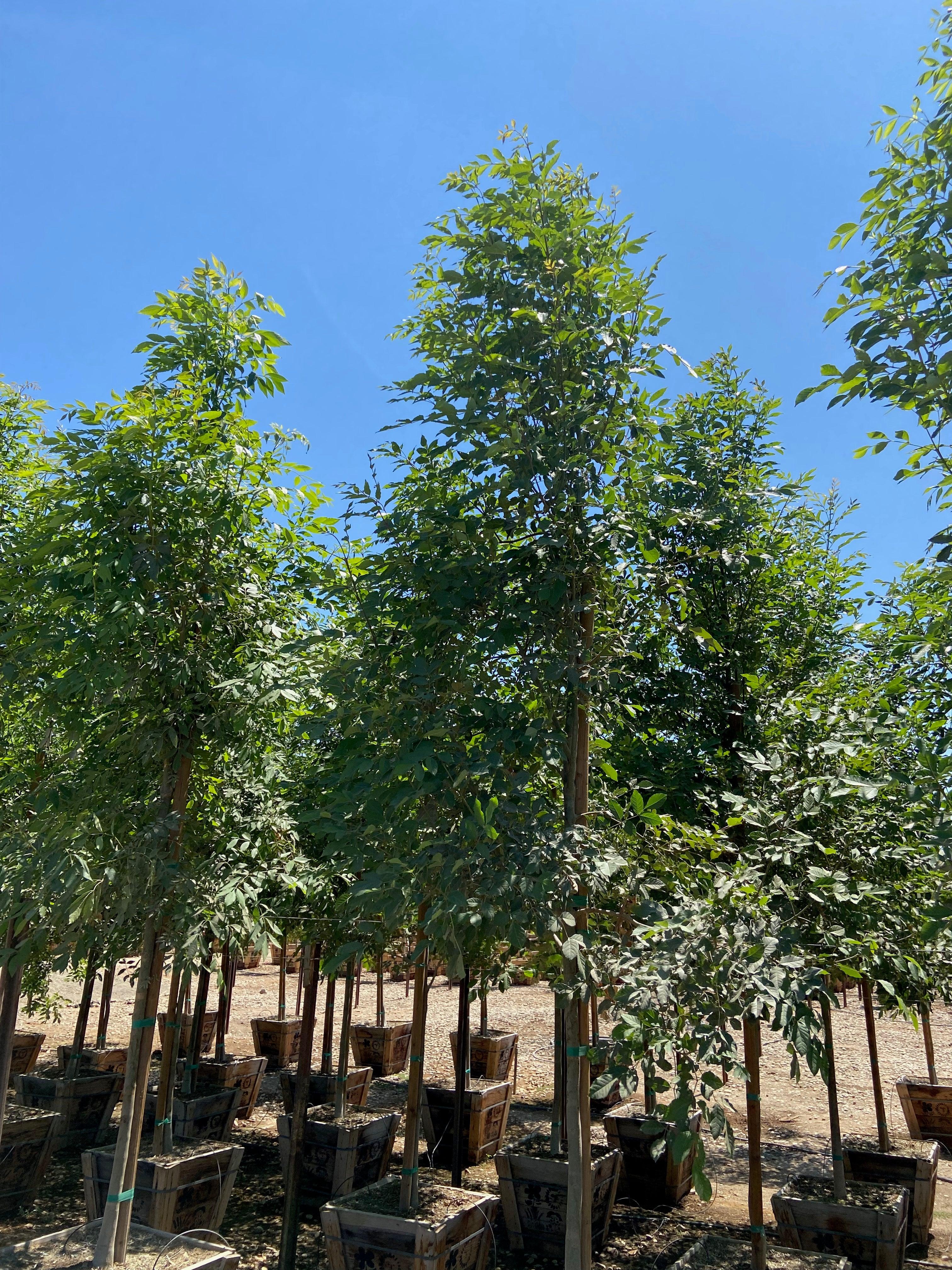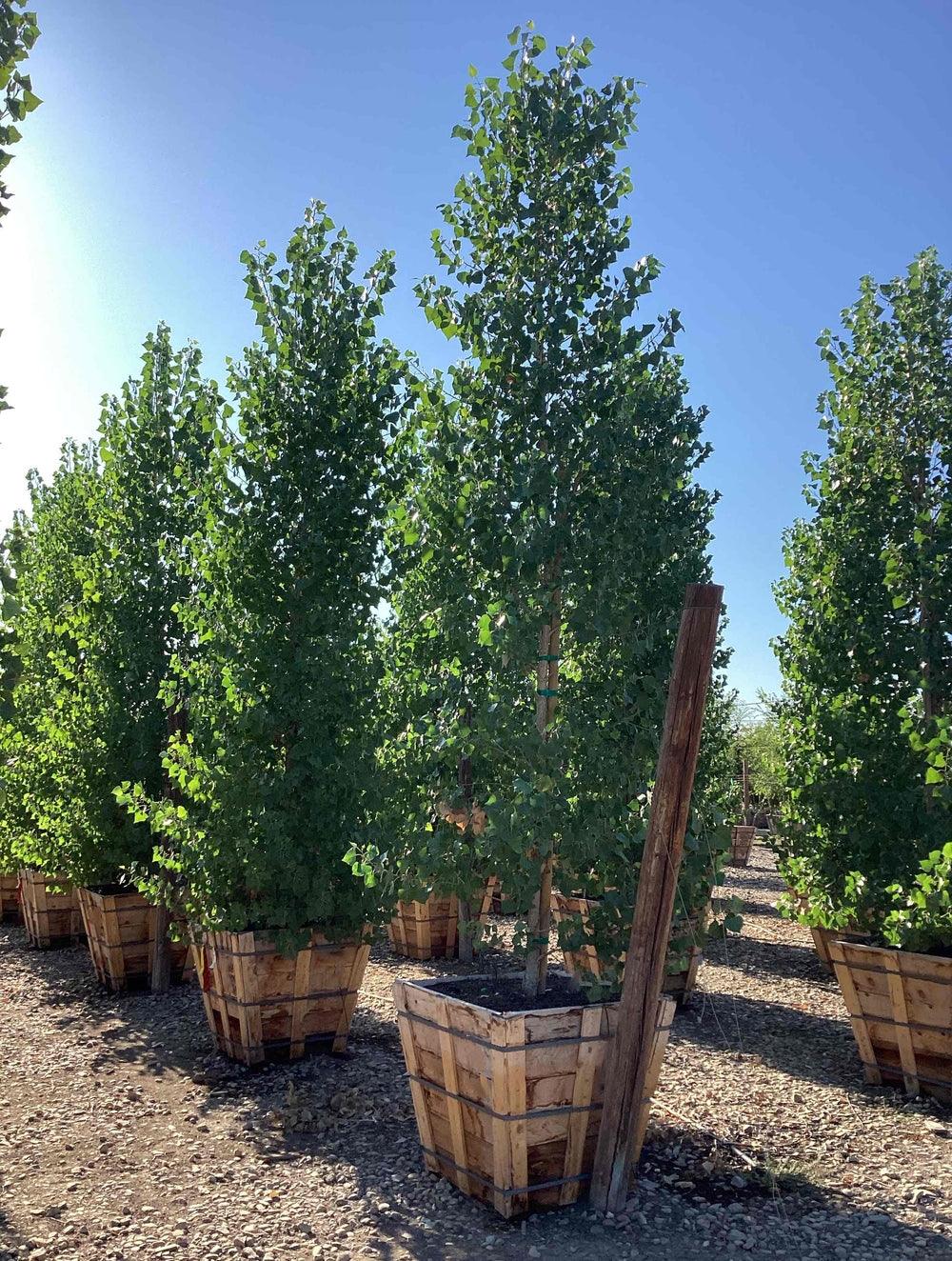


Glossy Privet (Ligustrum Lucidum)
Glossy Privet (Ligustrum lucidum) is a species in the olive family (Oleaceae), native to the southern half of China, and it is often compared with fruitless olive trees for elegant landscaping in Mediterranean-style designs. It has become naturalized in many places worldwide due to its adaptability and vigorous growth. This evergreen shrub or tree is prized for its broad, glossy dark green, opposite leaves that are long, leathery, and provide a lush, dense appearance. The plant typically grows as a dense shrub reaching 12 to 15 feet, but can be trained into a multitrunked tree exceeding 30 feet in height. In late spring or summer, it produces large clusters of small, fragrant white flowers borne in panicles, followed by deep blue-black fruits (berries) in winter. The flowers emit a highly pungent, sweet, and heavy scent, which can trigger severe seasonal respiratory allergies in many individuals. Both the leaves and fruits are poisonous to humans, pets, and livestock.
Glossy privet is highly resilient—tolerant of salt, poor soil, drought, and urban pollution—and is valued for its hardiness, pest-resistance, and low maintenance. It is considered highly invasive in many regions, aggressively displacing native vegetation and sometimes classified as a noxious weed. Its dense growth and thick leaf canopy make it ideal for constructing privacy walls, sound barriers, and windbreaks, and its sturdy root system helps control erosion on banks, similar in use to a Fern Pine hedge (Podocarpus gracilior). The robust structure and adaptability of these plants make them suitable for urban centers, commercial driveways, and a broad range of landscaping needs, much like a versatile Fern Pine tree (Podocarpus gracilior) used for shade and privacy.
Glossy privet thrives in various soil types, including poor or clay soils, as long as drainage is good, and prefers a soil pH between 6.0 and 8.0. It grows best in full sun (at least 6 hours daily) but tolerates partial shade. Young plants require deep watering 1–2 times per week during their first growing season; mature specimens are drought-tolerant and need watering every 10–14 days during dry spells. Routine pruning is necessary to maintain shape and prevent spreading, and the plant tolerates severe pruning for topiary or geometric forms.
Container sizes: a 15-gallon shrub is typically 3-4 feet tall, a 15-gallon tree is 5-6 feet, a 36" box tree is 8-10 feet, and a 48" box tree is 10-12 feet. Compared to other privets, glossy privet stands out for its large, broad, glossy dark green leaves, robust growth, and adaptability, while Mediterranean-style landscapes may favor a Wilsonii olive tree for a similar evergreen structure with less litter.
Original: $395.00
-65%$395.00
$138.25Product Information
Product Information
Shipping & Returns
Shipping & Returns
Description
Glossy Privet (Ligustrum lucidum) is a species in the olive family (Oleaceae), native to the southern half of China, and it is often compared with fruitless olive trees for elegant landscaping in Mediterranean-style designs. It has become naturalized in many places worldwide due to its adaptability and vigorous growth. This evergreen shrub or tree is prized for its broad, glossy dark green, opposite leaves that are long, leathery, and provide a lush, dense appearance. The plant typically grows as a dense shrub reaching 12 to 15 feet, but can be trained into a multitrunked tree exceeding 30 feet in height. In late spring or summer, it produces large clusters of small, fragrant white flowers borne in panicles, followed by deep blue-black fruits (berries) in winter. The flowers emit a highly pungent, sweet, and heavy scent, which can trigger severe seasonal respiratory allergies in many individuals. Both the leaves and fruits are poisonous to humans, pets, and livestock.
Glossy privet is highly resilient—tolerant of salt, poor soil, drought, and urban pollution—and is valued for its hardiness, pest-resistance, and low maintenance. It is considered highly invasive in many regions, aggressively displacing native vegetation and sometimes classified as a noxious weed. Its dense growth and thick leaf canopy make it ideal for constructing privacy walls, sound barriers, and windbreaks, and its sturdy root system helps control erosion on banks, similar in use to a Fern Pine hedge (Podocarpus gracilior). The robust structure and adaptability of these plants make them suitable for urban centers, commercial driveways, and a broad range of landscaping needs, much like a versatile Fern Pine tree (Podocarpus gracilior) used for shade and privacy.
Glossy privet thrives in various soil types, including poor or clay soils, as long as drainage is good, and prefers a soil pH between 6.0 and 8.0. It grows best in full sun (at least 6 hours daily) but tolerates partial shade. Young plants require deep watering 1–2 times per week during their first growing season; mature specimens are drought-tolerant and need watering every 10–14 days during dry spells. Routine pruning is necessary to maintain shape and prevent spreading, and the plant tolerates severe pruning for topiary or geometric forms.
Container sizes: a 15-gallon shrub is typically 3-4 feet tall, a 15-gallon tree is 5-6 feet, a 36" box tree is 8-10 feet, and a 48" box tree is 10-12 feet. Compared to other privets, glossy privet stands out for its large, broad, glossy dark green leaves, robust growth, and adaptability, while Mediterranean-style landscapes may favor a Wilsonii olive tree for a similar evergreen structure with less litter.