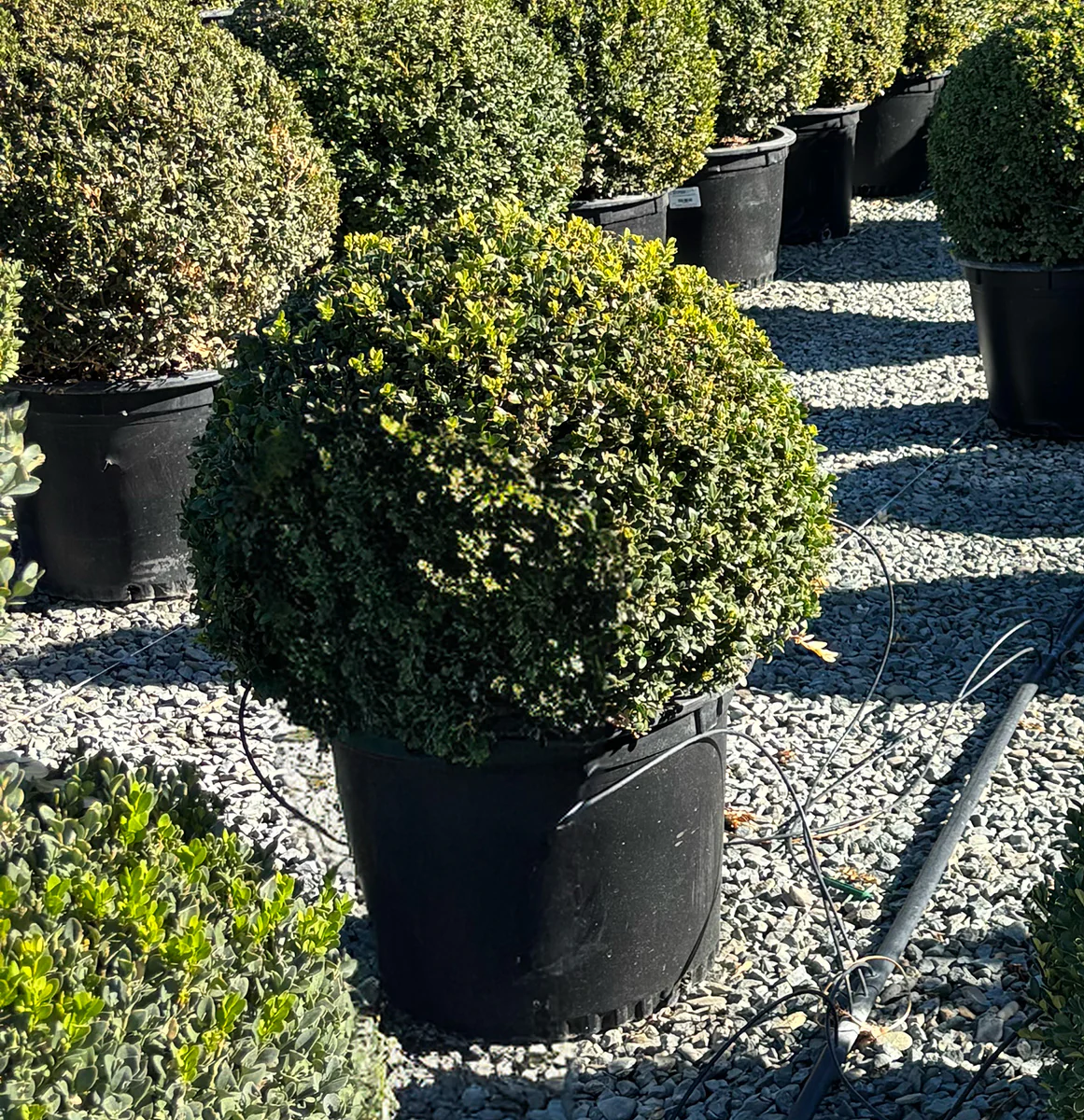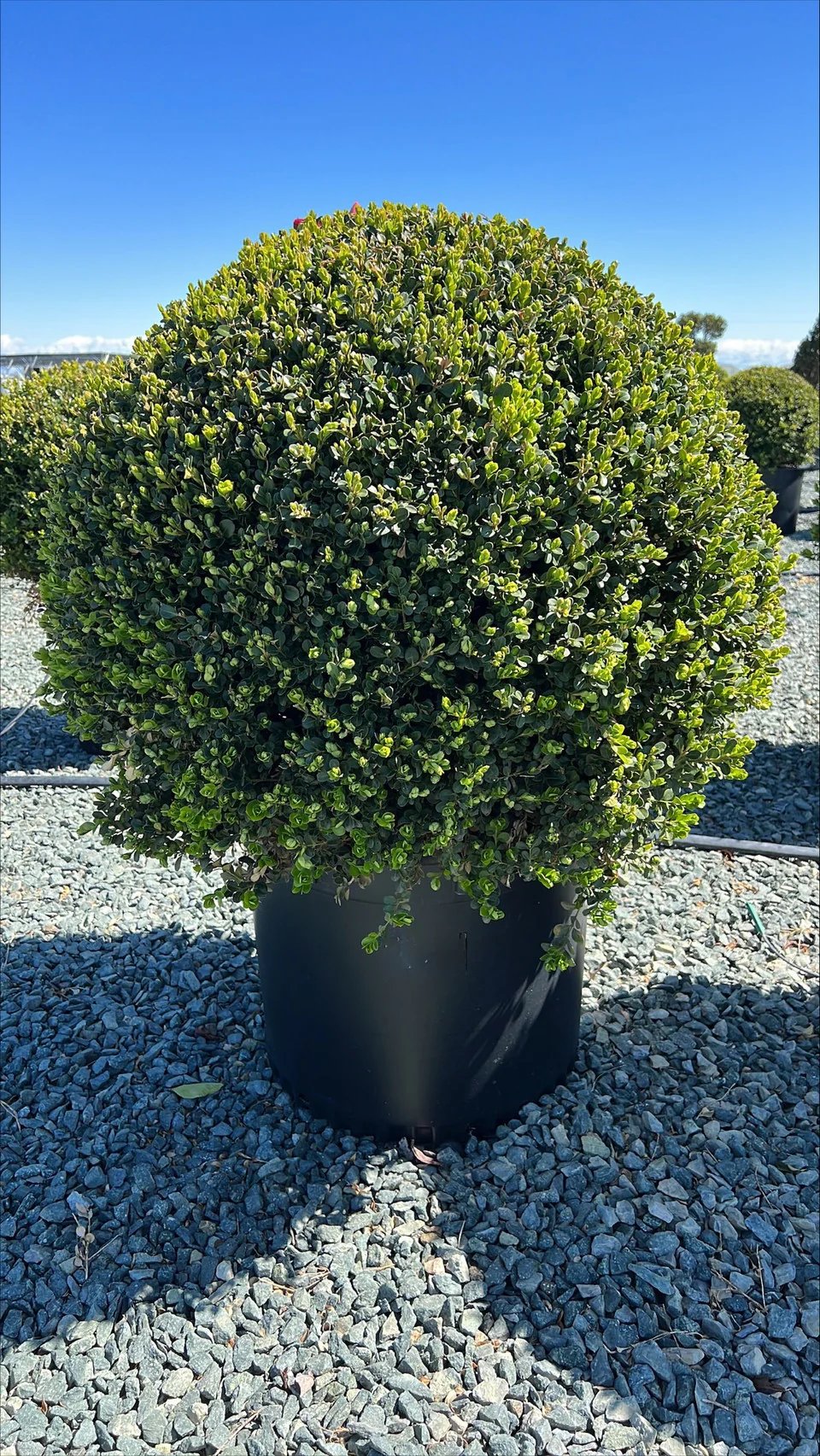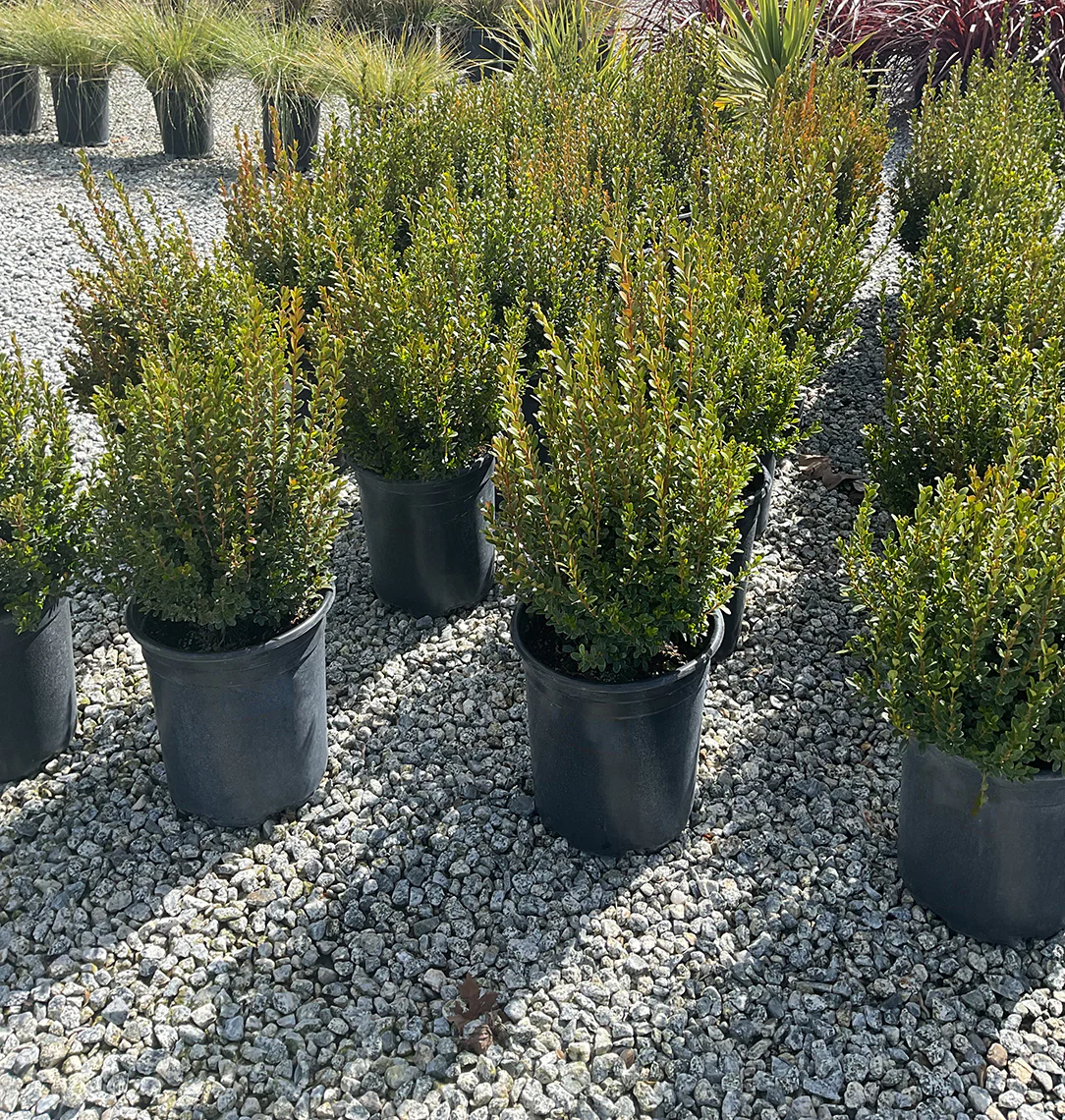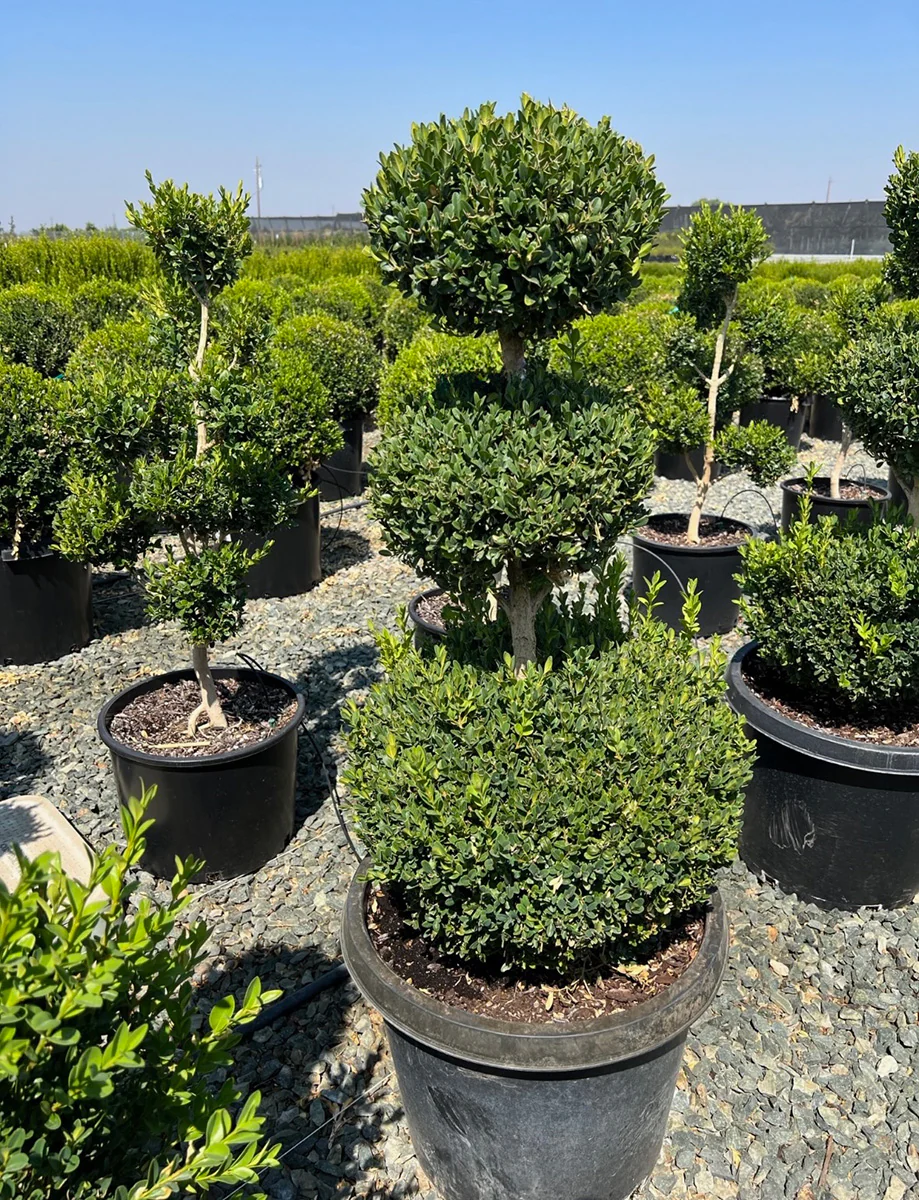
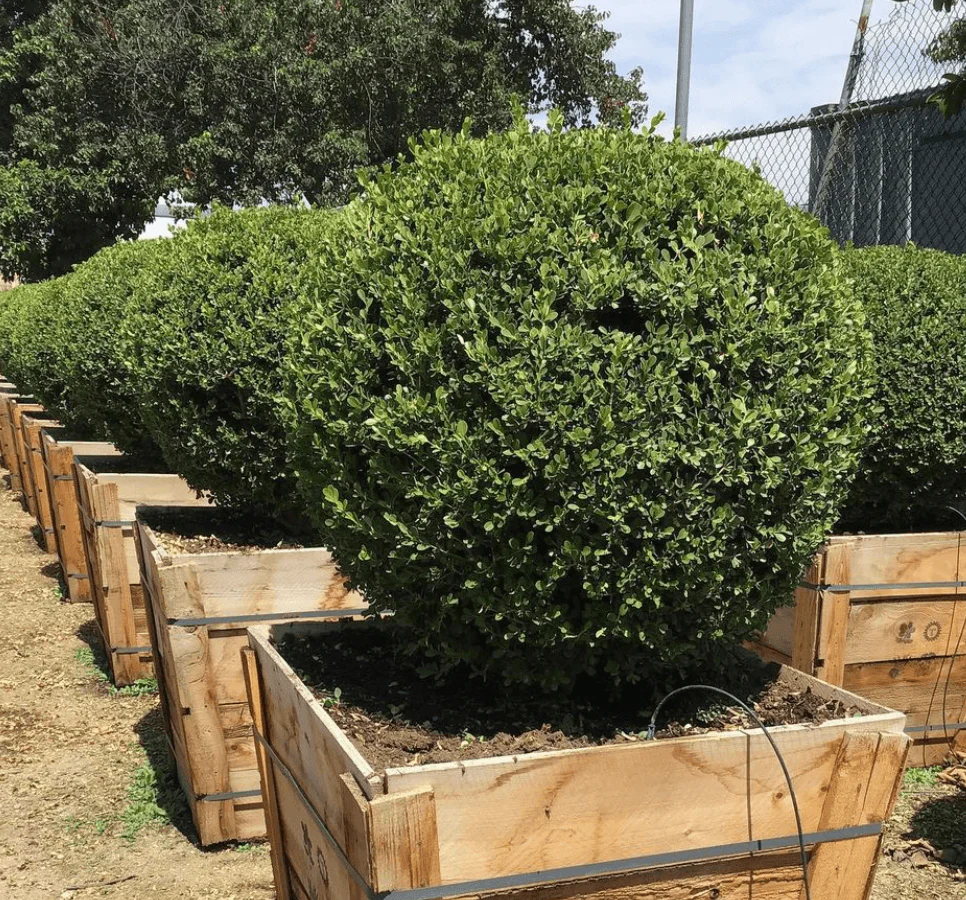
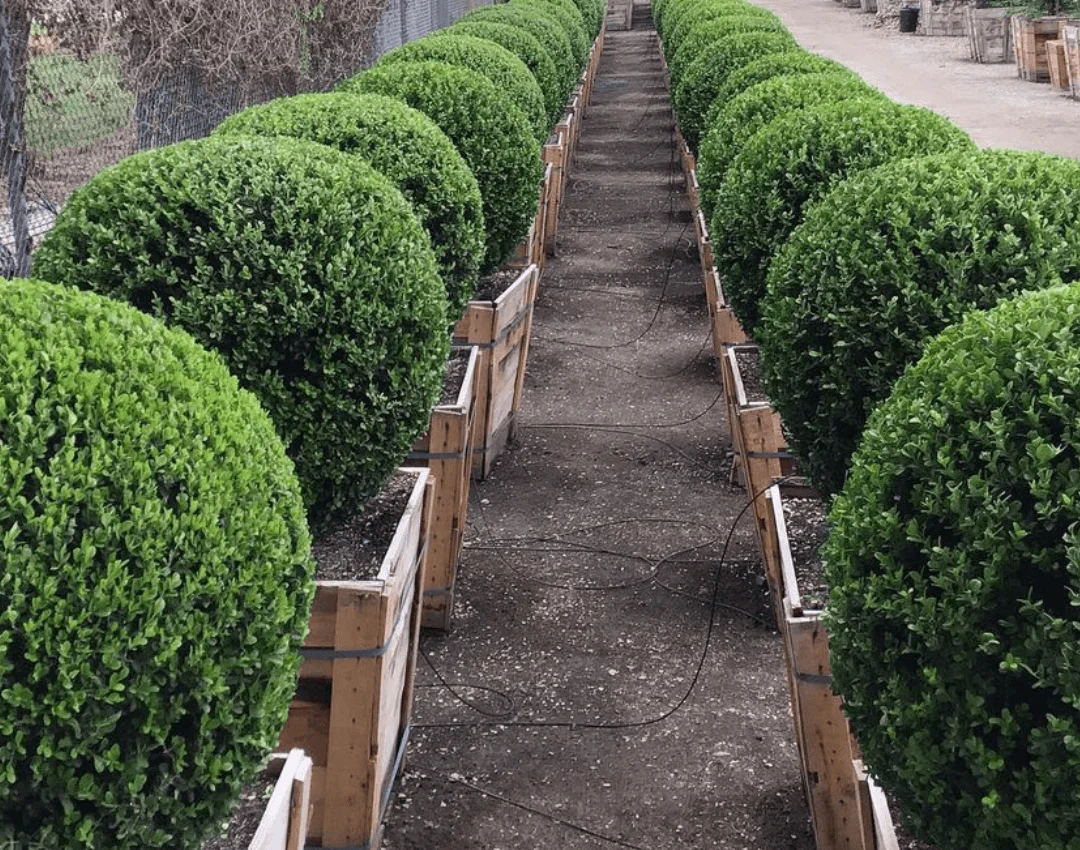
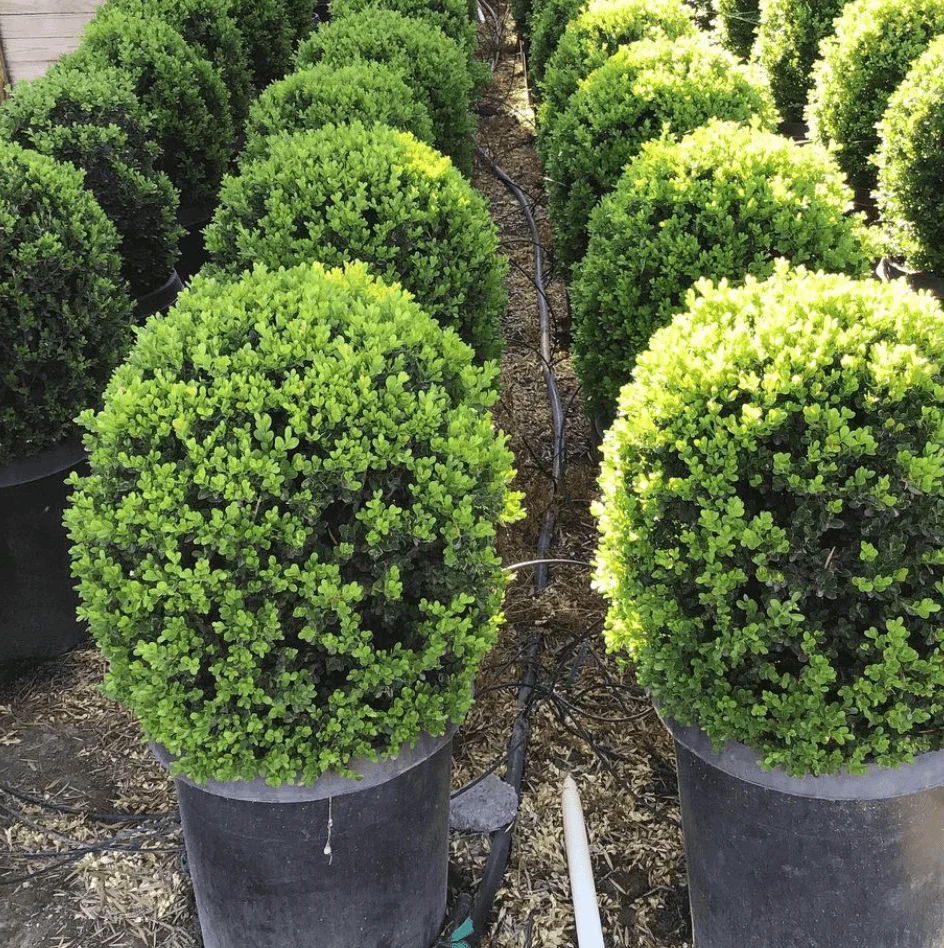
Japanese Boxwood Globe (Buxus microphylla japonica)
Create Dense Evergreen Privacy That Looks Beautiful Year-Round
Japanese Boxwood gives you a dense, green privacy screen without the constant trimming and upkeep many hedges require. This rounded evergreen shrub is valued for year-round foliage, a tidy shape, and reliable performance in California landscapes.
Designed for homeowners who want low maintenance beauty, the japanese boxwood plant works well for hedges, borders, foundation plantings, defined walkways, and formal garden layouts. It grows slowly, fills in densely over time, and stays attractive through normal seasonal changes.
Why You’ll Love It
-
Evergreen Privacy – Japanese boxwood is known for its dense, evergreen foliage, making it an excellent choice for hedges and borders in various landscape designs.
-
Low Maintenance – This slow growing shrub typically grows less than 12 inches per year, so it needs less frequent pruning than faster shrubs.
-
Drought Tolerant – Once established, Japanese boxwood is drought tolerant and requires less frequent watering except during prolonged dry spells.
-
Deer Resistant – Japanese boxwood offers useful resistance to deer and many common garden pests, helping protect foundation plantings and borders.
-
Versatile Design – The naturally dense, branching habit of Japanese boxwood makes it a premier choice for low- to medium-height formal hedges, property borders, and defined walkways.
Japanese boxwood is highly adaptable and prized for its year-round bright foliage, heat tolerance, and versatility. It can tolerate full sun to partial shade, though afternoon shade is helpful in exceptionally hot climates to prevent leaf scorch.
What Makes It Different
Most privacy plants force a tradeoff: fast growth with constant pruning, seasonal foliage loss, or a shape that becomes open and uneven over time.
Japanese Boxwood has:
-
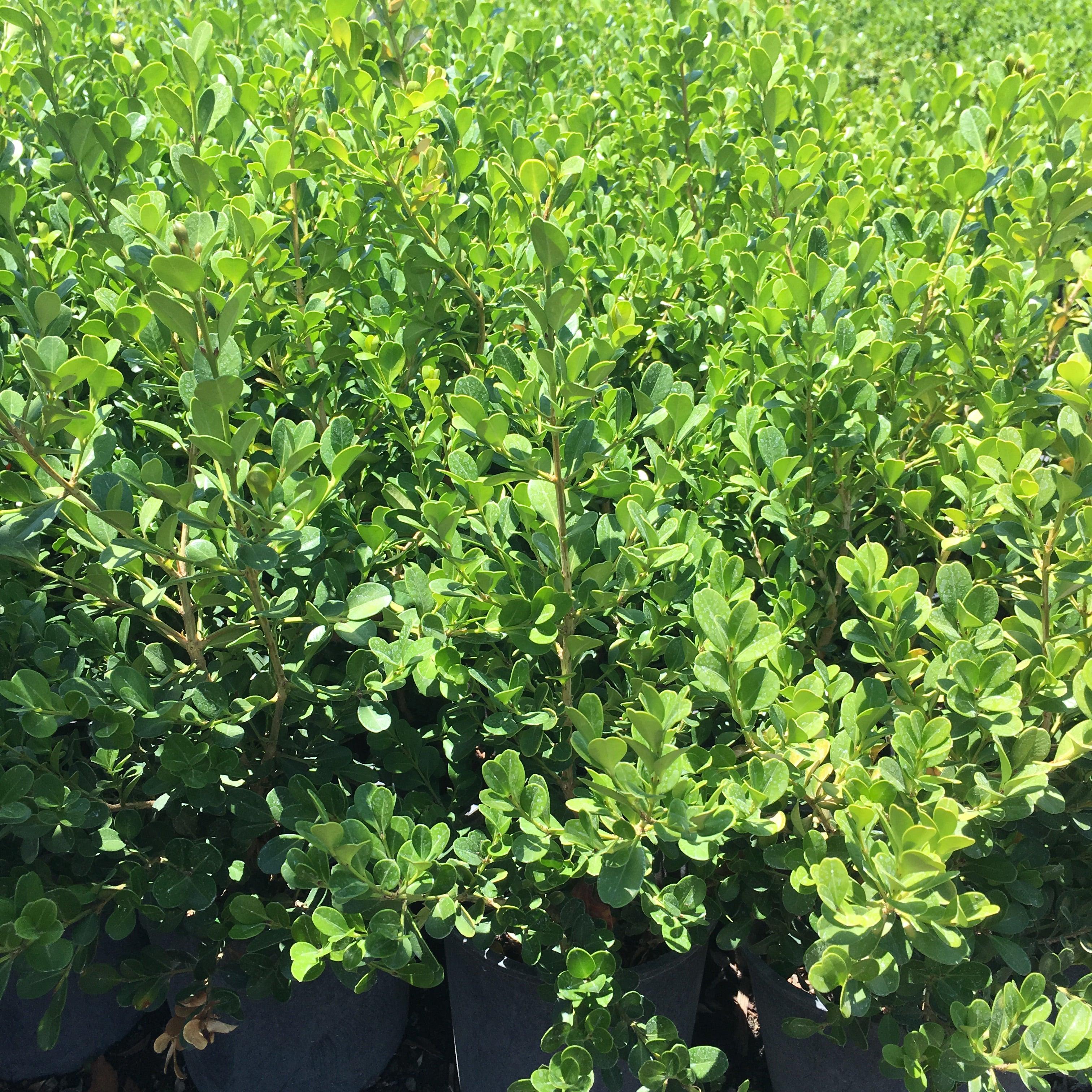
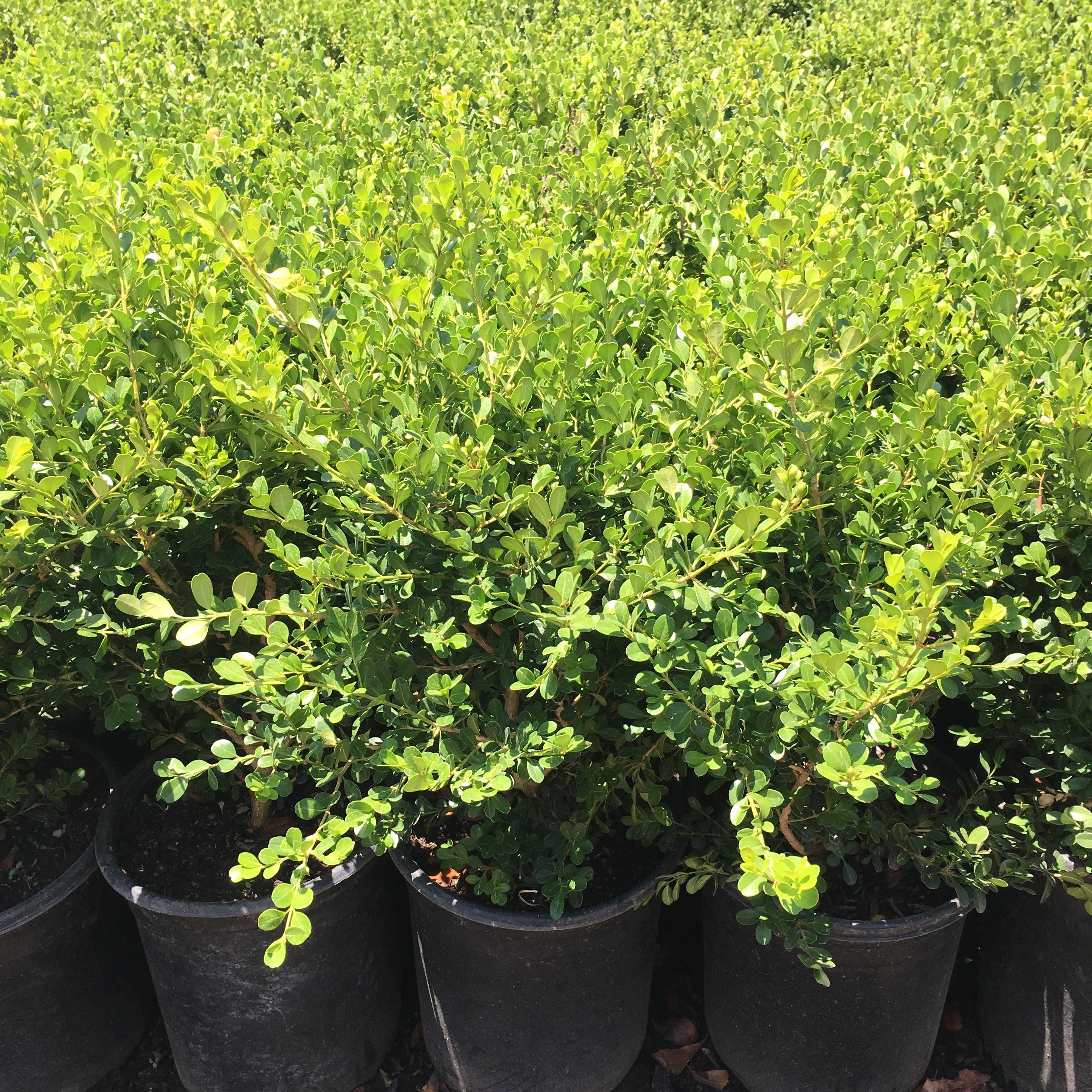
Dense Growth Habit – Its compact branching creates a thick visual edge for hedges, borders, and formal hedge designs.
-
Year-Round Color – The small, thick, oval-shaped leaves are bright green and can appear slightly yellowish compared to other boxwood varieties, giving gardens a unique, refined look.
-
Cold Hardy – Japanese boxwoods are generally hardy in USDA Zones 5 to 9 and offer better heat and humidity tolerance than other boxwood varieties.
Compared with many other plants used for screening, Japanese boxwood gives you a more controlled, formal look. Compared with other boxwood varieties like Green Gem boxwood, Japanese boxwood is much less prone to common boxwood blights and pests, while still benefiting from smart care such as well drained soil, airflow, and dry foliage.
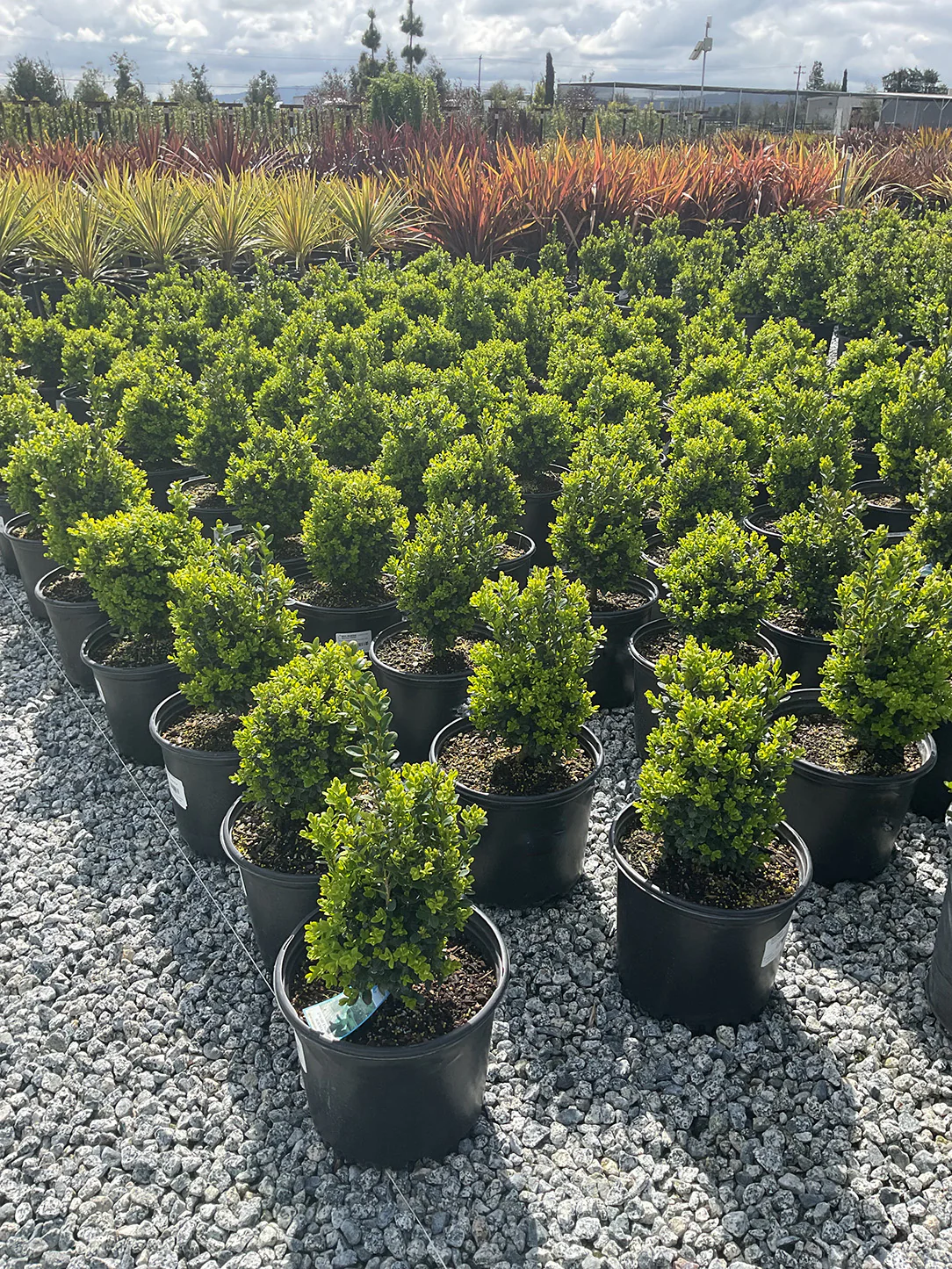
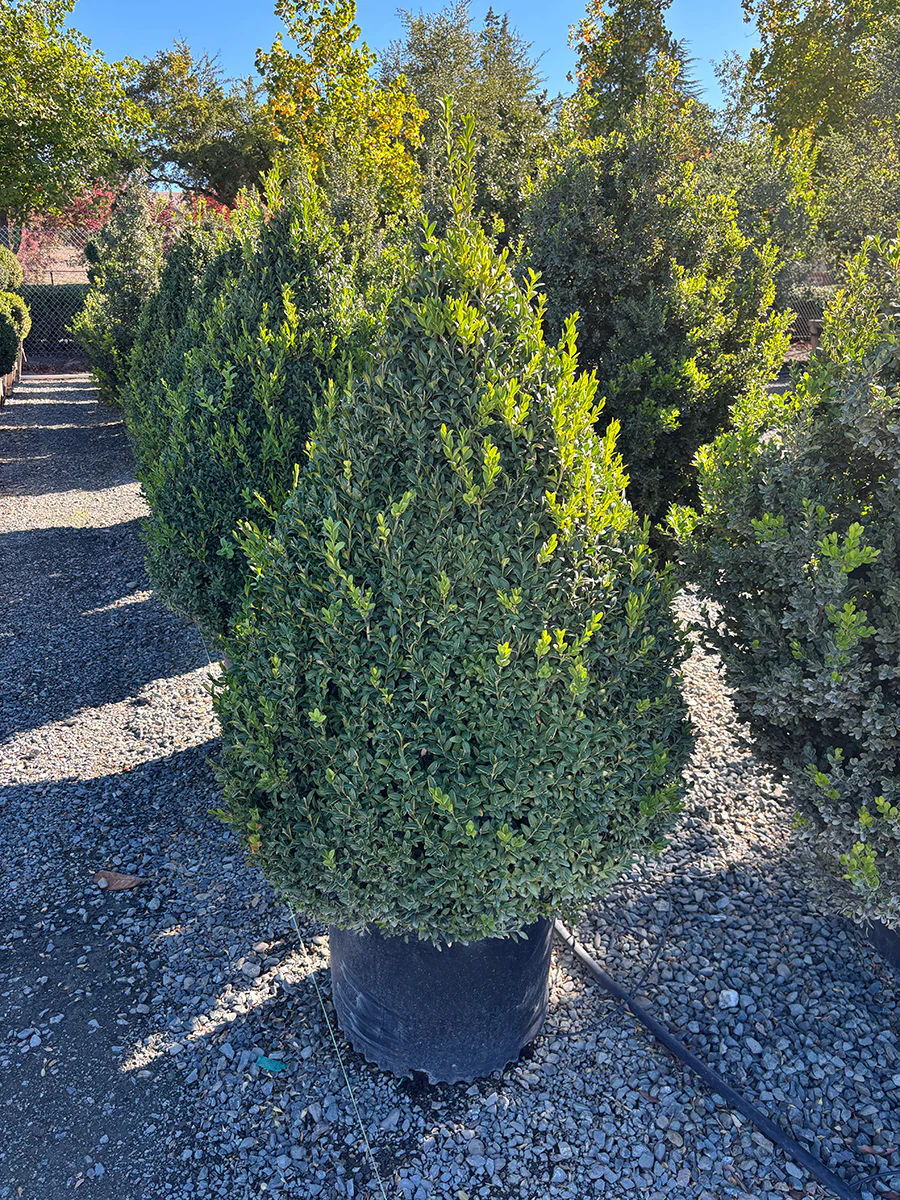
It is also exceptionally tolerant of pruning and offers resistance to heat, drought, and pests. Japanese boxwood can be sculpted into geometric shapes or used for advanced topiary art due to its responsiveness to regular shearing and clipping, similar to the dense, rounded form of the Globe Japanese Boxwood.
Tips For Success
-
Plant Properly
Plant Japanese boxwood in well-drained soil, ideally with a pH of 6.5-7, and know that it can tolerate a wide range of soil types. It is recommended to mix top soil or organic peat moss into the planting hole to enhance soil quality for Japanese boxwood. -
Minimal Care
Water deeply twice a week during the first year after planting, and once a week during the second year. After that, maintain moisture during prolonged dry spells, mulch heavily with a proper 2-3 inch mulch layer, and avoid constantly wet roots. -
Enjoy Results
Watch the dense privacy screen develop over 2-3 growing seasons. Because Japanese boxwood has a slow growth rate, it may take several years for a Japanese Boxwood seedling to mature into a privacy shrub, making it advisable to start with a larger plant if you want faster screening.
For hedge planting, space Japanese boxwood 2 to 3 feet apart to allow for mature size and dense hedge formation, or pair it with a faster-growing option like a Fern Pine hedge for layered privacy.
Plant Details
-
Scientific name: Buxus microphylla var. japonica
-
Common family/type: Littleleaf boxwood, evergreen shrub
-
Native origin: Buxus microphylla is native to Japan and Taiwan
-
Mature size: When fully mature, Japanese Boxwoods can grow to be between 5 to 6 feet tall and 4 to 6 feet wide
-
Growth rate: Slow; Japanese Boxwood typically grows less than 12 inches per year
-
Hardiness zones: USDA Zones 5-9
-
Light requirements: Full sun to partial shade; avoid deep full shade because growth may become sparse
-
Hot-climate note: Afternoon shade may be needed in exceptionally hot climates to prevent leaf scorch
-
Soil preference: Well drained soil with a preferred pH of 6.5-7
-
Soil improvement: Mix top soil or organic peat moss into the planting hole to add organic matter and improve soil quality
-
Watering: Water regularly and deeply during establishment, especially in spring and summer
-
Fertilizer: Fertilize Japanese boxwood three times a year-spring, summer, and fall-with a slow-release granular fertilizer, but avoid fertilizing in the first year after planting to prevent damage
-
Pruning: Pruning can be done at any time of the year, but it is best to avoid late fall; do not trim more than 25% of the shrub’s depth for optimal appearance
-
Best shaping times: Late winter or early spring cleanup, with light shaping after new growth hardens
-
Landscape uses: Hedges, formal borders, foundation plantings, specimen plantings, topiary, and defined garden edges, especially when combined with taller evergreen trees for year-round privacy
-
Flowers: Small spring flowers are not showy; the plant is grown mainly for foliage and shape
Who It’s For
Ideal for:
-
California homeowners seeking year-round privacy screening with a mix of shrubs and popular privacy trees and evergreens
-
Gardeners wanting low-maintenance evergreen borders
-
Landscape designers creating formal hedge designs that may mix rounded Japanese boxwood with Winter Gem boxwood globe shrubs
-
Property owners needing deer-resistant foundation plantings and hardy Winter Gem boxwood shrubs
-
Homeowners who want a hardy, rounded, green shrub that can thrive with proper japanese boxwood care
If you want a formal, dense, slow growing shrub that can be maintained cleanly along a walkway, driveway, patio, or garden edge, Japanese Boxwood fits your landscape needs and pairs well with taller evergreens like the Japanese Blueberry tree for privacy. It performs well in many California settings, especially where the soil is well drained and the plant receives sun, light shade, or partial shade.
Frequently Asked Questions
How fast does Japanese Boxwood grow?
Japanese Boxwood has a slow growth rate, typically growing less than 12 inches per year. The slow growth helps reduce pruning work, but it also means a seedling may take several years to become a mature privacy shrub.
How far apart should I plant them?
When planting Japanese boxwood for a hedge, space the plants 2 to 3 feet apart to allow for their mature size. This spacing helps the shrubs grow together into a dense hedge without overcrowding the roots.
Do they need full sun?
Japanese boxwood is versatile and can thrive in a range of light conditions, from full sun to partial shade, making it suitable for various planting locations. In hotter inland climates, afternoon shade can help protect the leaves from scorch.
Are they deer resistant?
Yes, Japanese boxwood is commonly considered deer resistant. No plant is completely deer-proof, but boxwood is a strong choice where deer pressure is a concern.
When is the best time to plant?
Early spring and fall are both good planting windows in California. Spring planting gives roots time to establish before summer heat, while fall planting lets the plant settle in before the next growing season.
How should I care for Japanese Boxwood after planting?
Water deeply twice a week during the first year after planting, then once a week during the second year. After the plant is established, water less often except during prolonged dry spells. Mulch to conserve moisture, use slow release fertilizer in spring, summer, and fall after the first year, and avoid heavy late fall pruning.
Ready to Transform Your Landscape?
Stop struggling with sparse, seasonal privacy solutions and choose Japanese Boxwood for dense, year-round evergreen beauty.
Yardwork can help you select the right size, confirm spacing, review soil conditions, and plan a hedge or foundation planting that fits your property, acting as your local plant nursery and landscaping resource. Our consultation and soil testing services help confirm drainage, pH, sun exposure, and planting conditions before installation.
Choose Japanese Boxwood for a clean, formal, drought tolerant, deer resistant landscape plant that stays green through the year, and consider complementing it with flowering specimens like Little Gem Dwarf Southern Magnolia for added seasonal interest.
Product Information
Product Information
Shipping & Returns
Shipping & Returns
Description
Create Dense Evergreen Privacy That Looks Beautiful Year-Round
Japanese Boxwood gives you a dense, green privacy screen without the constant trimming and upkeep many hedges require. This rounded evergreen shrub is valued for year-round foliage, a tidy shape, and reliable performance in California landscapes.
Designed for homeowners who want low maintenance beauty, the japanese boxwood plant works well for hedges, borders, foundation plantings, defined walkways, and formal garden layouts. It grows slowly, fills in densely over time, and stays attractive through normal seasonal changes.
Why You’ll Love It
-
Evergreen Privacy – Japanese boxwood is known for its dense, evergreen foliage, making it an excellent choice for hedges and borders in various landscape designs.
-
Low Maintenance – This slow growing shrub typically grows less than 12 inches per year, so it needs less frequent pruning than faster shrubs.
-
Drought Tolerant – Once established, Japanese boxwood is drought tolerant and requires less frequent watering except during prolonged dry spells.
-
Deer Resistant – Japanese boxwood offers useful resistance to deer and many common garden pests, helping protect foundation plantings and borders.
-
Versatile Design – The naturally dense, branching habit of Japanese boxwood makes it a premier choice for low- to medium-height formal hedges, property borders, and defined walkways.
Japanese boxwood is highly adaptable and prized for its year-round bright foliage, heat tolerance, and versatility. It can tolerate full sun to partial shade, though afternoon shade is helpful in exceptionally hot climates to prevent leaf scorch.
What Makes It Different
Most privacy plants force a tradeoff: fast growth with constant pruning, seasonal foliage loss, or a shape that becomes open and uneven over time.
Japanese Boxwood has:
-
Dense Growth Habit – Its compact branching creates a thick visual edge for hedges, borders, and formal hedge designs.
-
Year-Round Color – The small, thick, oval-shaped leaves are bright green and can appear slightly yellowish compared to other boxwood varieties, giving gardens a unique, refined look.
-
Cold Hardy – Japanese boxwoods are generally hardy in USDA Zones 5 to 9 and offer better heat and humidity tolerance than other boxwood varieties.
Compared with many other plants used for screening, Japanese boxwood gives you a more controlled, formal look. Compared with other boxwood varieties like Green Gem boxwood, Japanese boxwood is much less prone to common boxwood blights and pests, while still benefiting from smart care such as well drained soil, airflow, and dry foliage.
It is also exceptionally tolerant of pruning and offers resistance to heat, drought, and pests. Japanese boxwood can be sculpted into geometric shapes or used for advanced topiary art due to its responsiveness to regular shearing and clipping, similar to the dense, rounded form of the Globe Japanese Boxwood.
Tips For Success
-
Plant Properly
Plant Japanese boxwood in well-drained soil, ideally with a pH of 6.5-7, and know that it can tolerate a wide range of soil types. It is recommended to mix top soil or organic peat moss into the planting hole to enhance soil quality for Japanese boxwood. -
Minimal Care
Water deeply twice a week during the first year after planting, and once a week during the second year. After that, maintain moisture during prolonged dry spells, mulch heavily with a proper 2-3 inch mulch layer, and avoid constantly wet roots. -
Enjoy Results
Watch the dense privacy screen develop over 2-3 growing seasons. Because Japanese boxwood has a slow growth rate, it may take several years for a Japanese Boxwood seedling to mature into a privacy shrub, making it advisable to start with a larger plant if you want faster screening.
For hedge planting, space Japanese boxwood 2 to 3 feet apart to allow for mature size and dense hedge formation, or pair it with a faster-growing option like a Fern Pine hedge for layered privacy.
Plant Details
-
Scientific name: Buxus microphylla var. japonica
-
Common family/type: Littleleaf boxwood, evergreen shrub
-
Native origin: Buxus microphylla is native to Japan and Taiwan
-
Mature size: When fully mature, Japanese Boxwoods can grow to be between 5 to 6 feet tall and 4 to 6 feet wide
-
Growth rate: Slow; Japanese Boxwood typically grows less than 12 inches per year
-
Hardiness zones: USDA Zones 5-9
-
Light requirements: Full sun to partial shade; avoid deep full shade because growth may become sparse
-
Hot-climate note: Afternoon shade may be needed in exceptionally hot climates to prevent leaf scorch
-
Soil preference: Well drained soil with a preferred pH of 6.5-7
-
Soil improvement: Mix top soil or organic peat moss into the planting hole to add organic matter and improve soil quality
-
Watering: Water regularly and deeply during establishment, especially in spring and summer
-
Fertilizer: Fertilize Japanese boxwood three times a year-spring, summer, and fall-with a slow-release granular fertilizer, but avoid fertilizing in the first year after planting to prevent damage
-
Pruning: Pruning can be done at any time of the year, but it is best to avoid late fall; do not trim more than 25% of the shrub’s depth for optimal appearance
-
Best shaping times: Late winter or early spring cleanup, with light shaping after new growth hardens
-
Landscape uses: Hedges, formal borders, foundation plantings, specimen plantings, topiary, and defined garden edges, especially when combined with taller evergreen trees for year-round privacy
-
Flowers: Small spring flowers are not showy; the plant is grown mainly for foliage and shape
Who It’s For
Ideal for:
-
California homeowners seeking year-round privacy screening with a mix of shrubs and popular privacy trees and evergreens
-
Gardeners wanting low-maintenance evergreen borders
-
Landscape designers creating formal hedge designs that may mix rounded Japanese boxwood with Winter Gem boxwood globe shrubs
-
Property owners needing deer-resistant foundation plantings and hardy Winter Gem boxwood shrubs
-
Homeowners who want a hardy, rounded, green shrub that can thrive with proper japanese boxwood care
If you want a formal, dense, slow growing shrub that can be maintained cleanly along a walkway, driveway, patio, or garden edge, Japanese Boxwood fits your landscape needs and pairs well with taller evergreens like the Japanese Blueberry tree for privacy. It performs well in many California settings, especially where the soil is well drained and the plant receives sun, light shade, or partial shade.
Frequently Asked Questions
How fast does Japanese Boxwood grow?
Japanese Boxwood has a slow growth rate, typically growing less than 12 inches per year. The slow growth helps reduce pruning work, but it also means a seedling may take several years to become a mature privacy shrub.
How far apart should I plant them?
When planting Japanese boxwood for a hedge, space the plants 2 to 3 feet apart to allow for their mature size. This spacing helps the shrubs grow together into a dense hedge without overcrowding the roots.
Do they need full sun?
Japanese boxwood is versatile and can thrive in a range of light conditions, from full sun to partial shade, making it suitable for various planting locations. In hotter inland climates, afternoon shade can help protect the leaves from scorch.
Are they deer resistant?
Yes, Japanese boxwood is commonly considered deer resistant. No plant is completely deer-proof, but boxwood is a strong choice where deer pressure is a concern.
When is the best time to plant?
Early spring and fall are both good planting windows in California. Spring planting gives roots time to establish before summer heat, while fall planting lets the plant settle in before the next growing season.
How should I care for Japanese Boxwood after planting?
Water deeply twice a week during the first year after planting, then once a week during the second year. After the plant is established, water less often except during prolonged dry spells. Mulch to conserve moisture, use slow release fertilizer in spring, summer, and fall after the first year, and avoid heavy late fall pruning.
Ready to Transform Your Landscape?
Stop struggling with sparse, seasonal privacy solutions and choose Japanese Boxwood for dense, year-round evergreen beauty.
Yardwork can help you select the right size, confirm spacing, review soil conditions, and plan a hedge or foundation planting that fits your property, acting as your local plant nursery and landscaping resource. Our consultation and soil testing services help confirm drainage, pH, sun exposure, and planting conditions before installation.
Choose Japanese Boxwood for a clean, formal, drought tolerant, deer resistant landscape plant that stays green through the year, and consider complementing it with flowering specimens like Little Gem Dwarf Southern Magnolia for added seasonal interest.