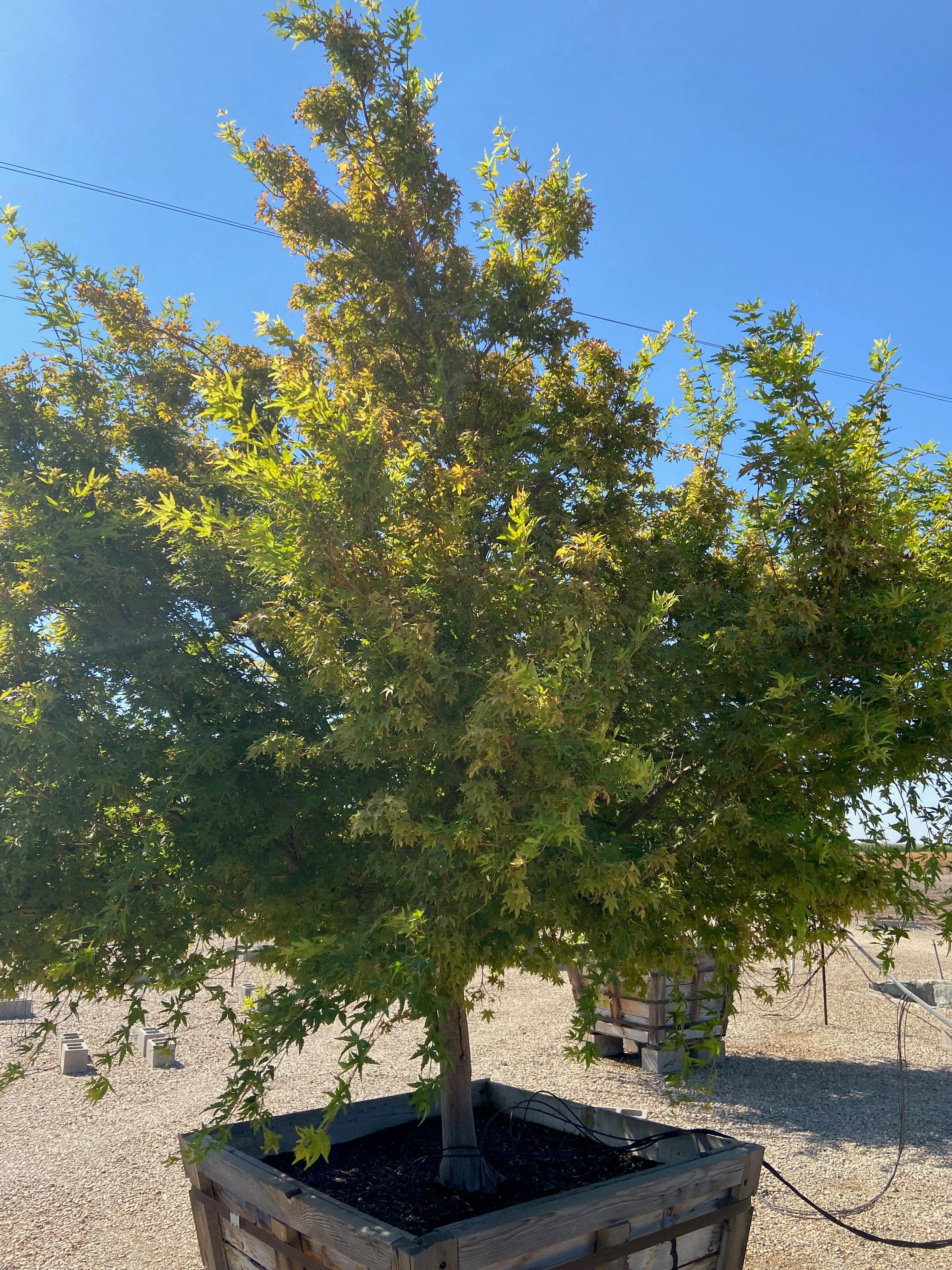
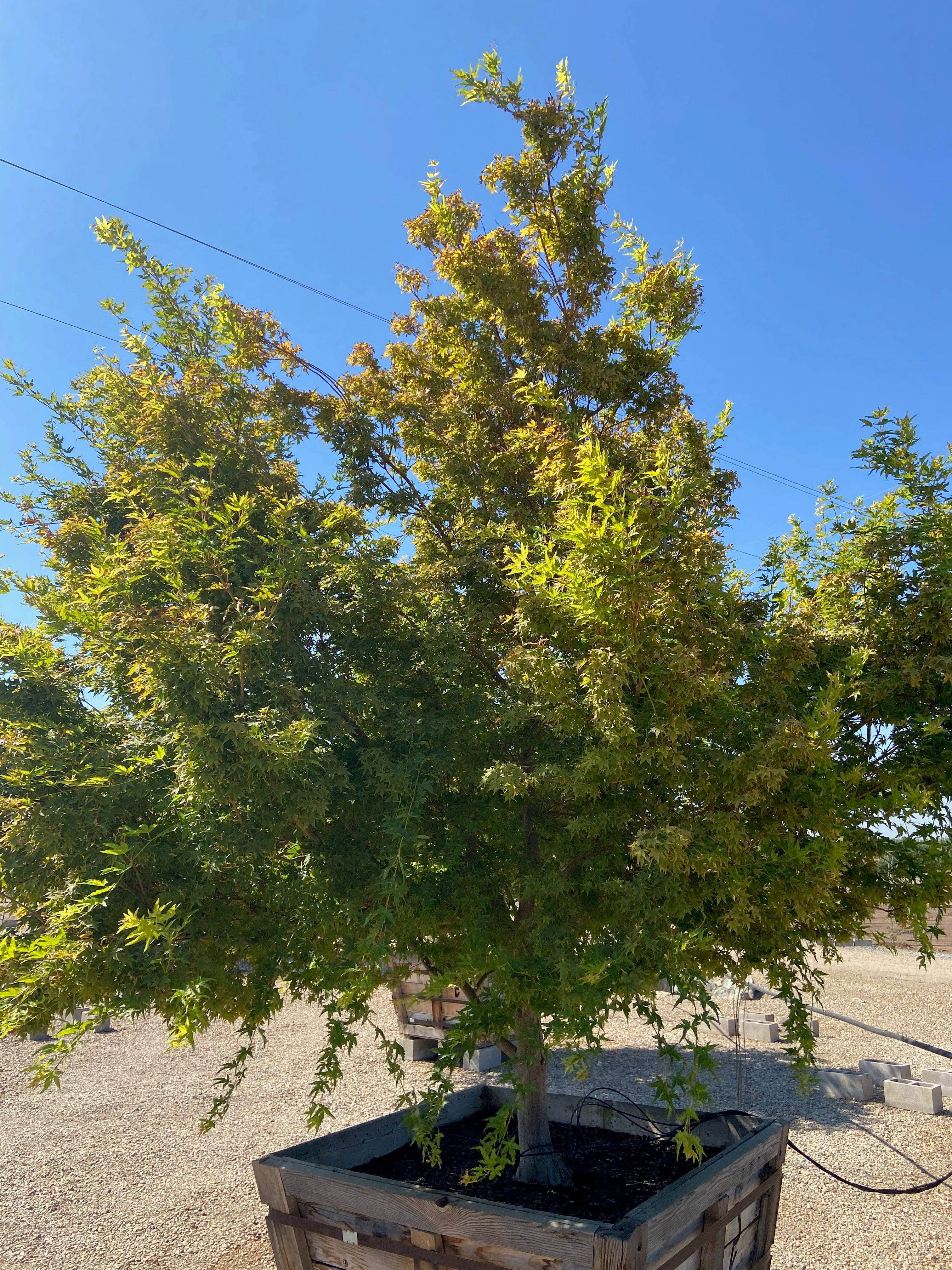

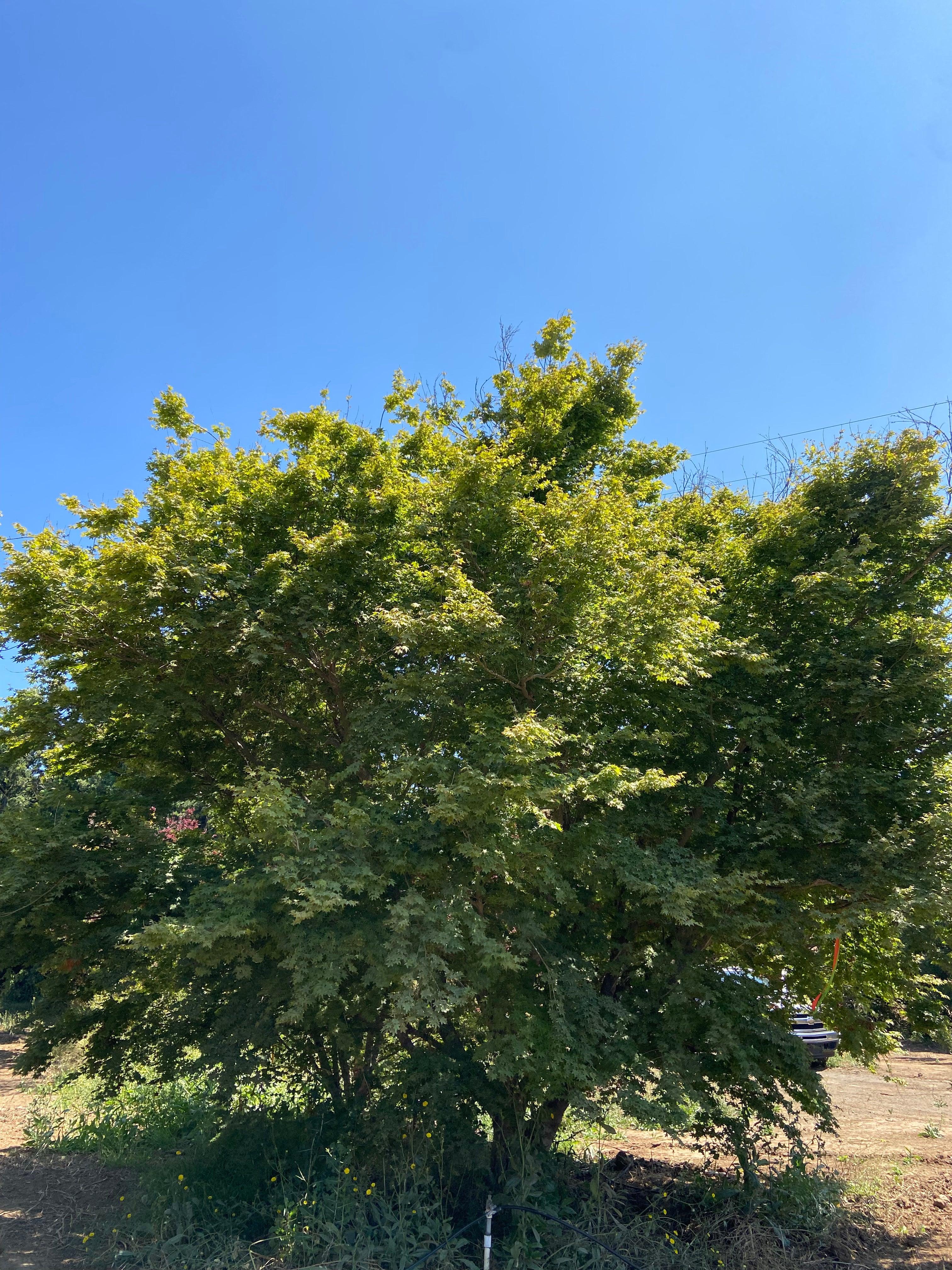
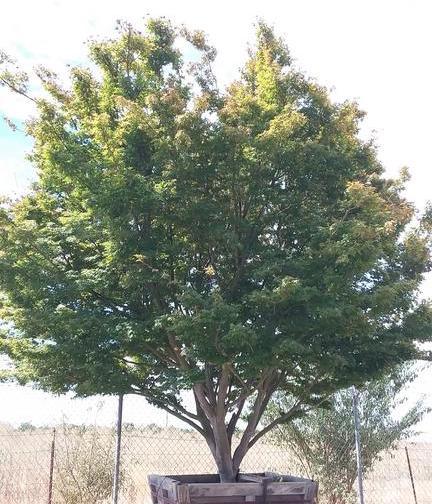
Coral Bark Japanese Maple (Acer Palmatum Sango Kaku)
Transform Your Winter Garden with Stunning Coral-Red Bark That Glows Year-Round
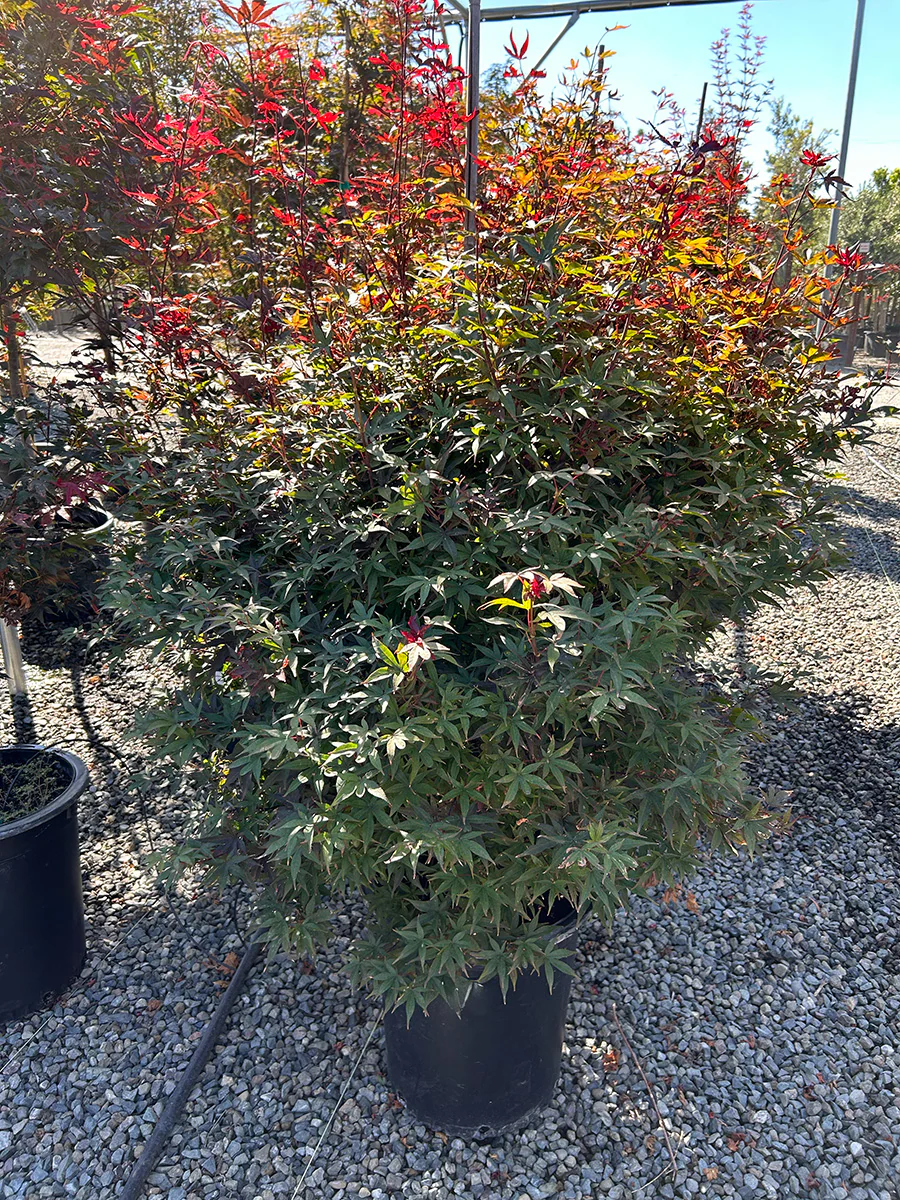
The Coral Bark Japanese Maple gives your garden color when most trees are bare: bright coral red bark in winter, fresh spring foliage, light green summer leaves, and golden yellow to orange fall color.
Also known as Acer palmatum Sango Kaku, coral bark maple, or bark Japanese maple, this Japanese maple tree is prized for young branches that glow red in late winter and early spring. “Sango-kaku” is often translated as “coral tower,” a fitting name for its upright form and coral red bark.
Unlike most Japanese maples, Coral Bark Japanese Maples can tolerate full sun to partial shade, making this small tree more versatile for California gardens. In hotter inland climates, dappled light or afternoon shade is still recommended to prevent leaf scorch and keep the foliage healthy.
Why You’ll Love It
-
Brilliant Winter Interest – The striking coral red bark becomes most prominent in winter, creating a bright focal point when other Japanese maples and deciduous trees are dormant.
-
Fast-Growing Beauty – Young Coral Bark Japanese Maple trees can grow up to two feet in a single year, with a slow-to-moderate growth rate of 1 to 2 feet per year when young.
-
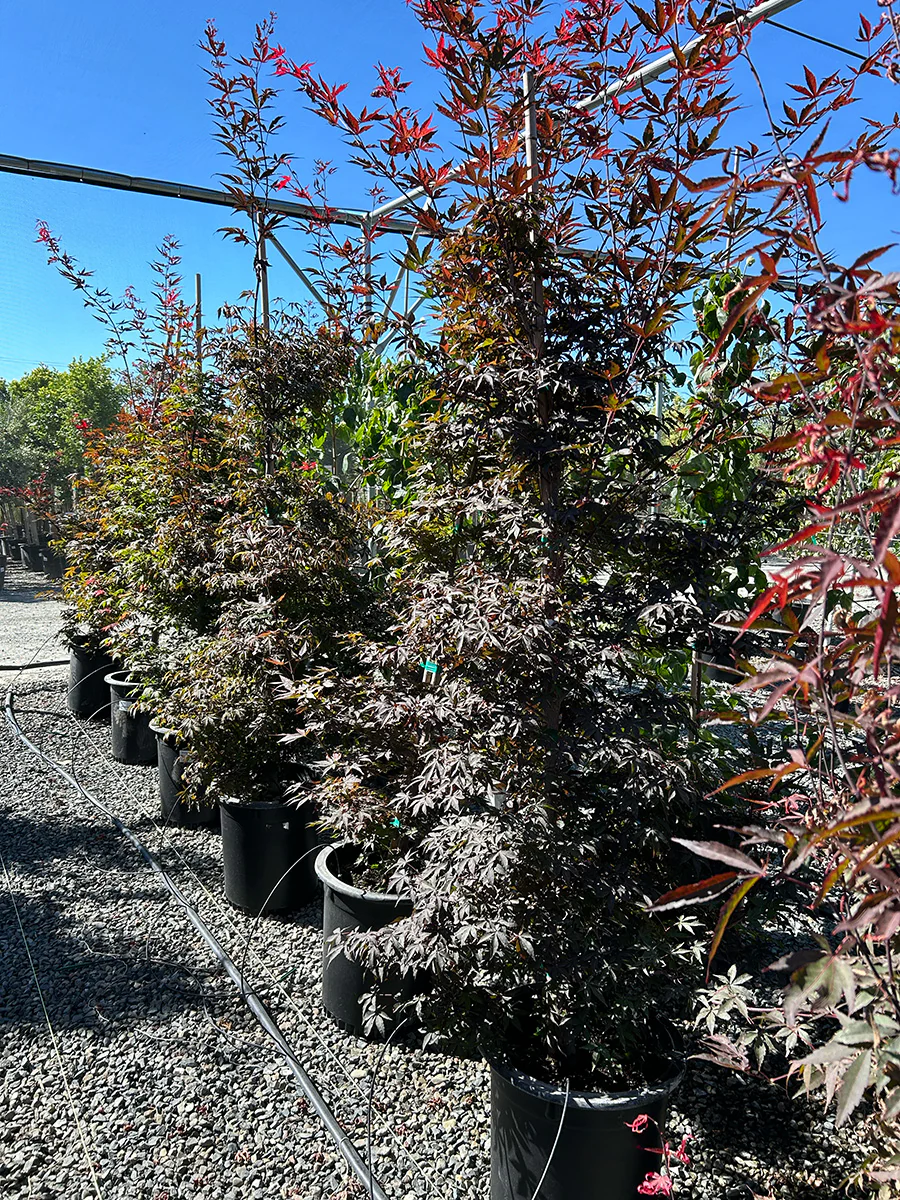
Four-Season Appeal – In spring, the leaves emerge with a reddish hue; in summer, the foliage transitions to light green; in fall, the tree displays bright yellow and orange colors, sometimes with hints of red; in winter, the coral bark takes center stage.
-
Heat Tolerance – Coral Bark Japanese Maples can tolerate full sun to partial shade, and sunlight enhances the red bark color. In warmer climates, provide some afternoon shade to prevent leaf scorch.
-
Low Maintenance – The tree appreciates deep watering during dry spells and requires minimal pruning once established, making it a practical choice for a refined garden without constant upkeep.
What Makes It Different
Most Japanese maples are chosen for foliage alone, and many need protection from strong sun while offering limited winter interest after leaf drop. Sango-kaku is different: one tree delivers structure, seasonal color, and vivid bark that stands out even in the quietest months of the garden year.
-
Full Sun Tolerance – This cultivar is more adaptable than many Japanese maple cultivars, tolerating full sun to partial shade. For best performance in hot California areas, plant in morning sun with partial shade or dappled shade during intense afternoon heat.
-
Vivid Coral Bark – Young branches hold the most intense red color, especially in winter and late winter. The bark color can fade over time on mature specimens, but younger branches typically retain the bright coral color, particularly when grown where the tree receives enough sun.
-
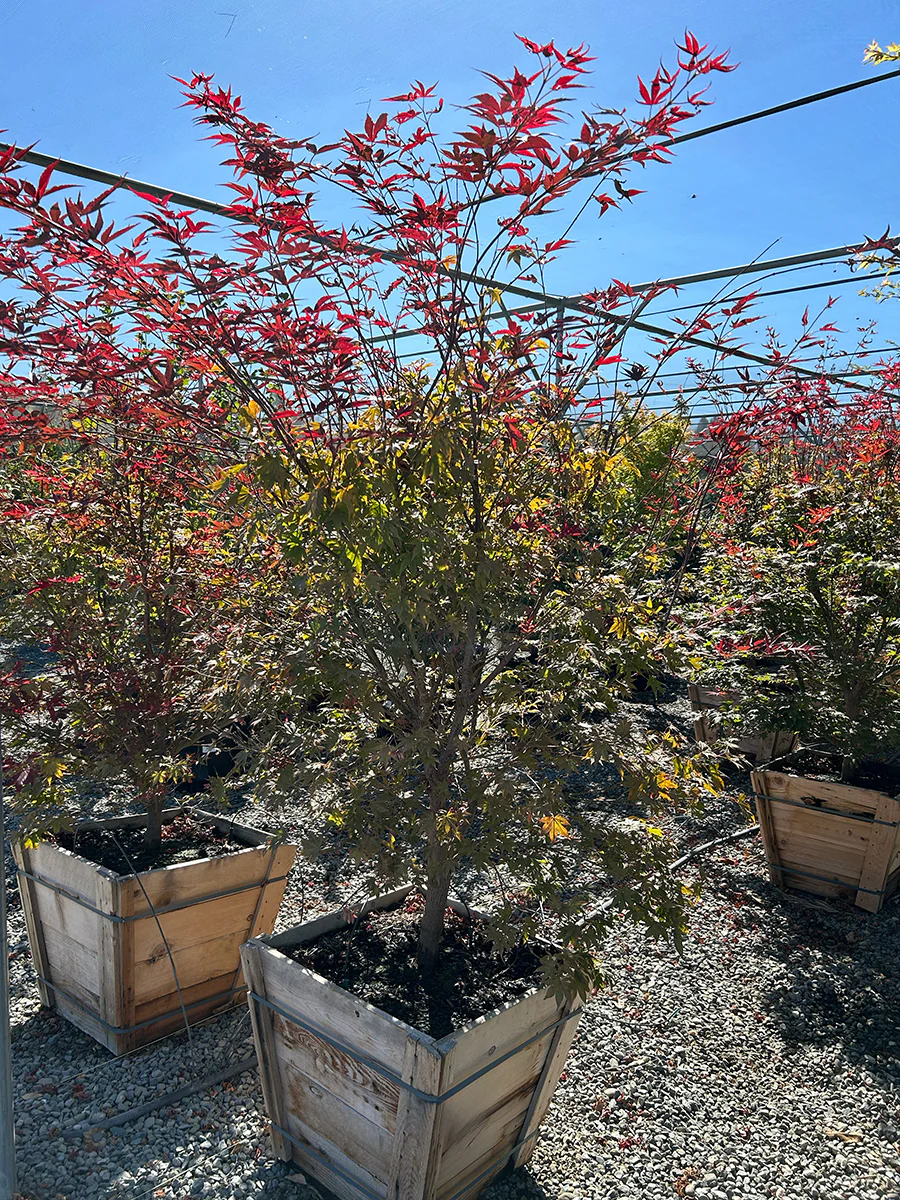
Upright Growth Habit – Coral Bark Japanese Maple maintains a strong, upright, V-shaped structure that provides excellent vertical framing for garden beds, small yards, entries, patios, and mixed borders with roses, evergreens, or shade-tolerant groundcovers.
How To Have Success In Your Garden
-
Plant in Well-Draining Soil
Choose well drained soil that is moist, nutrient-rich, and slightly acidic. Coral Bark Japanese Maples decline quickly in waterlogged or highly alkaline environments, and poor drainage can increase vulnerability to Pseudomonas bacteria and Verticillium wilt. Dig a hole wide enough for the root ball, keep the root crown level, and avoid planting during extreme temperatures. Spring or fall is ideal, although Coral Bark Japanese Maples can be planted at other times if heat and cold extremes are avoided. -
Establish with Consistent Watering
Water newly planted Coral Bark Japanese Maples daily for the first few weeks, then reduce to once a week once established, ensuring the soil remains moist but not overly saturated. During hot spells, deep watering helps protect roots, support healthy growth, and reduce leaf scorch. Add 2 to 3 inches of mulch around the base to retain soil moisture and protect roots from extreme temperatures, but keep mulch away from the trunk to prevent pest issues. -
Enjoy Year-Round Beauty
Use a slow-release balanced fertilizer in early spring, taking care to mix the fertilizer into the soil before planting to avoid root burn. Prune lightly only when needed to maintain the great shape, remove damaged branches, and preserve the upright structure. With the right soil, sun, and moisture, the bark Japanese maple rewards you with bright red winter bark, fresh spring leaves, summer shade, and autumn color.
Tree Specifications
-
Mature Size: Typically 16 to 18 feet tall and 8 to 10 feet wide; some specimens can reach 15 to 25 feet tall and 10 to 20 feet wide, and older mature tree specimens can grow up to 30 feet tall over many years.
-
Growth Rate: Fast when young, with young trees capable of growing up to two feet in a single year; overall slow-to-moderate growth of 1 to 2 feet per year when young.
-
Hardiness Zones: Thrives best in USDA Hardiness Zones 5 through 8; may perform in protected California microclimates with proper care.
-
Soil Requirements: Moist, well-draining, slightly acidic soil; adaptable to different soil types when drainage and soil moisture are carefully managed.
-
Sun Exposure: Full sun to partial shade; dappled shade or afternoon shade is recommended in hot climates to avoid leaf scorch.
-
Water Needs: Moderate once established; deep watering is appreciated during dry spells.
-
Foliage: Palmate leaves emerge with a reddish hue in spring, mature to light green in summer, and turn golden yellow, orange, and sometimes red in fall.
-
Bark: Bright coral red bark is strongest on young branches and becomes most prominent in winter.
-
Shape: Narrow growth habit with an upright, V-shaped form, suitable for smaller spaces and vertical garden framing.
-
Maintenance: Minimal pruning once established; prune with restraint to protect the natural shape and bark display.
-
Pest & Disease Notes: Coral Bark Japanese Maple trees are more susceptible to fungal diseases such as pseudomonas compared to other Japanese maple varieties. The Coral Bark Japanese Maple is highly vulnerable to Pseudomonas bacteria and Verticillium wilt if planted in poorly drained soil. Common pests include Japanese beetles and various insects that target the leaves and bark. Infections from harmful fungi like Botrytis and bacteria such as anthracnose can harm Coral Bark Japanese Maple trees, leading to leaf spots and browning foliage.
Who It’s For
Ideal for:
-
California Homeowners seeking winter interest, coral bark, and four-season appeal from a refined Japanese maple tree.
-
Small Space Gardeners who need a small tree with an upright form, narrow growth habit, and a maximum spread of around 15 to 20 feet at maturity.
-
Landscape Designers creating year-round color schemes with bright bark, golden fall foliage, and strong vertical structure.
-
Gardeners Who Love Japanese Maples but want a coral bark Japanese option that handles more sun than many other Japanese maples.
If you want a low maintenance specimen tree that looks elegant in spring, summer, fall, and winter, the Coral Bark Japanese Maple fits beautifully into patios, courtyards, small yards, front entries, and layered garden beds.
Frequently Asked Questions
How long before the bark shows coral color?
Young branches display coral red bark immediately, and the bright coral color becomes more noticeable in winter. The bark color is strongest on newer growth and can fade on older bark as the tree matures.
Does it need protection from California sun?
Not always. Sango Kaku can tolerate full sun to partial shade, and sunlight helps intensify the red bark. In warmer climates and hot inland California gardens, afternoon shade or dappled shade is recommended to prevent leaf scorch.
What about shipping to my location?
We offer free shipping throughout California on orders over $600. Expert packaging helps protect the root ball, branches, foliage, and overall tree health so your coral bark Japanese maple arrives ready to plant.
When is the best planting time?
Fall through early spring is best for establishment before summer heat. Coral Bark Japanese Maples should be planted in well-drained, moist, nutrient-rich soil, ideally during spring or fall, but they can be planted at other times if extreme temperatures are avoided.
How much care does the tree need once established?
The tree is low maintenance once established. Keep soil moist but not overly saturated, water deeply during dry spells, apply mulch correctly, fertilize in early spring with slow-release fertilizer, and prune only as needed.
Ready to Add Winter Magic to Your Garden?
Stop settling for a garden that looks bare in winter. Choose Coral Bark Japanese Maple and enjoy a small tree with coral red bark, light green summer foliage, golden yellow autumn color, and a great shape that anchors the landscape year-round.
Product Information
Product Information
Shipping & Returns
Shipping & Returns
Description
Transform Your Winter Garden with Stunning Coral-Red Bark That Glows Year-Round
The Coral Bark Japanese Maple gives your garden color when most trees are bare: bright coral red bark in winter, fresh spring foliage, light green summer leaves, and golden yellow to orange fall color.
Also known as Acer palmatum Sango Kaku, coral bark maple, or bark Japanese maple, this Japanese maple tree is prized for young branches that glow red in late winter and early spring. “Sango-kaku” is often translated as “coral tower,” a fitting name for its upright form and coral red bark.
Unlike most Japanese maples, Coral Bark Japanese Maples can tolerate full sun to partial shade, making this small tree more versatile for California gardens. In hotter inland climates, dappled light or afternoon shade is still recommended to prevent leaf scorch and keep the foliage healthy.
Why You’ll Love It
-
Brilliant Winter Interest – The striking coral red bark becomes most prominent in winter, creating a bright focal point when other Japanese maples and deciduous trees are dormant.
-
Fast-Growing Beauty – Young Coral Bark Japanese Maple trees can grow up to two feet in a single year, with a slow-to-moderate growth rate of 1 to 2 feet per year when young.
-
Four-Season Appeal – In spring, the leaves emerge with a reddish hue; in summer, the foliage transitions to light green; in fall, the tree displays bright yellow and orange colors, sometimes with hints of red; in winter, the coral bark takes center stage.
-
Heat Tolerance – Coral Bark Japanese Maples can tolerate full sun to partial shade, and sunlight enhances the red bark color. In warmer climates, provide some afternoon shade to prevent leaf scorch.
-
Low Maintenance – The tree appreciates deep watering during dry spells and requires minimal pruning once established, making it a practical choice for a refined garden without constant upkeep.
What Makes It Different
Most Japanese maples are chosen for foliage alone, and many need protection from strong sun while offering limited winter interest after leaf drop. Sango-kaku is different: one tree delivers structure, seasonal color, and vivid bark that stands out even in the quietest months of the garden year.
-
Full Sun Tolerance – This cultivar is more adaptable than many Japanese maple cultivars, tolerating full sun to partial shade. For best performance in hot California areas, plant in morning sun with partial shade or dappled shade during intense afternoon heat.
-
Vivid Coral Bark – Young branches hold the most intense red color, especially in winter and late winter. The bark color can fade over time on mature specimens, but younger branches typically retain the bright coral color, particularly when grown where the tree receives enough sun.
-
Upright Growth Habit – Coral Bark Japanese Maple maintains a strong, upright, V-shaped structure that provides excellent vertical framing for garden beds, small yards, entries, patios, and mixed borders with roses, evergreens, or shade-tolerant groundcovers.
How To Have Success In Your Garden
-
Plant in Well-Draining Soil
Choose well drained soil that is moist, nutrient-rich, and slightly acidic. Coral Bark Japanese Maples decline quickly in waterlogged or highly alkaline environments, and poor drainage can increase vulnerability to Pseudomonas bacteria and Verticillium wilt. Dig a hole wide enough for the root ball, keep the root crown level, and avoid planting during extreme temperatures. Spring or fall is ideal, although Coral Bark Japanese Maples can be planted at other times if heat and cold extremes are avoided. -
Establish with Consistent Watering
Water newly planted Coral Bark Japanese Maples daily for the first few weeks, then reduce to once a week once established, ensuring the soil remains moist but not overly saturated. During hot spells, deep watering helps protect roots, support healthy growth, and reduce leaf scorch. Add 2 to 3 inches of mulch around the base to retain soil moisture and protect roots from extreme temperatures, but keep mulch away from the trunk to prevent pest issues. -
Enjoy Year-Round Beauty
Use a slow-release balanced fertilizer in early spring, taking care to mix the fertilizer into the soil before planting to avoid root burn. Prune lightly only when needed to maintain the great shape, remove damaged branches, and preserve the upright structure. With the right soil, sun, and moisture, the bark Japanese maple rewards you with bright red winter bark, fresh spring leaves, summer shade, and autumn color.
Tree Specifications
-
Mature Size: Typically 16 to 18 feet tall and 8 to 10 feet wide; some specimens can reach 15 to 25 feet tall and 10 to 20 feet wide, and older mature tree specimens can grow up to 30 feet tall over many years.
-
Growth Rate: Fast when young, with young trees capable of growing up to two feet in a single year; overall slow-to-moderate growth of 1 to 2 feet per year when young.
-
Hardiness Zones: Thrives best in USDA Hardiness Zones 5 through 8; may perform in protected California microclimates with proper care.
-
Soil Requirements: Moist, well-draining, slightly acidic soil; adaptable to different soil types when drainage and soil moisture are carefully managed.
-
Sun Exposure: Full sun to partial shade; dappled shade or afternoon shade is recommended in hot climates to avoid leaf scorch.
-
Water Needs: Moderate once established; deep watering is appreciated during dry spells.
-
Foliage: Palmate leaves emerge with a reddish hue in spring, mature to light green in summer, and turn golden yellow, orange, and sometimes red in fall.
-
Bark: Bright coral red bark is strongest on young branches and becomes most prominent in winter.
-
Shape: Narrow growth habit with an upright, V-shaped form, suitable for smaller spaces and vertical garden framing.
-
Maintenance: Minimal pruning once established; prune with restraint to protect the natural shape and bark display.
-
Pest & Disease Notes: Coral Bark Japanese Maple trees are more susceptible to fungal diseases such as pseudomonas compared to other Japanese maple varieties. The Coral Bark Japanese Maple is highly vulnerable to Pseudomonas bacteria and Verticillium wilt if planted in poorly drained soil. Common pests include Japanese beetles and various insects that target the leaves and bark. Infections from harmful fungi like Botrytis and bacteria such as anthracnose can harm Coral Bark Japanese Maple trees, leading to leaf spots and browning foliage.
Who It’s For
Ideal for:
-
California Homeowners seeking winter interest, coral bark, and four-season appeal from a refined Japanese maple tree.
-
Small Space Gardeners who need a small tree with an upright form, narrow growth habit, and a maximum spread of around 15 to 20 feet at maturity.
-
Landscape Designers creating year-round color schemes with bright bark, golden fall foliage, and strong vertical structure.
-
Gardeners Who Love Japanese Maples but want a coral bark Japanese option that handles more sun than many other Japanese maples.
If you want a low maintenance specimen tree that looks elegant in spring, summer, fall, and winter, the Coral Bark Japanese Maple fits beautifully into patios, courtyards, small yards, front entries, and layered garden beds.
Frequently Asked Questions
How long before the bark shows coral color?
Young branches display coral red bark immediately, and the bright coral color becomes more noticeable in winter. The bark color is strongest on newer growth and can fade on older bark as the tree matures.
Does it need protection from California sun?
Not always. Sango Kaku can tolerate full sun to partial shade, and sunlight helps intensify the red bark. In warmer climates and hot inland California gardens, afternoon shade or dappled shade is recommended to prevent leaf scorch.
What about shipping to my location?
We offer free shipping throughout California on orders over $600. Expert packaging helps protect the root ball, branches, foliage, and overall tree health so your coral bark Japanese maple arrives ready to plant.
When is the best planting time?
Fall through early spring is best for establishment before summer heat. Coral Bark Japanese Maples should be planted in well-drained, moist, nutrient-rich soil, ideally during spring or fall, but they can be planted at other times if extreme temperatures are avoided.
How much care does the tree need once established?
The tree is low maintenance once established. Keep soil moist but not overly saturated, water deeply during dry spells, apply mulch correctly, fertilize in early spring with slow-release fertilizer, and prune only as needed.
Ready to Add Winter Magic to Your Garden?
Stop settling for a garden that looks bare in winter. Choose Coral Bark Japanese Maple and enjoy a small tree with coral red bark, light green summer foliage, golden yellow autumn color, and a great shape that anchors the landscape year-round.