Bird of Paradise Plant - Strelitzia Reginae
Transform Your Space with Tropical Elegance in One Statement
A Bird of Paradise plant gives indoor rooms, patios, and garden beds instant tropical flair with bold banana like leaves, sculptural height, and exotic bird-shaped flowers when mature.
Designed for homeowners who want a dramatic focal point without fussy daily care, the bird of paradise brings a resort-like atmosphere to outdoor spaces, sunny interiors, poolside borders, and modern landscape design. The Bird of Paradise thrives in bright sunlight, high humidity, and warm, stable temperatures, making it especially well suited to southern california and other warm climates.
Why You’ll Love Bird of Paradise Plants
-
Stunning Visual Impact – Large paddle-shaped paradise leaves create instant tropical drama, and the Bird of Paradise (Strelitzia) is a tropical plant known for its glossy leaves and crane-like flowers.
-
Low Maintenance Beauty – With the right watering routine, bright light, and well draining soil, paradise plant care stays simple for busy homeowners.
-
Year-Round Interest – Evergreen foliage provides consistent beauty in every season, even when the plant is not in bloom.
-
Impressive Size – Indoors, Bird of Paradise plants typically grow 4 to 6 feet tall, while outdoor varieties in tropical climates can exceed 20 feet; selected mature plants and giant bird varieties can create a 6-8 foot indoor statement or reach 20+ feet outdoors.
-
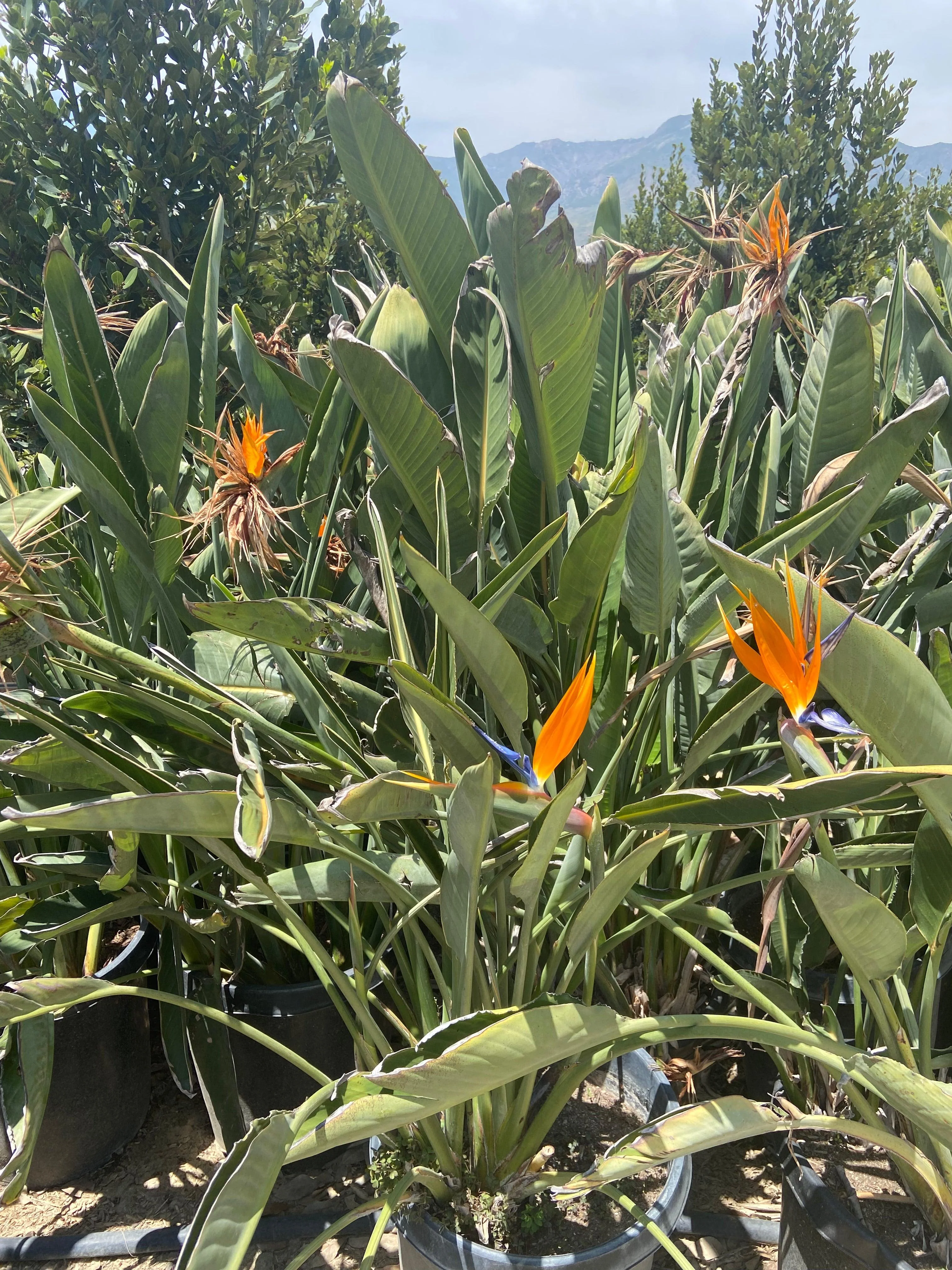
Exotic Blooms – Bird of Paradise plants typically bloom in vibrant hues of orange and blue, showcasing stunning, bird-like flowers that resemble exotic birds in flight.
The iconic flowers of the Bird of Paradise typically feature bright orange petals and deep blue hues. In ideal conditions, these plants can produce dozens of long-lasting blooms throughout the year when proper lighting, watering, and temperatures are consistent. The flowers of the Bird of Paradise are rich in nectar, which attracts sunbirds and other pollinators.
What Makes Bird of Paradise Plants Different
Most tropical indoor plants either stay small, demand constant humidity control, or lose their impact in larger rooms. Bird of paradise plants are different because the plant grows with strong architectural form, holds its shape beautifully, and can move between indoor plants and landscape plants depending on climate.
Bird of Paradise plants are built for standout spaces:
-
Adaptable Growth – Bird of paradise outdoors performs well in USDA zones 10-12 and thrives both indoors and outdoors in California’s climate when protected from cold. In cooler areas, a large pot with drainage holes lets you move the paradise plant during colder months.
-
Architectural Form – Unique paddle-shaped leaves create sculptural interest unlike many other houseplants, and the giant white bird form features large leaves that make an immediate design statement.
-
Proven Performance – Native to southern africa, the genus Strelitzia has a long ornamental history; the crane flower name comes from its bird like flowers, and Strelitzia honors queen charlotte of Mecklenburg-Strelitz.
The orange bird of paradise, Strelitzia reginae, is also the official flower of Los Angeles, making it a natural fit for san diego, southern california gardens, and warm coastal homes. The Orange Flower Bird of Paradise (Strelitzia reginae) is a more compact variety, known for its stunning orange and blue flowers, making it a popular choice for indoor gardening. Common varieties of Bird of Paradise (Strelitzia reginae) grow about 4 to 6 feet tall, while the Giant Bird of Paradise (Strelitzia nicolai) can grow up to 30 feet high outdoors.
How to Care for Your Bird of Paradise Plant
-
Choose the Right Location
Give your bird of paradise as much light as possible. Bird of Paradise requires 4-6 hours of bright light daily to encourage blooms. Bird of Paradise plants thrive best in bright, indirect light but can tolerate up to 6 hours of direct sunlight, making a south or west-facing window ideal for their growth. Outdoors, choose full sun to partial shade; indoors, a sunny spot with indirect light and some direct sun is best. -
Water Properly
Water your Bird of Paradise thoroughly, allowing the top 2-3 inches of soil to dry out completely between waterings, as they appreciate consistent moisture but dislike being overly wet. Always let excess water drain away through drainage holes. Yellowing leaves on a Bird of Paradise are typically a sign of overwatering, and consistently wet potting soil can lead to root rot around the fleshy roots. -
Maintain Conditions
Bird of Paradise plants thrive in temperatures between 65 °F and 85 °F. Bird of Paradise loves high humidity levels ranging from 50% to 70%. Bird of Paradise plants thrive in humidity levels of 30-50%, but can benefit from higher humidity levels of 60-70%, especially in dry environments. A humid environment helps reduce crispy leaf edges and supports a new leaf as it unfurls. -
Feed and Prune
Bird of Paradise should be fertilized every 2-4 weeks during the spring and summer growing seasons with a balanced liquid houseplant fertilizer. A water soluble fertilizer works well when used as directed. Remove damaged leaves with clean tools, wipe dust from paradise leaves, and watch for spider mites, scale, or mealybugs; neem oil or insecticidal soap can help manage pests when applied properly.
Young Bird of Paradise plants may not bloom for the first few years; as the plant ages, flowering increases, and they bloom best when slightly rootbound. Keeping the plant slightly pot bound can encourage flowering, while moving too quickly into a bigger pot may hinder flowering by directing energy into root expansion instead of paradise flowers.
Plant Specifications and Growing Details
-
Botanical name: Strelitzia nicolai (Giant Bird of Paradise) and Strelitzia reginae (Orange Bird of Paradise)
-
Other notable varieties: White Bird of Paradise, Strelitzia alba, and Strelitzia caudata
-
Mature size: 6-8 feet indoors for large specimens, 20+ feet outdoors in ground
-
Typical indoor size: Indoors, Bird of Paradise plants typically grow 4 to 6 feet tall
-
Outdoor potential: Outdoor varieties in tropical climates can exceed 20 feet, pairing well with sun-loving specimens like the Desert Museum Palo Verde tree
-
Climate zones: USDA zones 10-12, with container growing in cooler areas
-
Soil requirements: Well-draining potting mix with organic matter, similar to what many citrus fruit trees for home gardens prefer
-
Preferred pH: Bird of Paradise prefers rich, nutrient-dense soil that is well-draining, with a pH between 5.5 and 7.5
-
Best soil texture: Bird of Paradise plants prefer a well-draining potting soil that includes peat, perlite, or sand to promote healthy root development and prevent waterlogging, just as many fruitless olive trees for Mediterranean landscaping do
-
Light needs: Bright indirect light to partial sun exposure, with 4-6 hours of bright light daily to encourage blooms
-
Watering schedule: Weekly to bi-weekly depending on season, temperature, humidity, pot size, and how quickly the top 2-3 inches of soil dry
-
Temperature range: 65 °F to 85 °F
-
Humidity range: 50% to 70% preferred, with 30% to 50% tolerated in many indoor spaces; outdoors, pairing with an evergreen English Laurel hedge for privacy can complete a lush tropical-feeling backdrop
The Giant Bird of Paradise (Strelitzia Nicolai) is known for its impressive size, reaching heights of up to 30 feet outdoors, and features large, paddle-shaped leaves. The White Bird of Paradise (Strelitzia alba) is characterized by its dramatic, glossy leaves and can grow over 20 feet tall when planted outdoors, producing white bird-shaped flowers under ideal conditions. Strelitzia caudata, also known as Mountain Strelitzia, is another variety of Bird of Paradise that is less common but notable for its unique characteristics and adaptability to different environments, much like many ornamental flowering trees used for curb appeal.
White bird and giant white bird types are especially strong choices when you want height, broad foliage, and a dramatic tropical screen, similar to how a Tipu shade tree with yellow flowers can anchor a sunny landscape. Orange bird types stay more compact and are valued for orange sepals, sometimes yellow sepals, blue petals, and deep blue or dark blue floral accents. Some white bird of paradise varieties produce white flowers with dark blue details under the right conditions.
Who Should Grow Bird of Paradise Plants
Bird of paradise is ideal for plant lovers who want maximum visual impact with a low maintenance care routine, and the Giant Bird of Paradise is especially popular for creating a bold, architectural focal point in larger spaces. The paradise prefers warmth, bright light, regular moisture without soggy soil, and enough room for the root ball to expand slowly.
Ideal for:
-
California homeowners looking to create tropical outdoor living spaces and who want a convenient plant nursery and landscape partner
-
Indoor plant enthusiasts wanting a dramatic statement plant near a south or west-facing window
-
Landscape designers creating resort-style gardens for clients
-
Anyone seeking low-maintenance plants with maximum visual impact
-
Homeowners in warm climates who want durable landscape plants for patios, entries, courtyards, and pool areas, including evergreen privacy and fast-growing trees
-
Plant collectors who want mature plants with strong foliage and the possibility to produce blooms
If you want a focal point that looks polished from the first day, a mature bird of paradise is a strong choice. In southern california, including san diego and other frost-free areas, bird of paradise grows especially well outdoors when placed in full sun to partial shade and planted in well draining soil.
Frequently Asked Questions
Will my bird of paradise bloom indoors?
It can, but a flower indoors is not guaranteed. Bird of Paradise requires 4-6 hours of bright light daily to encourage blooms, and insufficient light is the most common reason mature indoor plants fail to flower. Young Bird of Paradise plants may not bloom for the first few years; as the plant ages, flowering increases, and they bloom best when slightly rootbound.
How fast do bird of paradise plants grow?
Growth is moderate. In bright conditions during spring, summer, and early fall, a healthy plant may push a new leaf regularly. Common varieties of Bird of Paradise (Strelitzia reginae) grow about 4 to 6 feet tall, while the Giant Bird of Paradise (Strelitzia nicolai) can grow up to 30 feet high outdoors.
Are bird of paradise plants safe for pets?
No. The Bird of Paradise plant is toxic to cats and dogs, containing compounds that can cause gastrointestinal distress if ingested. Symptoms of Bird of Paradise ingestion in pets may include drooling, vomiting, and in severe cases, more serious symptoms requiring veterinary attention. The White Bird of Paradise is also toxic to pets, with its flower seeds containing toxic tannins and leaves that may have hydrocyanic acid.
When should I repot my bird of paradise?
Repot when the root ball is crowded, roots circle heavily, or water runs through too quickly. Many plants flower best when pot bound or slightly pot bound, so avoid moving into an oversized bigger pot too soon. The most common method for propagating Bird of Paradise plants is division, typically performed every 3 to 5 years. To propagate by division, remove the Bird of Paradise plant from its pot and gently separate the rooted sections, ensuring each division has healthy roots before replanting; use a clean sharp knife only when sections cannot be separated by hand.
Can I grow bird of paradise outdoors in California year-round?
Yes, in many warm, frost-free parts of California. Bird of paradise outdoors is especially reliable in southern california, where full sun, partial shade, and mild winters support strong foliage and seasonal bloom potential. In colder months or cooler zones, grow the plant in a large pot so it can be protected from cold exposure.
Can bird of paradise be grown from seed?
Yes. Bird of Paradise can also be propagated from seeds, which requires patience and a warm, humid environment for optimal germination. Seed-grown plants take longer to mature than divisions, so divisions are usually preferred when you want established growth sooner.
What causes brown edges, pests, or yellowing leaves?
Dry air, inconsistent watering, excess minerals from tap water, or pest pressure can stress the leaves. Spider mites are more likely in dry indoor air. Neem oil or insecticidal soap can help with spider mites when used carefully. Yellowing leaves on a Bird of Paradise are typically a sign of overwatering, so let the soil dry properly between waterings.
Ready to Bring the Tropics Home?
Stop settling for ordinary houseplants when one bird of paradise plant can anchor an entire room, patio, or landscape design.
Yardwork helps you choose healthy, mature plants suited to your space, whether you want an orange bird for compact color, a white bird of paradise for bold foliage, or a giant bird for dramatic outdoor spaces, and can also supply complementary options like Carrotwood and other landscape trees. Our team can help with placement, paradise plant care, soil selection, watering routine, and consultation for indoor or outdoor planting.
Original: $65.00
-65%$65.00
$22.75Product Information
Product Information
Shipping & Returns
Shipping & Returns
Description
Transform Your Space with Tropical Elegance in One Statement
A Bird of Paradise plant gives indoor rooms, patios, and garden beds instant tropical flair with bold banana like leaves, sculptural height, and exotic bird-shaped flowers when mature.
Designed for homeowners who want a dramatic focal point without fussy daily care, the bird of paradise brings a resort-like atmosphere to outdoor spaces, sunny interiors, poolside borders, and modern landscape design. The Bird of Paradise thrives in bright sunlight, high humidity, and warm, stable temperatures, making it especially well suited to southern california and other warm climates.
Why You’ll Love Bird of Paradise Plants
-
Stunning Visual Impact – Large paddle-shaped paradise leaves create instant tropical drama, and the Bird of Paradise (Strelitzia) is a tropical plant known for its glossy leaves and crane-like flowers.
-
Low Maintenance Beauty – With the right watering routine, bright light, and well draining soil, paradise plant care stays simple for busy homeowners.
-
Year-Round Interest – Evergreen foliage provides consistent beauty in every season, even when the plant is not in bloom.
-
Impressive Size – Indoors, Bird of Paradise plants typically grow 4 to 6 feet tall, while outdoor varieties in tropical climates can exceed 20 feet; selected mature plants and giant bird varieties can create a 6-8 foot indoor statement or reach 20+ feet outdoors.
-
Exotic Blooms – Bird of Paradise plants typically bloom in vibrant hues of orange and blue, showcasing stunning, bird-like flowers that resemble exotic birds in flight.
The iconic flowers of the Bird of Paradise typically feature bright orange petals and deep blue hues. In ideal conditions, these plants can produce dozens of long-lasting blooms throughout the year when proper lighting, watering, and temperatures are consistent. The flowers of the Bird of Paradise are rich in nectar, which attracts sunbirds and other pollinators.
What Makes Bird of Paradise Plants Different
Most tropical indoor plants either stay small, demand constant humidity control, or lose their impact in larger rooms. Bird of paradise plants are different because the plant grows with strong architectural form, holds its shape beautifully, and can move between indoor plants and landscape plants depending on climate.
Bird of Paradise plants are built for standout spaces:
-
Adaptable Growth – Bird of paradise outdoors performs well in USDA zones 10-12 and thrives both indoors and outdoors in California’s climate when protected from cold. In cooler areas, a large pot with drainage holes lets you move the paradise plant during colder months.
-
Architectural Form – Unique paddle-shaped leaves create sculptural interest unlike many other houseplants, and the giant white bird form features large leaves that make an immediate design statement.
-
Proven Performance – Native to southern africa, the genus Strelitzia has a long ornamental history; the crane flower name comes from its bird like flowers, and Strelitzia honors queen charlotte of Mecklenburg-Strelitz.
The orange bird of paradise, Strelitzia reginae, is also the official flower of Los Angeles, making it a natural fit for san diego, southern california gardens, and warm coastal homes. The Orange Flower Bird of Paradise (Strelitzia reginae) is a more compact variety, known for its stunning orange and blue flowers, making it a popular choice for indoor gardening. Common varieties of Bird of Paradise (Strelitzia reginae) grow about 4 to 6 feet tall, while the Giant Bird of Paradise (Strelitzia nicolai) can grow up to 30 feet high outdoors.
How to Care for Your Bird of Paradise Plant
-
Choose the Right Location
Give your bird of paradise as much light as possible. Bird of Paradise requires 4-6 hours of bright light daily to encourage blooms. Bird of Paradise plants thrive best in bright, indirect light but can tolerate up to 6 hours of direct sunlight, making a south or west-facing window ideal for their growth. Outdoors, choose full sun to partial shade; indoors, a sunny spot with indirect light and some direct sun is best. -
Water Properly
Water your Bird of Paradise thoroughly, allowing the top 2-3 inches of soil to dry out completely between waterings, as they appreciate consistent moisture but dislike being overly wet. Always let excess water drain away through drainage holes. Yellowing leaves on a Bird of Paradise are typically a sign of overwatering, and consistently wet potting soil can lead to root rot around the fleshy roots. -
Maintain Conditions
Bird of Paradise plants thrive in temperatures between 65 °F and 85 °F. Bird of Paradise loves high humidity levels ranging from 50% to 70%. Bird of Paradise plants thrive in humidity levels of 30-50%, but can benefit from higher humidity levels of 60-70%, especially in dry environments. A humid environment helps reduce crispy leaf edges and supports a new leaf as it unfurls. -
Feed and Prune
Bird of Paradise should be fertilized every 2-4 weeks during the spring and summer growing seasons with a balanced liquid houseplant fertilizer. A water soluble fertilizer works well when used as directed. Remove damaged leaves with clean tools, wipe dust from paradise leaves, and watch for spider mites, scale, or mealybugs; neem oil or insecticidal soap can help manage pests when applied properly.
Young Bird of Paradise plants may not bloom for the first few years; as the plant ages, flowering increases, and they bloom best when slightly rootbound. Keeping the plant slightly pot bound can encourage flowering, while moving too quickly into a bigger pot may hinder flowering by directing energy into root expansion instead of paradise flowers.
Plant Specifications and Growing Details
-
Botanical name: Strelitzia nicolai (Giant Bird of Paradise) and Strelitzia reginae (Orange Bird of Paradise)
-
Other notable varieties: White Bird of Paradise, Strelitzia alba, and Strelitzia caudata
-
Mature size: 6-8 feet indoors for large specimens, 20+ feet outdoors in ground
-
Typical indoor size: Indoors, Bird of Paradise plants typically grow 4 to 6 feet tall
-
Outdoor potential: Outdoor varieties in tropical climates can exceed 20 feet, pairing well with sun-loving specimens like the Desert Museum Palo Verde tree
-
Climate zones: USDA zones 10-12, with container growing in cooler areas
-
Soil requirements: Well-draining potting mix with organic matter, similar to what many citrus fruit trees for home gardens prefer
-
Preferred pH: Bird of Paradise prefers rich, nutrient-dense soil that is well-draining, with a pH between 5.5 and 7.5
-
Best soil texture: Bird of Paradise plants prefer a well-draining potting soil that includes peat, perlite, or sand to promote healthy root development and prevent waterlogging, just as many fruitless olive trees for Mediterranean landscaping do
-
Light needs: Bright indirect light to partial sun exposure, with 4-6 hours of bright light daily to encourage blooms
-
Watering schedule: Weekly to bi-weekly depending on season, temperature, humidity, pot size, and how quickly the top 2-3 inches of soil dry
-
Temperature range: 65 °F to 85 °F
-
Humidity range: 50% to 70% preferred, with 30% to 50% tolerated in many indoor spaces; outdoors, pairing with an evergreen English Laurel hedge for privacy can complete a lush tropical-feeling backdrop
The Giant Bird of Paradise (Strelitzia Nicolai) is known for its impressive size, reaching heights of up to 30 feet outdoors, and features large, paddle-shaped leaves. The White Bird of Paradise (Strelitzia alba) is characterized by its dramatic, glossy leaves and can grow over 20 feet tall when planted outdoors, producing white bird-shaped flowers under ideal conditions. Strelitzia caudata, also known as Mountain Strelitzia, is another variety of Bird of Paradise that is less common but notable for its unique characteristics and adaptability to different environments, much like many ornamental flowering trees used for curb appeal.
White bird and giant white bird types are especially strong choices when you want height, broad foliage, and a dramatic tropical screen, similar to how a Tipu shade tree with yellow flowers can anchor a sunny landscape. Orange bird types stay more compact and are valued for orange sepals, sometimes yellow sepals, blue petals, and deep blue or dark blue floral accents. Some white bird of paradise varieties produce white flowers with dark blue details under the right conditions.
Who Should Grow Bird of Paradise Plants
Bird of paradise is ideal for plant lovers who want maximum visual impact with a low maintenance care routine, and the Giant Bird of Paradise is especially popular for creating a bold, architectural focal point in larger spaces. The paradise prefers warmth, bright light, regular moisture without soggy soil, and enough room for the root ball to expand slowly.
Ideal for:
-
California homeowners looking to create tropical outdoor living spaces and who want a convenient plant nursery and landscape partner
-
Indoor plant enthusiasts wanting a dramatic statement plant near a south or west-facing window
-
Landscape designers creating resort-style gardens for clients
-
Anyone seeking low-maintenance plants with maximum visual impact
-
Homeowners in warm climates who want durable landscape plants for patios, entries, courtyards, and pool areas, including evergreen privacy and fast-growing trees
-
Plant collectors who want mature plants with strong foliage and the possibility to produce blooms
If you want a focal point that looks polished from the first day, a mature bird of paradise is a strong choice. In southern california, including san diego and other frost-free areas, bird of paradise grows especially well outdoors when placed in full sun to partial shade and planted in well draining soil.
Frequently Asked Questions
Will my bird of paradise bloom indoors?
It can, but a flower indoors is not guaranteed. Bird of Paradise requires 4-6 hours of bright light daily to encourage blooms, and insufficient light is the most common reason mature indoor plants fail to flower. Young Bird of Paradise plants may not bloom for the first few years; as the plant ages, flowering increases, and they bloom best when slightly rootbound.
How fast do bird of paradise plants grow?
Growth is moderate. In bright conditions during spring, summer, and early fall, a healthy plant may push a new leaf regularly. Common varieties of Bird of Paradise (Strelitzia reginae) grow about 4 to 6 feet tall, while the Giant Bird of Paradise (Strelitzia nicolai) can grow up to 30 feet high outdoors.
Are bird of paradise plants safe for pets?
No. The Bird of Paradise plant is toxic to cats and dogs, containing compounds that can cause gastrointestinal distress if ingested. Symptoms of Bird of Paradise ingestion in pets may include drooling, vomiting, and in severe cases, more serious symptoms requiring veterinary attention. The White Bird of Paradise is also toxic to pets, with its flower seeds containing toxic tannins and leaves that may have hydrocyanic acid.
When should I repot my bird of paradise?
Repot when the root ball is crowded, roots circle heavily, or water runs through too quickly. Many plants flower best when pot bound or slightly pot bound, so avoid moving into an oversized bigger pot too soon. The most common method for propagating Bird of Paradise plants is division, typically performed every 3 to 5 years. To propagate by division, remove the Bird of Paradise plant from its pot and gently separate the rooted sections, ensuring each division has healthy roots before replanting; use a clean sharp knife only when sections cannot be separated by hand.
Can I grow bird of paradise outdoors in California year-round?
Yes, in many warm, frost-free parts of California. Bird of paradise outdoors is especially reliable in southern california, where full sun, partial shade, and mild winters support strong foliage and seasonal bloom potential. In colder months or cooler zones, grow the plant in a large pot so it can be protected from cold exposure.
Can bird of paradise be grown from seed?
Yes. Bird of Paradise can also be propagated from seeds, which requires patience and a warm, humid environment for optimal germination. Seed-grown plants take longer to mature than divisions, so divisions are usually preferred when you want established growth sooner.
What causes brown edges, pests, or yellowing leaves?
Dry air, inconsistent watering, excess minerals from tap water, or pest pressure can stress the leaves. Spider mites are more likely in dry indoor air. Neem oil or insecticidal soap can help with spider mites when used carefully. Yellowing leaves on a Bird of Paradise are typically a sign of overwatering, so let the soil dry properly between waterings.
Ready to Bring the Tropics Home?
Stop settling for ordinary houseplants when one bird of paradise plant can anchor an entire room, patio, or landscape design.
Yardwork helps you choose healthy, mature plants suited to your space, whether you want an orange bird for compact color, a white bird of paradise for bold foliage, or a giant bird for dramatic outdoor spaces, and can also supply complementary options like Carrotwood and other landscape trees. Our team can help with placement, paradise plant care, soil selection, watering routine, and consultation for indoor or outdoor planting.