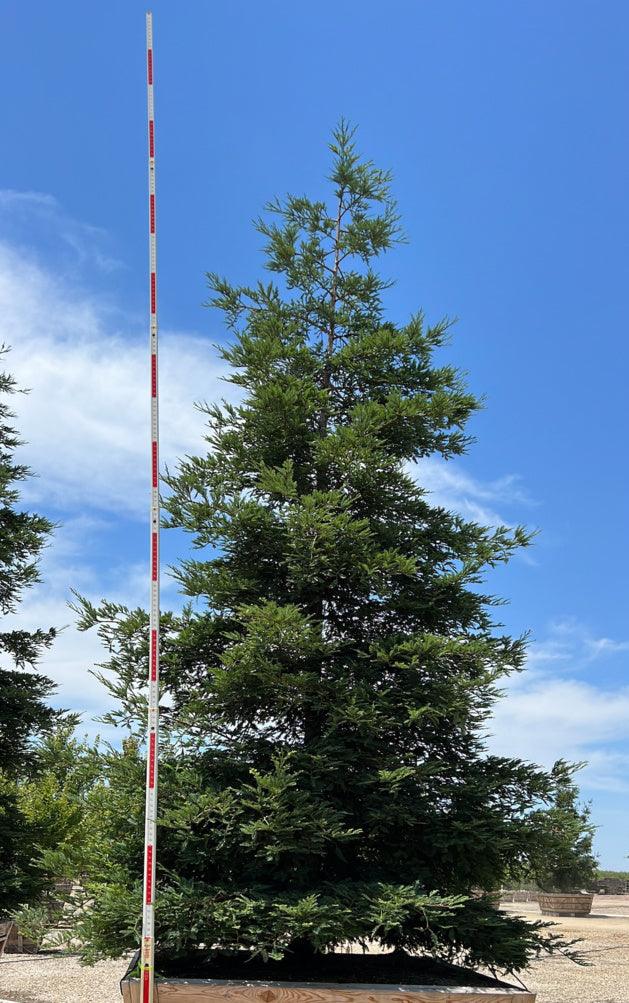
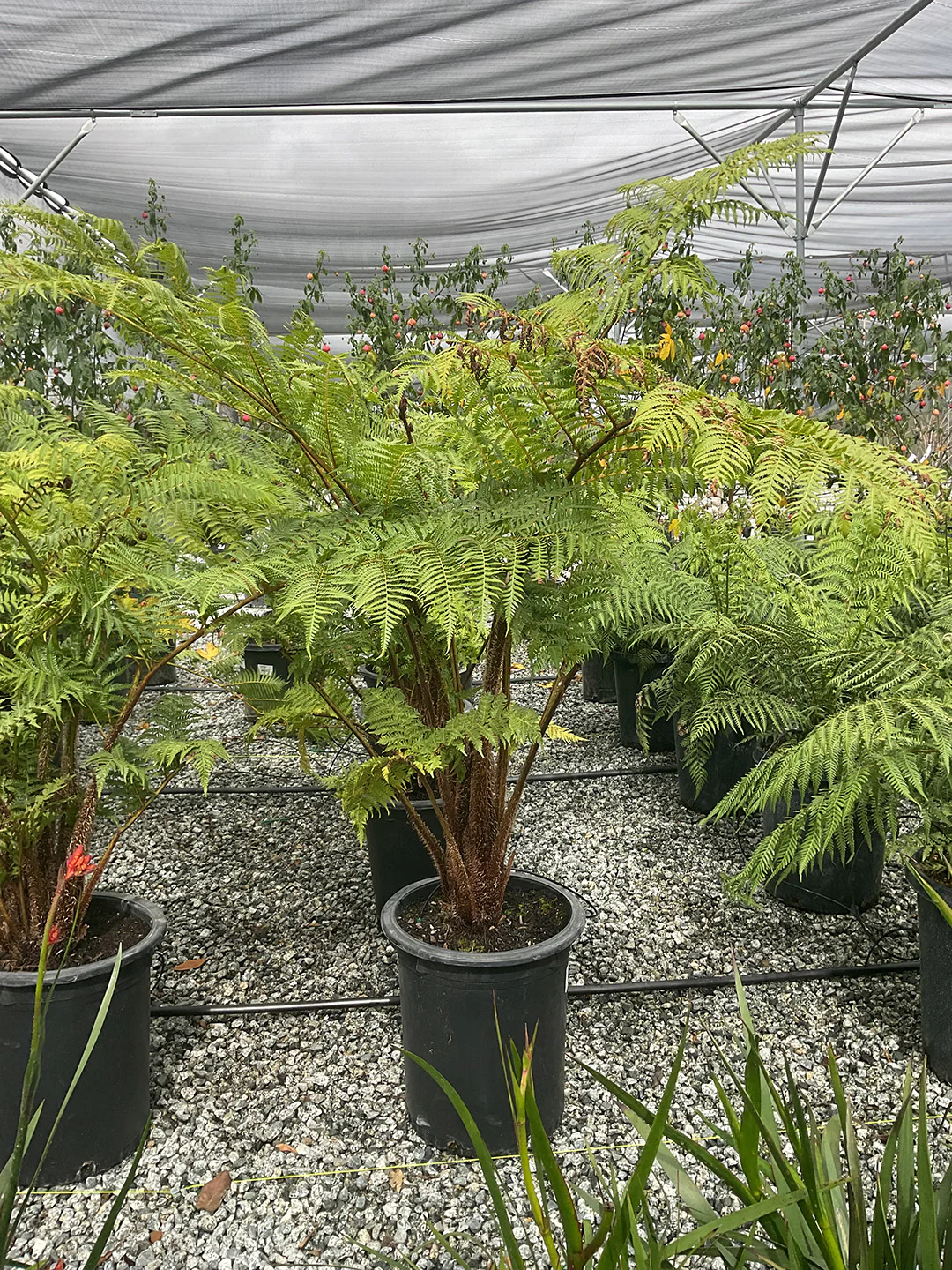
Tree Fern - Alsophila australis
Create a Prehistoric Paradise in Your California Garden
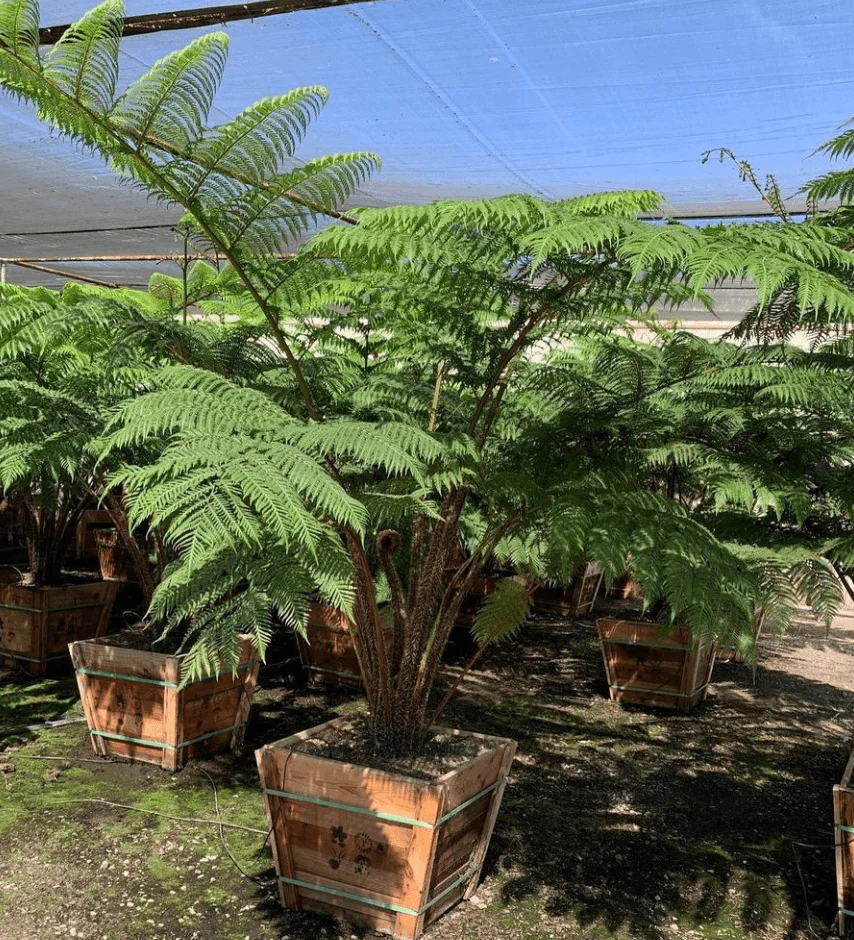
Tree ferns bring instant height, shade-loving texture, and a tropical-resort feel to California gardens without relying on ordinary trees or flowering shrubs and trees. With an upright tree fern trunk, umbrella shaped crowns, and long tree fern fronds that create a beautiful pattern in dappled shade, these plants can turn a patio, courtyard, pool garden, or shaded entry into a prehistoric sanctuary.
Tree ferns are non-flowering plants formed by a dense mass of aerial roots and old leaf bases, not true wood. Most tree ferns look ancient because their trunks are built from roots, leaf traces, and old frond bases around a living growing tip at the crown. Tree ferns thrive in humid tropical, subtropical, and temperate rainforests with high rainfall and consistent humidity, and many species are primarily found in Australasia, the Americas, and Southeast Asia & Pacific Islands.
For California, tree ferns are best in a suitable environment with dappled sunlight, indirect light, rich moist soil, and protection from strong winds. Coastal areas and shaded inland microclimates are especially useful because California’s Mediterranean climate gives tree ferns the mild winter conditions they like, while summer heat requires consistent moisture and smart placement.
Why You’ll Love Tree Ferns
-
Instant Drama – Create stunning focal points with towering fronds, sculptural trunks, and the lush look of tropical climates. A mature australian tree fern can make a garden feel like a shaded resort instead of a standard landscape.
-
Low Maintenance – Tree ferns require minimal care once established in the right growing conditions: shade, moisture, mulch, and protection from harsh sun.
-
Year-Round Interest – Evergreen fronds provide continuous garden structure through winter, especially in USDA zones 9-11 with winter protection when needed.
-
Shade Solution – Tree ferns grow best in partial to full shade to prevent the fronds from drying out, making them ideal where many other plants struggle.
-
Mature Impact – Available in large sizes for immediate transformation, similar to other mature trees for instant impact, so you do not have to wait a few years for the tropical effect to develop.
The two main genera of tree ferns are Cyathea, known as scaly or rough tree ferns, and Dicksonia, referred to as soft tree ferns, and they can be combined with other structural species such as African Sumac and companion trees. Cyathea is the largest group of tree ferns with over 500 species, typically found in warm, tropical climates, while Dicksonia has about 25 species and is often found in cooler climates.
Cyathea species are distinguished by flat scales rather than hairs on their fronds and trunk crowns. Dicksonia species are recognized by the dense, soft, reddish-brown hairs covering their crown and emerging fronds. This gives each species a different texture: the scaly tree fern Cyathea look is bold and architectural, while dicksonia antarctica has a softer, slow growing, woodland feel.
What Makes Our Tree Ferns Different
Most nurseries offer small plants, inconsistent specimens, or tree ferns that have not been selected for California growing conditions. Yardwork focuses on tree ferns that can perform in real landscapes, with healthy roots, well-developed trunks, and the right sizing for immediate visual impact.
Tree Fern is selected for California gardens:
-
Climate-Tested Varieties – Pre-selected species are chosen for performance in coastal areas, shaded inland sites, and Mediterranean growing conditions.
-
Mature Specimens Available – Large, established plants give you immediate height, structure, and the lush look associated with tropical resorts.
-
Expert Growing Methods – Professionally cultivated plants are selected for strong root systems, healthy crowns, and a dense mantle of fibrous trunk growth.
The Australian tree fern is known to be the fastest-growing of the tree ferns, with an annual growth rate of up to three feet in the wild. Tree ferns in the Cyathea genus tend to grow faster than those in the Dicksonia genus, particularly in warm, tropical climates where conditions are ideal for growth. The growth rate of tree ferns can vary significantly based on microclimate and soil conditions, with some Dicksonia species producing new fronds at an extraordinary rate when conditions are optimal.
Not every tree fern belongs in every garden. The Scaly tree fern, Cyathea cooperi, is native to eastern Australia and can grow up to 40 feet (12.2 meters) tall, making it one of the most common tree ferns in subtropical regions. The Black tree fern, Cyathea medullaris, is known for its slender black trunk and can be found in New Zealand and several Pacific islands, featuring long, arching fronds that can reach impressive heights. The Tasmanian tree fern, Dicksonia antarctica, is one of the most cold-tolerant tree ferns, surviving temperatures as low as 14 degrees Fahrenheit (-10 degrees Celsius) and thriving in moist areas.
Because some wild tree fern species face conservation threats, responsible sourcing matters. Regulations may prohibit international commerce involving wild plants or trunk material without a special permit, so buying from a reputable commercial source is better than relying on wild-collected plants, tiki statues, craft items typically sold as decor, or various handcrafted items made from old fern trunks.
How Tree Fern Care Works
-
Plant in Filtered Light
Choose partial shade, dappled sunlight, or indirect light with protection from harsh afternoon sun. Tree ferns thrive best in partial or dappled sunlight, and should be protected from harsh midday sun to prevent damage to their fronds. Tree ferns thrive in well-draining soil that is rich in organic matter, and they prefer a location with dappled sunlight or partial shade to avoid direct midday sun. -
Maintain Consistent Moisture
Tree ferns absorb water through both their root systems and their fibrous trunks. Tree ferns require high humidity and consistent moisture, especially in the fibrous trunk. Water the soil and the trunk regularly, especially during hot weather, while avoiding water sitting directly in the crown. Tree ferns require consistently moist soil and should be watered regularly, especially during hot weather, to prevent stress and wilting of fronds. -
Watch New Growth Emerge
In spring and active growth periods, new fronds unfurl from the growing tip in the crown. The fronds may carry sori on the undersides, sometimes with a membranous protective covering; depending on the species, sori can appear round or kidney shaped. Fertilize tree ferns with a diluted, water-soluble, balanced fertilizer or specialized tree fern feed every two to three weeks during the active growth seasons. During the growing season, tree ferns benefit from monthly feeding with a liquid fertilizer, and larger specimens may require feeding every other week.
For planting, tree ferns prefer to be planted in well-draining soil that is rich in organic matter, with a neutral to acidic pH level. When planting tree ferns, it is recommended to dig a hole that is twice the size of the root ball to ensure stability and proper growth. It is important to keep the soil consistently moist when planting tree ferns, as they are not drought-tolerant and require regular watering, especially in dry conditions.
Apply a thick layer of organic mulch around tree ferns to lock in soil moisture. For container plants, a loose mix with compost, fine bark, orchid bark, and moisture-retentive organic matter can support roots while preventing waterlogged soil, and a well-stocked plant nursery for California gardens can help you source these materials. Tree ferns pair well with orchids, other ferns, and shade-loving tropical plants that help maintain humidity around the trunk, and can be backed by a Fern Pine hedge for privacy in larger gardens.
Tree Fern Specifications
-
Available Sizes: 3-foot, 5-foot, and 7-foot trunk heights
-
Mature Height: 15-25 feet in California gardens
-
Frond Spread: 8-12 feet when fully developed
-
Hardiness: USDA zones 9-11, suitable for coastal and inland California
-
Growth Rate: 1-2 feet annually once established
-
Delivery: Professional handling and delivery included for orders over $600
Additional growing notes:
-
Material / Format: Living tree fern plants with fibrous trunks, active crowns, roots, and evergreen fronds
-
Light: Partial shade, full shade, dappled shade, or bright indirect light; avoid harsh midday sun
-
Soil: Moist, well-draining soil rich in organic matter; neutral to acidic pH preferred
-
Water: Regular watering to both soil and fibrous trunk, especially in warm temperatures
-
Best Use: Tropical gardens, shaded patios, poolside landscapes, courtyards, and modern architectural planting designs
-
Cold Care: Winter protection may be needed during frost events, especially for less cold hardy species
Tree ferns are found growing in various forms across Australia, New Zealand, South America, Hawaii, Norfolk Island, and other islands in the Pacific, where they often share space with adaptable evergreens such as the Fern Pine tree (Podocarpus gracilior). In native habitat, most tree ferns are surrounded by high humidity, rain, filtered light, and companion plants that reduce drying winds. California gardens can recreate those conditions with shade, mulch, irrigation, and wind protection.
Who Tree Ferns Are Perfect For
Ideal for:
-
Homeowners creating tropical or modern landscape designs
-
Garden enthusiasts seeking rare, architectural plants with prehistoric character
-
Landscape professionals designing high-impact installations
-
Designers who want lush foliage around pools, spas, entries, and shaded outdoor rooms
-
California gardeners who can provide moist soil, dappled shade, and winter protection when needed
Tree ferns are a strong fit if you want height and softness without planting conventional trees. The australian tree look is bold and fast growing, while tasmanian tree fern selections offer a cooler, woodland character and better cold hardy performance, and both can contrast beautifully with upright silhouettes like Mexican Fan Palms and other tall trees. A lacy tree fern canopy also works beautifully with other plants, including orchids, ferns, palms, and shade perennials.
If your garden has intense sun, drying wind, or limited irrigation, tree ferns need extra planning, and you may want to combine them with tougher evergreen privacy trees and windbreaks. They are not drought-tolerant plants. In a protected microclimate with moist organic soil, steady nutrients, and careful placement, tree ferns grow into dramatic living sculptures, especially when sourced from a nursery offering hardy conifers like Incense Cedar and other California trees.
Frequently Asked Questions
Do tree ferns survive California winters?
Yes, tree ferns can survive California winters in suitable areas, especially USDA zones 9-11. Coastal areas are often ideal because winter temperatures are milder and humidity is higher. The Tasmanian tree fern, Dicksonia antarctica, is one of the most cold-tolerant tree ferns, surviving temperatures as low as 14 degrees Fahrenheit (-10 degrees Celsius) and thriving in moist areas. Even cold hardy species benefit from winter protection such as frost cloth, mulch, and placement near walls or sheltered courtyards.
How much water do tree ferns need?
Tree ferns need consistent moisture, especially during hot weather. Tree ferns absorb water through both their root systems and their fibrous trunks, so water the soil and wet the trunk regularly. Tree ferns require high humidity and consistent moisture, especially in the fibrous trunk. Apply mulch to conserve moisture, and increase watering during dry inland heat or strong winds.
Can tree ferns grow in containers?
Yes, tree ferns can grow in a large pot if the container has good drainage, rich organic soil, and regular watering. Container tree ferns are easier to move for winter protection, but they can dry faster than plants in the ground. Use a moisture-retentive but draining mix with compost and orchid bark, and monitor the roots so the plant does not become stressed or root-bound.
What’s the best location for planting?
The best location is a sheltered area with dappled shade, indirect light, moist well-draining soil, and protection from harsh midday sun. Tree ferns grow best in partial to full shade to prevent the fronds from drying out. Avoid exposed sites with strong winds, reflected heat, or dry soil. Under taller trees, beside shaded walls, near water features, or in protected courtyards usually works well.
Ready to Transform Your Garden?
Stop settling for ordinary landscaping and create your own prehistoric sanctuary with a living Tree Fern, and consider layering in productive specimens such as a Valencia orange tree and other citrus for seasonal color and fruit. Yardwork can help you choose the right australian tree fern, tasmanian tree fern, or other suitable species for your California garden, then coordinate professional delivery for large specimens.
Choose Tree Fern if you want instant tropical structure, sculptural trunks, and dramatic fronds that make a garden feel established from day one.
Original: $495.00
-65%$495.00
$173.25Product Information
Product Information
Shipping & Returns
Shipping & Returns
Description
Create a Prehistoric Paradise in Your California Garden
Tree ferns bring instant height, shade-loving texture, and a tropical-resort feel to California gardens without relying on ordinary trees or flowering shrubs and trees. With an upright tree fern trunk, umbrella shaped crowns, and long tree fern fronds that create a beautiful pattern in dappled shade, these plants can turn a patio, courtyard, pool garden, or shaded entry into a prehistoric sanctuary.
Tree ferns are non-flowering plants formed by a dense mass of aerial roots and old leaf bases, not true wood. Most tree ferns look ancient because their trunks are built from roots, leaf traces, and old frond bases around a living growing tip at the crown. Tree ferns thrive in humid tropical, subtropical, and temperate rainforests with high rainfall and consistent humidity, and many species are primarily found in Australasia, the Americas, and Southeast Asia & Pacific Islands.
For California, tree ferns are best in a suitable environment with dappled sunlight, indirect light, rich moist soil, and protection from strong winds. Coastal areas and shaded inland microclimates are especially useful because California’s Mediterranean climate gives tree ferns the mild winter conditions they like, while summer heat requires consistent moisture and smart placement.
Why You’ll Love Tree Ferns
-
Instant Drama – Create stunning focal points with towering fronds, sculptural trunks, and the lush look of tropical climates. A mature australian tree fern can make a garden feel like a shaded resort instead of a standard landscape.
-
Low Maintenance – Tree ferns require minimal care once established in the right growing conditions: shade, moisture, mulch, and protection from harsh sun.
-
Year-Round Interest – Evergreen fronds provide continuous garden structure through winter, especially in USDA zones 9-11 with winter protection when needed.
-
Shade Solution – Tree ferns grow best in partial to full shade to prevent the fronds from drying out, making them ideal where many other plants struggle.
-
Mature Impact – Available in large sizes for immediate transformation, similar to other mature trees for instant impact, so you do not have to wait a few years for the tropical effect to develop.
The two main genera of tree ferns are Cyathea, known as scaly or rough tree ferns, and Dicksonia, referred to as soft tree ferns, and they can be combined with other structural species such as African Sumac and companion trees. Cyathea is the largest group of tree ferns with over 500 species, typically found in warm, tropical climates, while Dicksonia has about 25 species and is often found in cooler climates.
Cyathea species are distinguished by flat scales rather than hairs on their fronds and trunk crowns. Dicksonia species are recognized by the dense, soft, reddish-brown hairs covering their crown and emerging fronds. This gives each species a different texture: the scaly tree fern Cyathea look is bold and architectural, while dicksonia antarctica has a softer, slow growing, woodland feel.
What Makes Our Tree Ferns Different
Most nurseries offer small plants, inconsistent specimens, or tree ferns that have not been selected for California growing conditions. Yardwork focuses on tree ferns that can perform in real landscapes, with healthy roots, well-developed trunks, and the right sizing for immediate visual impact.
Tree Fern is selected for California gardens:
-
Climate-Tested Varieties – Pre-selected species are chosen for performance in coastal areas, shaded inland sites, and Mediterranean growing conditions.
-
Mature Specimens Available – Large, established plants give you immediate height, structure, and the lush look associated with tropical resorts.
-
Expert Growing Methods – Professionally cultivated plants are selected for strong root systems, healthy crowns, and a dense mantle of fibrous trunk growth.
The Australian tree fern is known to be the fastest-growing of the tree ferns, with an annual growth rate of up to three feet in the wild. Tree ferns in the Cyathea genus tend to grow faster than those in the Dicksonia genus, particularly in warm, tropical climates where conditions are ideal for growth. The growth rate of tree ferns can vary significantly based on microclimate and soil conditions, with some Dicksonia species producing new fronds at an extraordinary rate when conditions are optimal.
Not every tree fern belongs in every garden. The Scaly tree fern, Cyathea cooperi, is native to eastern Australia and can grow up to 40 feet (12.2 meters) tall, making it one of the most common tree ferns in subtropical regions. The Black tree fern, Cyathea medullaris, is known for its slender black trunk and can be found in New Zealand and several Pacific islands, featuring long, arching fronds that can reach impressive heights. The Tasmanian tree fern, Dicksonia antarctica, is one of the most cold-tolerant tree ferns, surviving temperatures as low as 14 degrees Fahrenheit (-10 degrees Celsius) and thriving in moist areas.
Because some wild tree fern species face conservation threats, responsible sourcing matters. Regulations may prohibit international commerce involving wild plants or trunk material without a special permit, so buying from a reputable commercial source is better than relying on wild-collected plants, tiki statues, craft items typically sold as decor, or various handcrafted items made from old fern trunks.
How Tree Fern Care Works
-
Plant in Filtered Light
Choose partial shade, dappled sunlight, or indirect light with protection from harsh afternoon sun. Tree ferns thrive best in partial or dappled sunlight, and should be protected from harsh midday sun to prevent damage to their fronds. Tree ferns thrive in well-draining soil that is rich in organic matter, and they prefer a location with dappled sunlight or partial shade to avoid direct midday sun. -
Maintain Consistent Moisture
Tree ferns absorb water through both their root systems and their fibrous trunks. Tree ferns require high humidity and consistent moisture, especially in the fibrous trunk. Water the soil and the trunk regularly, especially during hot weather, while avoiding water sitting directly in the crown. Tree ferns require consistently moist soil and should be watered regularly, especially during hot weather, to prevent stress and wilting of fronds. -
Watch New Growth Emerge
In spring and active growth periods, new fronds unfurl from the growing tip in the crown. The fronds may carry sori on the undersides, sometimes with a membranous protective covering; depending on the species, sori can appear round or kidney shaped. Fertilize tree ferns with a diluted, water-soluble, balanced fertilizer or specialized tree fern feed every two to three weeks during the active growth seasons. During the growing season, tree ferns benefit from monthly feeding with a liquid fertilizer, and larger specimens may require feeding every other week.
For planting, tree ferns prefer to be planted in well-draining soil that is rich in organic matter, with a neutral to acidic pH level. When planting tree ferns, it is recommended to dig a hole that is twice the size of the root ball to ensure stability and proper growth. It is important to keep the soil consistently moist when planting tree ferns, as they are not drought-tolerant and require regular watering, especially in dry conditions.
Apply a thick layer of organic mulch around tree ferns to lock in soil moisture. For container plants, a loose mix with compost, fine bark, orchid bark, and moisture-retentive organic matter can support roots while preventing waterlogged soil, and a well-stocked plant nursery for California gardens can help you source these materials. Tree ferns pair well with orchids, other ferns, and shade-loving tropical plants that help maintain humidity around the trunk, and can be backed by a Fern Pine hedge for privacy in larger gardens.
Tree Fern Specifications
-
Available Sizes: 3-foot, 5-foot, and 7-foot trunk heights
-
Mature Height: 15-25 feet in California gardens
-
Frond Spread: 8-12 feet when fully developed
-
Hardiness: USDA zones 9-11, suitable for coastal and inland California
-
Growth Rate: 1-2 feet annually once established
-
Delivery: Professional handling and delivery included for orders over $600
Additional growing notes:
-
Material / Format: Living tree fern plants with fibrous trunks, active crowns, roots, and evergreen fronds
-
Light: Partial shade, full shade, dappled shade, or bright indirect light; avoid harsh midday sun
-
Soil: Moist, well-draining soil rich in organic matter; neutral to acidic pH preferred
-
Water: Regular watering to both soil and fibrous trunk, especially in warm temperatures
-
Best Use: Tropical gardens, shaded patios, poolside landscapes, courtyards, and modern architectural planting designs
-
Cold Care: Winter protection may be needed during frost events, especially for less cold hardy species
Tree ferns are found growing in various forms across Australia, New Zealand, South America, Hawaii, Norfolk Island, and other islands in the Pacific, where they often share space with adaptable evergreens such as the Fern Pine tree (Podocarpus gracilior). In native habitat, most tree ferns are surrounded by high humidity, rain, filtered light, and companion plants that reduce drying winds. California gardens can recreate those conditions with shade, mulch, irrigation, and wind protection.
Who Tree Ferns Are Perfect For
Ideal for:
-
Homeowners creating tropical or modern landscape designs
-
Garden enthusiasts seeking rare, architectural plants with prehistoric character
-
Landscape professionals designing high-impact installations
-
Designers who want lush foliage around pools, spas, entries, and shaded outdoor rooms
-
California gardeners who can provide moist soil, dappled shade, and winter protection when needed
Tree ferns are a strong fit if you want height and softness without planting conventional trees. The australian tree look is bold and fast growing, while tasmanian tree fern selections offer a cooler, woodland character and better cold hardy performance, and both can contrast beautifully with upright silhouettes like Mexican Fan Palms and other tall trees. A lacy tree fern canopy also works beautifully with other plants, including orchids, ferns, palms, and shade perennials.
If your garden has intense sun, drying wind, or limited irrigation, tree ferns need extra planning, and you may want to combine them with tougher evergreen privacy trees and windbreaks. They are not drought-tolerant plants. In a protected microclimate with moist organic soil, steady nutrients, and careful placement, tree ferns grow into dramatic living sculptures, especially when sourced from a nursery offering hardy conifers like Incense Cedar and other California trees.
Frequently Asked Questions
Do tree ferns survive California winters?
Yes, tree ferns can survive California winters in suitable areas, especially USDA zones 9-11. Coastal areas are often ideal because winter temperatures are milder and humidity is higher. The Tasmanian tree fern, Dicksonia antarctica, is one of the most cold-tolerant tree ferns, surviving temperatures as low as 14 degrees Fahrenheit (-10 degrees Celsius) and thriving in moist areas. Even cold hardy species benefit from winter protection such as frost cloth, mulch, and placement near walls or sheltered courtyards.
How much water do tree ferns need?
Tree ferns need consistent moisture, especially during hot weather. Tree ferns absorb water through both their root systems and their fibrous trunks, so water the soil and wet the trunk regularly. Tree ferns require high humidity and consistent moisture, especially in the fibrous trunk. Apply mulch to conserve moisture, and increase watering during dry inland heat or strong winds.
Can tree ferns grow in containers?
Yes, tree ferns can grow in a large pot if the container has good drainage, rich organic soil, and regular watering. Container tree ferns are easier to move for winter protection, but they can dry faster than plants in the ground. Use a moisture-retentive but draining mix with compost and orchid bark, and monitor the roots so the plant does not become stressed or root-bound.
What’s the best location for planting?
The best location is a sheltered area with dappled shade, indirect light, moist well-draining soil, and protection from harsh midday sun. Tree ferns grow best in partial to full shade to prevent the fronds from drying out. Avoid exposed sites with strong winds, reflected heat, or dry soil. Under taller trees, beside shaded walls, near water features, or in protected courtyards usually works well.
Ready to Transform Your Garden?
Stop settling for ordinary landscaping and create your own prehistoric sanctuary with a living Tree Fern, and consider layering in productive specimens such as a Valencia orange tree and other citrus for seasonal color and fruit. Yardwork can help you choose the right australian tree fern, tasmanian tree fern, or other suitable species for your California garden, then coordinate professional delivery for large specimens.
Choose Tree Fern if you want instant tropical structure, sculptural trunks, and dramatic fronds that make a garden feel established from day one.